1Introduction
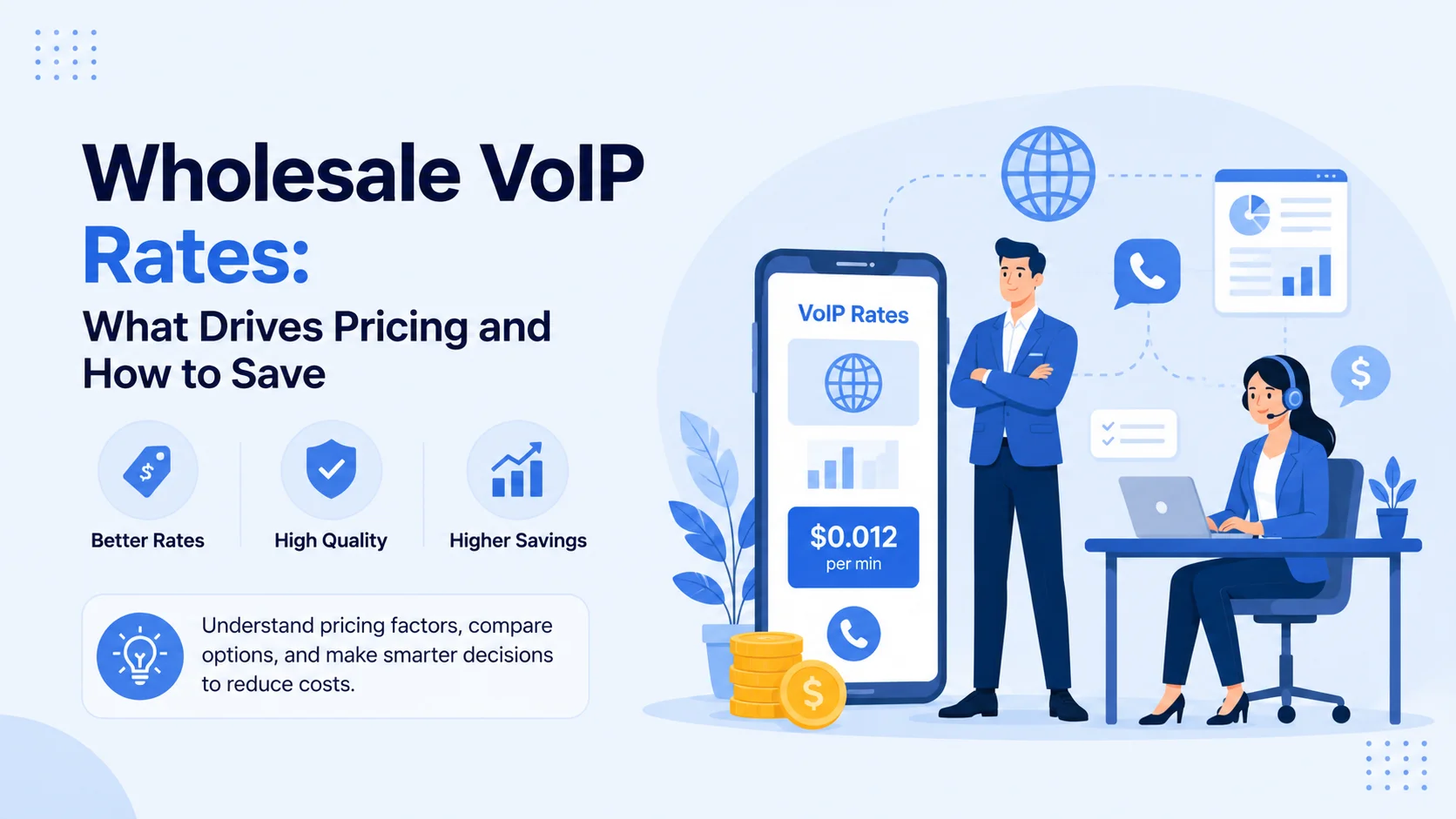
Wholesale VoIP rates are the per-minute (or per-second) prices carriers, resellers, and enterprises pay to complete large volumes of outbound calls through a wholesale termination provider. They sit well below retail voice pricing because they reflect carrier-to-carrier cost rather than the finished-service margin built into a standard business phone plan — but the rate printed on a sales page rarely tells the whole story.
Two providers quoting an identical headline rate for the same destination can produce very different real-world costs once route quality, billing increments, and hidden fees enter the picture. This guide breaks down what actually drives wholesale VoIP rates, how to read a rate deck correctly, and how to compare providers on true cost rather than the number at the top of the page.
2What Are Wholesale VoIP Rates?
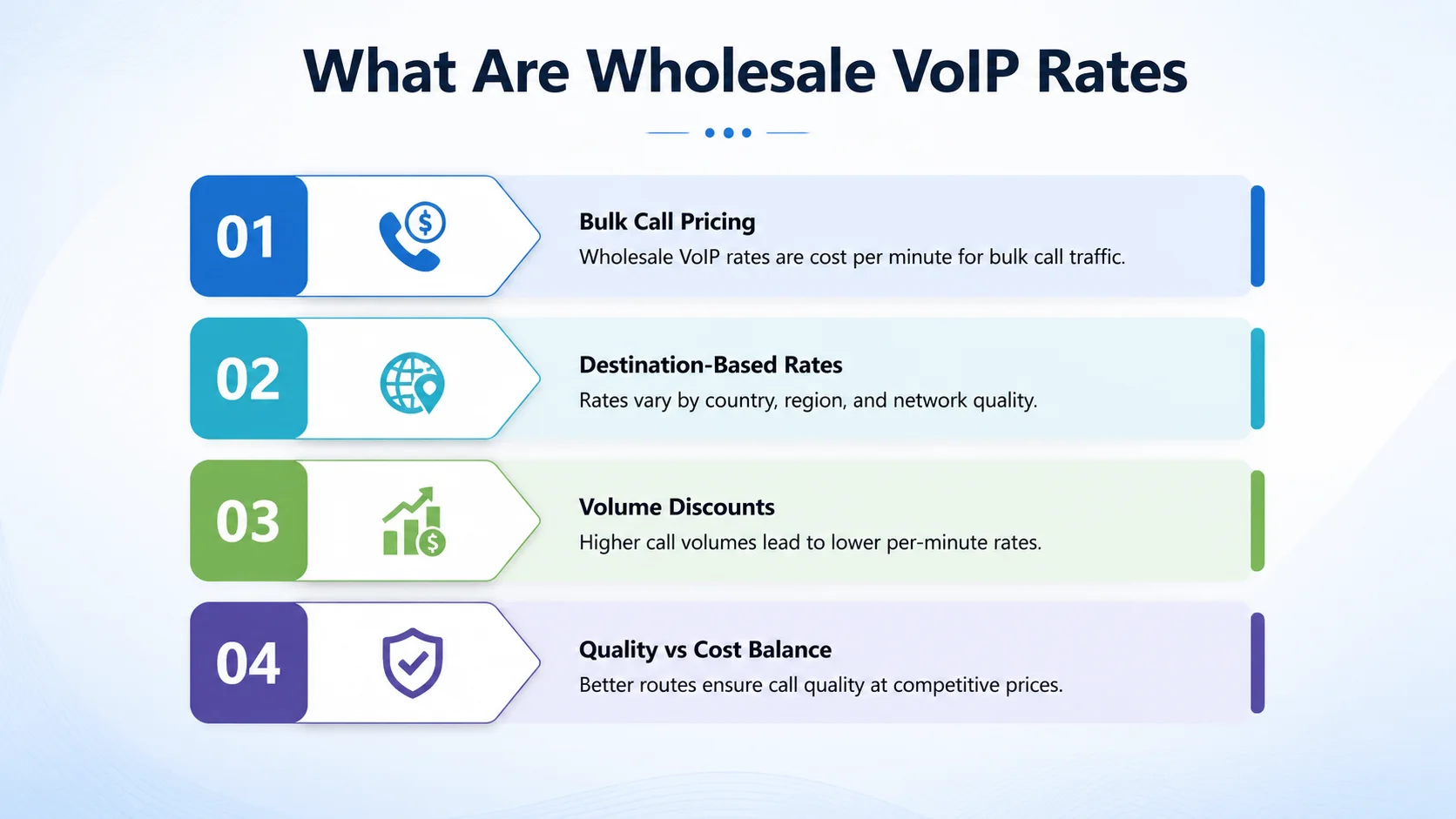
A wholesale VoIP rate is the price a carrier charges another business — not an individual consumer — to complete a call to a given destination. Retail voice pricing bundles a phone line, support, and a marked-up per-minute rate into a single consumer product. Wholesale pricing strips that bundling away: a business buys raw call-completion capacity in bulk over a SIP trunk and either resells it downstream or consumes it directly to power its own platform.
This structure exists because wholesale carriers have already made the expensive investment in direct interconnect agreements with telecom operators around the world. Spreading that cost across thousands of customers is what makes wholesale rates a fraction of retail pricing, often starting near $0.003 per minute for major destinations.
3How the Call Routing Path Affects Rate
The price on a rate deck reflects the path a call actually travels, and that path varies more than most buyers assume:
- Direct interconnects connect the wholesale carrier straight to the destination operator, with no intermediate hop.
- Transit routing sends the call through one or more third-party networks when no direct interconnect exists, adding cost and latency at each hop.
- Resold capacity means the "wholesale" rate you're quoted already has a markup baked in from an upstream carrier you never see.
A rate quoted for a destination on a direct route and the same rate quoted for a destination reached through two transit hops can look identical on paper while producing very different call quality — which is exactly why rate comparison has to go beyond the number itself. Ask any provider plainly whether a given destination sits on a direct interconnect or a transit path, and how many hops separate their network from the actual destination carrier.
4Route Types and Their Price Impact
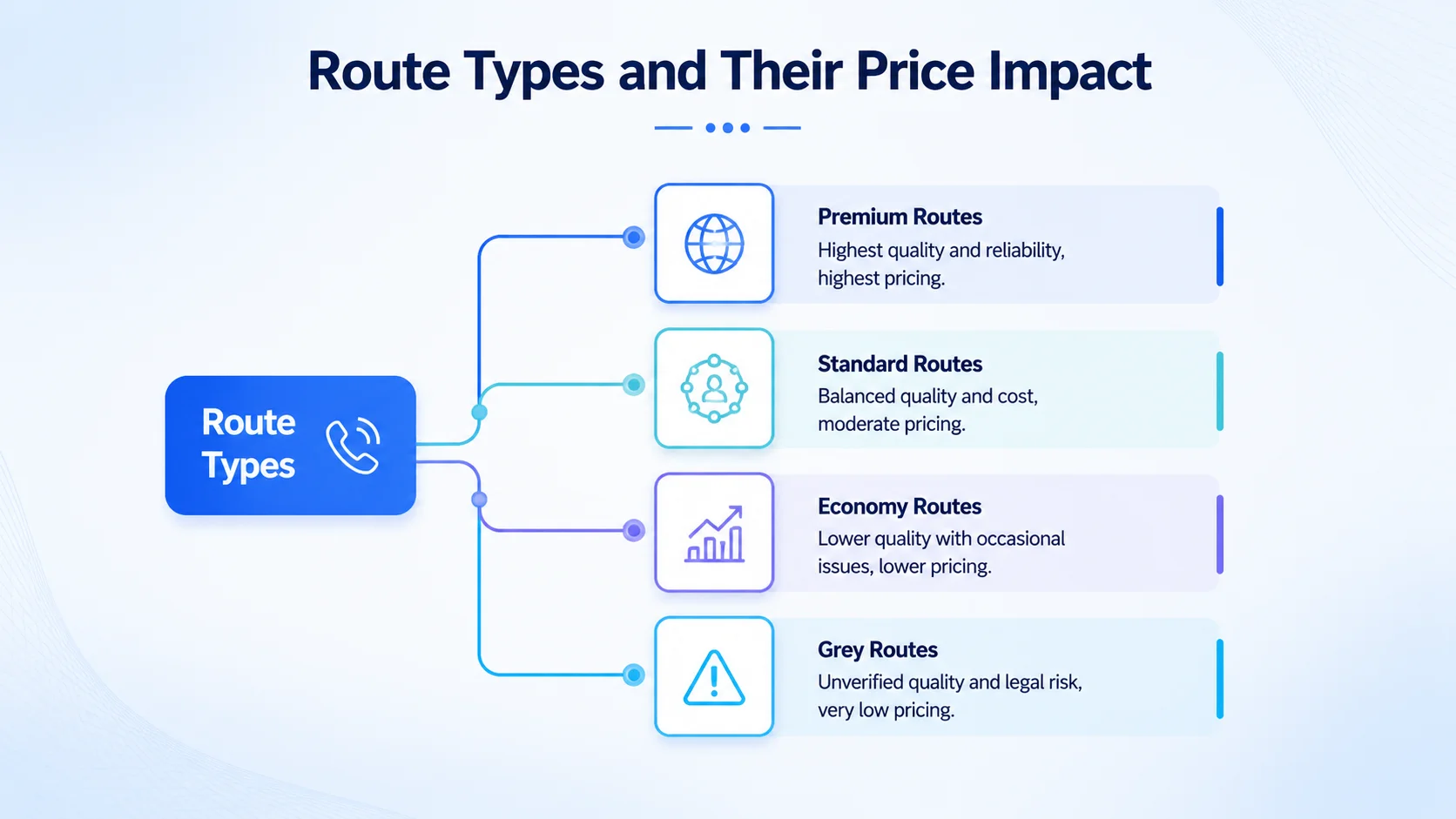
Every wholesale VoIP rate deck breaks pricing down by route type, and the type selected for a given destination is often the single biggest lever on both cost and quality:
- CLI (Caller Line Identification) routes pass the real calling number through to the destination, are required in most regulated markets, and carry the highest per-minute rate — reflecting the direct interconnects and compliance overhead needed to support them.
- Non-CLI routes strip or alter the caller ID, cost meaningfully less, and suit high-volume outbound use cases where the caller's number isn't operationally important.
- CC (country-code) routes sit at the lowest price point and the lowest reliability tier, appropriate only for narrow, cost-tolerant use cases.
Choosing the cheapest route type across the board rather than matching route type to traffic type is one of the most common ways buyers quietly overpay — a low CC rate on customer-facing traffic often produces enough failed calls to erase any savings.
5What Actually Drives Wholesale VoIP Rates
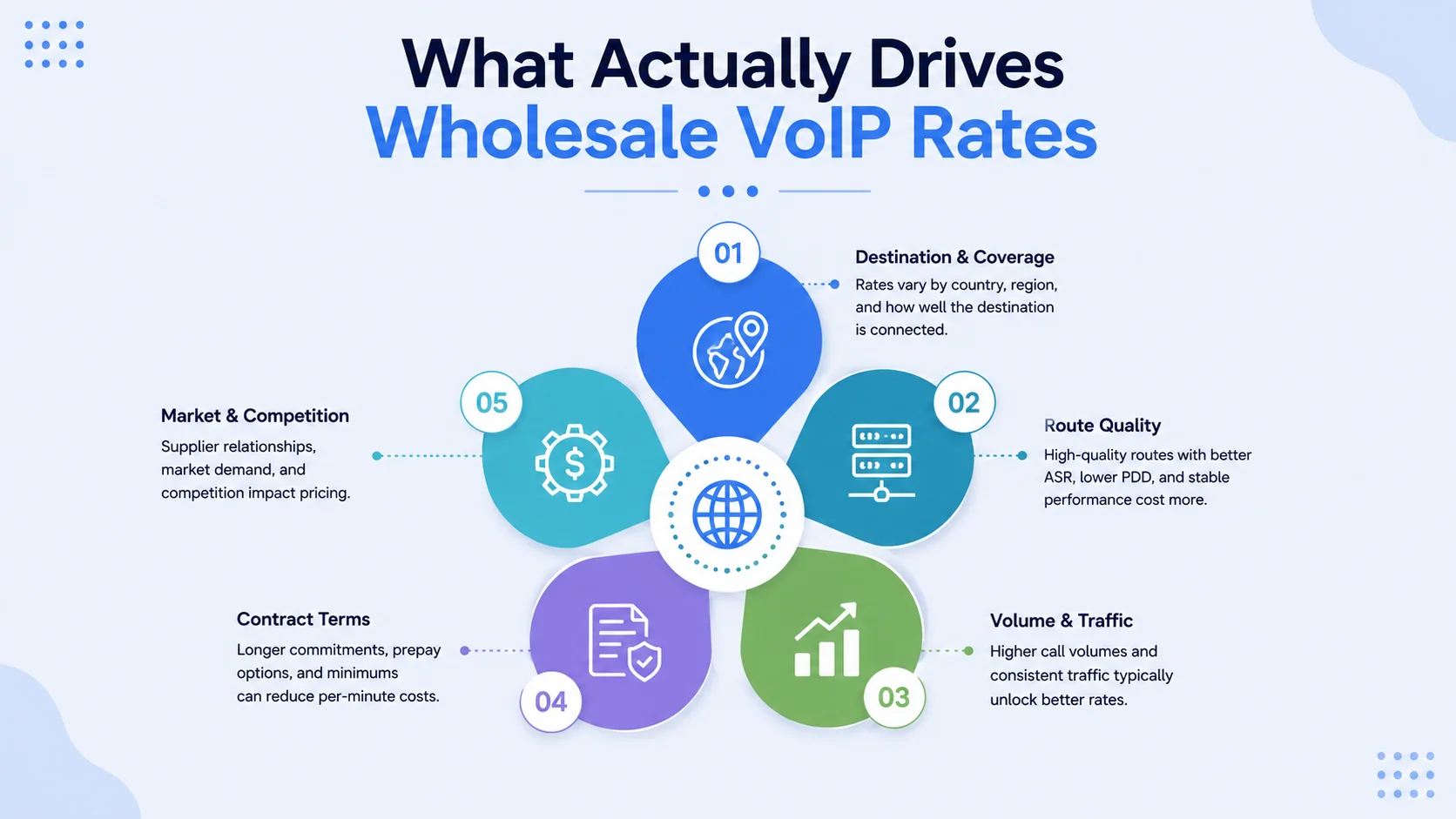
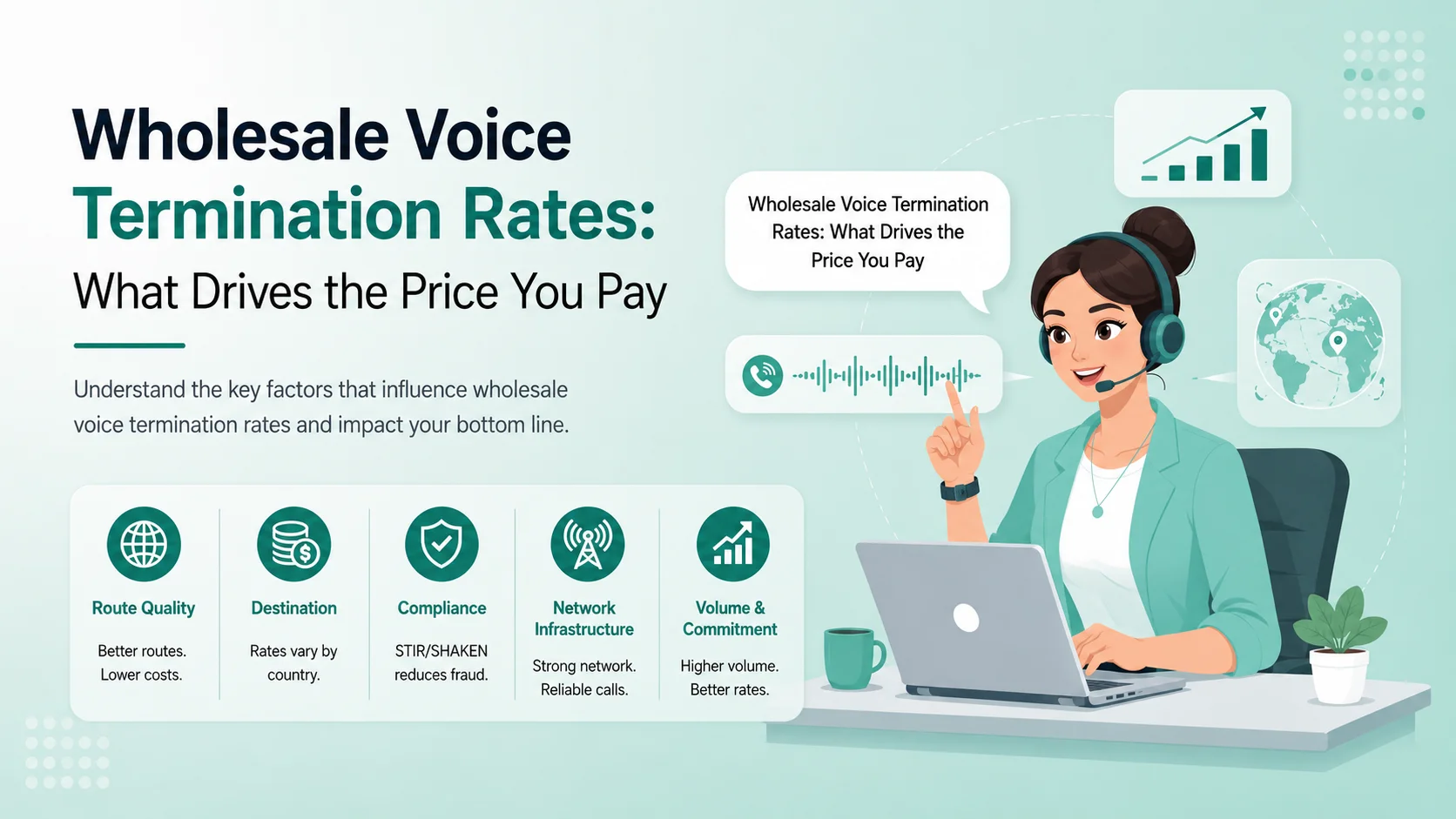
Destination is the single largest factor in any wholesale VoIP rate. US and Western European fixed-line termination often starts near $0.003–0.005 per minute, mobile termination runs several times higher, and destinations with limited carrier competition can run five to ten times the US baseline. Route type adds another layer on top of that baseline — CLI routes typically carry a 20–40% premium over non-CLI on the same destination.
Traffic volume also shapes what rate a buyer can actually access. Rate decks are frequently tiered, with higher committed monthly minutes unlocking meaningfully lower per-minute pricing — a dynamic reinforced by ITU global telecom traffic data showing steady growth in international call volume even as per-minute rates trend down. A carrier quoting a headline rate publicly is often quoting the entry tier, not the rate available to a business committing serious volume — which is why requesting a custom rate deck based on real traffic estimates usually produces a better number than a published price list.
6Billing Models That Change Your True Cost
The billing model behind a wholesale VoIP rate frequently matters more than the rate itself. A provider charging a lower per-minute rate but billing in six-second increments rounds every short call upward, quietly inflating the effective cost per completed call. False answer supervision (FAS) — charging for call attempts that were never actually answered — has the same inflating effect, sometimes adding 10–25% to true cost depending on a buyer's average answer rate.
True per-second, FAS-free billing means the rate quoted is the rate actually billed. Before comparing two providers on headline rate alone, confirm the billing increment and FAS policy for each — the provider with the technically higher rate but transparent, per-second, FAS-free billing frequently produces a lower real-world bill.
7How to Compare Wholesale VoIP Rates Properly
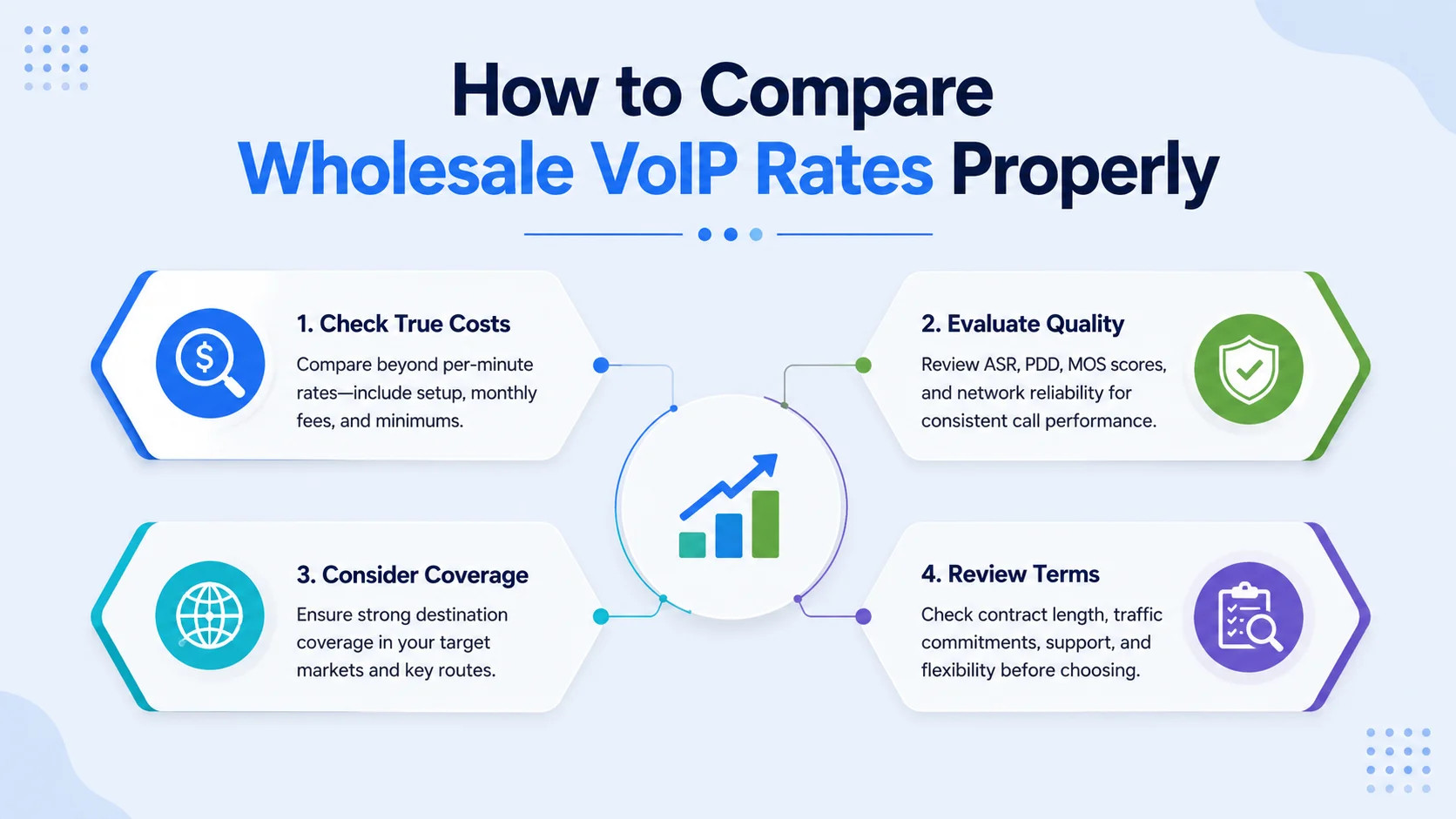
The only accurate way to compare wholesale VoIP rates across providers is cost-per-completed-call rather than cost-per-minute. A CLI route at a higher per-minute rate with a strong ASR (answer seizure ratio) can cost less per completed call than a cheaper non-CLI route with a weak ASR, because failed call attempts still consume time and resources without producing a connected call.
To compare properly, request full rate decks broken down by destination and route type, ask for live ASR benchmarks by destination rather than a blended network average, confirm billing increment and FAS policy in writing, and negotiate a live trial period before committing meaningful volume. A provider unwilling to support a trial against a real rate deck is signaling something about how its stated numbers hold up in production. For a broader look at how this market is structured, see our wholesale voice carrier market guide.
Document trial results destination-by-destination rather than as a single blended figure, since a provider can look competitive on average while quietly underperforming on the specific corridors that make up most of your actual traffic.
8Red Flags in a Rate Deck
A handful of patterns in a rate deck reliably predict a worse-than-advertised outcome: headline rates meaningfully below the rest of the market with no clear explanation, FAS charges or six-second billing increments buried in the fine print, refusal to provide route-level ASR data, no rate-change notice policy (some providers can shift pricing with almost no warning), and no trial period offered before a volume commitment. None of these disqualify a provider by itself, but two or more together are worth treating as a serious warning sign. A carrier confident in its actual route quality has little reason to resist a structured, time-boxed trial against a competing rate deck.
9Conclusion
Wholesale VoIP rates only tell part of the pricing story — the real comparison has to account for route type, destination-level quality, billing granularity, and volume tiering before a headline number means anything. A provider with a slightly higher quoted rate but true per-second, FAS-free billing and strong destination-level ASR will consistently beat a cheaper rate deck once cost-per-completed-call is the actual measure. Request a full rate deck matched to your real traffic, verify the billing terms in writing, and run a live trial before shifting meaningful volume to any new provider.
10Frequently Asked Questions
What is a good wholesale VoIP rate for US termination?
CLI routes to US fixed-line destinations typically start near $0.003–0.005 per minute from Tier-1 carriers. Rates significantly below that range on the same route type are worth scrutinizing for grey-route quality issues.
Why do wholesale VoIP rates vary so much by destination?
Rate is driven primarily by how much local carrier competition exists in a destination market and whether the wholesale provider holds a direct interconnect there. Markets with fewer local carriers and no direct interconnect available can run five to ten times higher than a competitive market like the US.
What is the difference between CLI and non-CLI wholesale VoIP rates?
CLI routes preserve the caller's real number and typically carry a 20–40% premium over non-CLI routes on the same destination, reflecting the direct interconnects and compliance requirements needed to support caller ID delivery.
How does billing increment affect my actual wholesale VoIP cost?
Per-6-second billing rounds every short call upward, inflating effective cost compared to true per-second billing — the difference compounds significantly at high call volumes, even when the quoted per-minute rate looks identical.
How do I know if a wholesale VoIP rate deck is trustworthy?
Ask for live ASR data by destination rather than a network-wide average, confirm billing increment and FAS policy in writing, and request a trial period before committing real volume. A provider that resists any of these requests is worth evaluating carefully before signing.