1Introduction
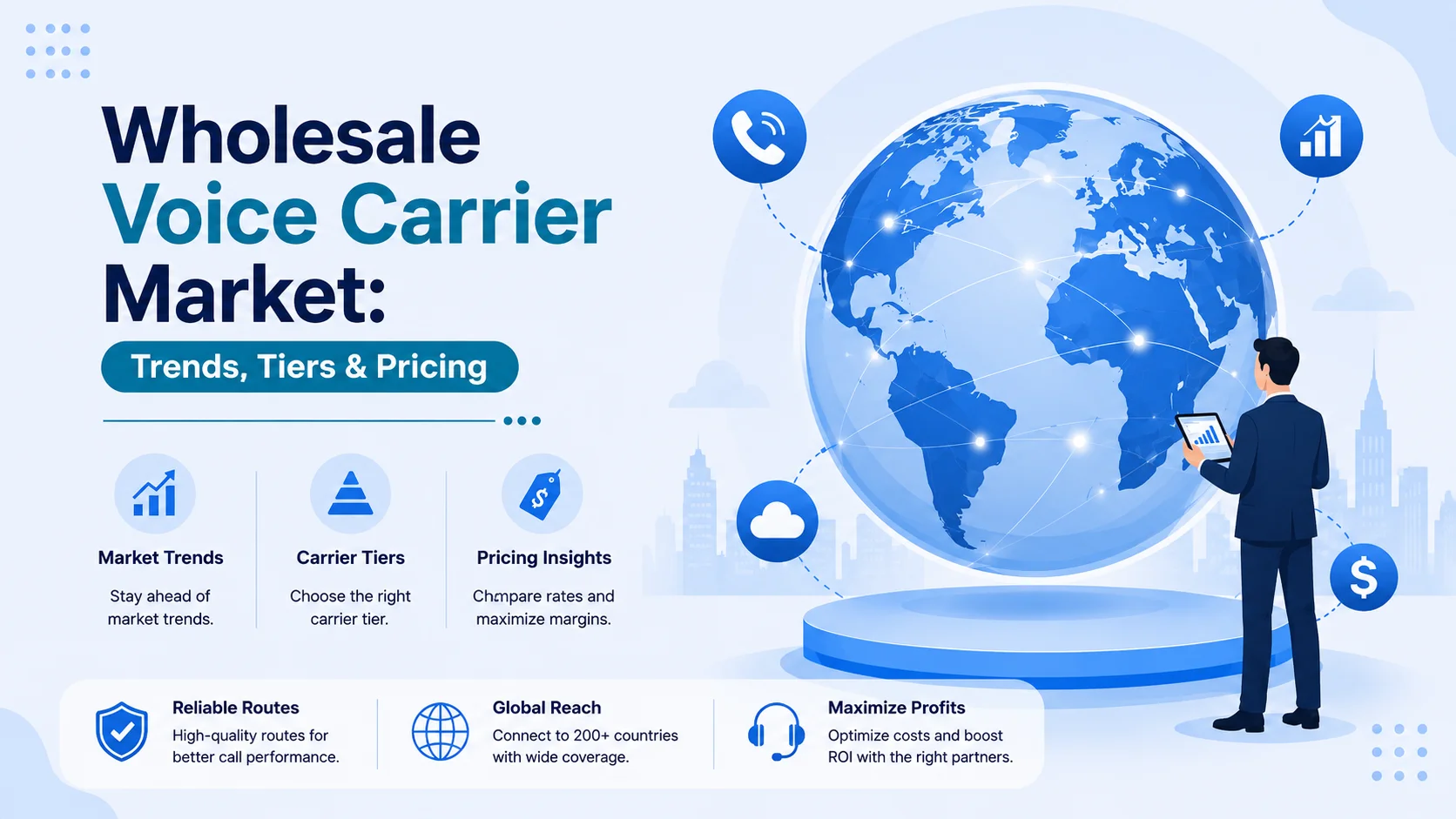
Every business phone call that travels across the internet eventually has to land somewhere. VoIP wholesale termination is the infrastructure that makes that happen — routing large volumes of voice traffic from carriers, resellers, and enterprises to destinations across the globe. Unlike retail VoIP lines sold to end users, wholesale termination is a carrier-grade service built for high-volume traffic at the lowest possible cost per minute.
Softtop connects businesses to over 150 countries through direct Tier-1 carrier relationships, backed by 99.99% uptime and a 24/7/365 Network Operations Centre. Whether you run a contact centre, a calling platform, or a telecom reseller business, understanding how wholesale termination works puts you in the driver's seat when it comes to cost, quality, and reliability.
VoIP wholesale termination routes high-volume voice calls from originating carriers to end destinations worldwide. Route types (CLI, Non-CLI, CC) determine call quality, compliance, and per-minute pricing. Softtop delivers 40–70% savings versus retail, FAS-free billing, and STIR/SHAKEN A-level attestation across 150+ countries.
2What Is VoIP Wholesale Termination and How Does It Work?
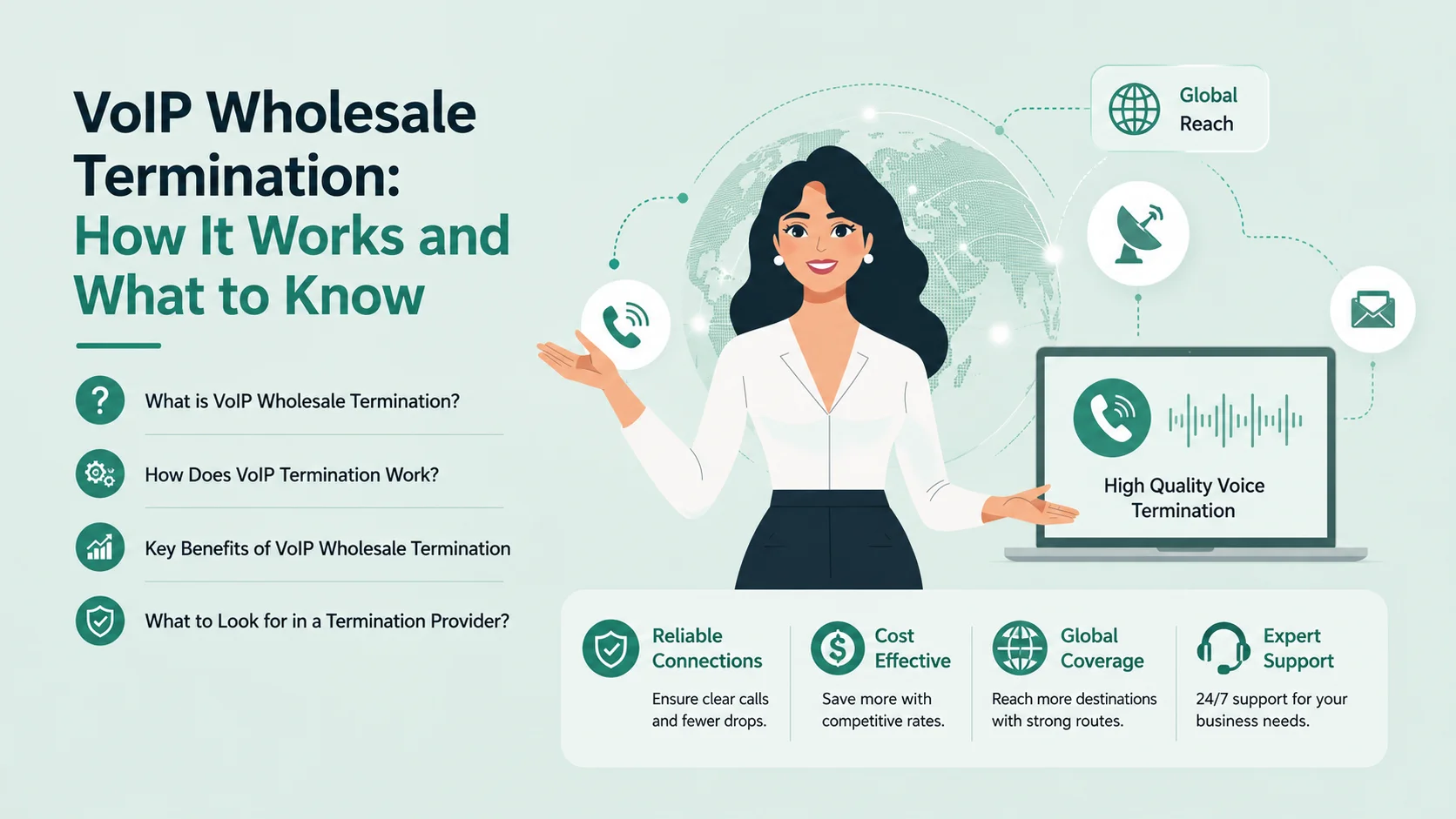
VoIP wholesale termination is the process of completing a voice call that originates on one network by routing it through an intermediary wholesale carrier to its final destination. When a SIP endpoint sends a call, a session is negotiated using the Session Initiation Protocol and the voice payload travels via Real-Time Transport Protocol packets. Wholesale carriers — often called terminators — hold interconnection agreements with national and regional operators so they can deliver that call to any phone number, whether on a mobile, fixed-line, or another VoIP network.
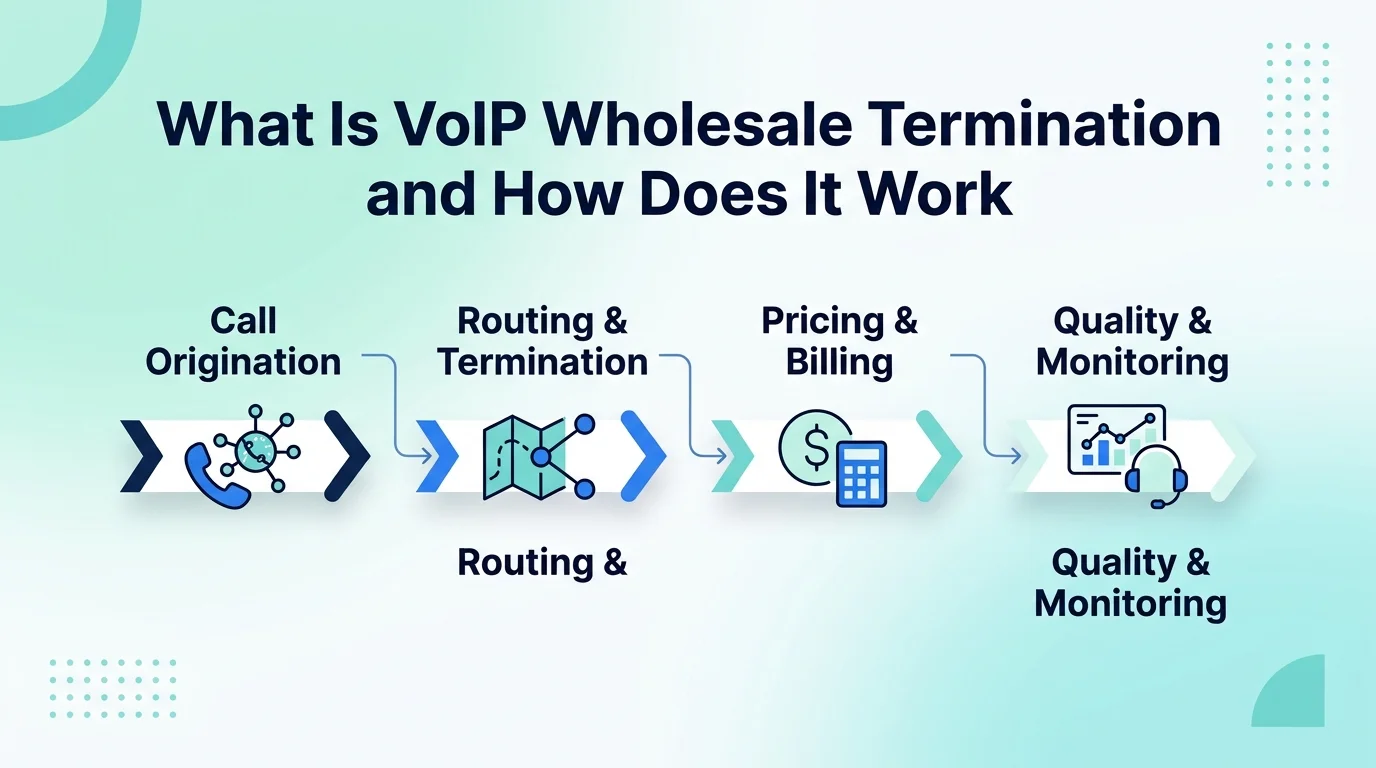
The terminating carrier charges the originating party a per-minute rate that reflects trunk access, local interconnect costs, and the quality tier of the route. Businesses that aggregate large call volumes benefit enormously from these wholesale rates.
Softtop's Wholesale Voice service gives enterprises and resellers direct access to Tier-1 interconnects, bypassing retail mark-ups entirely and passing those savings directly to clients. With interconnect agreements across six continents, every call finds the shortest, most reliable path to its destination.
3CLI, Non-CLI, and CC Routes: Choosing the Right Route Type
Not all VoIP wholesale termination routes are created equal, and selecting the wrong type can hurt both call quality and regulatory standing. CLI (Calling Line Identification) routes preserve the original caller ID through the entire call path, making them the preferred choice for contact centres, enterprise outbound campaigns, and any scenario where a recognisable number improves answer rates. Non-CLI routes strip or replace the caller ID and are typically used for high-volume anonymous traffic where cost is the primary driver. CC (Country Code) routes are optimised for specific geographic destinations, offering competitive rates into markets where standard CLI paths are expensive.
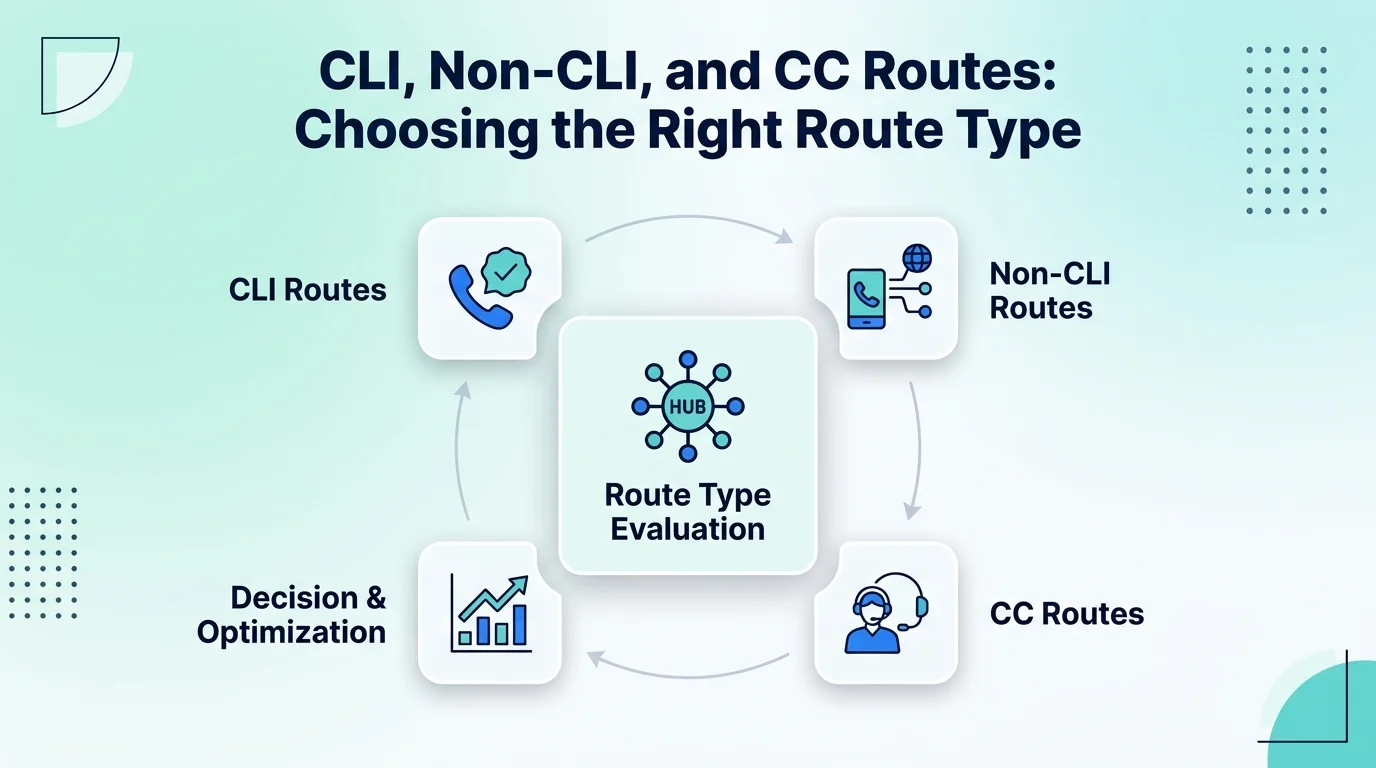
The FCC's rules on caller ID require accurate CLI delivery for regulated traffic, making route selection a compliance matter as well as a commercial one. Softtop's CLI Routes product ensures caller ID integrity end-to-end, with ASR targets of 60–80% on premium routes and post-dial delay under six seconds. Businesses can also switch between route types dynamically as traffic patterns evolve without renegotiating their wholesale agreements.
4Quality Metrics That Define a Premium Termination Provider
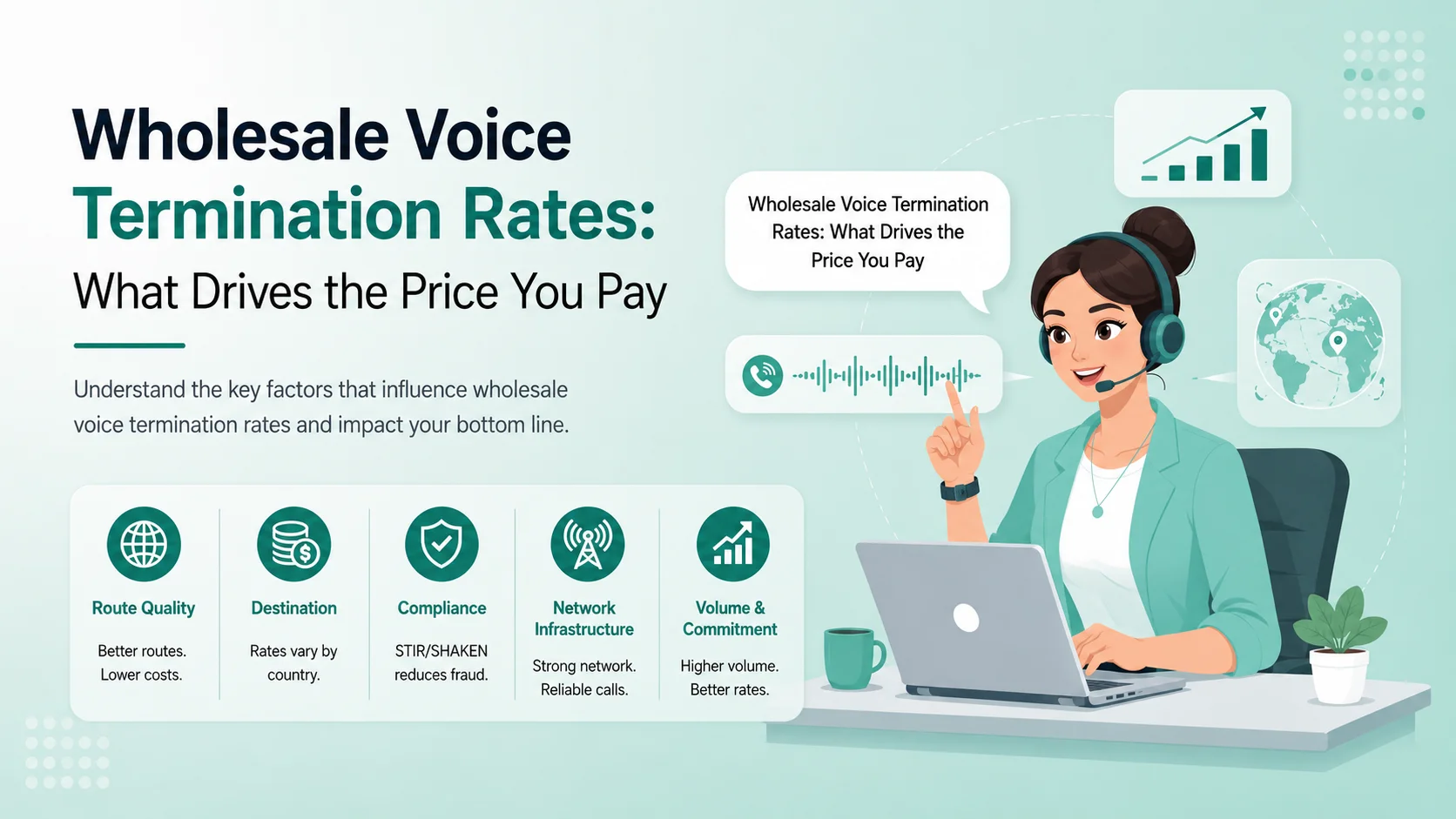
When evaluating VoIP wholesale termination partners, two metrics stand out above all others: Answer Seizure Ratio and Post-Dial Delay. ASR measures the percentage of call attempts that are successfully answered; a healthy premium route should land in the 60–80% range. PDD tracks the seconds between the moment a call is initiated and the moment the far end begins ringing — anything above six seconds signals routing problems or congestion.
Beyond these core indicators, FAS (False Answer Supervision) is a billing fraud where a terminator charges for a call that was never genuinely answered by a human. FAS-free billing, a standard Softtop practice, means clients only pay for real connected time.
The ITU's E.164 numbering plan underpins how numbers are formatted and routed globally, and adherence to it is non-negotiable for any provider claiming enterprise-grade quality. Combine rigorous metrics with transparent billing and the cost-per-conversation drops dramatically. For network operations teams, real-time monitoring dashboards that surface ASR and PDD trends by destination make it far easier to catch route degradation before it reaches end users.
5STIR/SHAKEN and Compliance in Wholesale Voice Termination
Regulatory compliance has become inseparable from wholesale voice termination quality. STIR/SHAKEN — Secure Telephone Identity Revisited and Signature-based Handling of Asserted information using toKENs — is the framework that cryptographically authenticates caller ID information before a call crosses network boundaries. Attestation levels run from A (full attestation, highest trust) through B and C, with Level A reserved for calls where the carrier can fully verify the originating customer and the number they are calling from.
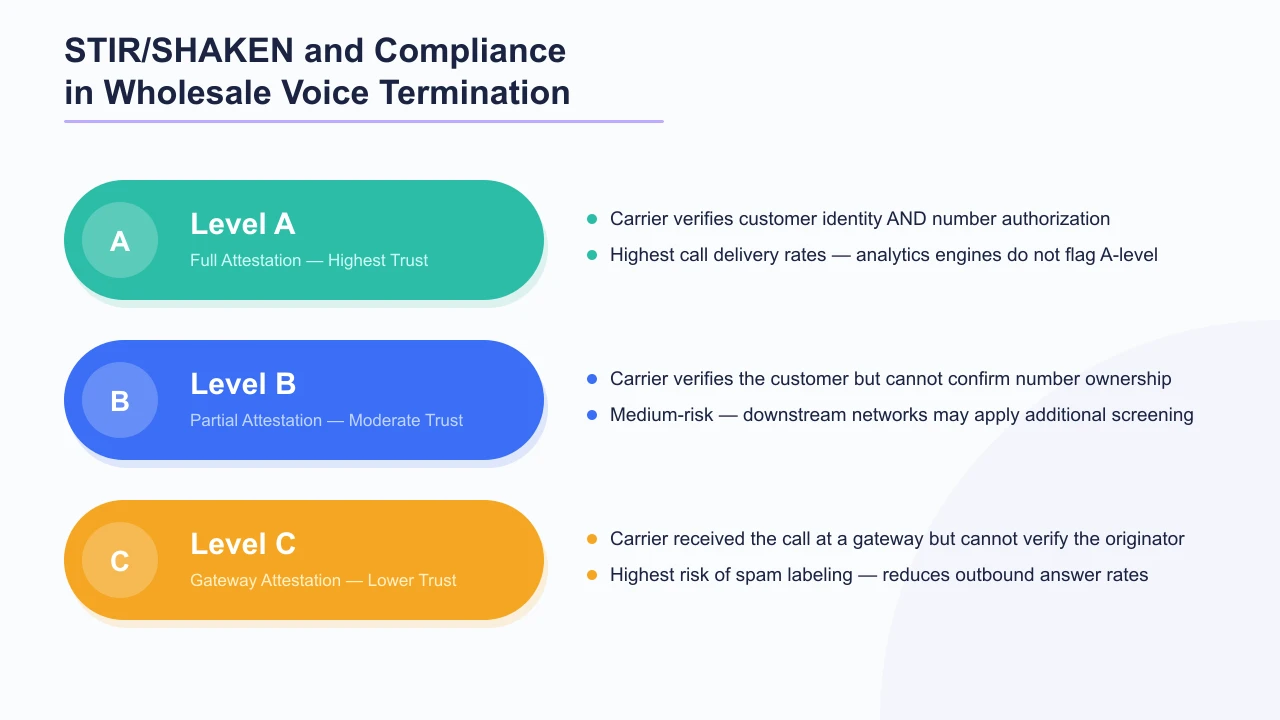
Carriers and enterprises that carry Level A attestation see higher answer rates because downstream networks and analytics platforms flag unattestation calls as higher-risk. Softtop carries STIR/SHAKEN A-level attestation across its network, a differentiator that matters especially for US-terminating traffic where TRACED Act compliance is enforced.
Pair that with Least Cost Routing logic and a self-service portal offering real-time CDRs, and compliance stops being a cost centre and starts being a competitive advantage for resellers and platform operators.
6Pricing, Savings, and How Least Cost Routing Cuts Your Bill
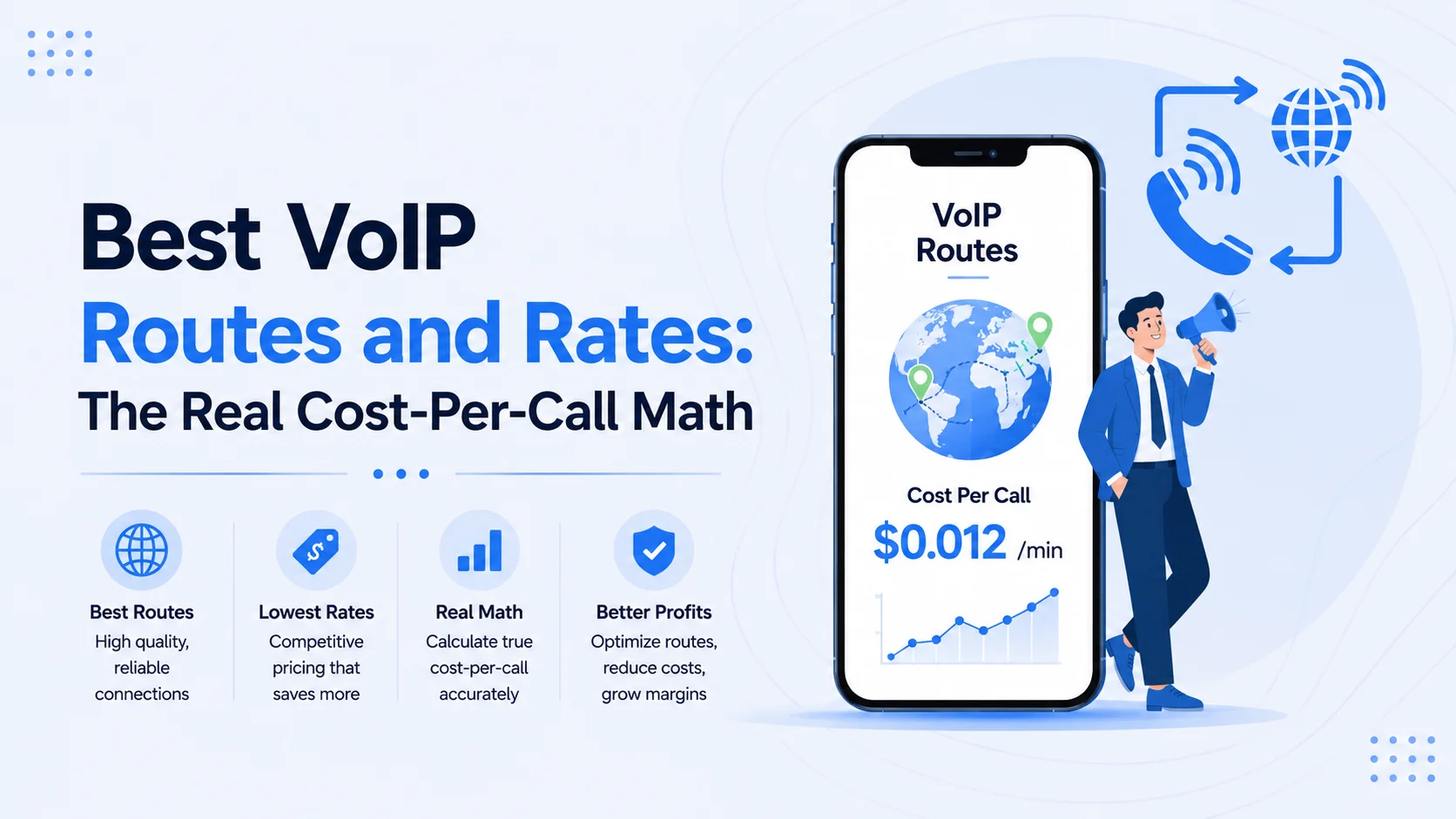
Wholesale termination pricing is measured in fractions of a cent, and small differences compound dramatically at scale. Softtop's rates run from $0.003 to $0.01 per minute depending on destination and route type, which translates to 40–70% savings compared to standard retail VoIP pricing.
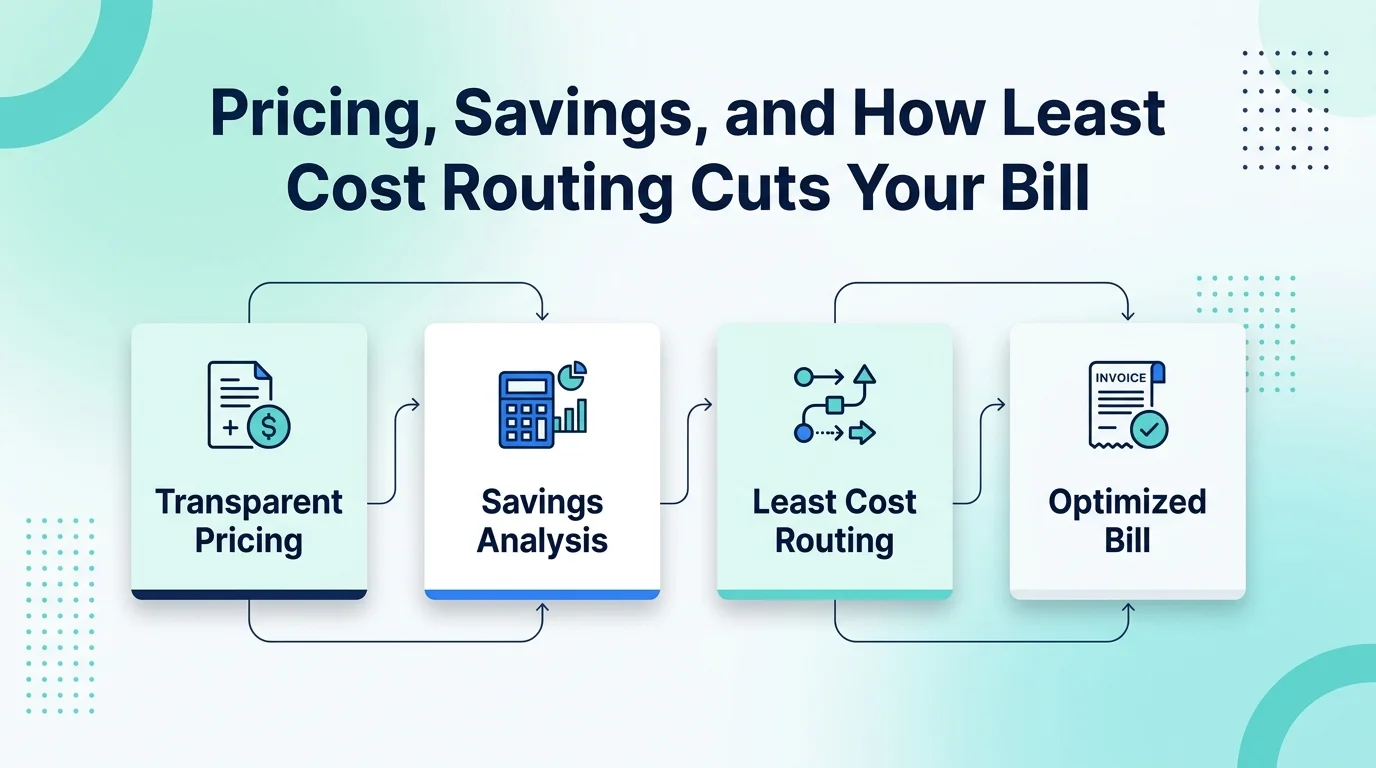
The engine that makes those savings systematic is Least Cost Routing. LCR evaluates every outbound call against a real-time routing table, selecting the path that meets quality thresholds — ASR, PDD, MOS — at the lowest available cost. When a primary route degrades, LCR automatically fails over to the next-best option without dropping the call.
Businesses running Wholesale VoIP through Softtop access LCR natively, alongside SIP trunking infrastructure that scales from dozens to millions of concurrent sessions. A self-service portal with real-time CDRs means finance teams can reconcile spend daily rather than waiting for end-of-month invoices, eliminating billing surprises on high-volume months. Volume discounts unlock automatically as usage grows, so the savings curve steepens the more traffic you send.
7Conclusion
VoIP wholesale termination sits at the foundation of every high-volume voice operation, and choosing the right provider determines whether that foundation is solid or fragile. The combination of route type selection, quality metrics like ASR and PDD, FAS-free billing, and STIR/SHAKEN A-level attestation creates a framework for voice traffic that is both cost-efficient and compliant.
Softtop's direct Tier-1 carrier connections across 150+ countries, paired with LCR automation and a transparent self-service portal, gives businesses the tools to control costs without sacrificing quality. Understanding wholesale voice termination is the first step; the second is partnering with a network that makes those principles operational every day.
8Frequently Asked Questions
What is VoIP wholesale termination?
VoIP wholesale termination is the process of routing bulk voice call traffic from one carrier or business to its final destination through wholesale interconnect agreements. It is the carrier-grade layer beneath consumer and business phone services, enabling high-volume calls at fractional per-minute costs compared to retail pricing.
How do CLI routes differ from Non-CLI routes?
CLI routes preserve the original caller ID number through the full call path, which improves answer rates and meets regulatory requirements for outbound business calls. Non-CLI routes replace or remove the caller ID, making them suitable for anonymous high-volume traffic where the lowest possible cost per minute is the primary consideration.
What does FAS-free billing mean in wholesale voice?
FAS stands for False Answer Supervision — a billing practice where a carrier charges for a call that was never genuinely connected to a live party. FAS-free billing means you are only charged for calls where a real answer event is detected, eliminating a common source of inflated costs in lower-quality wholesale termination arrangements.
Why does STIR/SHAKEN attestation level matter?
STIR/SHAKEN attestation tells downstream networks how confident the originating carrier is that the caller ID is legitimate. Level A means the carrier fully verifies both the customer and the number. Higher attestation leads to better call delivery rates because analytics platforms and mobile carriers are less likely to label high-attestation calls as potential spam.
What is Least Cost Routing in VoIP wholesale termination?
Least Cost Routing is an automated system that evaluates available routes for every outbound call and selects the one that satisfies minimum quality thresholds — such as ASR and PDD targets — at the lowest per-minute rate. When a route degrades or fails, LCR automatically reroutes the call, maintaining quality while keeping costs predictable at scale.