1Introduction
Wholesale voice services are the carrier-to-carrier infrastructure that powers bulk voice communication for carriers, resellers, and enterprises. Retail voice is different. There, a business buys a phone system for its own employees. Wholesale voice services are sold in bulk to organizations. These organizations then deliver voice capability to their own customers or route it through their own platform. Every phone call that crosses a business VoIP system, call center, or embedded calling app ultimately depends on a wholesale voice service somewhere in the chain.
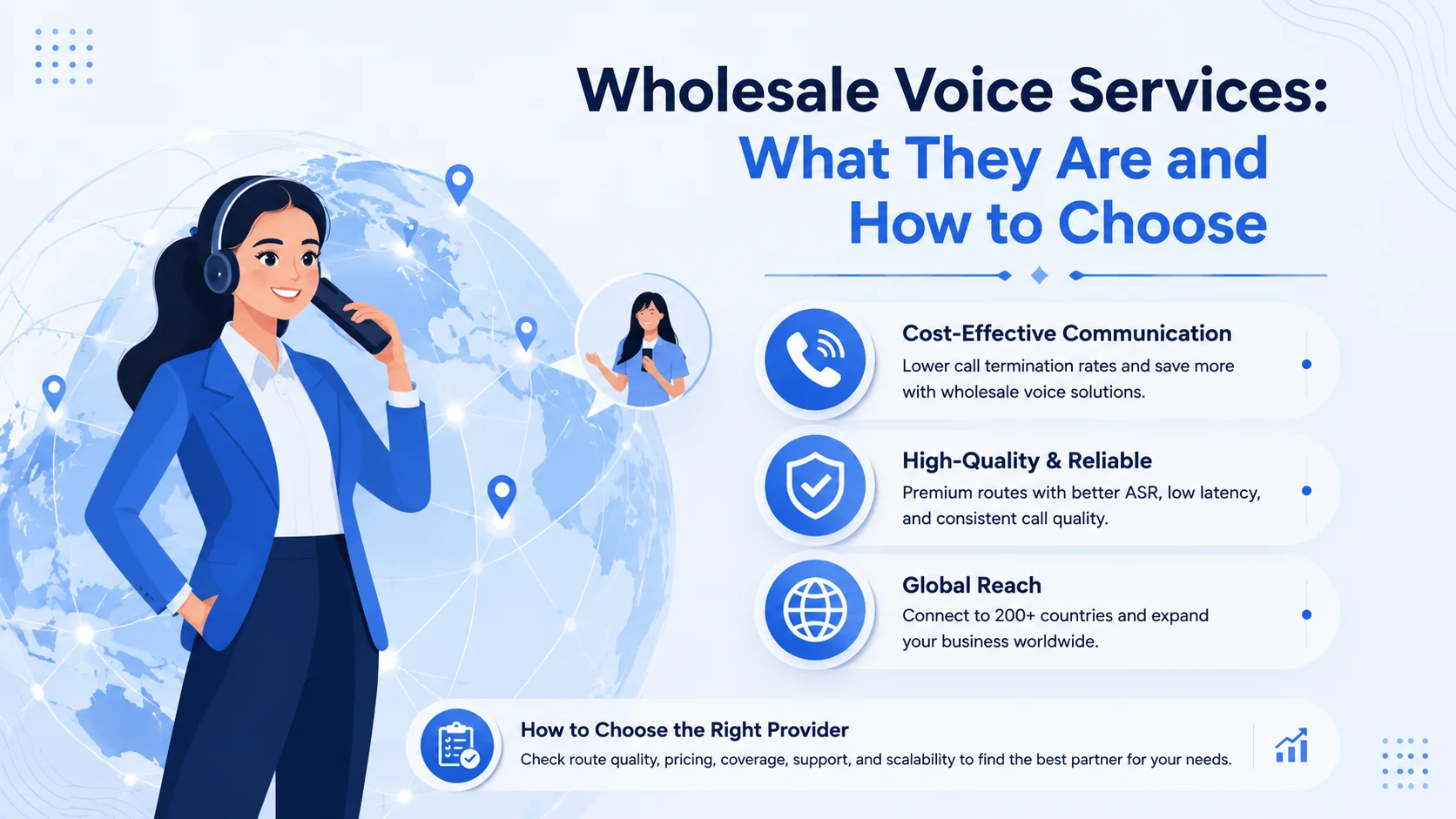
Choosing the right wholesale voice services provider is a structural decision, not a routine vendor comparison. The provider behind that layer shapes call quality, cost per completed call, and compliance posture across every market a business serves. This guide explains what wholesale voice services actually include. It also shows how pricing and routing work, and how to evaluate a provider before committing volume.
2What Are Wholesale Voice Services?
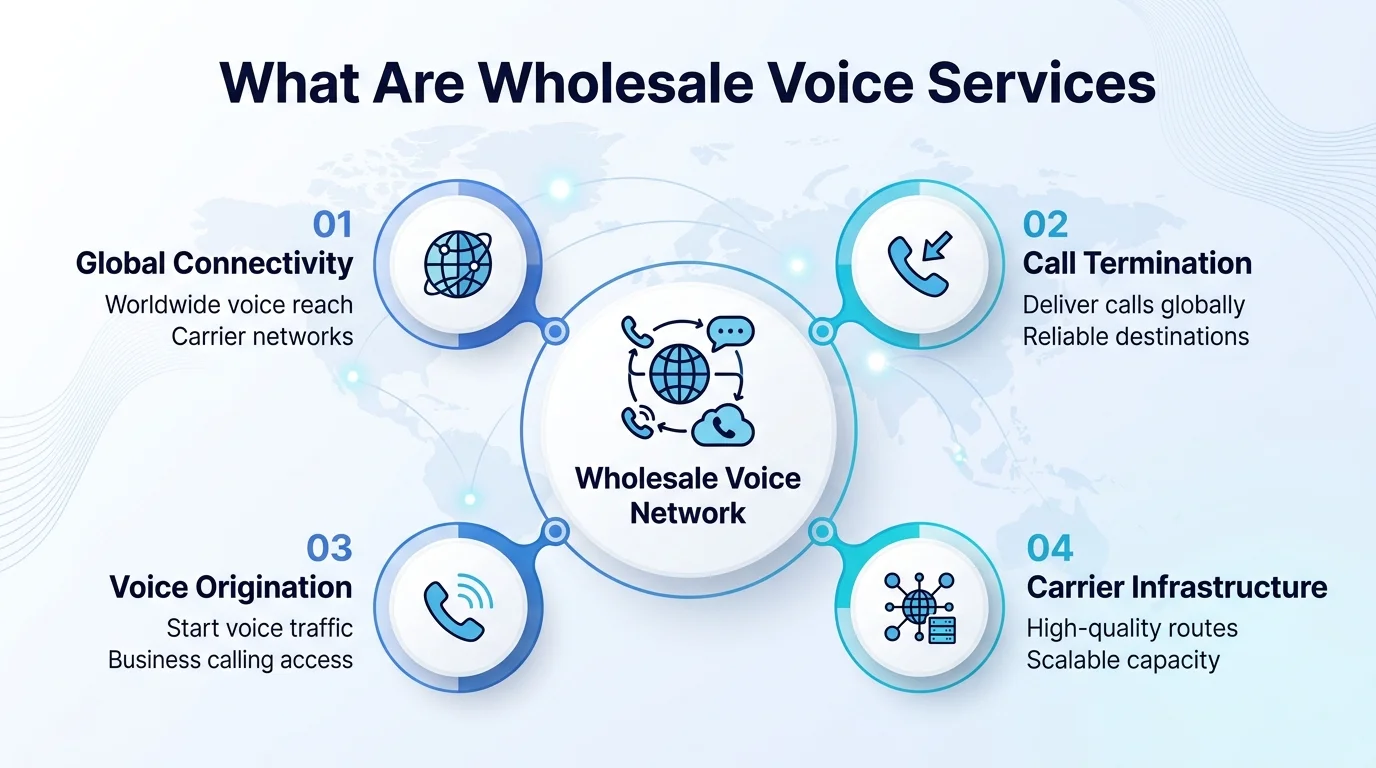
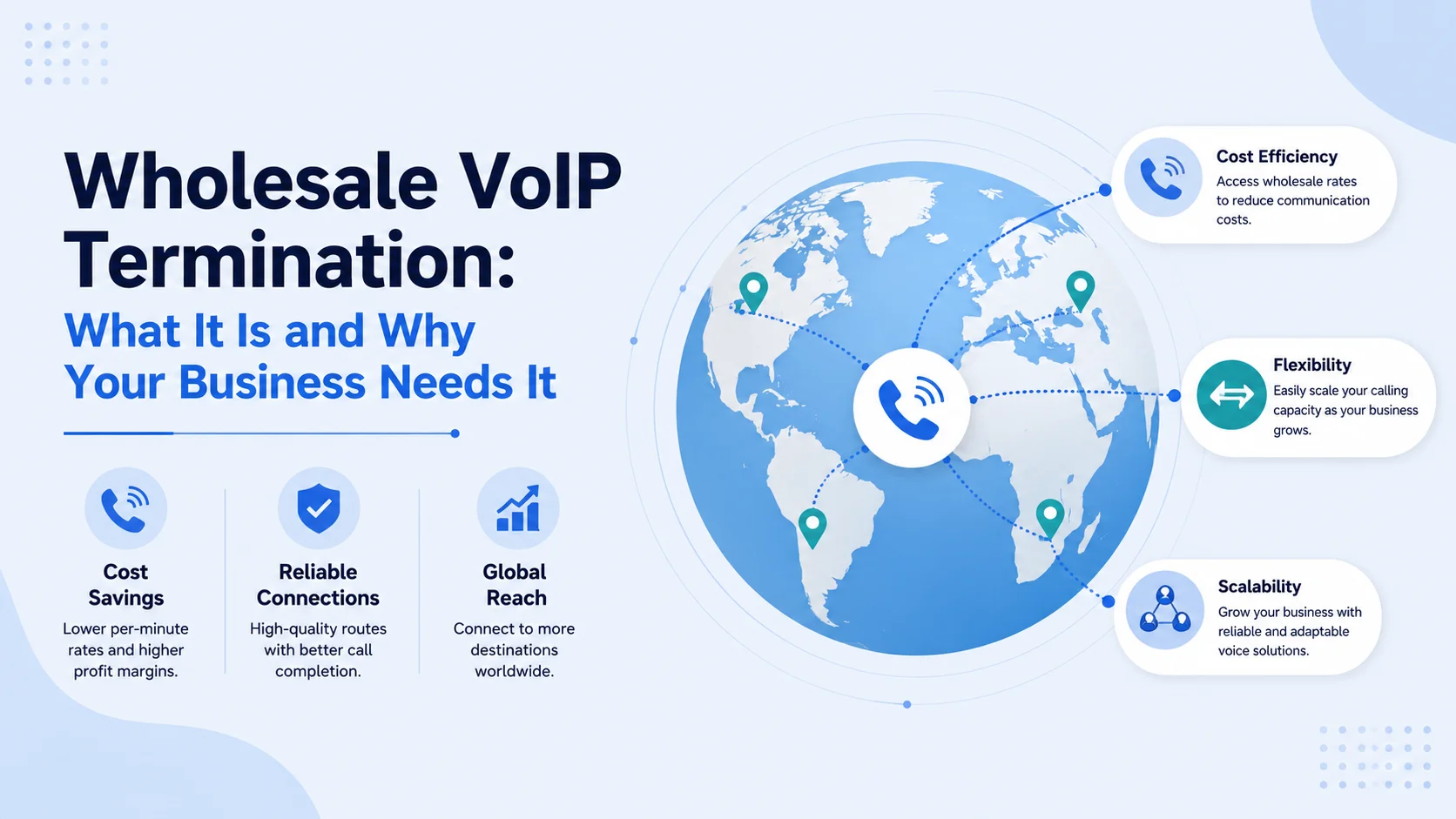
Wholesale voice services are carrier-grade voice products sold at bulk rates to businesses that route large call volumes. These include carriers, resellers, ITSPs, call centers, and enterprise platforms. Building direct interconnect relationships with telecom operators around the world is costly. A wholesale provider has already made that investment and spreads the cost across thousands of customers. That is why wholesale rates are a fraction of retail voice pricing.
The wholesale provider sits between the customer's platform and the destination network. It handles the switching, interconnect relationships, and compliance layer needed to complete calls reliably at scale.
3Termination vs. Origination: The Two Core Services
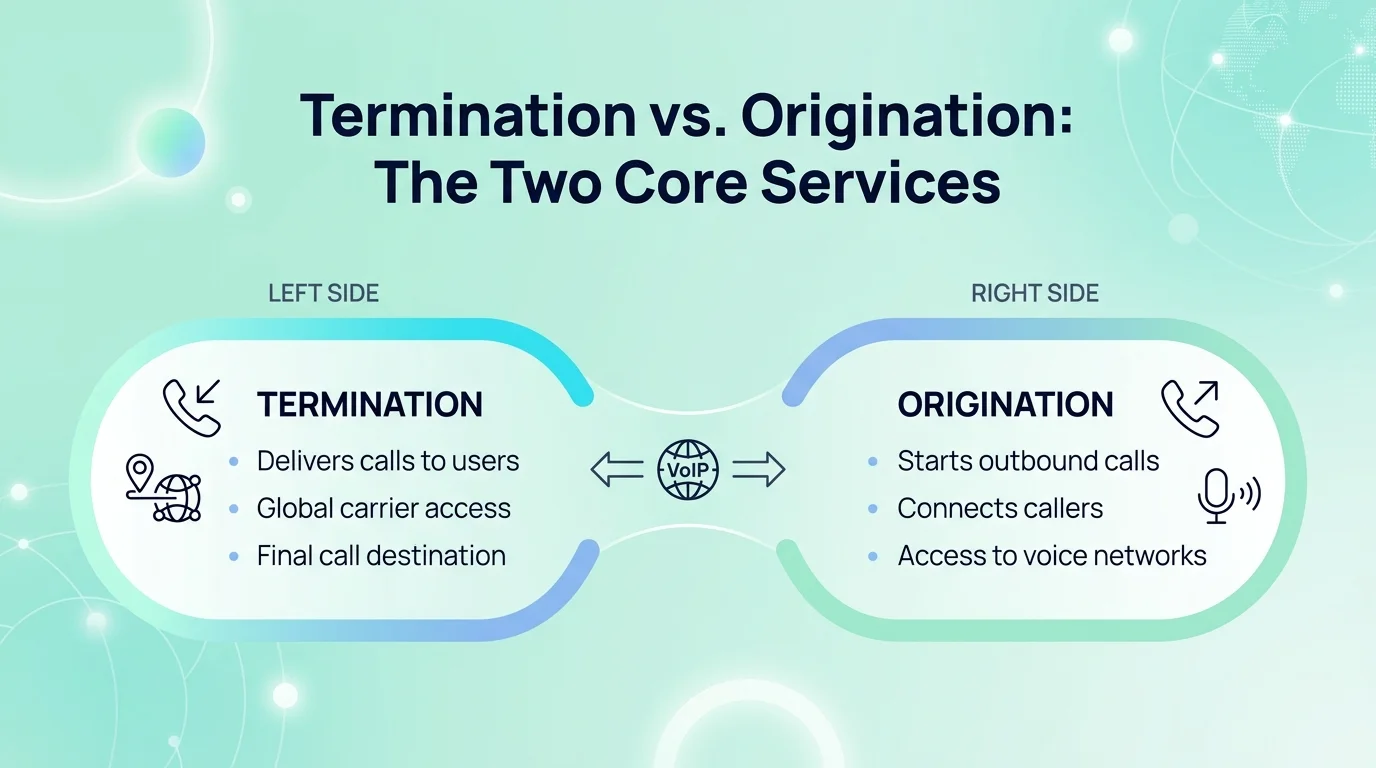
Wholesale voice services split into two foundational categories, and most carriers and resellers need both:
- Termination routes outbound calls from an IP network to their final destination on the PSTN or a mobile network. Most people mean this service when they say "wholesale voice."
- Origination receives inbound calls from the PSTN and delivers them to an IP endpoint. This lets a business receive calls to numbers it has provisioned in a given country.
Beyond these two core services, the wholesale voice stack often extends to SIP trunking (IP-based voice channels that replace traditional PRI or analog lines). It also covers wholesale DID numbers for building a multi-market phone presence. Toll-free termination and origination serve businesses that offer free-to-call numbers.
4How Wholesale Voice Providers Actually Route Calls
Understanding the routing path clarifies why quality and price vary so much between wholesale voice providers:
- Origination — the customer's platform sends the call as SIP traffic to the wholesale provider.
- Route lookup — the provider's switch checks the dialed number against its routing tables and identifies available paths to that destination.
- Path selection — a route is chosen based on cost, quality tier, and current network conditions, favoring direct interconnects where available.
- Termination — the destination carrier completes the call and returns call-progress signaling back through the chain.
Every intermediate hop between the originating platform and the destination network adds latency and risk. A provider with direct interconnects in a given country will typically outperform one that resells capacity from a third party. This holds even when the quoted rate looks identical. Ask any prospective provider plainly whether a destination sits on a direct interconnect or a transit path. Do not assume the rate reflects comparable quality.
5Route Types and Their Trade-Offs
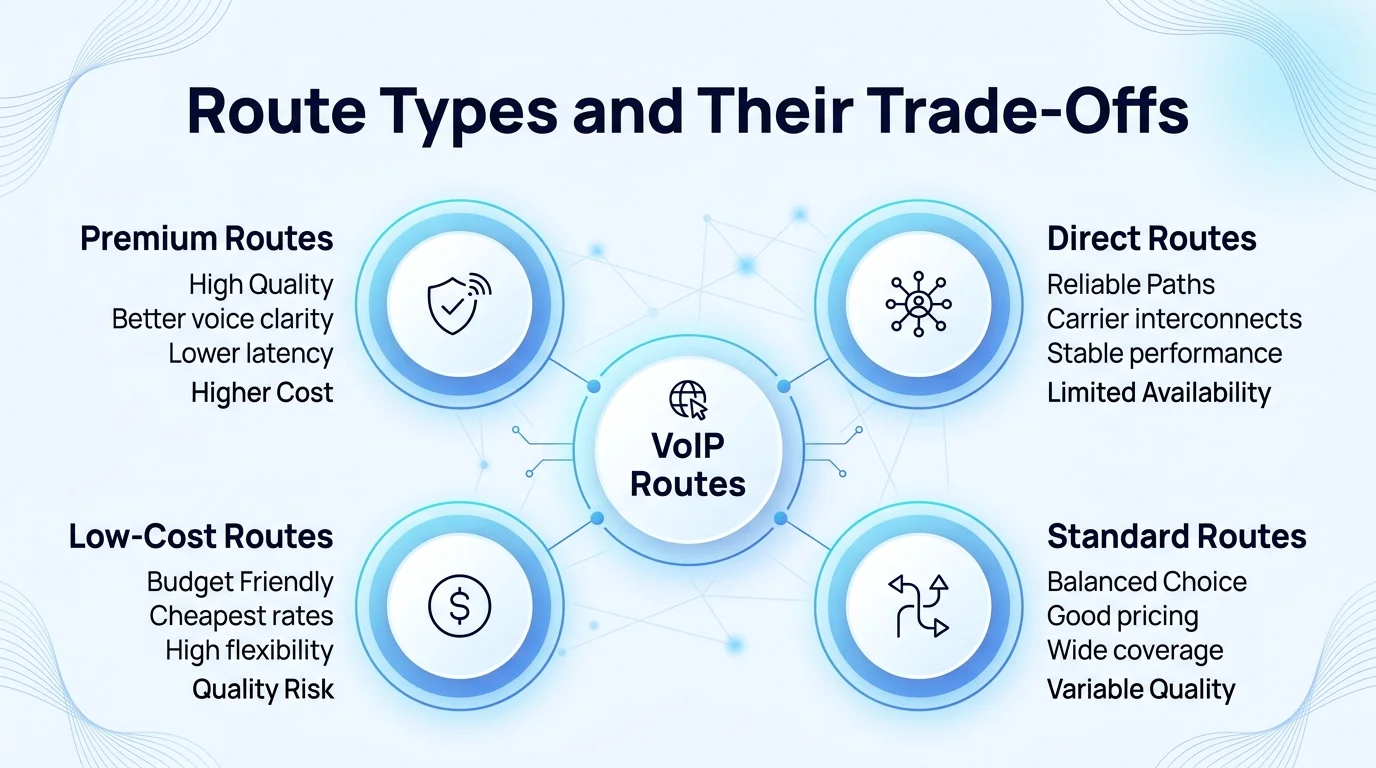
Every wholesale voice services provider organizes pricing by route type. The type selected for a destination is one of the biggest levers on both cost and quality:
- CLI (Caller Line Identification) routes pass the real originating number through to the destination. Most regulated markets require them under frameworks like the FCC's call authentication rules. They typically deliver the highest answer rates.
- Non-CLI routes strip or alter caller ID and cost less. They suit high-volume outbound traffic where the caller's number isn't operationally important. However, they face growing blocking rates as destination networks tighten anti-fraud filtering.
- CC (country-code) routes sit at the lowest price point and the lowest reliability tier. Use them only for narrow, cost-tolerant use cases.
Matching route type to traffic type is one of the highest-leverage decisions a buyer makes when using wholesale voice services. Don't default to the cheapest option across the board.
6What Drives Wholesale Voice Pricing
Destination is the largest single driver of wholesale voice pricing. US and Western European fixed-line termination often starts near $0.003–0.005 per minute. Mobile termination runs several times higher. Destinations with limited carrier competition can run five to ten times the US baseline. Route type adds another layer. CLI routes typically carry a 20–40% premium over non-CLI on the same destination. This reflects the direct interconnects and compliance overhead needed to support them.
Billing model frequently matters more than the headline rate. Take a provider that charges a lower per-minute rate but bills in six-second increments. Or take one that applies false answer supervision (charging for calls that were never actually answered). Either can produce a higher real bill than a provider with a slightly higher rate and true per-second, FAS-free billing.
7Quality Metrics That Matter
Three metrics separate a wholesale voice services provider worth paying for from one that quietly erodes margin:
- ASR (Answer Seizure Ratio) — the percentage of call attempts that result in an answered call. Premium CLI routes typically land in the 60–80% range on major destinations. Consistently lower figures signal route quality problems or carrier blocking.
- ACD (Average Call Duration) — the mean length of completed calls. It confirms that calls are genuinely connecting and holding, rather than dropping shortly after answer.
- PDD (Post-Dial Delay) — the time between the last dialed digit and the first ring. Anything over 5–6 seconds is a red flag, since most callers hang up before the delay ends.
Request live, destination-level data for all three metrics before committing meaningful volume to a provider. Do not accept blended network averages.
8How to Choose a Wholesale Voice Services Provider
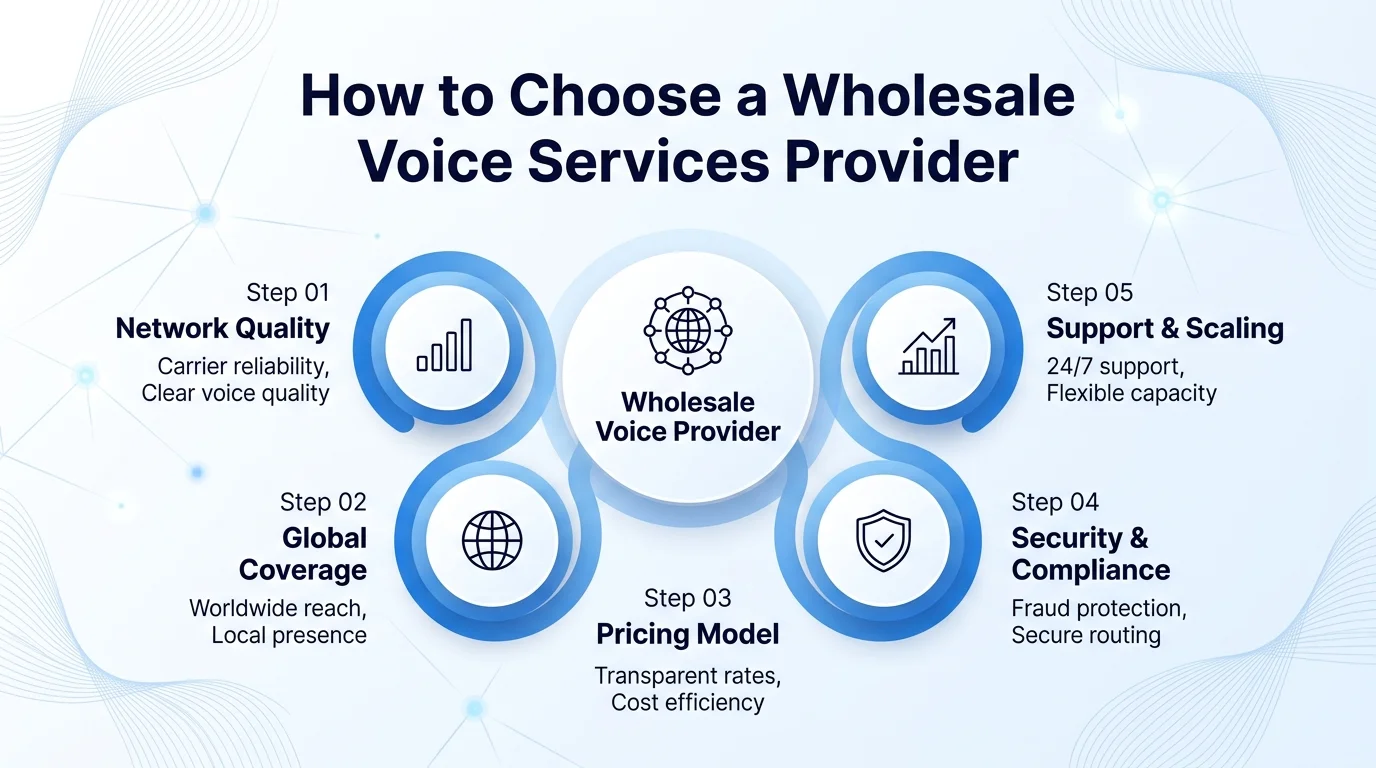
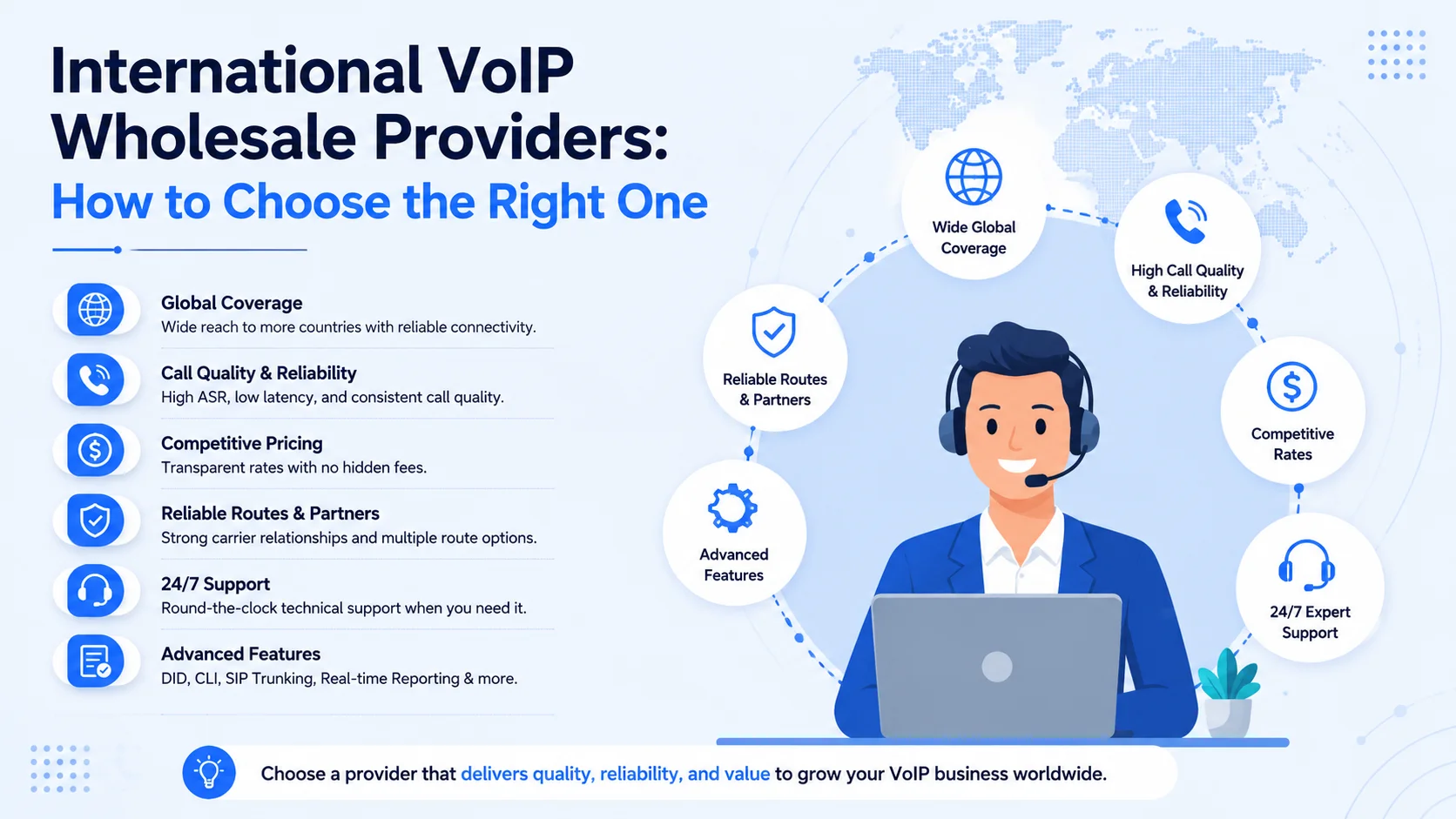
A rate sheet alone tells you almost nothing about how a provider will actually perform once real traffic is live. Evaluate against these criteria instead. Check network ownership and interconnect depth, and live ASR data by destination. Check CLI delivery policy, and current STIR/SHAKEN attestation for US-originating traffic. Look for true per-second FAS-free billing. Look for a contractual uptime SLA backed by service credits. Look for a 24/7 support model with a defined response-time commitment.
Before shifting meaningful volume, request a rate deck alongside a short live-traffic trial. Compare real-world ASR, billing accuracy, and support responsiveness directly against your existing provider. Don't rely on sales claims. Document trial results destination by destination, not as a single blended average. A provider can look strong overall while quietly underperforming on the specific corridors that matter most to your traffic mix. For a deeper look at how to evaluate routes on cost-per-completed-call, see our best VoIP routes and rates guide.
9Conclusion
Wholesale voice services are the infrastructure layer that quietly determines call quality, cost, and compliance for every business that routes meaningful call volume. That makes the provider choice a structural decision, not a routine vendor comparison. A cheaper alternative will not match a provider that owns direct interconnects and publishes real ASR data by destination. That provider also bills transparently with no hidden charges and backs its uptime with a contractual SLA. Once true cost per completed call is considered, it will consistently come out ahead. Evaluate on that basis. Run a live trial before committing volume. Revisit the comparison periodically as carrier pricing and quality shift.
10Frequently Asked Questions
What is the difference between wholesale voice termination and origination?
Termination routes outbound calls from an IP network to their destination on the PSTN or a mobile network. Origination receives inbound calls from the PSTN and delivers them to an IP endpoint. Most carriers and resellers need both services.
What is the difference between CLI and non-CLI wholesale voice routes?
CLI routes pass the caller's real number through to the destination and typically deliver the highest answer rates. Non-CLI routes strip caller ID and cost less. They suit high-volume outbound traffic where the caller's number isn't operationally important.
What is a good ASR for wholesale voice services?
On premium CLI routes to major destinations, a healthy ASR typically falls in the 60–80% range. Figures consistently below 40–50% usually point to carrier blocking, route congestion, or grey-route quality issues.
Why does billing model matter more than the headline rate?
A provider billing in six-second increments or applying false answer supervision can cost more per completed call than one with a slightly higher rate and true per-second, FAS-free billing. Always model total cost against actual traffic patterns. Don't compare headline rates alone.
How do I evaluate a wholesale voice services provider before committing volume?
Request live ASR, ACD, and PDD data by destination rather than network averages. Confirm whether interconnects are direct or resold, and verify current compliance attestation. Then run a short live-traffic trial alongside your existing provider before shifting meaningful volume.