1Introduction
A single percentage-point difference in termination cost can erase thousands of dollars in monthly margin for a calling operation. That is why businesses ranging from call centers and telecom resellers to international callback operators research VoIP minutes wholesale before signing any carrier agreement. This guide explains what wholesale VoIP minutes are, how pricing is structured, which route types suit which use case, and what quality metrics you must monitor to protect call quality.
Softtop delivers direct Tier-1 carrier connections across 150+ countries, FAS-free billing, and 99.99% platform uptime backed by a 24/7/365 NOC — giving you the tools to build a reliable, cost-efficient voice operation from day one.
VoIP minutes wholesale pricing runs $0.003–$0.01/min, saving businesses 40–70% versus retail rates. Route quality depends on CLI, Non-CLI, or CC type; always verify ASR, ACD, and PDD before committing volume. Providers with direct Tier-1 carrier access and FAS-free billing deliver the lowest effective cost per completed call.
2What Are VoIP Minutes Wholesale and Why Do Pricing Models Matter?
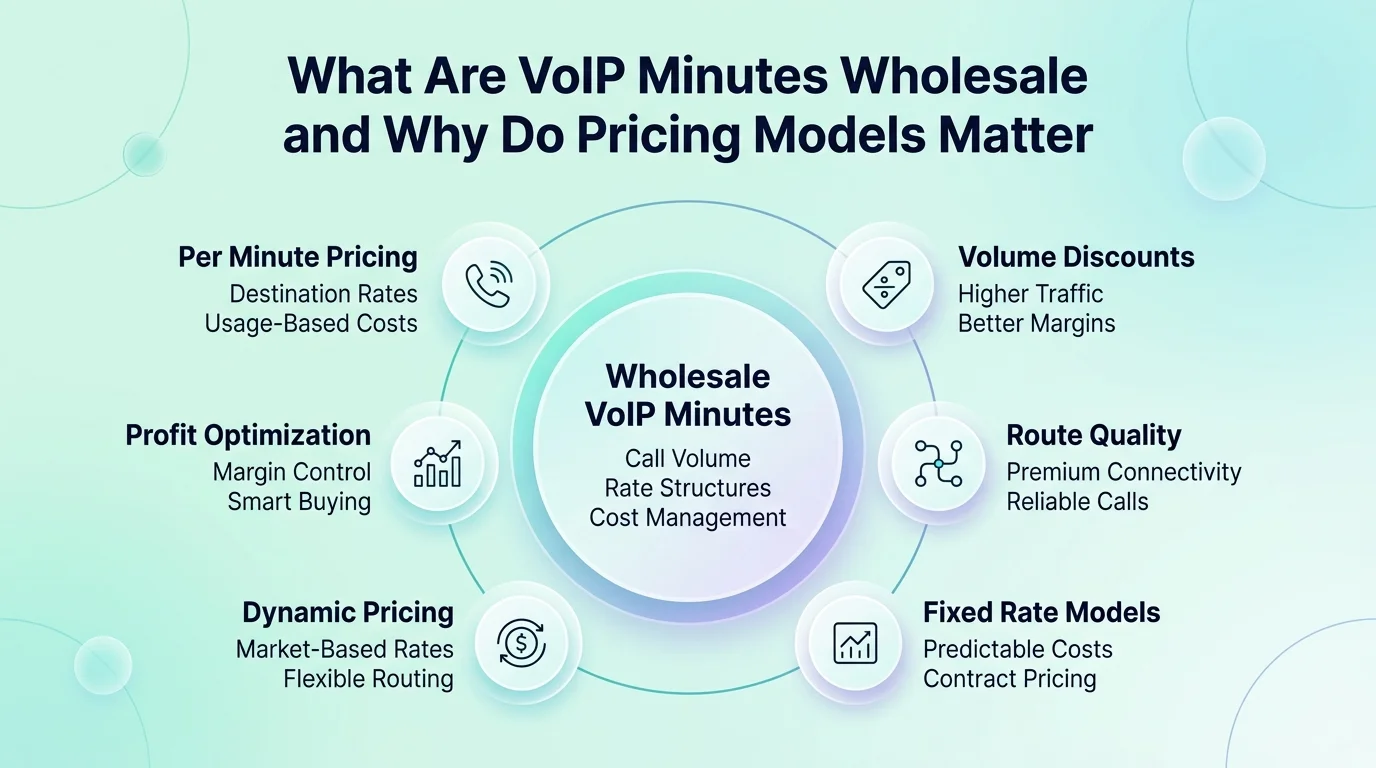
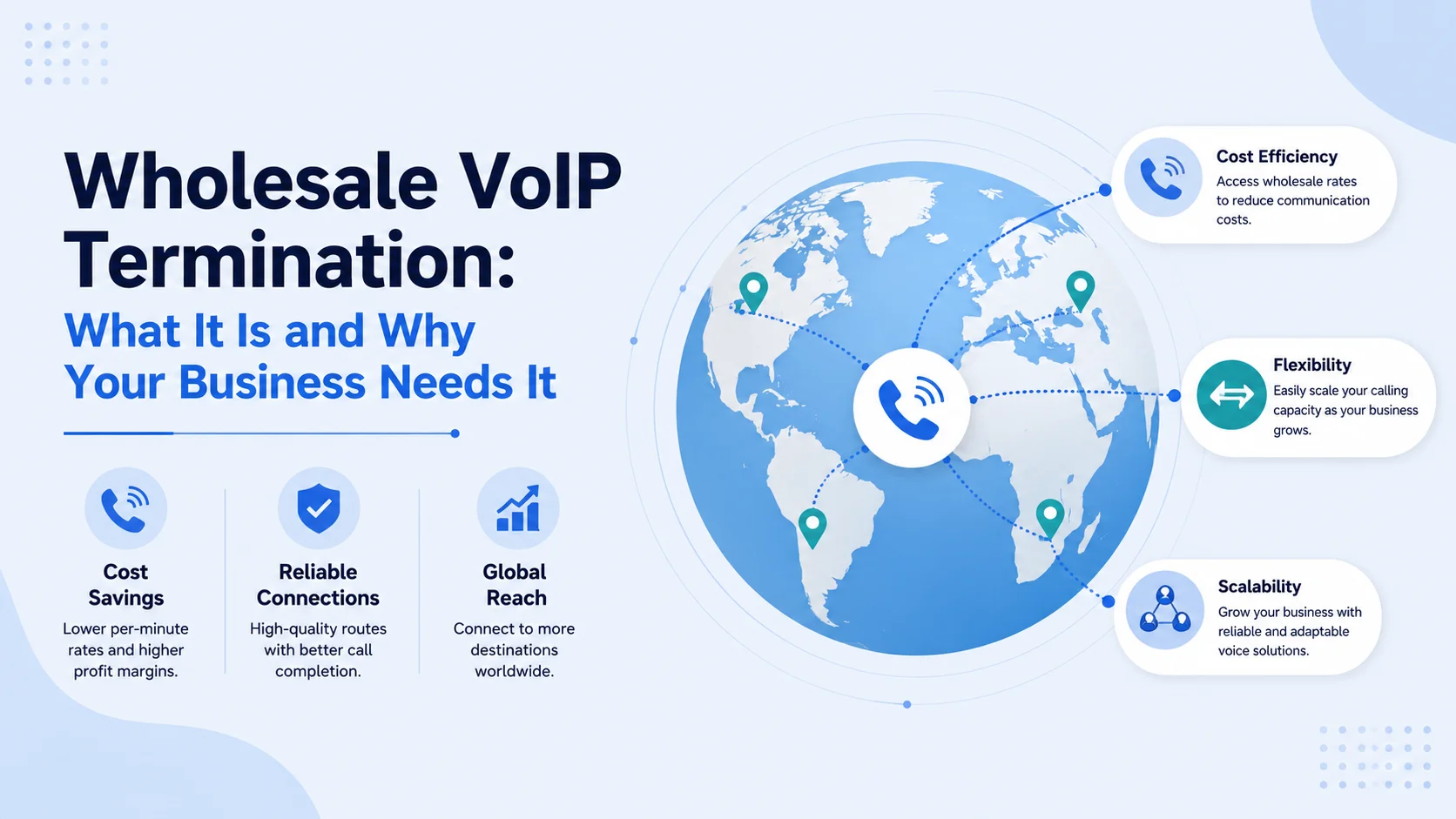
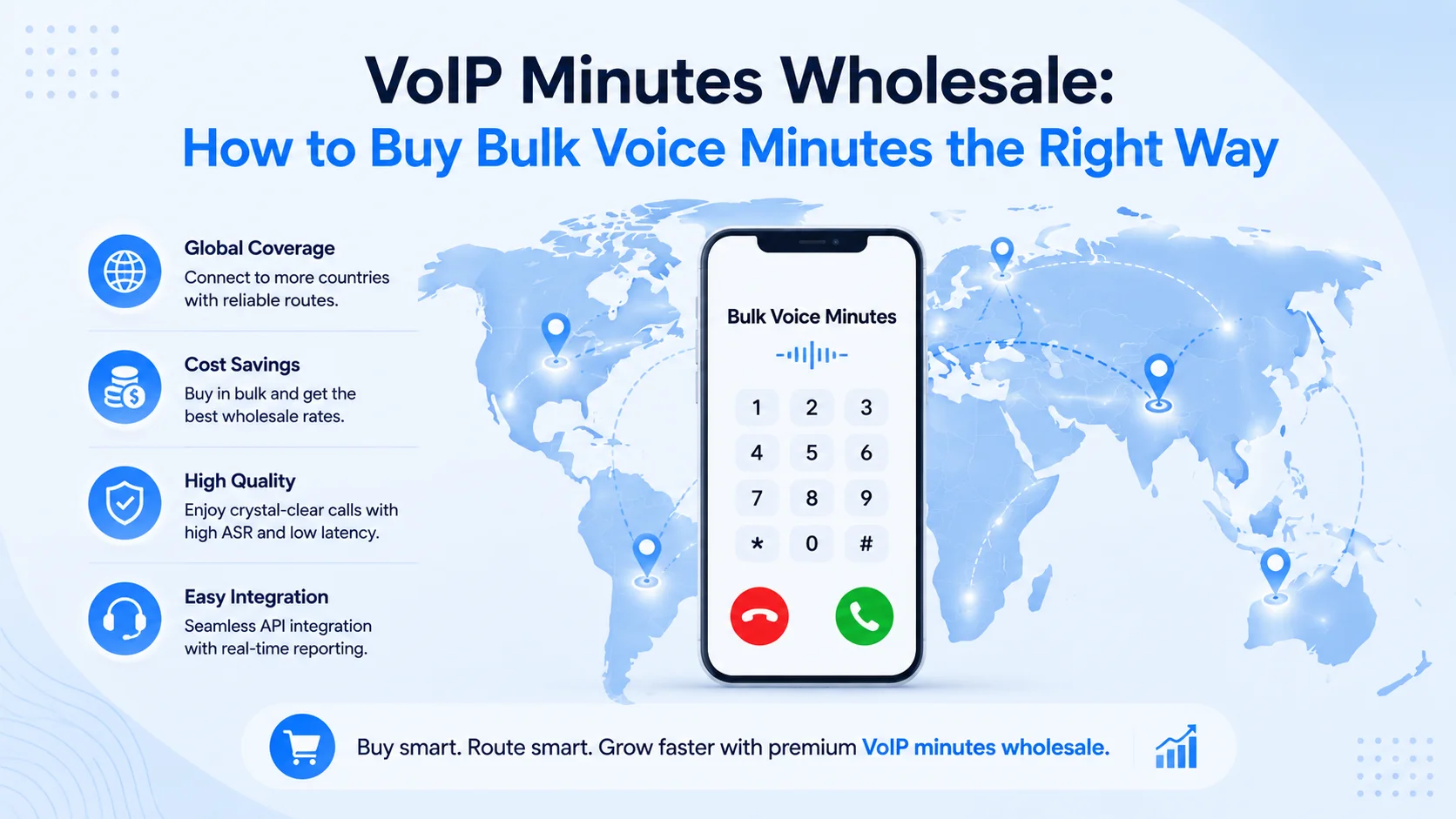
VoIP minutes wholesale refers to bulk voice traffic purchased directly from a carrier or aggregator at rates far below retail. Instead of paying per-minute retail prices, a business buys a high volume of termination minutes under a wholesale agreement, typically without per-minute minimums beyond an agreed monthly commitment.
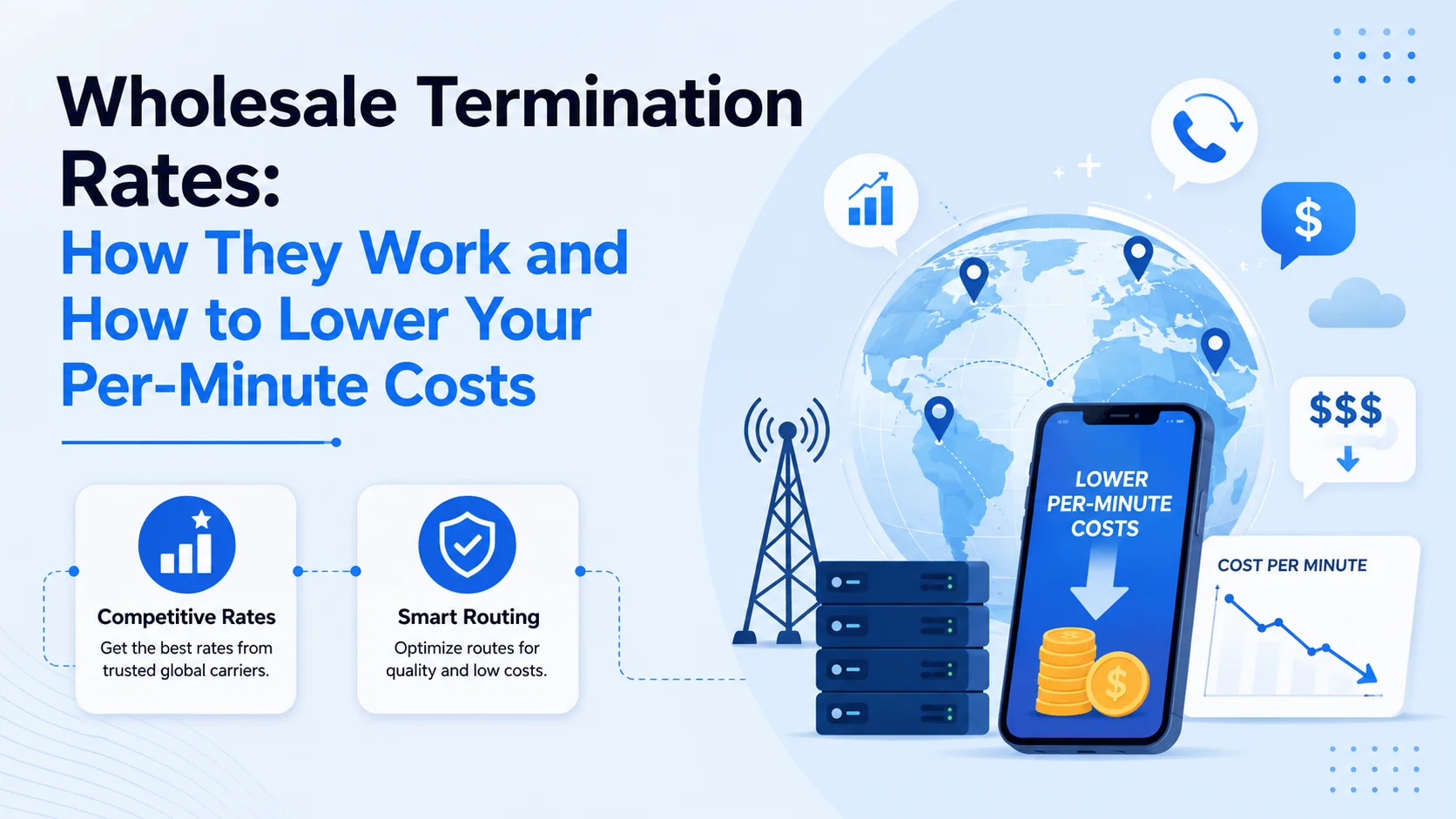
Pricing models vary. Some carriers charge flat per-minute rates across all destinations; others use tiered or volume-based structures where cost per minute drops as traffic increases. The most competitive providers publish destination-level rate decks so buyers can forecast spend precisely.
Key pricing factors to evaluate
- Rate deck transparency: Can you download a full A-Z rate sheet before signing?
- Billing increment: Per-second versus per-minute billing dramatically affects cost on short calls.
- FAS risk: False Answer Supervision inflates billed duration by counting unanswered calls as connected. FAS-free billing ensures you only pay for genuine call seconds.
Softtop's Wholesale VoIP platform offers FAS-free billing, transparent rate decks, and per-second increments — so the rate you see is the rate you pay.
3CLI, Non-CLI, and CC Routes: Choosing the Right VoIP Minute Type
Not all wholesale VoIP minutes carry the same technical profile. Route type determines whether caller ID is passed, how networks prioritize the call, and what end-user experience results.
CLI Routes
CLI routes pass the originating caller ID intact. They are preferred for business outbound calling, contact centers, and any use case where number presentation affects answer rates. CLI routes typically carry a slight premium but deliver higher ASR and better customer trust.
Non-CLI Routes
Non-CLI routes strip or replace caller ID. They suit high-volume campaigns where specific number presentation is not required and cost minimization is the primary goal.
CC (Calling Card) Routes
CC routes are optimized for prepaid calling card platforms and services that route through IVR before connecting. They balance cost with acceptable quality for that specific application. For a deeper comparison of all three, see our guide to wholesale VoIP route types.
For operations where caller ID integrity is critical, CLI routes preserve the calling number as defined in IETF RFC 3261, the foundational SIP protocol standard that governs how caller identity is carried across VoIP networks — making CLI delivery verifiable and carrier-compliant.
4Quality Metrics That Determine the True Value of Wholesale VoIP Minutes
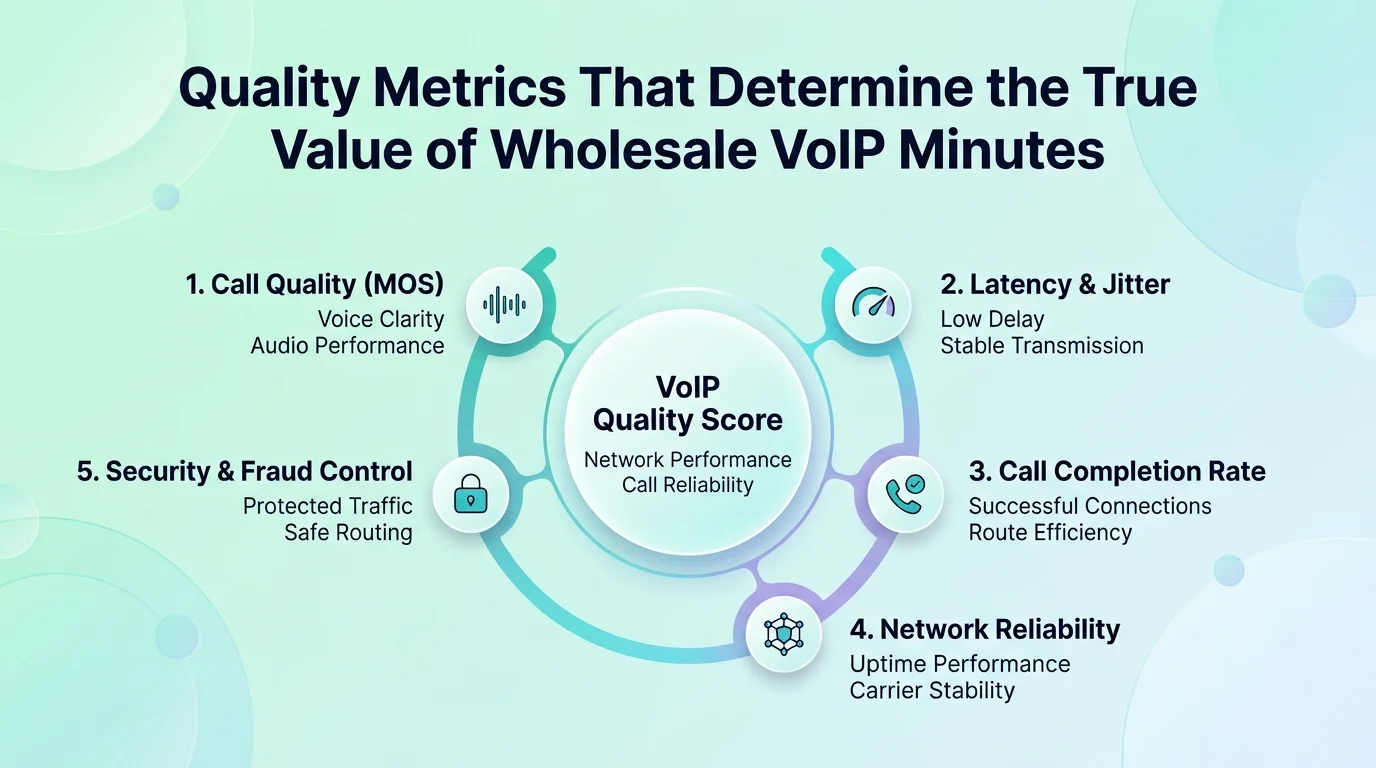
Rate alone never tells the full story. A cheap per-minute figure means nothing if calls fail to connect, audio degrades, or call duration collapses. Three metrics reveal real-world quality for any wholesale voice minute supplier.
ASR (Answer Seizure Ratio)
ASR measures the percentage of call attempts that result in a successful answer. A healthy wholesale route targets 60–80% ASR. Routes below 50% indicate network congestion, routing issues, or destination-specific problems that inflate your cost per completed call.
ACD (Average Call Duration)
ACD benchmarks expected talk time. Unusually low ACD — under 60 seconds — often signals poor audio quality or network instability causing early hangups.
PDD (Post-Dial Delay)
PDD tracks time between dialing and ringback. The ITU recommends keeping PDD under 150 ms for toll-quality voice; practical wholesale targets keep PDD below 6 seconds to prevent callers hanging up before the far end rings. Providers with direct Tier-1 infrastructure — such as Softtop's Voice Termination platform — consistently deliver lower PDD than resellers because fewer routing hops reduce end-to-end signaling delay.
How to enforce quality standards
- Request real-time ASR and ACD dashboards from your provider.
- Set automatic route failover thresholds in your softswitch.
- Test new routes with low-volume traffic before committing full capacity.
5Least Cost Routing: How LCR Reduces Your Wholesale VoIP Minute Spend
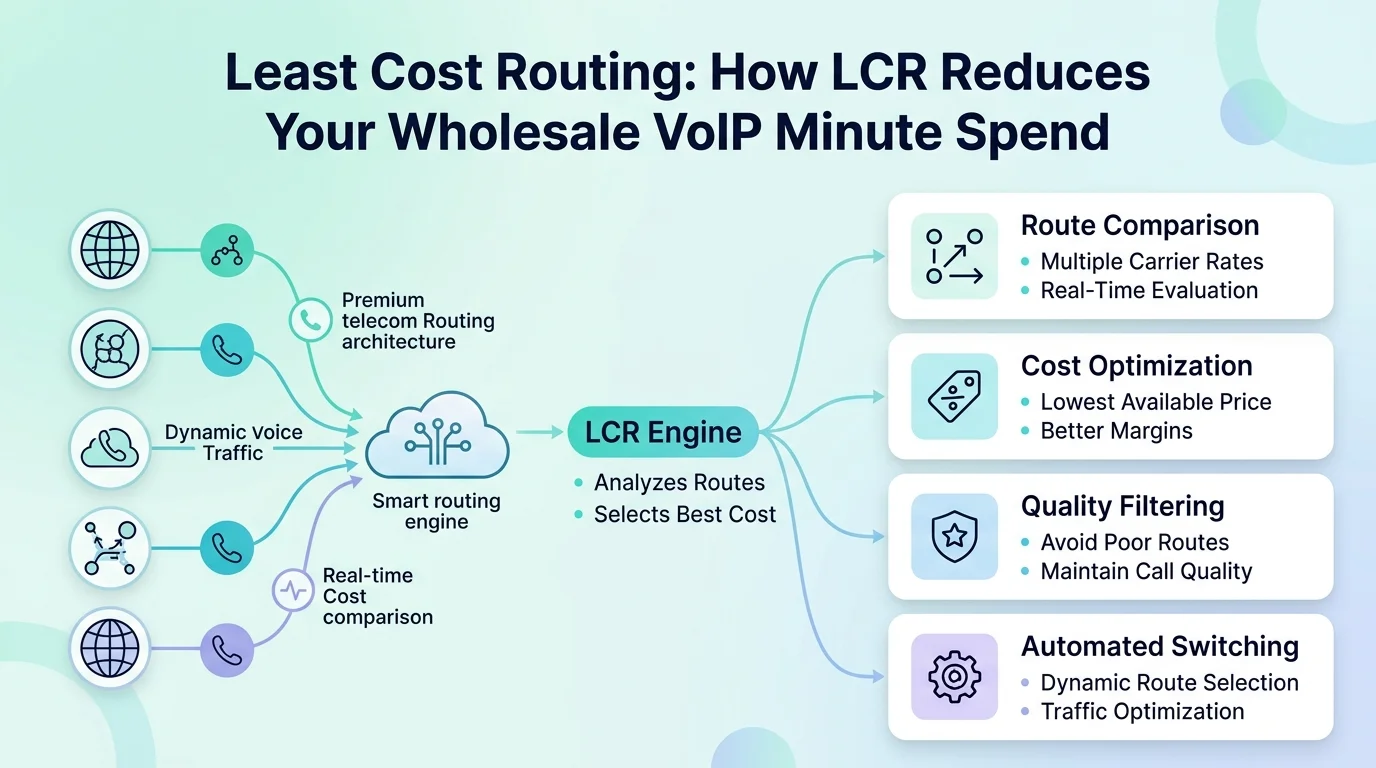
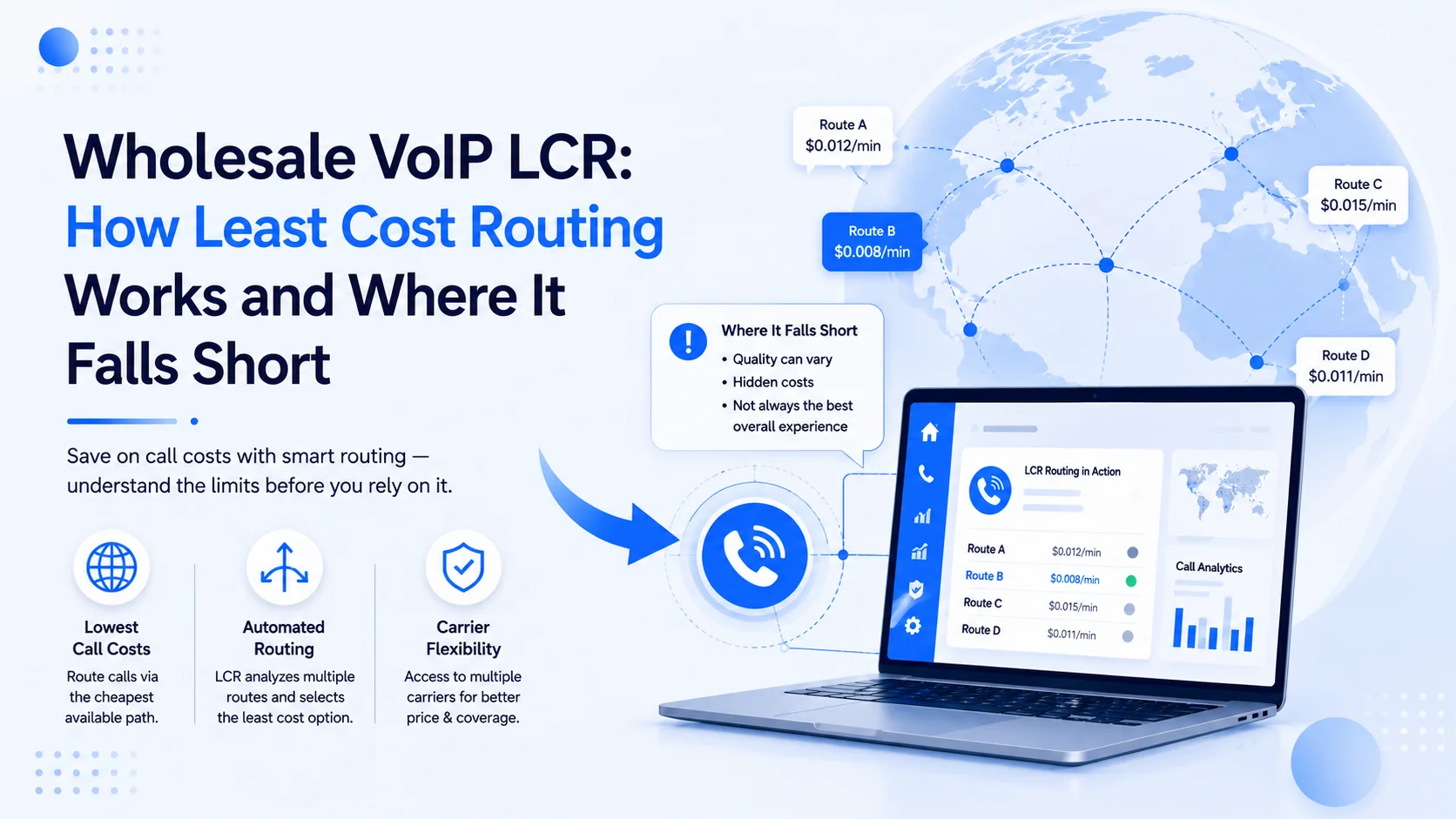
Least Cost Routing is the engine behind every efficient wholesale VoIP operation. LCR software evaluates available routes to a destination in real time, ranks them by cost while applying minimum quality thresholds, and sends each call over the cheapest route that meets your ASR and PDD requirements.
Without LCR, operators manually manage rate decks — a process that becomes unmanageable across hundreds of destinations. With LCR, the system continuously updates routing tables as rate decks change, ensuring you capture savings automatically.
LCR configuration best practices
- Define quality floors (minimum ASR, maximum PDD) before enabling cost sorting.
- Maintain at least two backup routes per destination to prevent single-carrier outages from blocking calls.
- Re-run LCR optimization daily, since carrier rates fluctuate frequently.
Softtop's SIP trunking infrastructure includes built-in LCR logic, removing the need for a separate routing engine and simplifying your wholesale stack. Routes exceeding the 150 ms one-way delay threshold should be automatically deprioritized to protect call quality.
6Key Benefits of Buying VoIP Minutes Wholesale Over Retail
The case for wholesale VoIP minutes is not purely about price per minute. The structural advantages extend to how traffic is routed, how billing is calculated, and how much visibility you have into your own voice spend. Businesses that make the switch from retail voice plans to wholesale agreements typically unlock gains across all three dimensions simultaneously.
- Cost reduction of 40–70% versus retail rates — Wholesale per-minute pricing ($0.003–$0.01/min on major routes) reflects carrier-level economics rather than the margin stack built into retail SIP trunks, UCaaS bundles, and per-seat telephony plans.
- Direct Tier-1 carrier access — Wholesale providers route traffic through direct peering agreements with Tier-1 networks, reducing the number of carrier hops between origination and termination. Fewer hops mean lower latency, better ASR, and shorter PDD compared to multi-tier reseller chains.
- Transparent, destination-level rate decks — Wholesale agreements come with published A-Z rate tables so you know the exact per-minute cost for every destination before committing traffic. Retail plans obscure this inside bundled pricing that makes overspend invisible.
- FAS-free billing eliminates phantom charges — Credible wholesale providers bill only on answered seconds, not on ring time or call seizure. Eliminating False Answer Supervision means your cost per minute reflects actual call duration rather than a carrier-inflated figure that can add 10–20% to effective cost.
- Per-second billing availability on supported routes — Where available, per-second billing removes the rounding waste of six-second increment billing. On short-call traffic — IVR lookups, verification calls, SMS fallback — this can reduce billed duration by 15–25% compared to six-second increment plans.
- Scalable volume without per-seat caps — Wholesale agreements price on traffic volume, not on the number of seats or concurrent call channels. As your call volume grows, cost per minute falls rather than remaining flat or rising with seat additions.
- 150+ country reach under a single provider relationship — A wholesale agreement with a provider offering direct global reach eliminates the need to manage separate carrier contracts per region, reducing administrative overhead and removing inter-provider quality handoff risks.
- SLA-backed uptime and quality guarantees — Enterprise wholesale providers commit to platform uptime (99.99% is industry standard) and support SLAs that retail plans rarely match. Downtime compensation is contractual, not discretionary.
Taken together, these advantages compound. Lower per-minute cost combined with FAS-free billing, per-second increments, and Tier-1 routing produces an effective cost per completed call that retail pricing structures simply cannot match at scale. The larger the monthly volume, the wider that gap becomes.
7How to Evaluate and Switch Wholesale VoIP Minute Providers Without Downtime
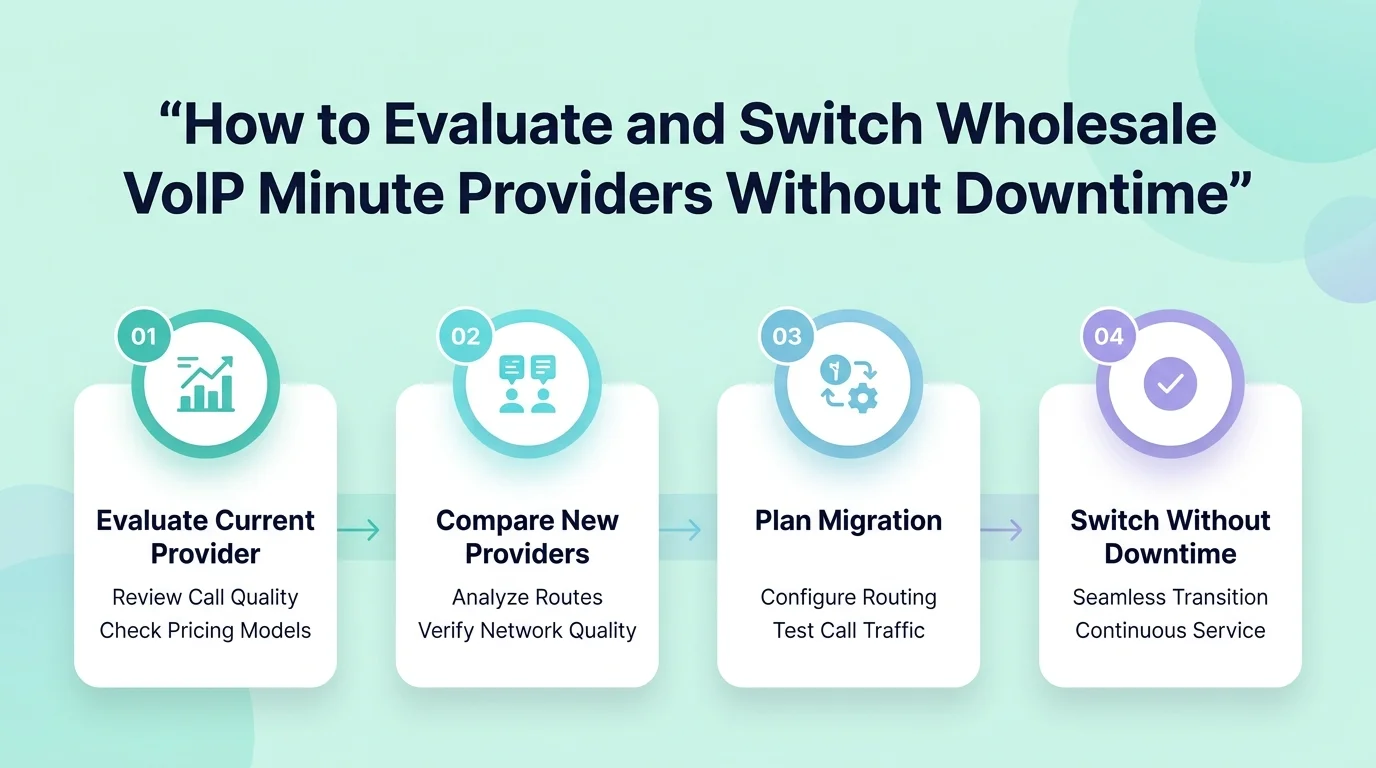
Switching carriers mid-operation is a legitimate concern. Poorly planned transitions cause dropped calls, missed SLAs, and revenue loss. A structured evaluation-and-migration process protects continuity.
Step 1 — Request a trial allocation
Any credible wholesale VoIP minutes provider will supply a test block of minutes across target destinations before requiring a financial commitment. Use this to measure ASR, ACD, and PDD against your current carrier.
Step 2 — Run traffic in parallel
Add the new provider as a secondary route in your softswitch. Gradually shift percentage of traffic (10%, 25%, 50%) while monitoring quality metrics at each threshold.
Step 3 — Validate billing accuracy
Compare CDRs from your softswitch against the provider's billing portal. Discrepancies in call duration indicate FAS or billing increment issues that erode your margins silently.
Step 4 — Confirm compliance posture
For US-originated traffic, verify that the provider is STIR/SHAKEN compliant. Non-compliant carriers increase the risk of calls being labeled as spam by terminating networks, reducing your effective ASR even on clean routes. Softtop maintains STIR/SHAKEN compliance for US traffic and provides real-time CDR access so billing audits are straightforward.
8Conclusion
Buying VoIP minutes wholesale is one of the highest-leverage decisions a calling operation makes. The difference between a well-negotiated wholesale agreement and a retail voice plan routinely exceeds 40–70% in per-minute cost. But rate alone is not the metric to optimize — route type, FAS-free billing, and measurable quality benchmarks like ASR, ACD, and PDD determine your true cost per connected call.
Softtop's wholesale voice platform covers 150+ countries through direct Tier-1 carrier connections, supported by 99.99% platform uptime and a 24/7/365 NOC. Whether you need CLI routes for business outbound, Non-CLI for high-volume campaigns, or CC routes for calling card services, the infrastructure and transparent pricing are ready. Start with a trial, measure the metrics, and build your routing stack on verified performance.
9Frequently Asked Questions
What is the minimum volume required to access wholesale VoIP minutes pricing?
Minimum volume thresholds vary by provider. Some carriers require monthly traffic commitments of several thousand minutes; others offer wholesale rates from the first minute with no commitment floor. Softtop structures agreements to accommodate both growing operators and established high-volume carriers without forcing rigid minimums.
How are wholesale VoIP minutes billed — per second or per minute?
Billing increments vary. Per-minute billing rounds every call up to the nearest full minute, which inflates cost on short calls. Per-second billing charges only for actual call duration. Always confirm the billing increment in your rate agreement, as it significantly affects your effective cost per completed call across high call volumes.
What is FAS, and why does FAS-free billing matter for VoIP minutes wholesale?
False Answer Supervision occurs when a carrier marks a call as answered — and starts billing — before a human actually picks up. This inflates billed minutes without delivering value. FAS-free billing guarantees you only pay for genuine answered call seconds, making your per-minute cost accurately reflect real business conversations delivered.
Can I use wholesale VoIP minutes for international termination?
Yes. Most wholesale providers offer international termination across major global destinations. Quality and pricing vary significantly by country. Verify that your provider offers direct Tier-1 routes — not resold capacity — to key destinations, and request destination-level ASR data before committing volume to international routes.
What is the difference between CLI and Non-CLI wholesale VoIP routes?
CLI routes pass the caller's phone number to the receiving party, supporting number presentation and improving answer rates. Non-CLI routes suppress or replace caller ID, reducing cost but sacrificing number identity. Choose CLI routes when presentation affects business outcomes and Non-CLI routes when cost minimization on anonymous outbound campaigns is the priority.