1Introduction
Every minute, over 15 billion minutes of international voice traffic traverse the globe — and the carriers routing that traffic rely on a tight network of international VoIP wholesale providers to keep calls connected, clear, and competitively priced. Choose the wrong partner and you pay for it in dropped calls, inflated termination costs, and churned customers. Choose well and you unlock the margins that make a wholesale voice business genuinely profitable.
The global VoIP market is projected at $195.39 billion in 2026, with the wholesale voice segment valued at $44.53 billion and growing at 10.58% CAGR toward $73.63 billion by 2031. Softtop's carrier-grade infrastructure spans 150+ countries with 99.9% uptime — making it a reference point worth benchmarking every other provider against.
International VoIP wholesale providers vary widely on route quality (ASR/PDD), country coverage, and pricing models — the wrong choice costs margin and customer trust. CLI, non-CLI, and CC routes serve different use cases; matching route type to traffic profile is the single biggest lever on call quality. Softtop offers wholesale VoIP services, CLI routes, and SIP trunking across 150+ countries with direct carrier connections.
2What "Wholesale VoIP" Actually Means
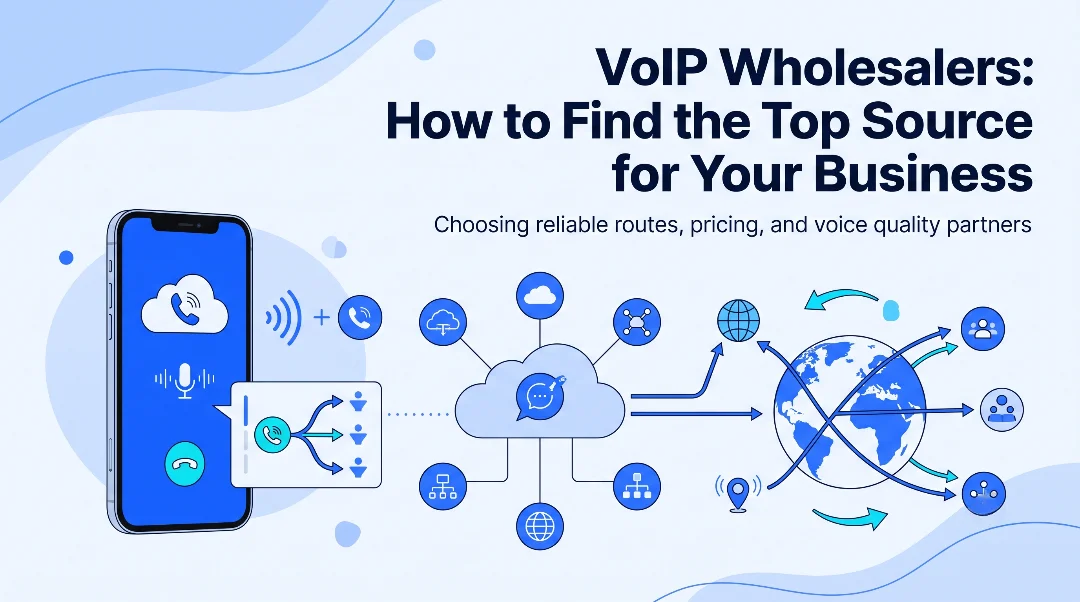
Wholesale VoIP is the bulk buying and selling of voice termination capacity between carriers, resellers, and aggregators. Instead of negotiating individual agreements with hundreds of national carriers, a wholesale buyer routes traffic through a provider that has already built those interconnects.
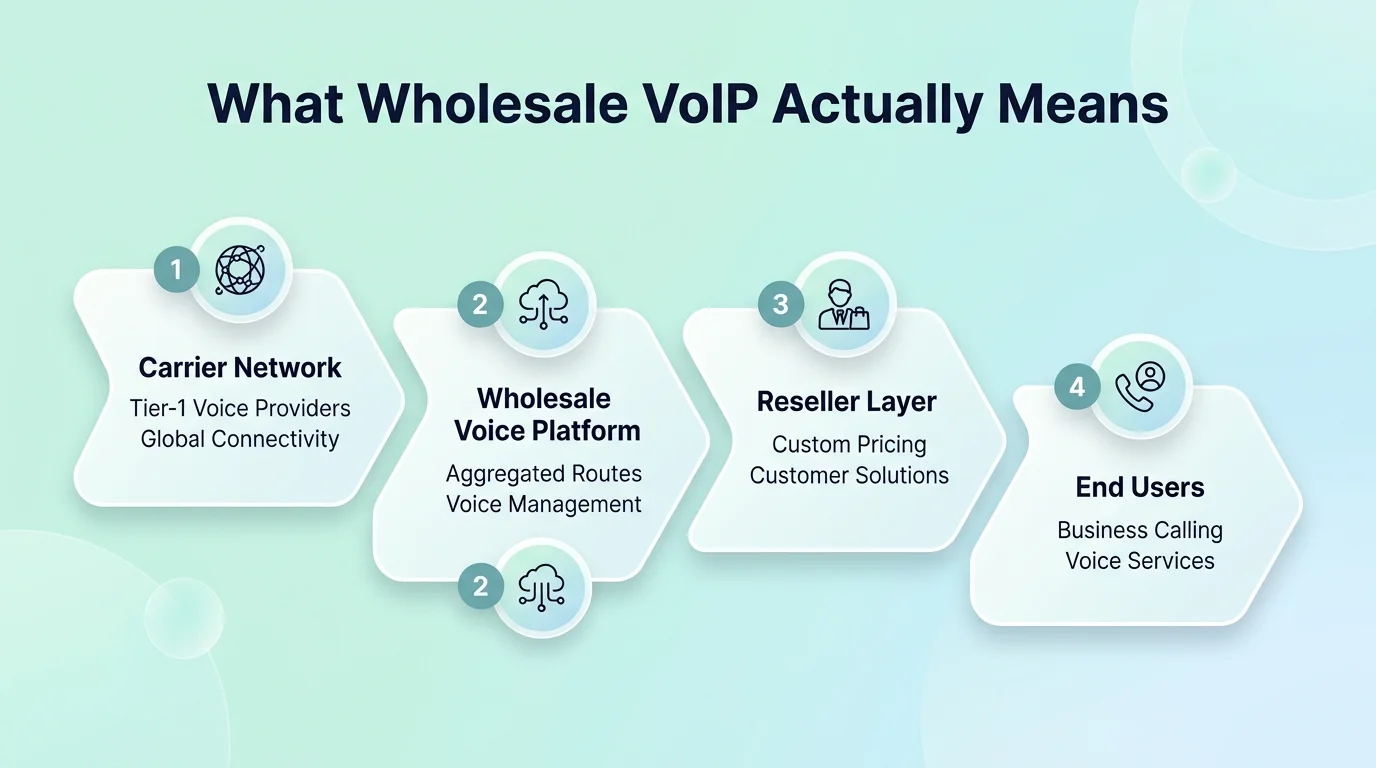
The Three Parties in Every Wholesale Deal
- Originating carrier — owns the customer relationship and the local loop.
- Wholesale provider — aggregates routes, manages LCR (Least Cost Routing), and provides SIP peering or physical interconnect.
- Terminating carrier — delivers the call to the called party's device on the public switched or VoIP network.
Why It Matters for Margin
Resellers using white-label VoIP models consistently report 50–70% margins because the wholesale layer absorbs the complexity of carrier interconnect, fraud prevention, and rate management. That spread is only available when your wholesale provider's rates are competitive and route quality is high. Softtop's wholesale VoIP services aggregate CLI, non-CLI, and CC routes across 150+ countries under a single SIP interconnect — with wholesale VoIP rates published per destination prefix for full transparency.
The economics make the selection decision consequential: a 0.001 USD/minute difference on a route carrying 10 million minutes per month is $10,000 — positive or negative depending on which direction you negotiate.
3Route Types: CLI, Non-CLI, and CC Routes Explained
Not all routes are equal, and not all traffic needs the same grade of route. Understanding the distinction is the foundation of any smart procurement strategy.
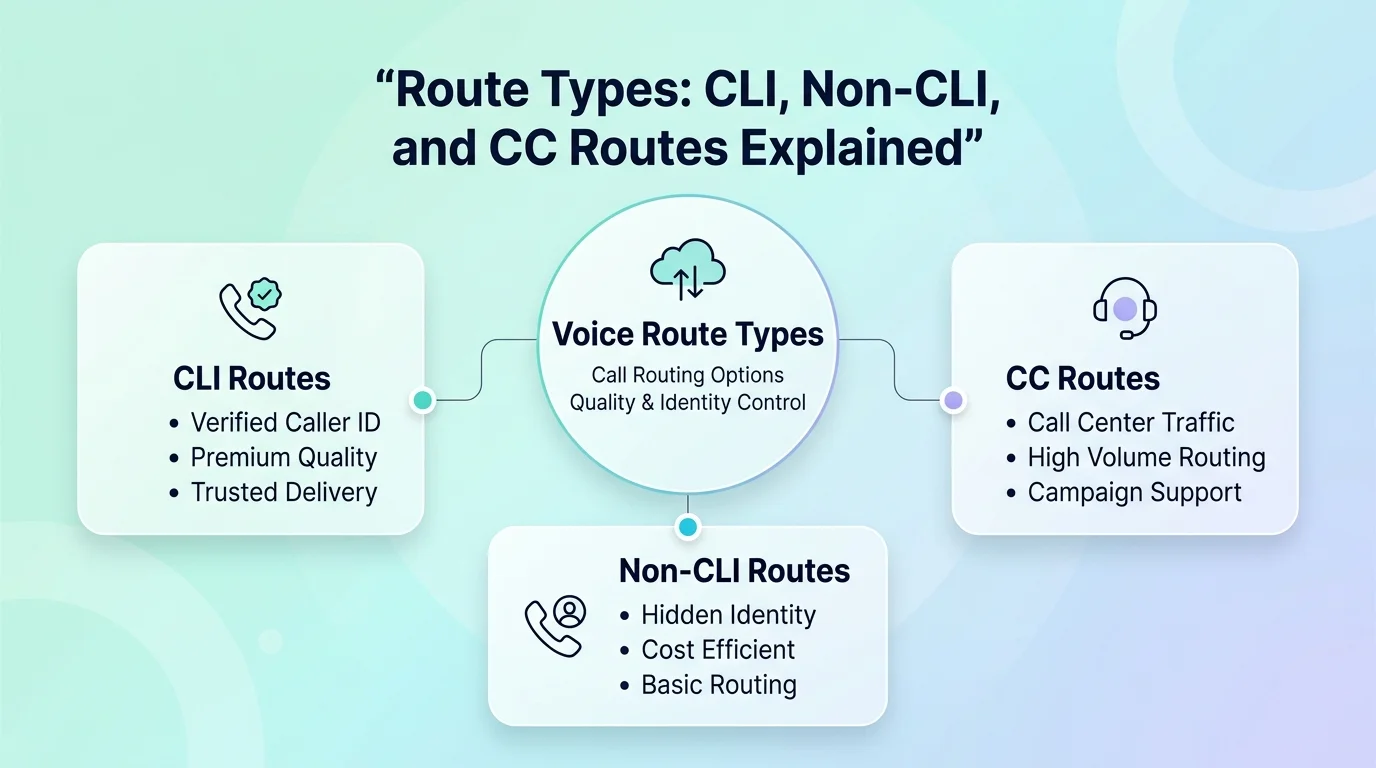
CLI Routes (Calling Line Identification)
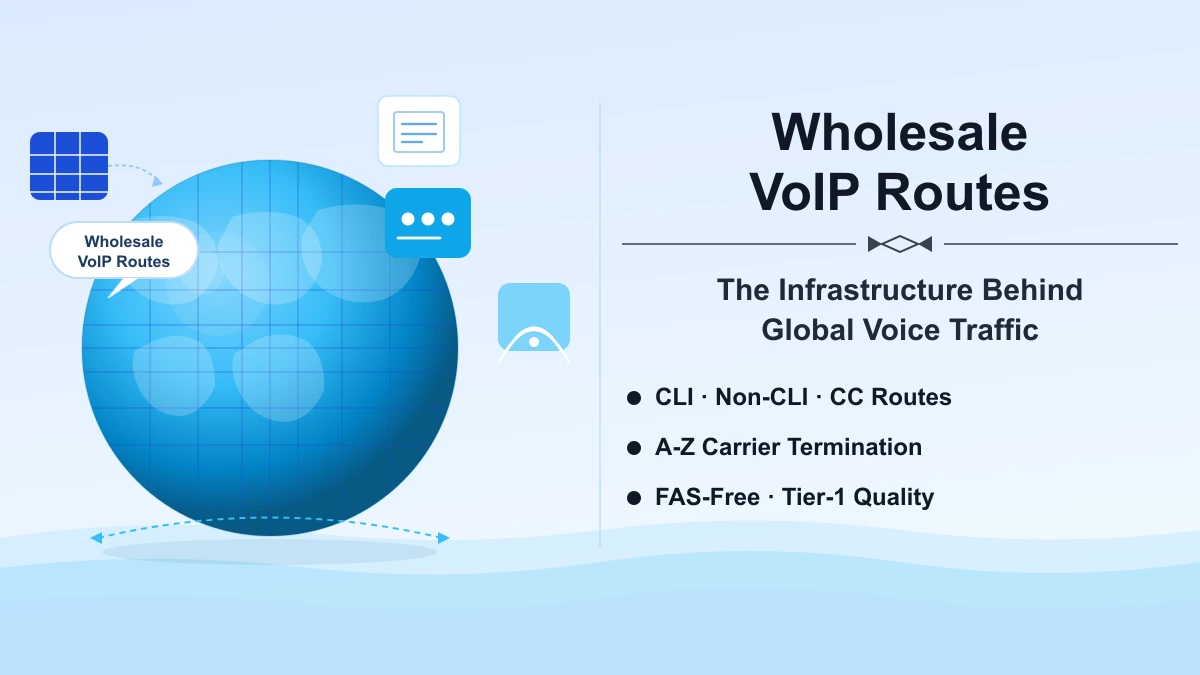
CLI routes pass the caller's number to the terminating network intact, so the called party sees a valid caller ID. These routes command premium rates but deliver the highest Answer Seizure Ratio (ASR) and the shortest Post-Dial Delay (PDD). They are mandatory for enterprise voice and contact centers. All international number prefixes are governed by the ITU-T E.164 numbering plan, which defines how every country code and subscriber number must be formatted for global CLI delivery.
Non-CLI Routes
Non-CLI routes do not guarantee caller ID delivery. They are well-suited for bulk notification traffic, OTP delivery, and anonymous calling card services where price per minute matters more than identity presentation. The tradeoff is a lower ASR on networks that screen for CLI validity — the same carrier-side screening that causes some numbers to fail app-side SMS verification checks on the receiving end.
CC Routes (Calling Card Routes)
CC routes are optimized for calling card platforms and high-volume consumer traffic. They sit between CLI and non-CLI on quality and price, with LCR engines automatically selecting the cheapest path that meets a minimum ASR threshold. Matching route type to traffic profile — rather than defaulting to the cheapest option across the board — is the single biggest operational lever available to a wholesale buyer.
4Key Selection Criteria for International VoIP Wholesale Providers
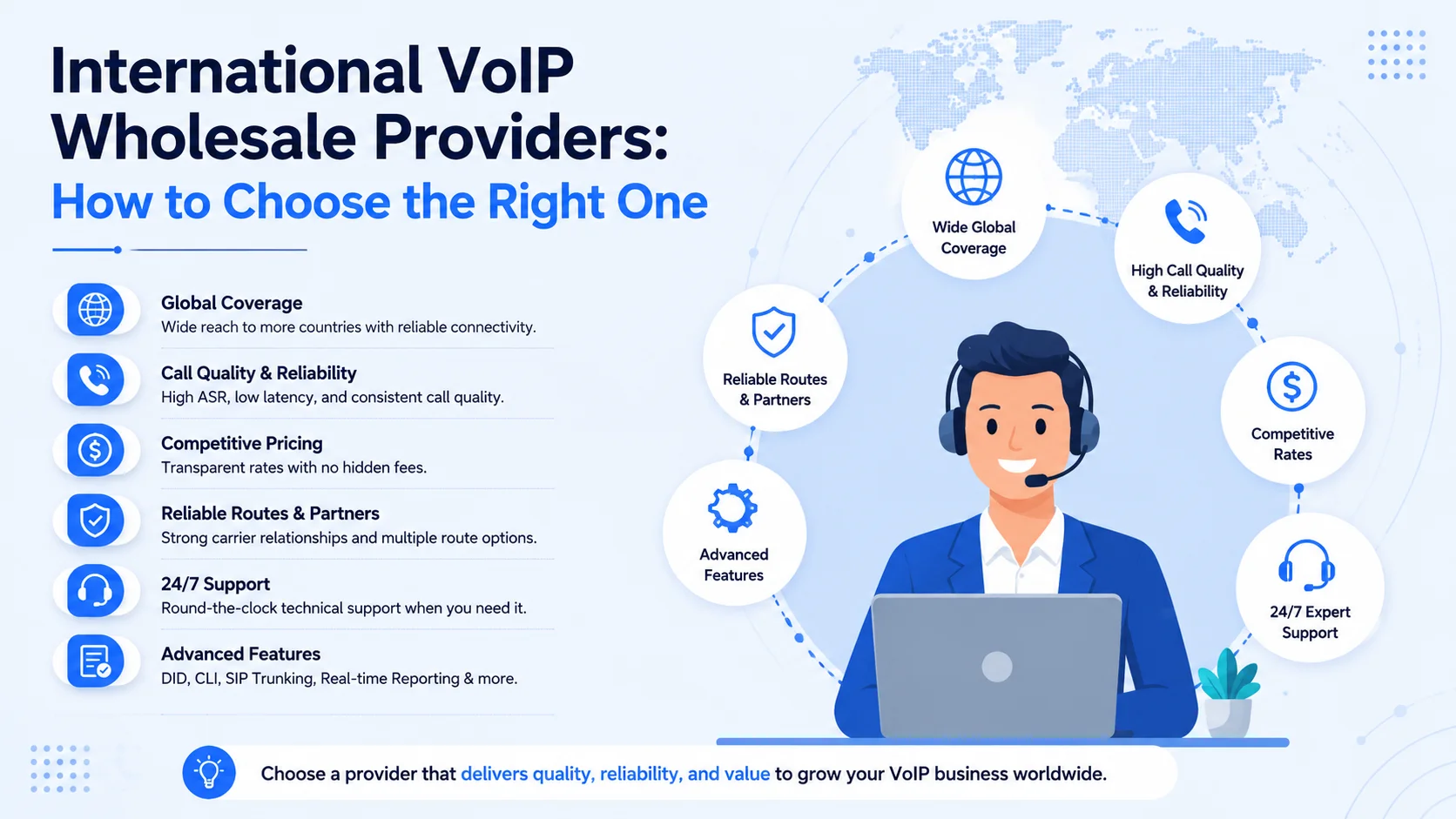
With dozens of providers competing for wholesale contracts, a structured evaluation framework prevents decisions based on headline rate cards alone.
1. Route Quality Metrics: ASR and PDD
ASR (Answer Seizure Ratio) measures the percentage of call attempts that result in a live answer. PDD (Post-Dial Delay) measures the time between dialing and the first ring. Both are real-time indicators of route health. A provider that publishes live NOC dashboards and contractually guarantees minimum ASR per destination is more trustworthy than one that offers low rates with no quality SLA.
2. Country and Destination Coverage
A-Z termination — routing to every dialed destination globally — matters for carriers serving multinational customers. Gaps in coverage force secondary provider relationships and complicate billing reconciliation. Evaluate both breadth (number of countries) and depth (mobile vs. landline split, premium numbers, geographic numbers).
3. Pricing Model and Rate Transparency
Per-minute billing, tiered volume discounts, and flat-rate bundles each suit different traffic profiles. Watch for billing increments (6-second vs. 60-second) and rounding conventions — these affect effective rate as much as the headline per-minute price.
4. API Access and Automation
Modern voice termination business operations run rate deck updates, CDR reconciliation, and route failover through APIs. A provider without documented REST or XML-RPC APIs forces manual processes that do not scale.
5. Fraud Prevention and Security
Toll fraud on international routes — particularly IRSF (International Revenue Share Fraud) — can generate five- and six-figure losses overnight. Evaluate whether your provider offers real-time traffic anomaly detection, per-destination spending caps, and rapid route blocking. ITU-T E.164 numbering compliance and GSMA wholesale interconnection standards provide the baseline frameworks providers should follow.
5Understanding VoIP Wholesale Rates and Pricing Structures
VoIP wholesale rates are published in rate decks — spreadsheets or API-accessible databases listing price per minute by destination prefix. Reading a rate deck accurately is a skill that separates experienced buyers from those who over-pay.
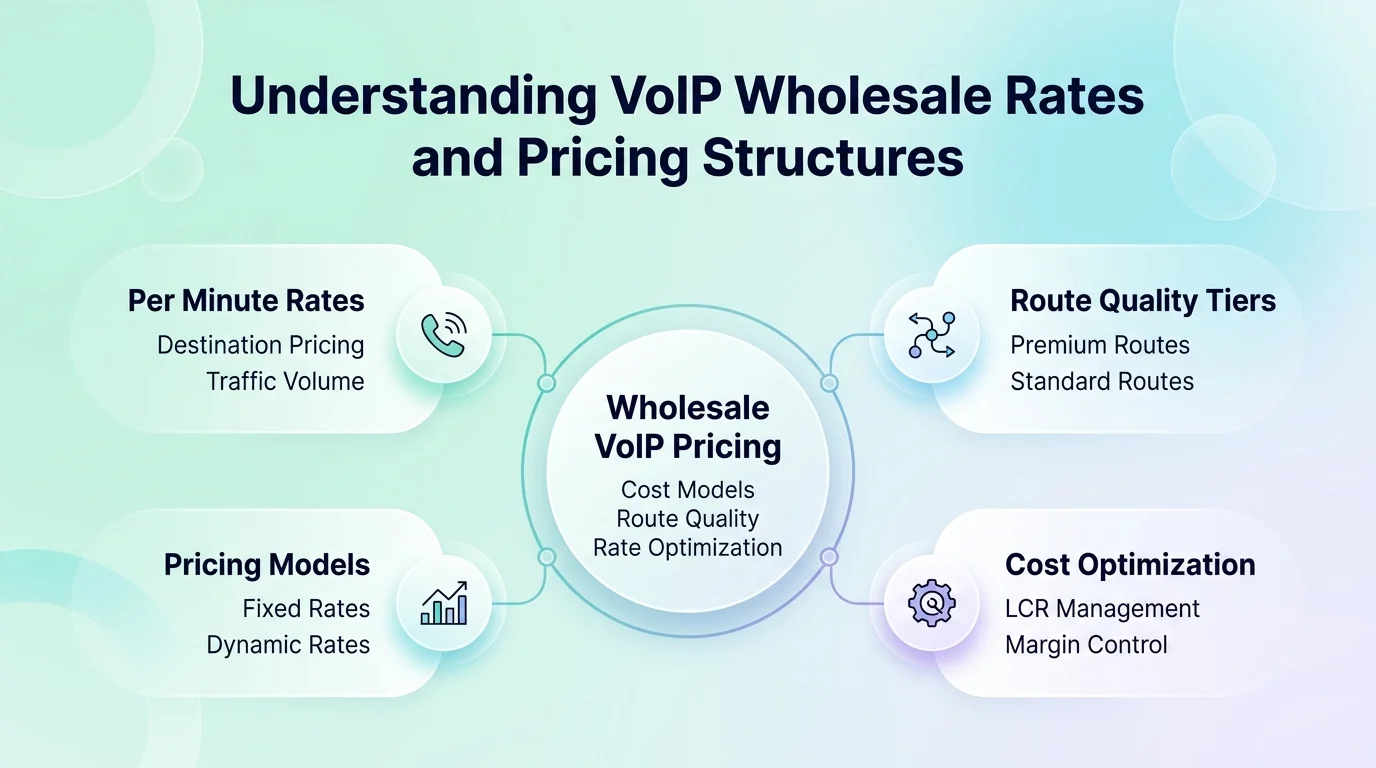
Rate Deck Anatomy
Each row in a rate deck typically includes: destination country, prefix (ITU-T E.164 format), rate per minute, effective date, and billing increment. Some providers publish separate CLI and non-CLI columns; others require negotiation for premium route access.
Hidden Cost Vectors
- Billing increment — a 60-second minimum on short-duration calls (average 45 seconds) effectively inflates your rate by 33%.
- Surcharges — premium numbers, satellite destinations, and directory assistance carry surcharges not visible in the base rate deck.
- Currency fluctuation — USD-denominated contracts insulate against local currency volatility but expose buyers to forex risk when revenue is in another currency.
Comparing effective cost-per-minute across providers — accounting for increment, surcharges, and expected call duration — gives a cleaner picture than comparing headline rates alone. Softtop's call termination services publish transparent per-minute rates by destination prefix, with no surcharges hidden from the base rate deck.
6SIP Trunking vs. Traditional Carrier Interconnect
SIP-based carrier interconnect has largely displaced TDM for wholesale traffic over the past decade, but the choice between SIP peering models still carries operational consequences. The GSMA wholesale interconnection standards define the technical and commercial baseline that serious international providers must meet for direct peering.
Direct SIP Peering
Direct peering between two carriers — exchanging traffic over private IP links at a shared Point of Presence (PoP) — offers the lowest latency and highest quality. It requires technical coordination, IP whitelisting, and ongoing NOC communication, but eliminates intermediate hops that degrade ASR and increase PDD.
Managed SIP Trunking
Managed SIP trunking through an aggregator trades some margin for operational simplicity. The aggregator handles routing intelligence, failover, and rate management — often the right call for resellers without dedicated network engineering staff.
Codec Considerations
G.711 (uncompressed, 64 kbps) delivers the highest voice quality and is preferred for enterprise and contact center traffic. G.729 (compressed, 8 kbps) reduces bandwidth cost on high-volume routes where audio fidelity is secondary. Most enterprise-grade voice termination routes support both, with codec negotiation handled at the SIP INVITE level.
7What to Look for in a Global Voice Termination Service
Global voice termination service quality is ultimately measured at the endpoint — whether calls complete, how they sound, and how reliably the service performs during peak traffic periods.
Infrastructure Redundancy
Providers with multiple geographically distributed PoPs can re-route traffic around network outages without call drops. Single-PoP providers create a single point of failure that no SLA language can fully compensate for.
SLA and Uptime Guarantees
A 99.9% uptime SLA allows a maximum of 8.76 hours of downtime per year. Hold wholesale providers to at least this standard, with contractual credits tied to verified downtime events.
Onboarding and Technical Support
The quality of the onboarding process — provisioning timelines, documentation, NOC responsiveness — predicts the quality of ongoing support. Providers completing SIP trunk provisioning in under 24 hours with documented API credentials are structurally more capable than those running manual, email-based provisioning. Evaluating a provider's voice termination routes against these infrastructure criteria — not just the rate card — produces partnerships that hold up under operational pressure.
8Conclusion
Choosing among international VoIP wholesale providers is a decision that compounds over time. A provider with competitive VoIP wholesale rates but poor route quality or unreliable uptime costs more in the long run than one with slightly higher rates and a robust carrier infrastructure.
The market is growing fast — from $44.53 billion in 2026 to a projected $73.63 billion by 2031 — which means your provider's capacity to scale with your traffic is as important as today's rate card. Evaluate route type alignment, ASR/PDD SLAs, coverage depth, API capabilities, and fraud prevention before signing any interconnect agreement. Softtop's global voice termination service covers 150+ countries with direct carrier connections, multiple PoPs, and transparent pricing across CLI, non-CLI, and CC routes.
9Frequently Asked Questions
What is the difference between CLI and non-CLI routes in wholesale VoIP?
CLI (Calling Line Identification) routes pass the caller's number to the destination network, resulting in higher answer rates and better call completion. Non-CLI routes do not guarantee caller ID delivery and are typically used for bulk, anonymous, or notification traffic where cost per minute is the primary consideration. CLI routes cost more but deliver measurably better ASR.
How do I evaluate VoIP wholesale rates accurately?
Compare effective cost-per-minute rather than headline rates. Factor in billing increment (6-second vs. 60-second minimum), surcharges for premium or satellite destinations, and your expected average call duration. A provider billing in 60-second increments on calls averaging 45 seconds charges a 33% effective premium over the stated per-minute rate.
What ASR should I expect from a quality international VoIP wholesale provider?
ASR benchmarks vary by destination, but a quality provider should deliver 60–80%+ ASR on major international routes with CLI traffic. Mobile termination typically runs lower than fixed-line. Any provider unwilling to publish destination-level ASR statistics or provide live NOC data should be evaluated cautiously.
Is SIP trunking the same as wholesale VoIP?
SIP trunking is the transport mechanism — the protocol-level connection between your switch and the provider's network. Wholesale VoIP is the commercial arrangement for bulk voice termination capacity. Most wholesale VoIP is delivered over SIP trunks today, but SIP trunking can also refer to enterprise PBX connectivity, which is a different use case with different QoS requirements.
What is A-Z termination in wholesale voice?
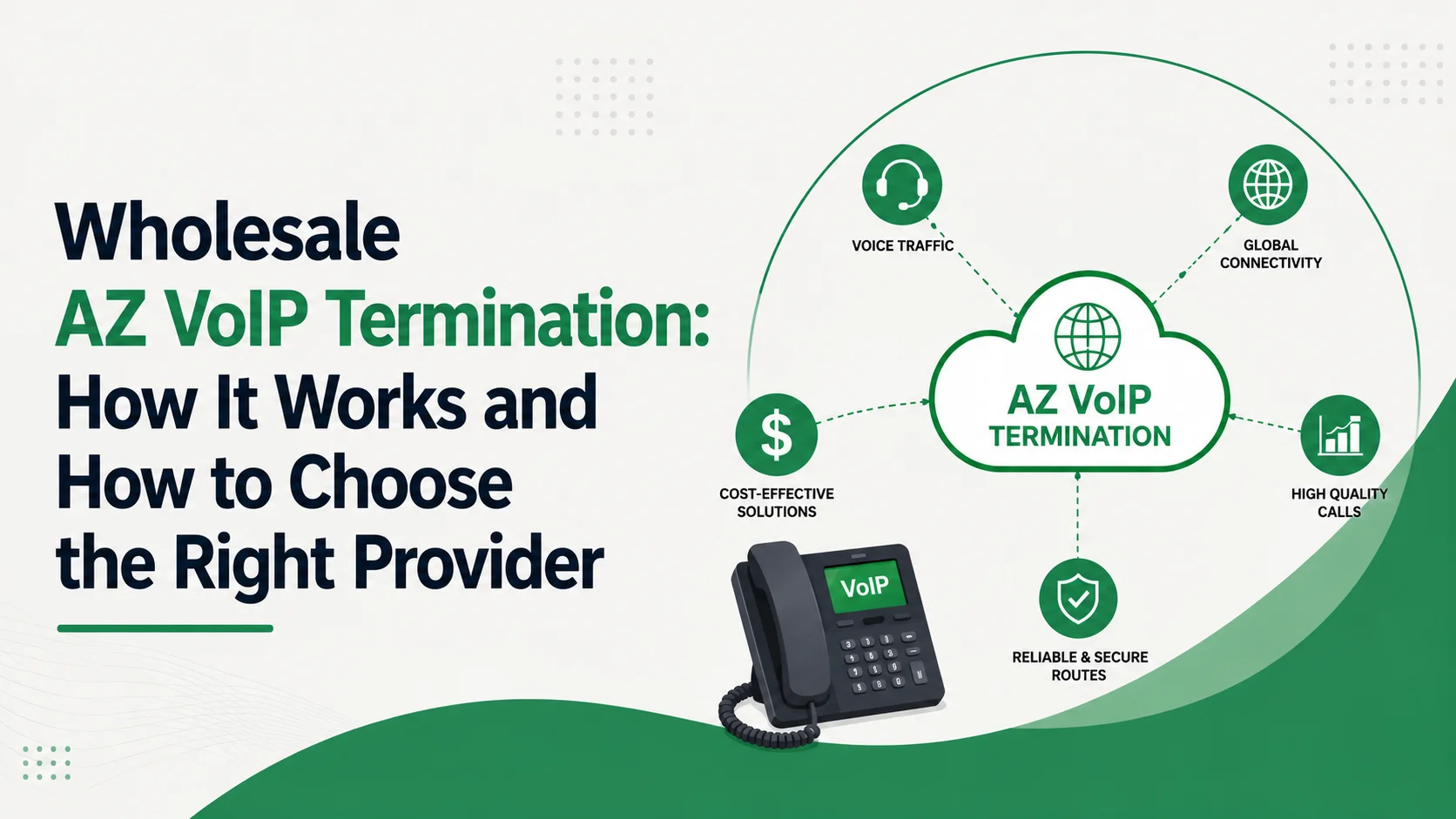
A-Z termination means the provider routes calls to any dialed destination globally — every country and prefix in the ITU-T E.164 numbering plan. It simplifies procurement by eliminating the need for multiple provider relationships to cover different regions. Confirm A-Z coverage includes both mobile and landline prefixes, and ask specifically about coverage in high-cost destinations like satellite numbers and certain African mobile networks.
How does white-label VoIP affect my margin as a reseller?
White-label VoIP lets you resell a provider's capacity under your own brand without disclosing the underlying carrier. Resellers operating white-label models consistently report 50–70% gross margins because they capture the spread between wholesale rates and retail pricing while outsourcing carrier interconnect, routing infrastructure, and compliance management to their upstream provider.
What fraud risks should I watch for with international routes?
International Revenue Share Fraud (IRSF) is the primary risk — fraudsters generate high-volume traffic to premium-rate numbers in high-cost destinations, with the fraudster sharing in the termination revenue. Effective countermeasures include per-destination spending caps, real-time anomaly detection, country-level blocking for destinations outside your normal traffic profile, and rapid escalation paths to your provider's fraud team.