1Introduction
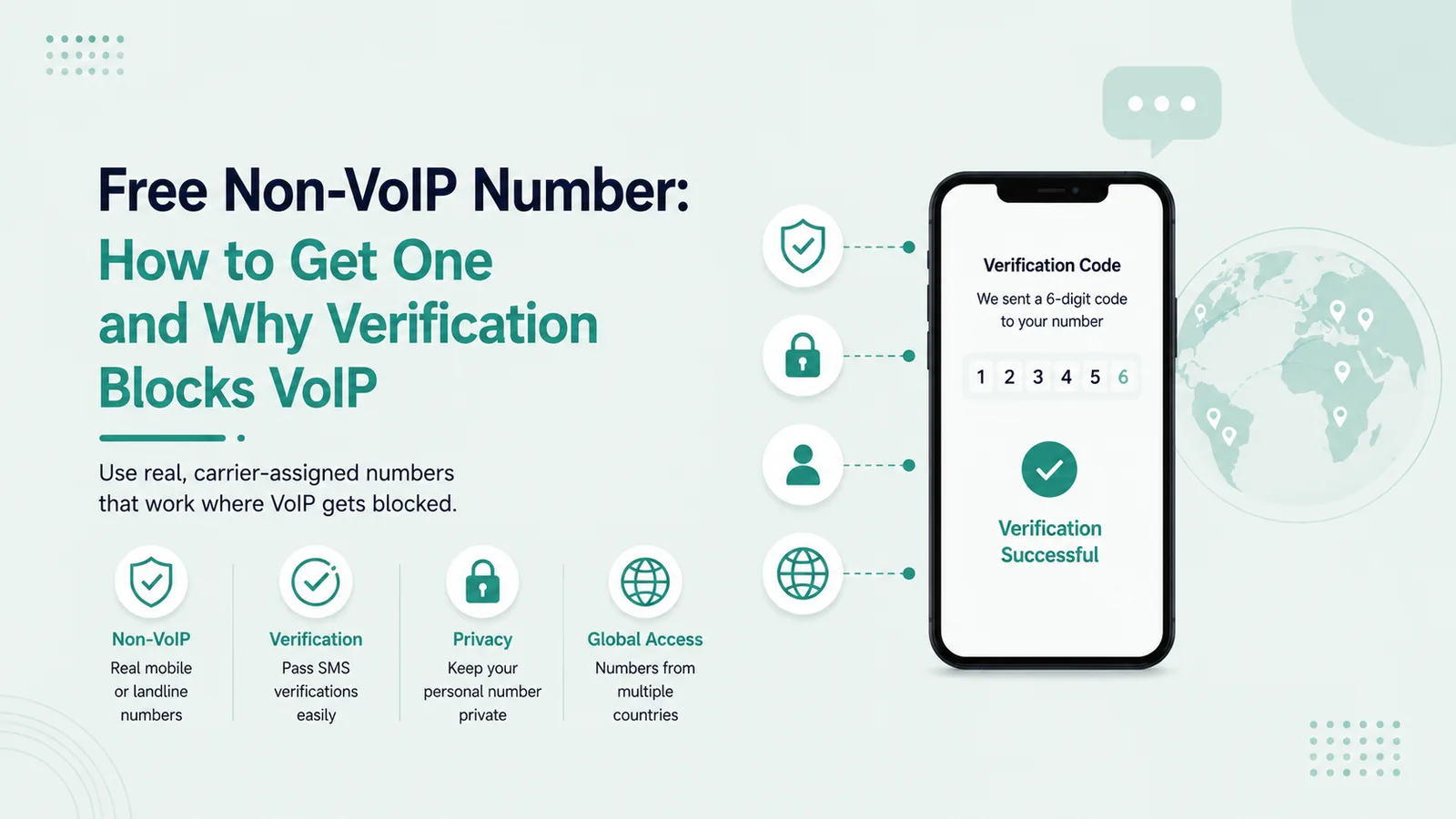
You enter a virtual number into a verification field and get rejected before the OTP even sends. That message — "This number cannot be used for verification" — is VoIP detection, and platforms are enforcing it harder than ever.
Over 70% of major platforms now actively filter VoIP numbers before sending an authentication code. Getting a free non-VoIP number is possible, but "free" almost always comes with real tradeoffs in reliability, how long the number lasts, and which platforms will actually accept it.
This guide explains exactly what a non-VoIP number is, which free options exist, where each one falls short, and when a carrier-grade virtual number becomes the right answer instead of a workaround.
A free non-VoIP number is assigned by a real mobile carrier — not routed over the internet — and passes carrier lookup checks where VoIP numbers fail. Truly free permanent options are rare; the most reliable free path is a low-cost prepaid SIM. For businesses that need non-VoIP numbers at scale, carrier-grade virtual numbers from a provider like Softtop offer the best balance of reach, reliability, and deliverability.
2What Is a Non-VoIP Number?
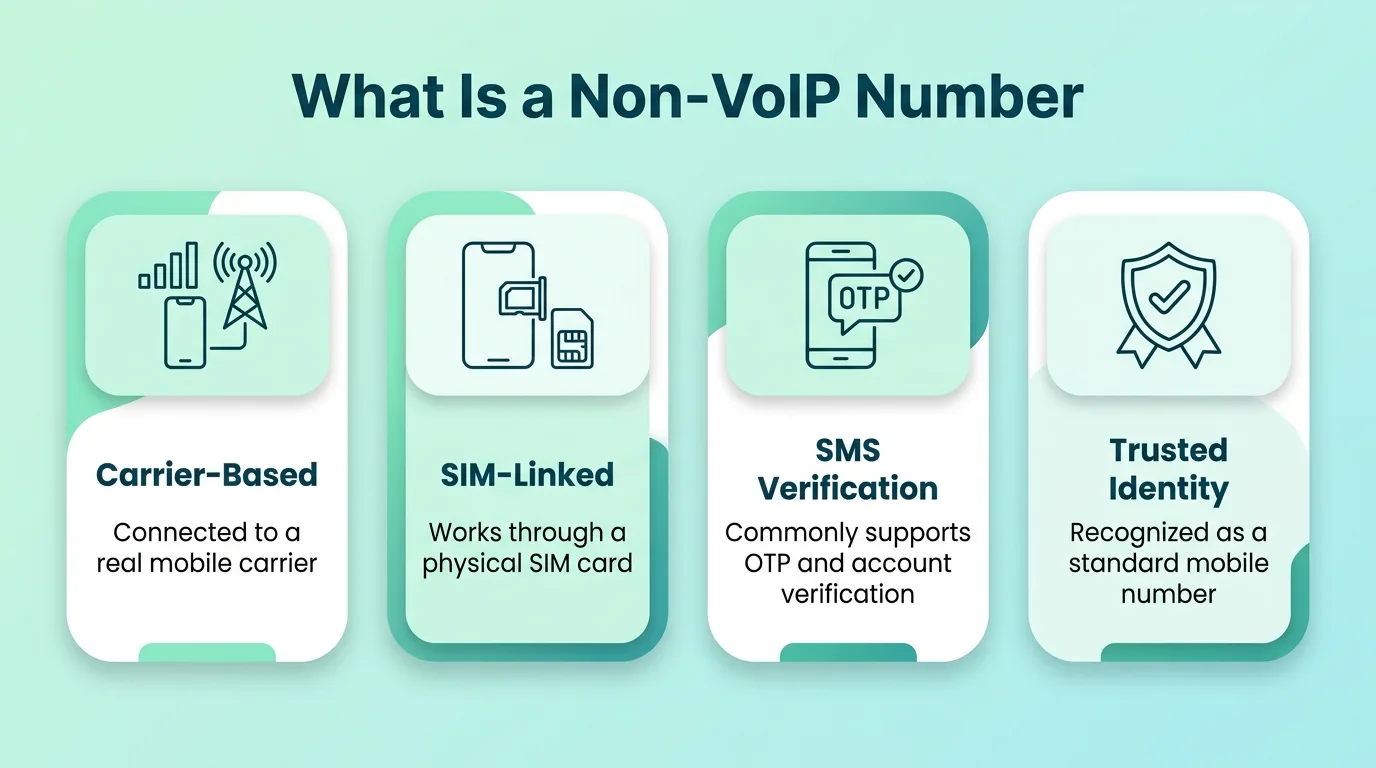
A non-VoIP number is a phone number assigned directly by a mobile carrier — AT&T, Vodafone, T-Mobile, or their regional equivalents — and transmitted over cellular infrastructure rather than the internet. This distinguishes it from a VoIP (Voice over Internet Protocol) number, which is issued by services like Google Voice, Skype, or TextNow and routes calls and texts over a broadband connection.
Platforms use carrier lookup APIs to classify every submitted number before sending a verification code. Numbers that resolve to a VoIP provider are flagged and blocked. Numbers that trace to a real mobile operator — governed by the ITU-T E.164 international numbering standard — pass the check.
Three terms you'll see used interchangeably
- Non-VoIP — any number not routed through internet telephony
- PSTN number — uses the Public Switched Telephone Network, the traditional carrier infrastructure
- Real number — casual usage for a genuine carrier-assigned mobile number
The practical test is simple: if a legitimate platform accepts it for two-factor authentication, it's non-VoIP. If it bounces with "Invalid number" or "Number cannot be used," it isn't.
3Why Platforms Block VoIP Numbers
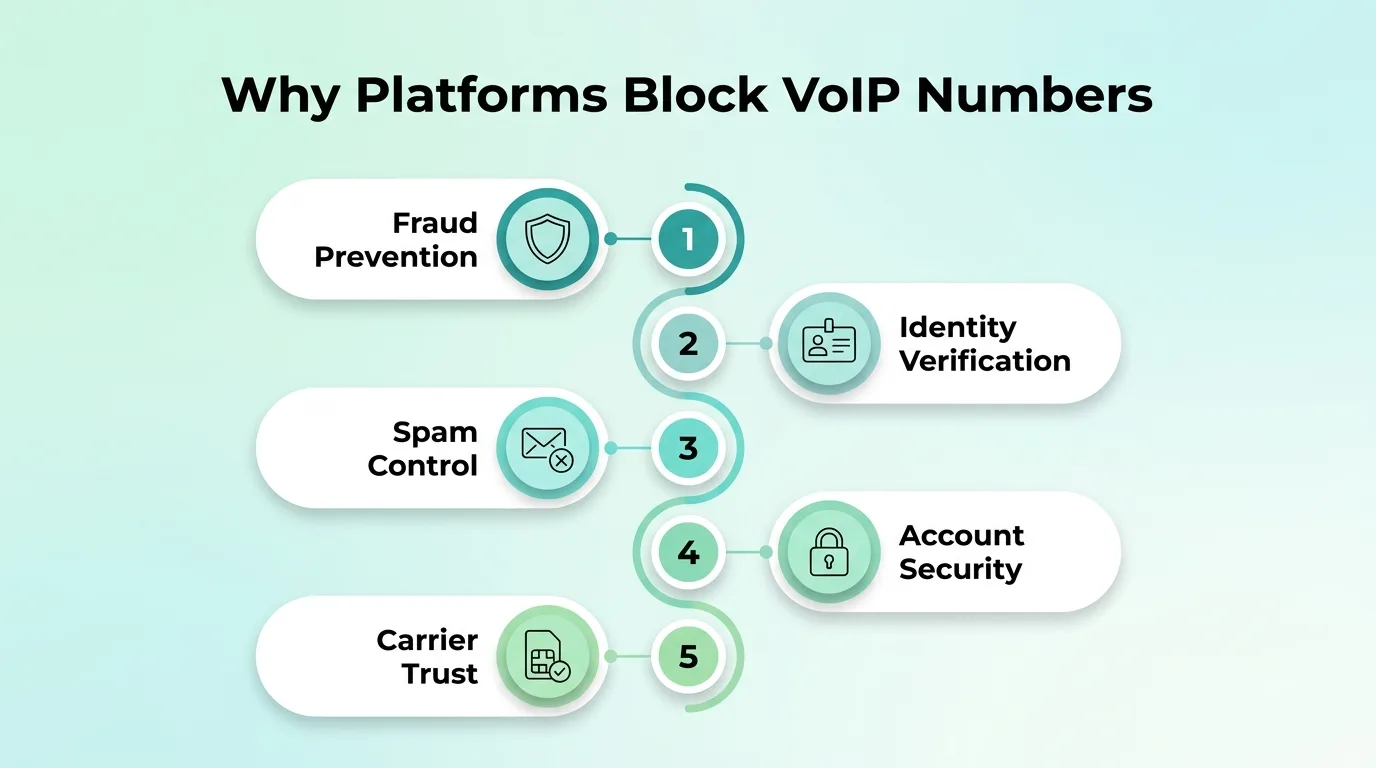
VoIP numbers can be generated in bulk at near-zero cost, which makes them a primary tool for fake account creation, spam campaigns, and identity fraud. Services like WhatsApp, Instagram, TikTok, and Gmail now query number intelligence APIs — from providers like Twilio Lookup or Ekata — in milliseconds during registration, applying carrier classification frameworks governed by GSMA mobile network standards.
Three specific signals get a number flagged
- Carrier type — numbers issued by internet-based services show as "VoIP" or "virtual" in the lookup. Strict platforms block these immediately.
- Number reputation — even real numbers can be blocklisted if they've been used for mass verifications. High-reuse numbers from rental platforms often appear on shared blocklists. Carriers actively monitor numbers for suspicious SMS patterns and can flag or suspend them.
- Location mismatch — submitting a US number from an IP registered overseas triggers additional scrutiny, sometimes a secondary verification step, sometimes an outright block.
This is why Google Voice, which worked fine for most verifications a few years ago, now fails on WhatsApp, TikTok, and Instagram in the majority of cases.
4Free Non-VoIP Number Options That Actually Work
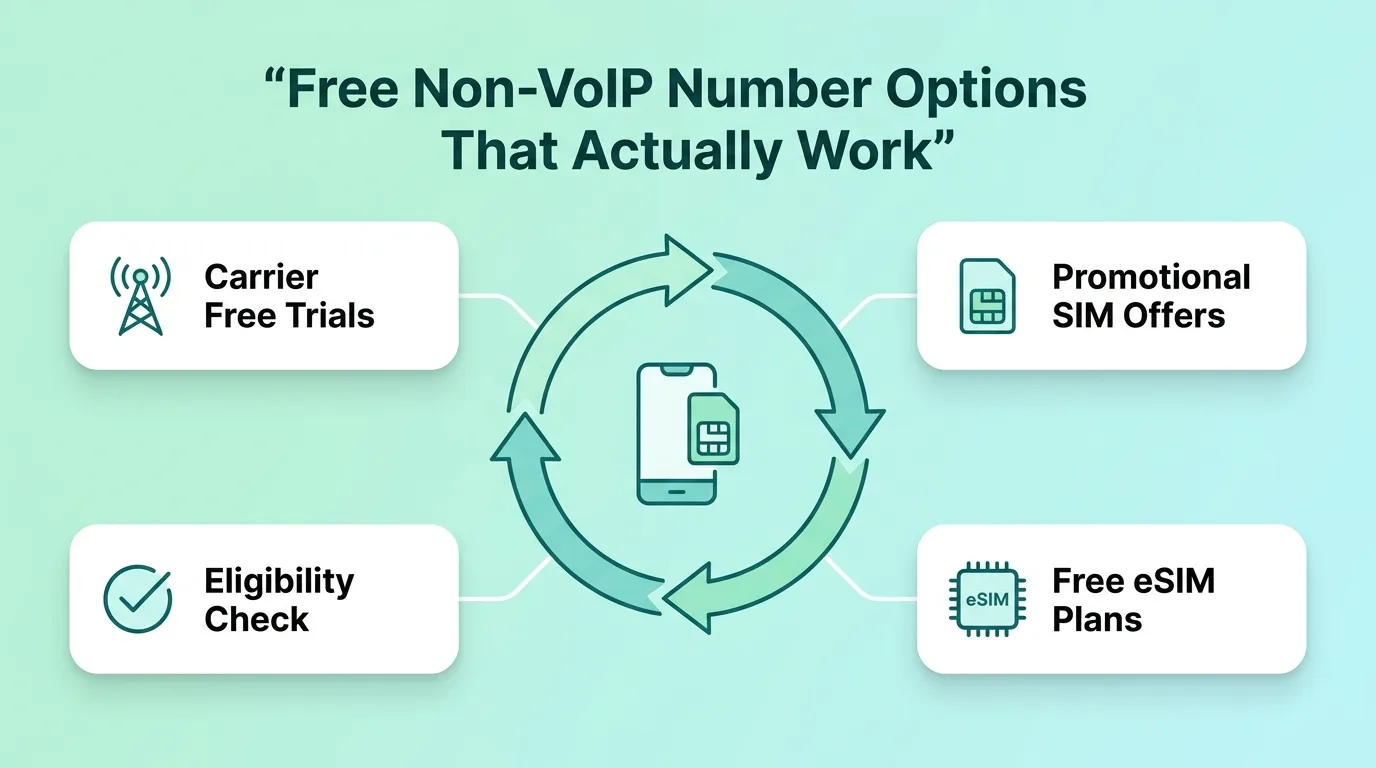
Prepaid SIM Cards
The most reliable free non-VoIP number is a prepaid SIM purchased from a local carrier. In the US, MVNOs like Ultra Mobile and Mint Mobile offer plans starting under $3/month. In many countries, basic prepaid SIMs cost nothing beyond the card itself. Every prepaid SIM provides a genuine carrier-assigned number that passes any VoIP lookup. The limit is scale: one SIM, one number — businesses needing volume typically turn to wholesale VoIP platforms instead.
TextNow (Free Tier — Limited)
TextNow operates on an MVNO relationship, so their numbers classify as real mobile numbers on many carrier lookups rather than standard VoIP. That's why TextNow passes verification on some lower-sensitivity platforms but fails on WhatsApp, Instagram, and Gmail, which apply stricter carrier-type filtering. The free tier recycles numbers — if a previous user burned it on repeated signups, the number may already be blocklisted.
eSIM Trial Access
Some eSIM providers offer short-term trial numbers tied to real carrier networks — non-VoIP by definition. Trials typically run 7–30 days before requiring a paid plan, making them a zero-cost starting point if you need a real number quickly.
5Low-Cost Paid Services Worth Knowing
When a free option isn't reliable enough, these paid single-use non-VoIP services offer a practical middle ground:
- SMS-Activate — aggregates real carrier numbers from 50+ countries for single-use SMS verification. Prices range from $0.07–$3.00 per number. US numbers for WhatsApp or Instagram typically cost $0.50–$1.50. Success rates run 85–95%, with refunds if verification fails.
- 5SIM — same model, coverage across 180+ countries starting at $0.05 per number. Numbers are sourced from real mobile operators, not internet telephony.
Both services suit low-volume, one-off verifications. For businesses needing numbers that are reusable, dedicated, and active over time, a carrier-grade business phone number provider is the better fit — look for one issuing carrier-registered numbers in your target markets with full inbound and outbound capabilities.
6When Your Business Needs Carrier-Grade Non-VoIP Numbers
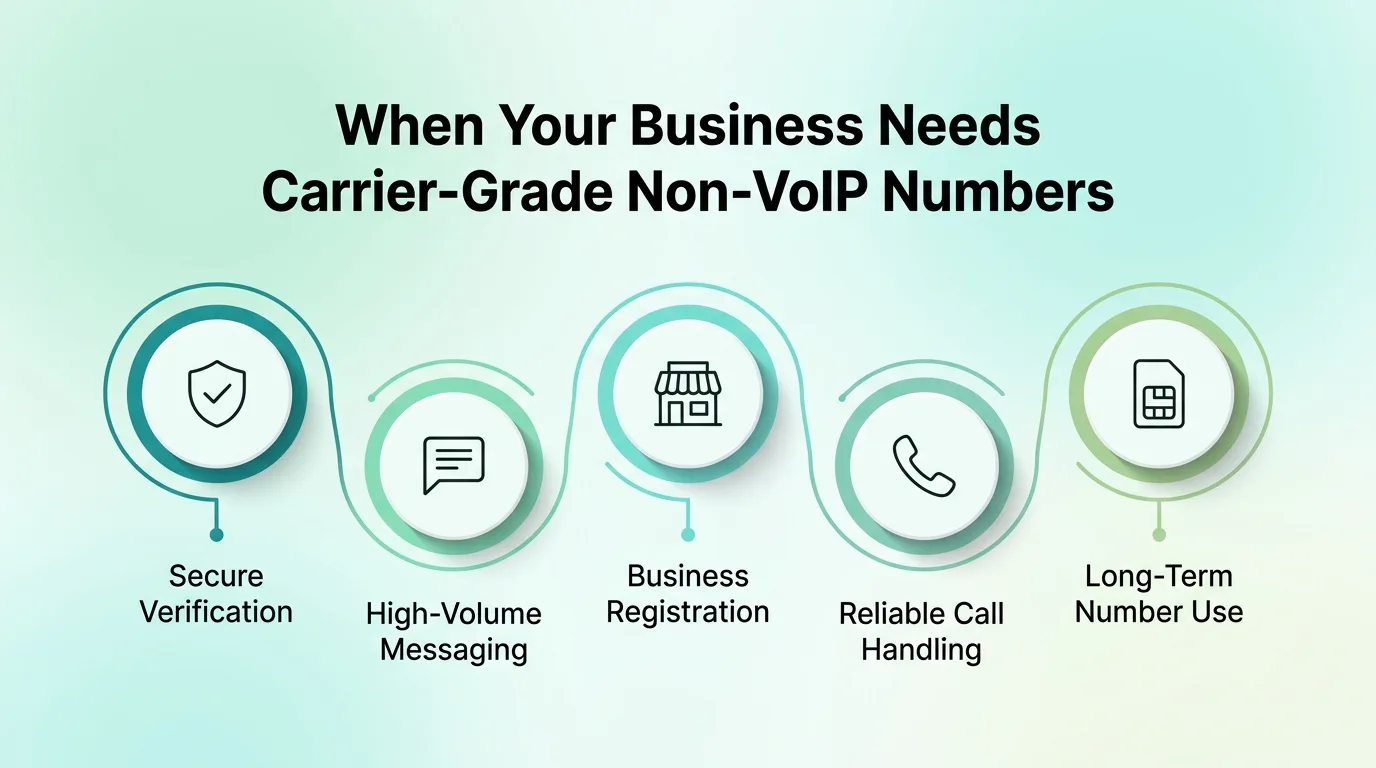
Individual use cases — verifying a personal account, setting up a second line — are manageable with a prepaid SIM or a short-term service. Business use is a different problem.
If your operations involve outbound SMS campaigns, automated OTP flows, customer callback numbers, or international reach, you need numbers that are carrier-grade and reliably deliverable across multiple regions. Any platform with active fraud filtering will reject VoIP numbers — including WhatsApp Business, which requires numbers backed by a real mobile operator.
Softtop's virtual phone numbers provide locally registered numbers in 150+ countries, backed by carrier-grade infrastructure with 99.9% uptime. Unlike shared rental pools that cycle thousands of users through the same number, these are dedicated numbers tied to your account. One customer reported a 25% increase in international sales after switching to local numbers in target markets.
For businesses running SMS-based authentication, customer notifications, or bulk campaigns, a dedicated SMS API that routes messages through real carrier connections across 150+ countries removes the guesswork entirely.
7Common Mistakes That Lead to Verification Failures
- Using a recycled number from a shared pool — check per-platform success rates before buying from rental services.
- Country mismatch with your IP — submitting a US number while your connection shows a foreign IP triggers additional scrutiny. Match your VPN location to the number's country code.
- Expecting one number to work everywhere — some platforms share blocklists. A number used for multiple signups on one platform may already be flagged on another.
- Confusing virtual numbers with VoIP numbers — not all virtual numbers are VoIP. Some cloud-managed numbers are provisioned through real carrier partnerships, so the lookup returns a real mobile carrier, not an internet telephony provider.
Ask any provider directly whether their numbers are carrier-registered — a genuine carrier lookup should return a real mobile network, not VoIP.
8Conclusion
A free non-VoIP number is achievable, but "free" almost always means a tradeoff. Prepaid SIMs deliver genuine carrier numbers at near-zero cost but don't scale past one line. Free-tier MVNO services like TextNow pass some platform checks but fail on WhatsApp, Instagram, and Gmail where VoIP filtering is strictest. For one-off personal verifications, these options work.
For business use, the calculus shifts. You need numbers that are carrier-registered, reliably deliverable across markets, and not burned from prior high-volume use. Softtop's infrastructure covers 150+ countries with 99.9% uptime and carrier-grade routes, built for businesses that need real presence. Whether you need a dedicated local number for a specific market, an SMS API for automated flows, or a scalable global platform, the foundation is the same: numbers that carriers and platforms both recognize as real.
9Frequently Asked Questions
What is a non-VoIP number and how is it different from VoIP?
A non-VoIP number is assigned by a real mobile carrier and transmitted over cellular infrastructure. A VoIP number routes over the internet through services like Google Voice or Skype. Platforms distinguish between them using carrier lookup APIs — VoIP numbers fail on platforms that enforce real-number verification policies, while non-VoIP numbers pass.
Can I really get a free non-VoIP number?
Yes, but with limits. A prepaid SIM from a local carrier gives you a genuine non-VoIP number at very low or no cost, depending on your country. Free MVNO services like TextNow work on some platforms. Truly free, permanent non-VoIP numbers that work across all major platforms do not exist — the carrier infrastructure required to issue them has real costs.
Which platforms block VoIP numbers for verification?
WhatsApp, Instagram, TikTok, Gmail, Facebook, and Telegram all apply VoIP filtering to varying degrees. WhatsApp and Telegram are strictest. Gmail's filtering has become significantly more aggressive since 2024. Some platforms are inconsistent — the same number may work one day and fail the next depending on updates to their fraud detection systems.
How do I know if my number is VoIP or non-VoIP?
You can use a carrier lookup tool (available from providers like Twilio Lookup or NumVerify) to check the carrier type associated with any number. If the lookup returns "VoIP," "virtual," or the name of a VoIP provider, the number will fail verification on strict platforms. A real mobile carrier name confirms it's non-VoIP.
What's the best non-VoIP number solution for a business?
For businesses that need non-VoIP numbers at scale — across multiple countries, with reliable deliverability — dedicated virtual numbers from a carrier-grade provider are the right choice. Softtop offers locally registered numbers in 150+ countries with 99.9% uptime, full SMS and voice capabilities, and direct carrier connections.
Why does my real number still get blocked sometimes?
Real non-VoIP numbers can still be blocked if they've been used for a high volume of verifications by previous owners (number reputation), if there's a mismatch between the number's country code and your current IP location, or if the platform has added your number to a cross-platform blocklist. Using a fresh, dedicated number from a reputable provider eliminates most of these failure modes.