1Introduction
A dropped sales call or a garbled support line costs real money — and the root cause is often the wrong SIP trunking provider. According to industry estimates, poor-quality business telephony leads to measurable customer churn and lost revenue every quarter. Choosing a provider built on Tier-1 carrier infrastructure, transparent billing, and genuine redundancy is no longer optional; it is a baseline requirement for any company handling significant call volume.
The consequences of making the wrong choice — service outages during peak trading hours, inflated bills from opaque surcharges, or calls blocked by carrier spam filters — can be immediate and severe. Softtop delivers exactly that: direct Tier-1 connections across 150+ countries, FAS-free billing, and a 99.99% uptime SLA backed by 24/7/365 network operations — giving businesses a reliable foundation they can build on with confidence.
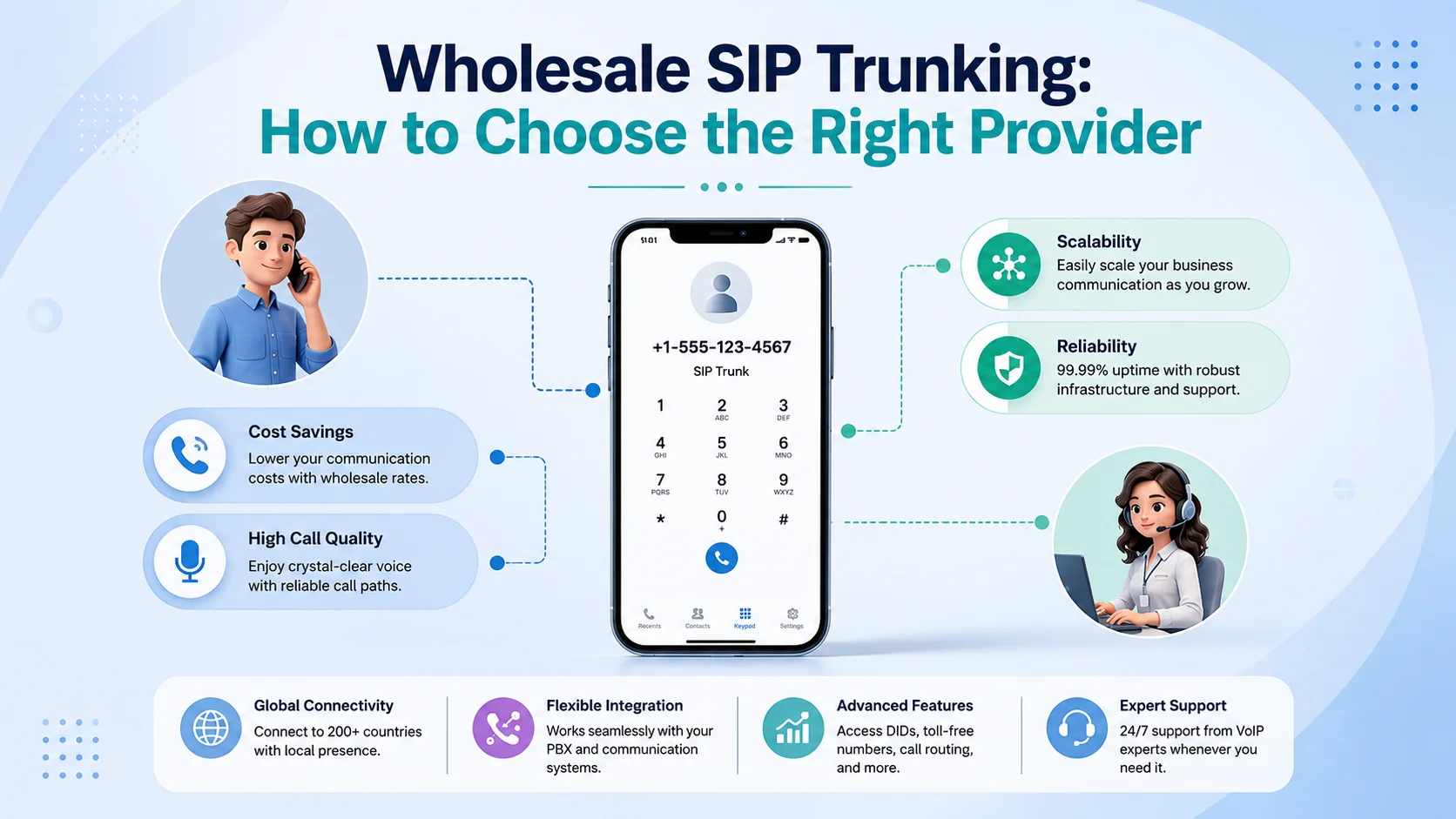
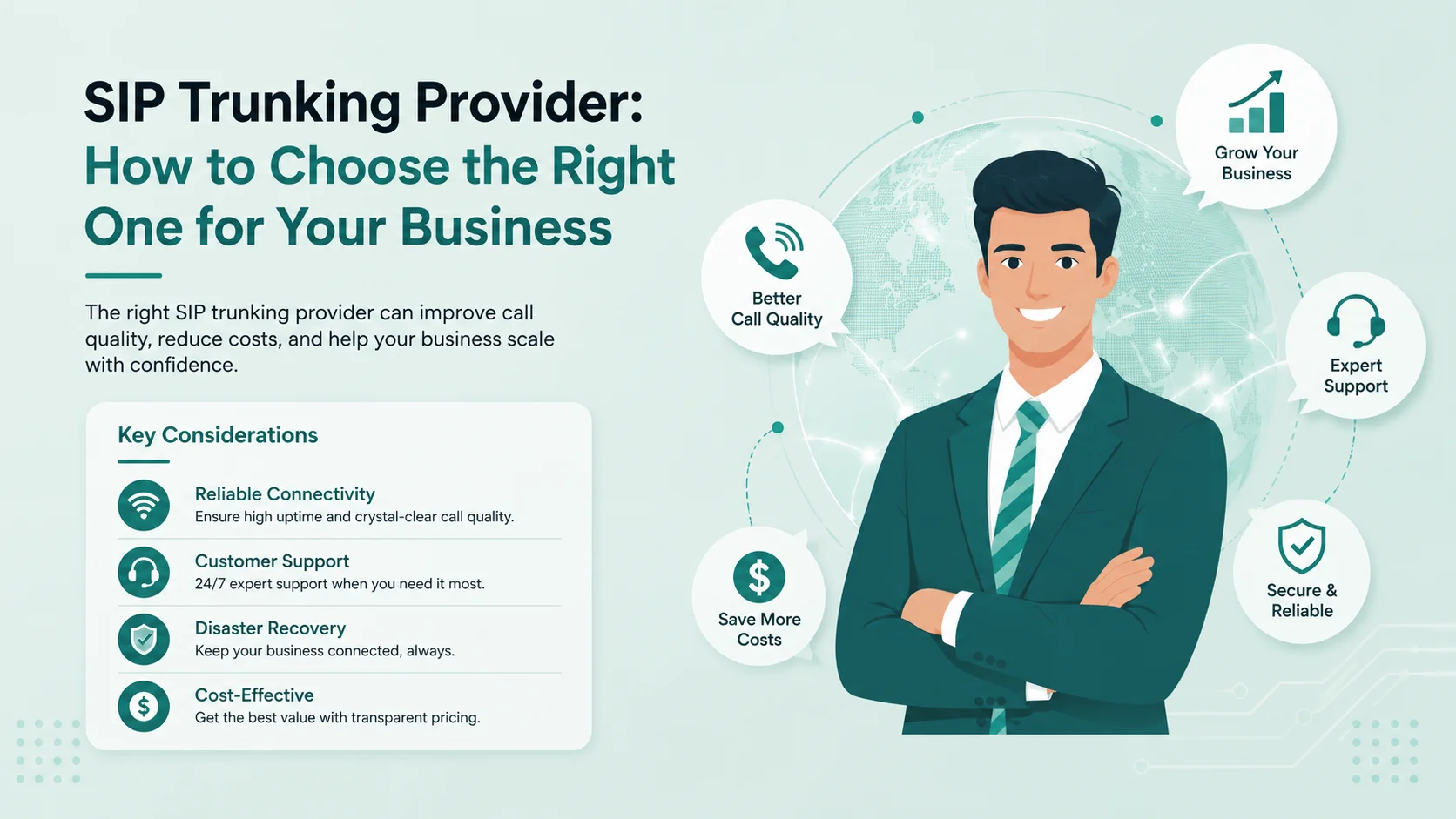
Choosing the right SIP trunking provider directly affects call quality, cost, and compliance. Key criteria: uptime SLA, codec support, fraud protection, and transparent per-minute rates. Softtop offers $0.003–$0.01/min pricing across 150+ countries with no hard concurrency caps.
2What Is a SIP Trunking Provider and Why Does It Matter?
Session Initiation Protocol trunking replaces legacy PSTN lines with IP-based voice channels that connect your PBX or UCaaS platform to the public telephone network. A SIP trunking provider manages those IP channels, handles routing, and bills you per minute or per channel. The practical upside is significant: businesses that migrate from traditional PRI circuits to SIP trunking routinely report cost reductions of 40–70% on their monthly telephony spend — a saving Softtop customers access from day one.
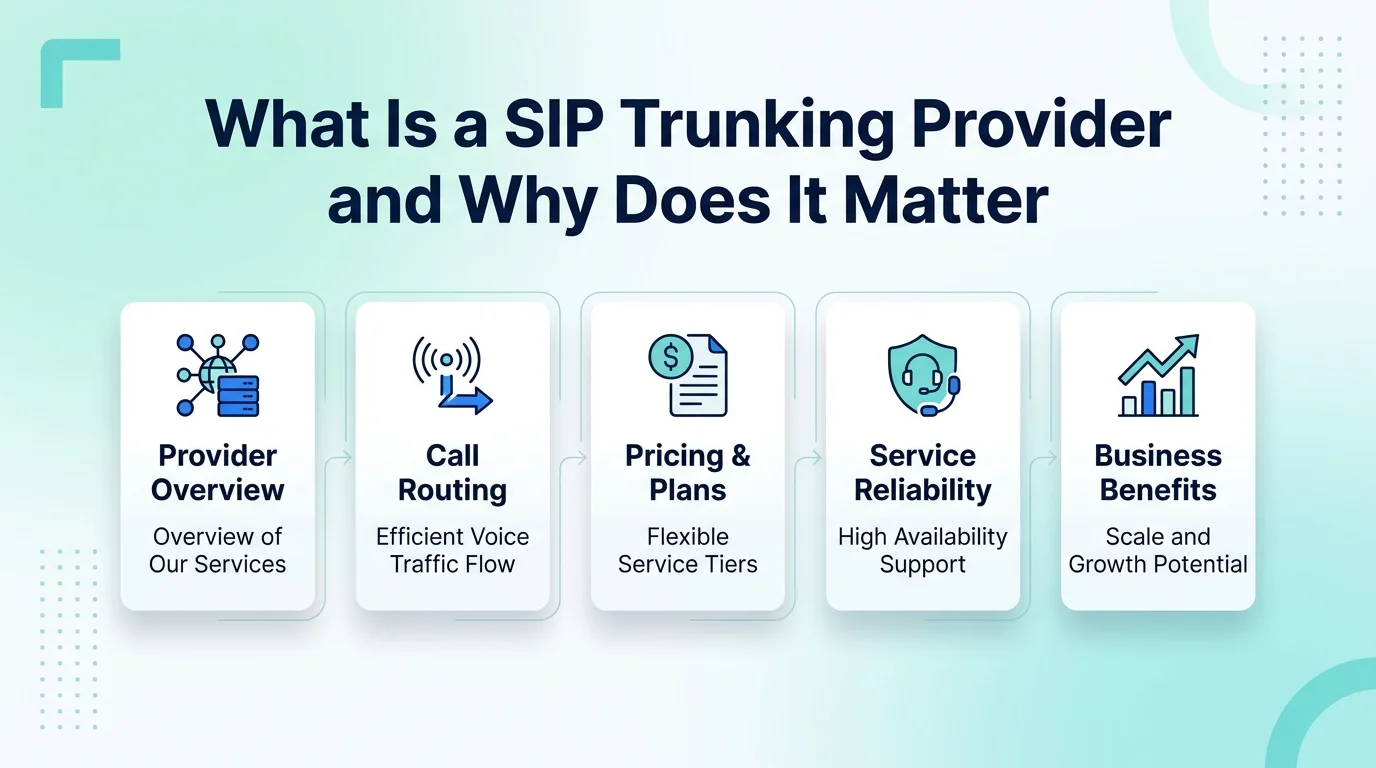
Beyond cost, SIP trunks deliver instant scalability; instead of ordering new physical lines weeks in advance, your team can provision additional capacity in minutes through a self-service portal. That agility matters as call volumes fluctuate with campaigns, seasonal peaks, and business growth.
Softtop's self-service portal lets administrators provision new trunks, assign DDI/DID numbers, and monitor live CDRs without raising a support ticket, compressing a process that once took days into minutes.
3Five Criteria That Separate Good SIP Trunking Providers from Great Ones
Not every SIP trunking provider is built the same way. Five criteria reliably separate commodity services from enterprise-grade platforms.
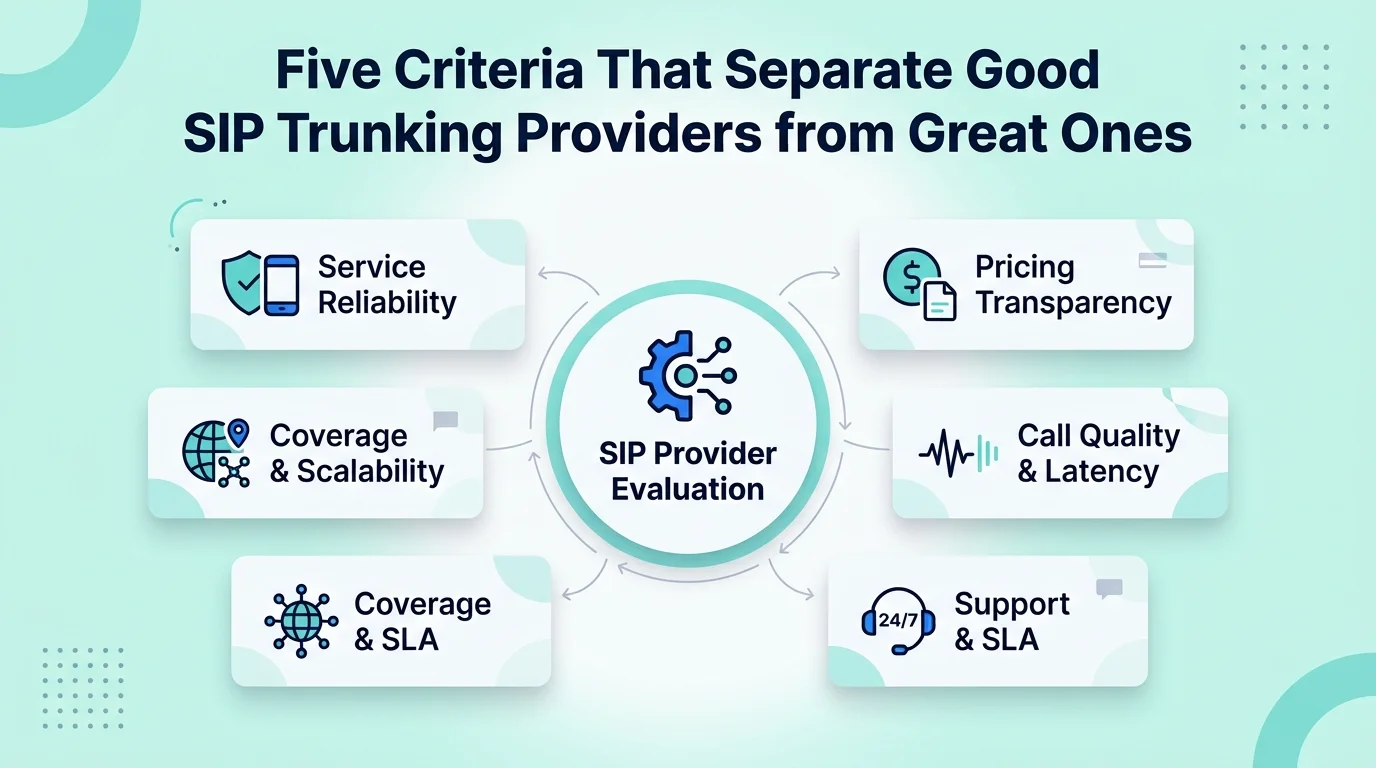
- 1Network topology: providers with direct Tier-1 carrier connections bypass reseller hops that add latency and jitter.
- 2Uptime commitment: a 99.99% SLA translates to less than 53 minutes of downtime per year — materially different from a 99.9% promise.
- 3Codec flexibility: support for G.711, G.729, G.722, and Opus lets you optimise for bandwidth or quality depending on the use case.
- 4Billing transparency: FAS (False Answer Supervision) inflates call costs by billing for unanswered seconds; providers that eliminate it demonstrate commercial honesty.
- 5Fraud controls: STIR/SHAKEN A-level attestation in the US verifies caller identity and protects your brand reputation.
Evaluating candidates against these five criteria narrows the field quickly and surfaces the providers worth serious consideration. Learn more about Softtop's SIP Trunking service →
4How SIP Trunk Pricing Really Works — and What to Watch For
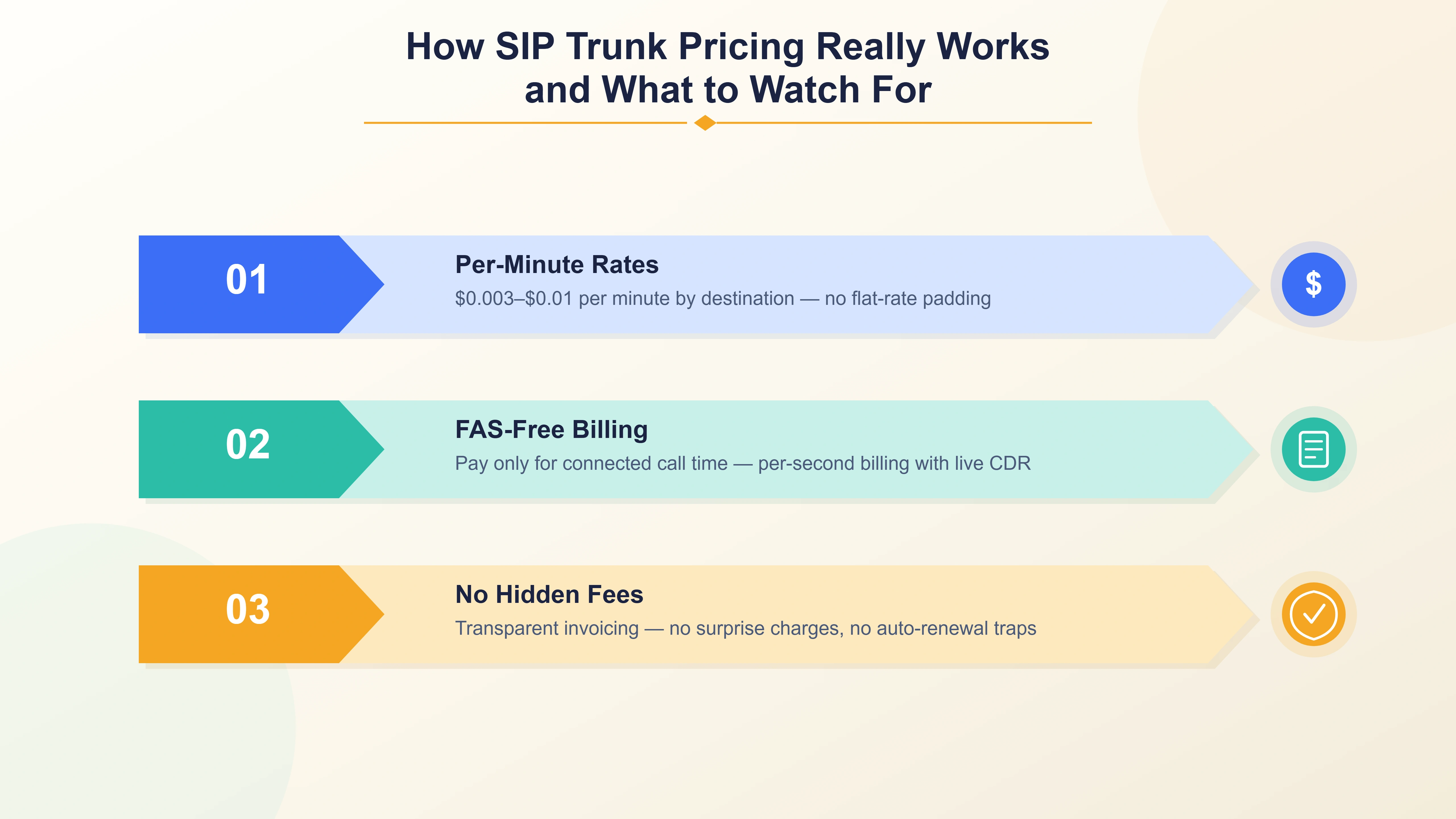
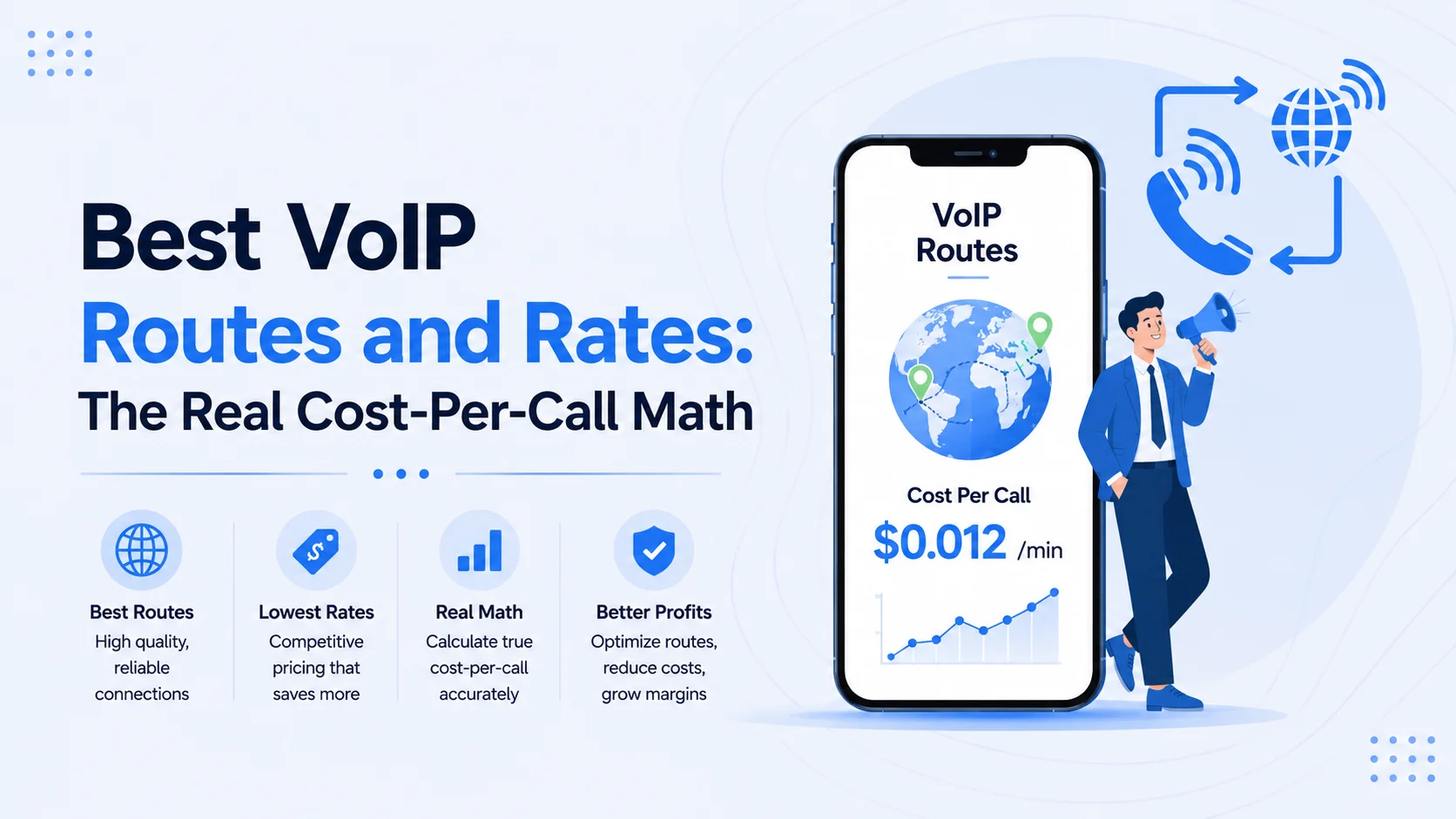
Pricing models across the SIP trunking market vary enough to make apples-to-apples comparison genuinely difficult. Some providers advertise low headline rates but layer on per-channel fees, DID rental markups, and minimum monthly commitments that erode the advertised saving. Softtop publishes straightforward per-minute rates of $0.003–$0.01 depending on destination — no hidden channel fees and no FAS padding.
The SIP protocol itself, standardised in IETF RFC 3261, is an open standard, which means switching providers should be straightforward if your contract terms are reasonable. Watch for auto-renewal clauses, egress-only billing that ignores inbound minutes, and vague references to "network surcharges."
The cleanest signal that a provider trusts its own pricing is live CDR access: when you can pull real-time call detail records yourself, there is nowhere for billing errors to hide. Softtop's self-service portal provides exactly that level of visibility, 24 hours a day. Because call recording and real-time analytics are included as standard features — not metered add-ons — finance teams and operations managers can audit spend without waiting for end-of-month invoices.
5Reliability, Redundancy, and the SIP Trunking Provider SLA
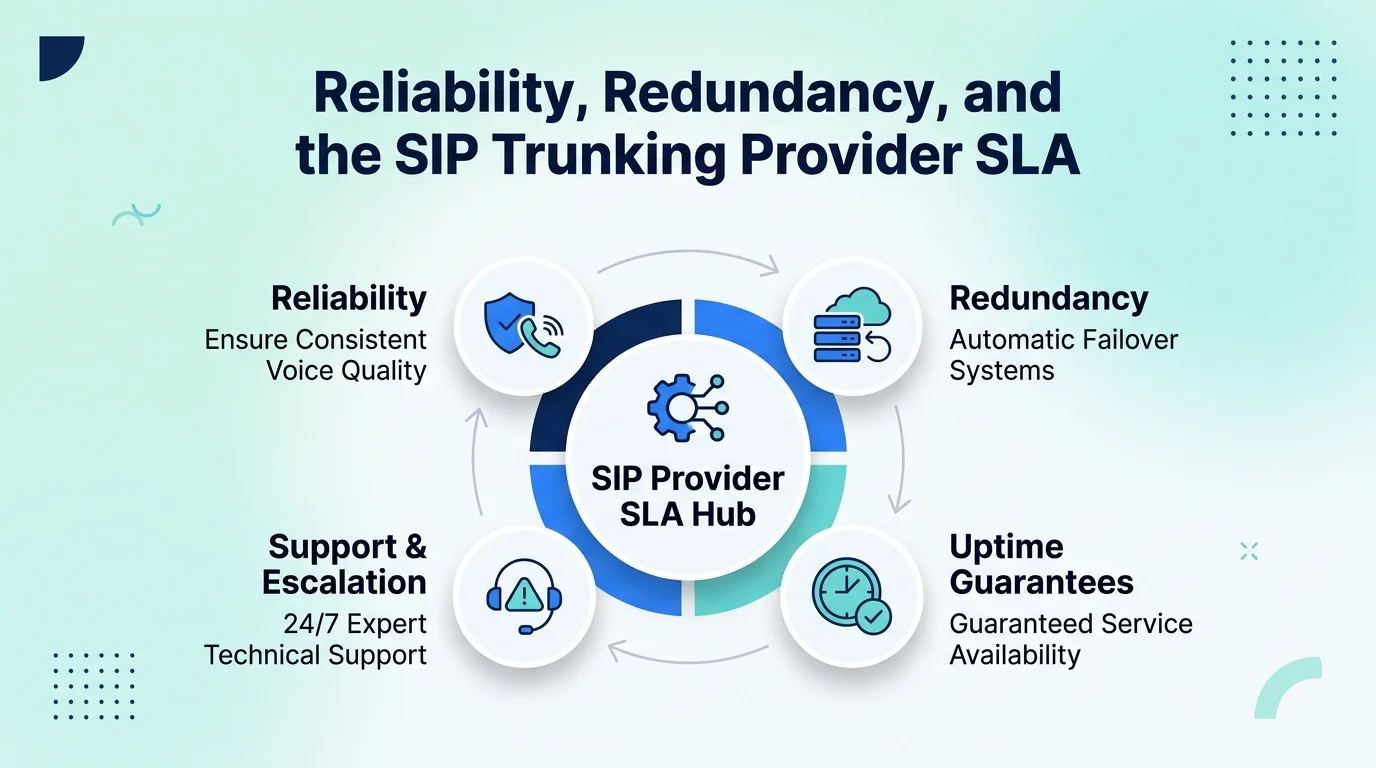
Uptime is where marketing language and operational reality frequently diverge. A SIP trunking provider may quote a 99.99% SLA but define "downtime" so narrowly that most outages fall outside its scope. Genuine reliability requires multiple layers: geographic redundancy across data centres, automatic failover routing that reroutes calls in seconds when a path degrades, and a network operations centre staffed around the clock.
Softtop's 24/7/365 NOC monitors every trunk in real time, and failover routing is built into every account — not offered as a premium add-on. Concurrent call scaling operates without hard caps, so a sudden spike in inbound volume during a product launch or an emergency does not trigger throttling.
For businesses operating across time zones, the absence of a hard concurrency ceiling is not a nice-to-have; it is mission critical. Confirm that any provider you evaluate can demonstrate, not just promise, the redundancy architecture that matches your business continuity requirements.
6Global Reach and Compliance for a SIP Trunking Provider
Coverage and compliance are inseparable when you operate internationally. A SIP trunking provider with genuine global reach maintains direct interconnects with local carriers in each market rather than routing calls through a patchwork of resellers. Softtop's network spans 150+ countries, supported by DDI/DID number assignments that give your business a local presence in markets where it matters commercially.
Regulatory compliance varies significantly by jurisdiction: in the US, STIR/SHAKEN A-level attestation is increasingly required for calls to reach recipients without being flagged or blocked. In the EU and UK, Ofcom and national regulators set specific requirements around CLI presentation and data handling. Choosing a provider that actively maintains compliance in your target markets protects your brand and reduces legal exposure.
Softtop's compliance posture is maintained continuously, with STIR/SHAKEN attestation updated as US carrier requirements evolve — so your outbound calls reach their destination rather than being silently dropped. See Softtop's Voice Termination →
7Conclusion
Selecting a SIP trunking provider is a decision that shapes call quality, cost structure, and compliance posture for years. The criteria covered in this guide — network tier, uptime SLA, codec support, billing transparency, and regulatory coverage — give you a structured framework for evaluating candidates rather than relying on headline claims.
Softtop combines Tier-1 carrier connections across 150+ countries with FAS-free billing, STIR/SHAKEN A-level attestation, and a 99.99% uptime SLA backed by a round-the-clock network operations centre. Per-minute rates start at $0.003, concurrent call scaling has no hard caps, and a self-service portal with live CDRs keeps billing fully transparent.
8Frequently Asked Questions
What is the difference between a SIP trunk and a traditional phone line?
A traditional phone line uses physical copper circuits with fixed capacity. A SIP trunk delivers voice over your existing IP network, allowing instant capacity changes without hardware installation. Businesses that switch typically cut telephony costs by 40–70% and gain features like failover routing and real-time analytics unavailable on legacy lines.
How many concurrent calls can a SIP trunk handle?
The number of simultaneous calls a SIP trunk supports depends on your provider and bandwidth. Some providers impose hard channel caps that throttle calls during peak periods. Softtop's infrastructure scales concurrent calls dynamically with no hard caps, so sudden volume spikes — during campaigns or emergencies — are handled without dropped or degraded calls.
Is SIP trunking secure for business use?
Yes, when implemented correctly. Look for providers offering TLS signalling encryption, SRTP media encryption, and STIR/SHAKEN attestation to prevent caller ID spoofing. Softtop holds STIR/SHAKEN A-level attestation in the US, which verifies call authenticity and reduces the risk of your outbound calls being blocked or flagged as spam by carriers.
Can I keep my existing phone numbers when switching SIP trunking providers?
In most jurisdictions, number portability regulations allow you to retain your existing DDI/DID numbers when changing providers. The porting process typically takes five to ten business days and requires your current provider's cooperation. Confirm that your new SIP trunking provider handles the porting process end-to-end and provides a dedicated point of contact during the transition.
What codecs should a SIP trunking provider support?
At minimum, look for G.711 (uncompressed, highest quality) and G.729 (compressed, bandwidth-efficient). G.722 improves voice clarity on HD-capable endpoints, while Opus adapts dynamically to network conditions. Softtop supports all four codecs, letting you configure each trunk to balance audio quality against bandwidth consumption based on your specific infrastructure and use case requirements.