1Introduction
Picking the wrong voice provider can cost you dropped calls and a surprise invoice. Wholesale SIP trunking lets businesses, resellers, and call centers buy voice channels in bulk and connect their phone systems to the global network over the internet, often at per-channel rates below $10 at scale. This buyer's guide walks you through how it works, how many channels you actually need, what it should cost, and the exact criteria to weigh before you sign.
Softtop backs its own wholesale SIP trunking with 99.99% uptime and Tier-1 routes across 150+ countries, so the advice here reflects what a dependable network really looks like. By the end, you will be able to compare providers with confidence and sidestep the hidden fees that catch most first-time buyers.
2What Is Wholesale SIP Trunking?
Wholesale SIP trunking is a high-volume voice service that connects your phone system, or IP PBX, to the public network using the Session Initiation Protocol (SIP). Instead of leasing physical lines, you buy concurrent call channels in bulk over the internet, then scale them up or down on demand.
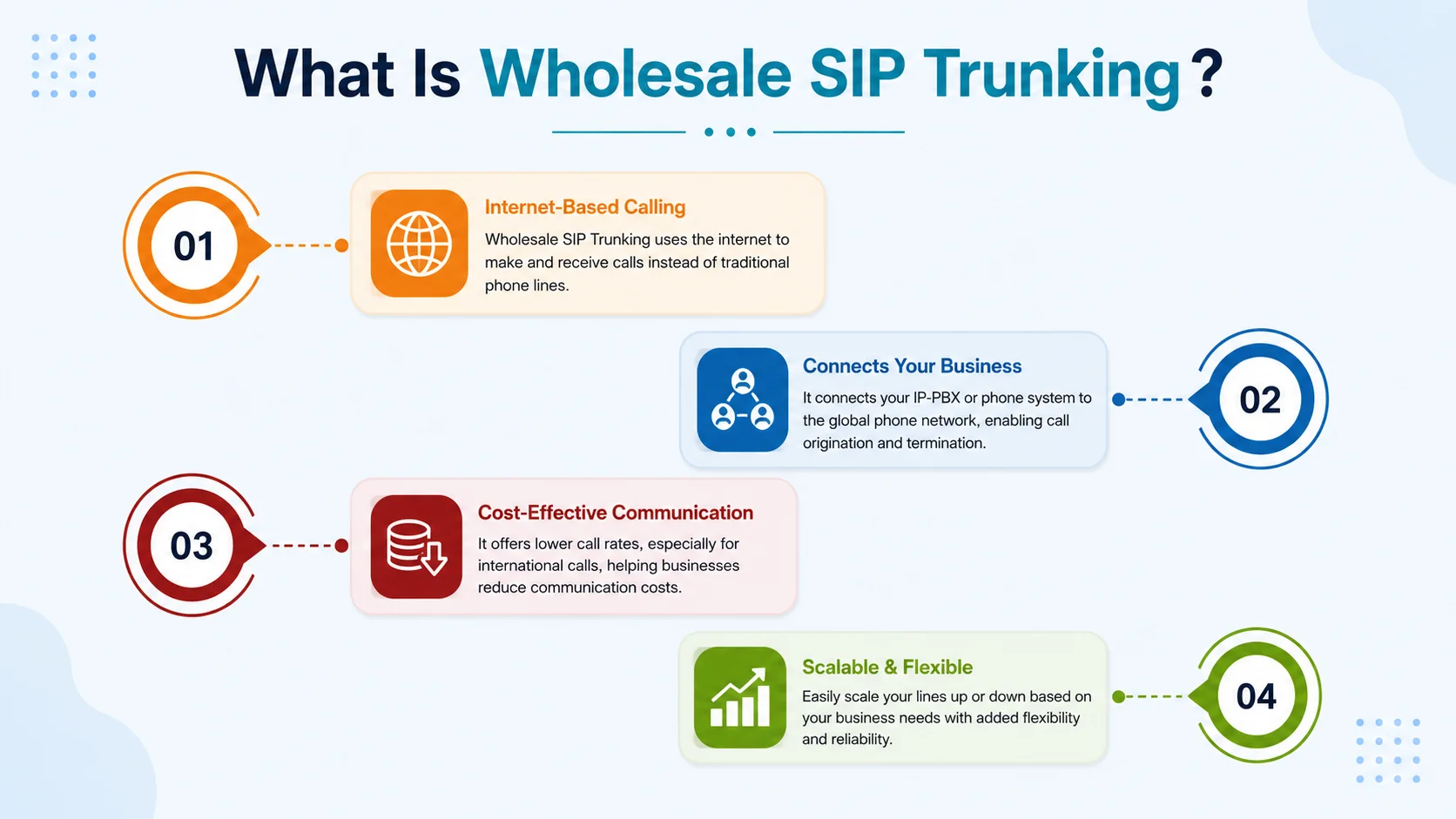
The wholesale part matters. Providers sell capacity at carrier-scale rates, so the per-channel and per-minute costs drop well below retail. That makes the model a favourite for resellers and MSPs who rebrand the service, and for enterprises and call centers that route heavy volumes. In short, wholesale SIP trunking turns voice into a flexible, software-controlled utility you can resize as your business changes.
3How Wholesale SIP Trunking Works
A wholesale SIP trunking service carries calls as data. When you place a call, your IP PBX signals the provider using SIP, defined in IETF RFC 3261, and the voice itself travels as IP packets across the internet or dedicated links.
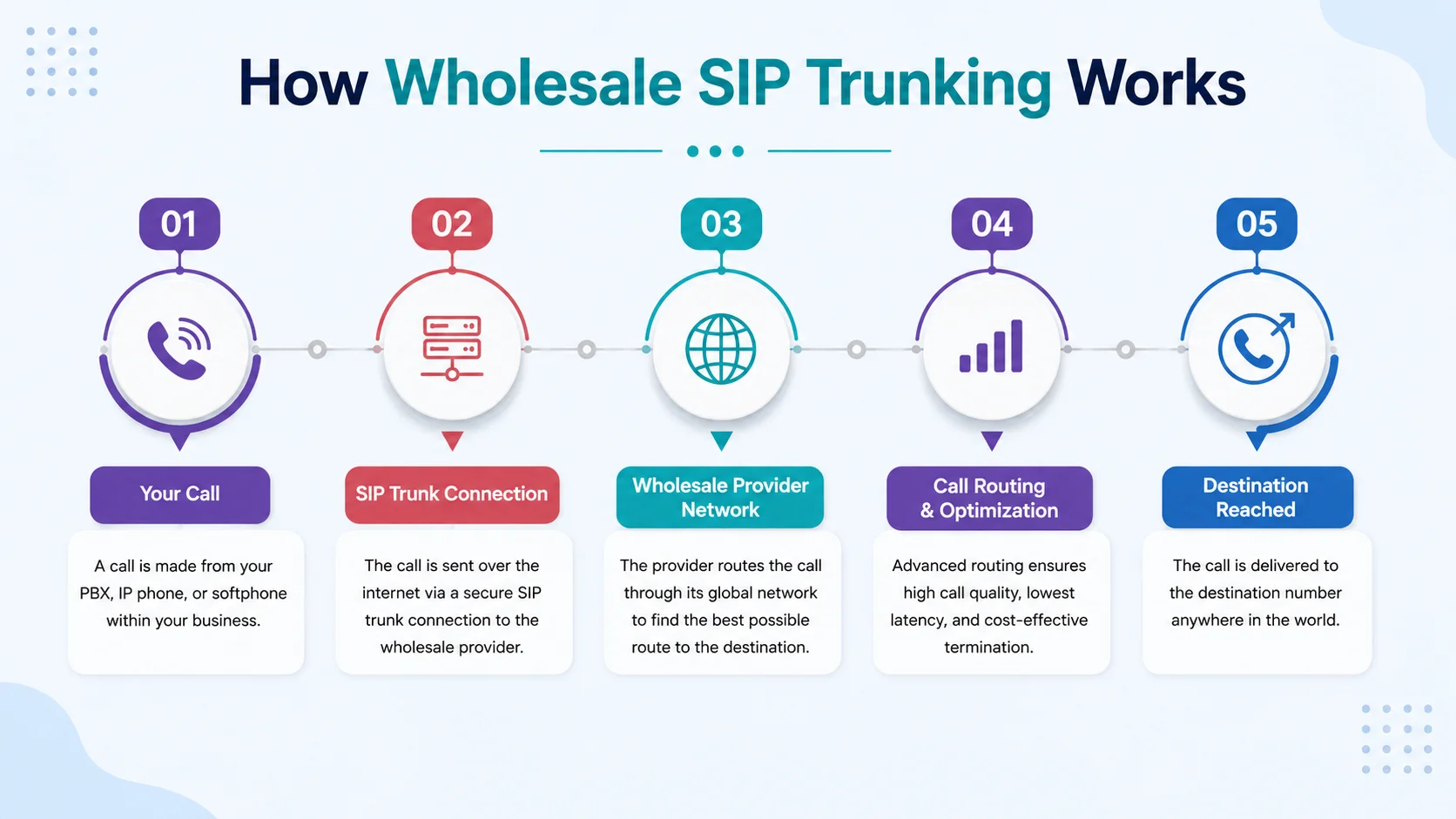
Each trunk supports a set number of concurrent channels, and the provider routes traffic over its carrier network. Termination hands your outbound calls to their destination on another network or the PSTN, while origination delivers inbound calls to your DID numbers. Quality depends on the path, which is why direct interconnects with Tier-1 carriers matter so much. Softtop routes across 70+ global Points of Presence with a 60%+ Answer Seizure Ratio, keeping calls clear and connected. Because everything is software-defined, you can reroute traffic or add capacity in minutes rather than waiting weeks for a physical line install.
4How Many SIP Channels Do You Need?
This is where buyers most often overspend. You need one channel for every simultaneous call, not one per employee, because calls naturally stagger through the day. Use these rules of thumb to size your trunk:
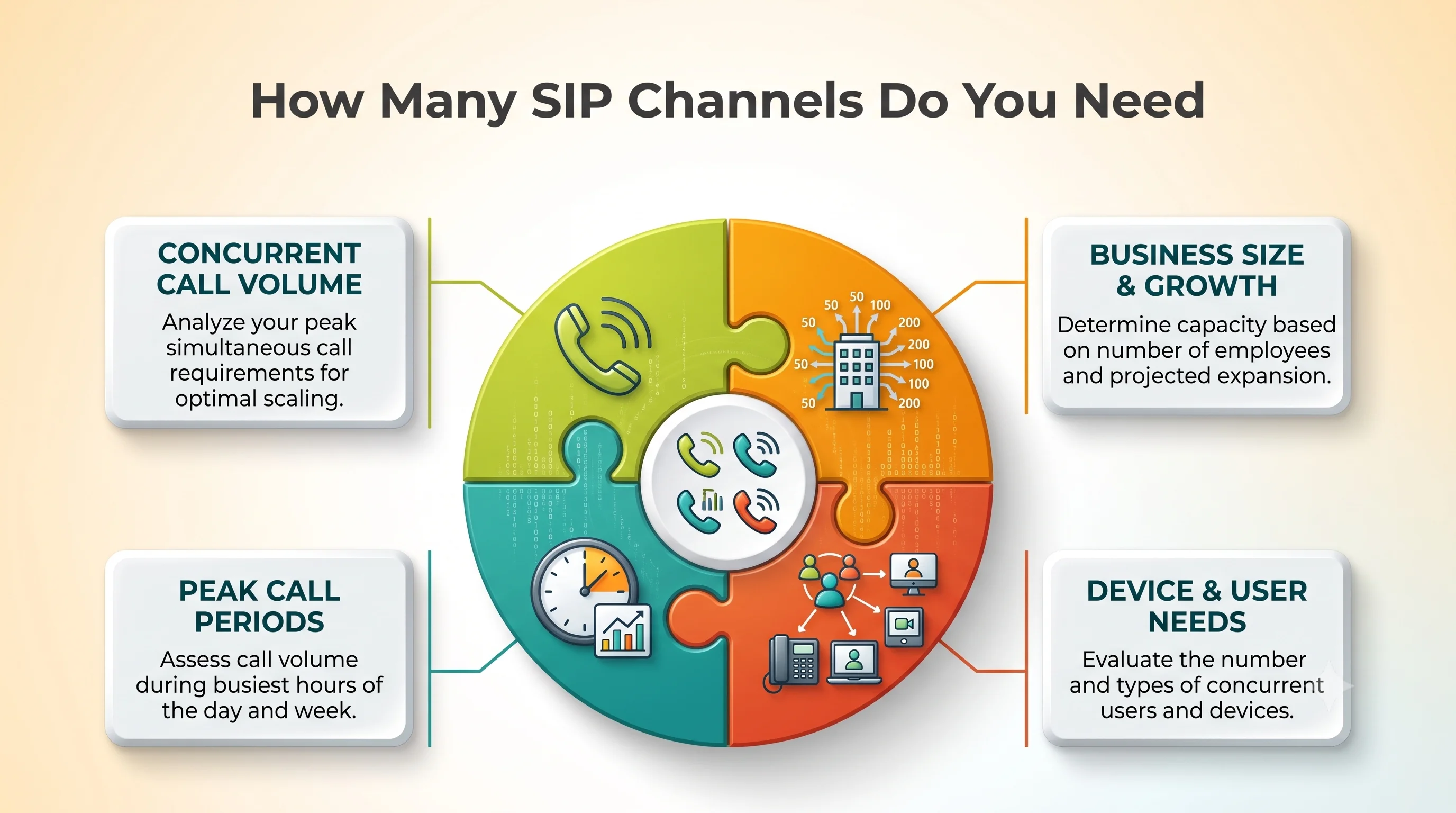
- General business use: plan one channel per three to four employees.
- Sales teams and call centers: run closer to one-to-one, since most agents are on the phone at once.
- Peak estimate: if roughly 20% of staff could be talking simultaneously, a 100-seat office needs about 20 channels.
- Headroom: many wholesale plans allow bursting above your provisioned channels during spikes, though that traffic is billed at a higher rate.
It pays to review your call detail records from a busy week before committing, since real peaks often differ from what managers expect. Get this number right and you avoid both blocked calls and paying for idle capacity.
5What Wholesale SIP Trunking Costs
Pricing comes in two shapes: unlimited per-channel plans and metered per-minute rates. In 2026, channel plans typically run $15 to $25 per channel each month for domestic calling, while metered usage sits around $0.005 to $0.02 per minute. At wholesale scale, premium termination routes can fall to $0.001–$0.008 per minute and per-channel rates can drop below $10.
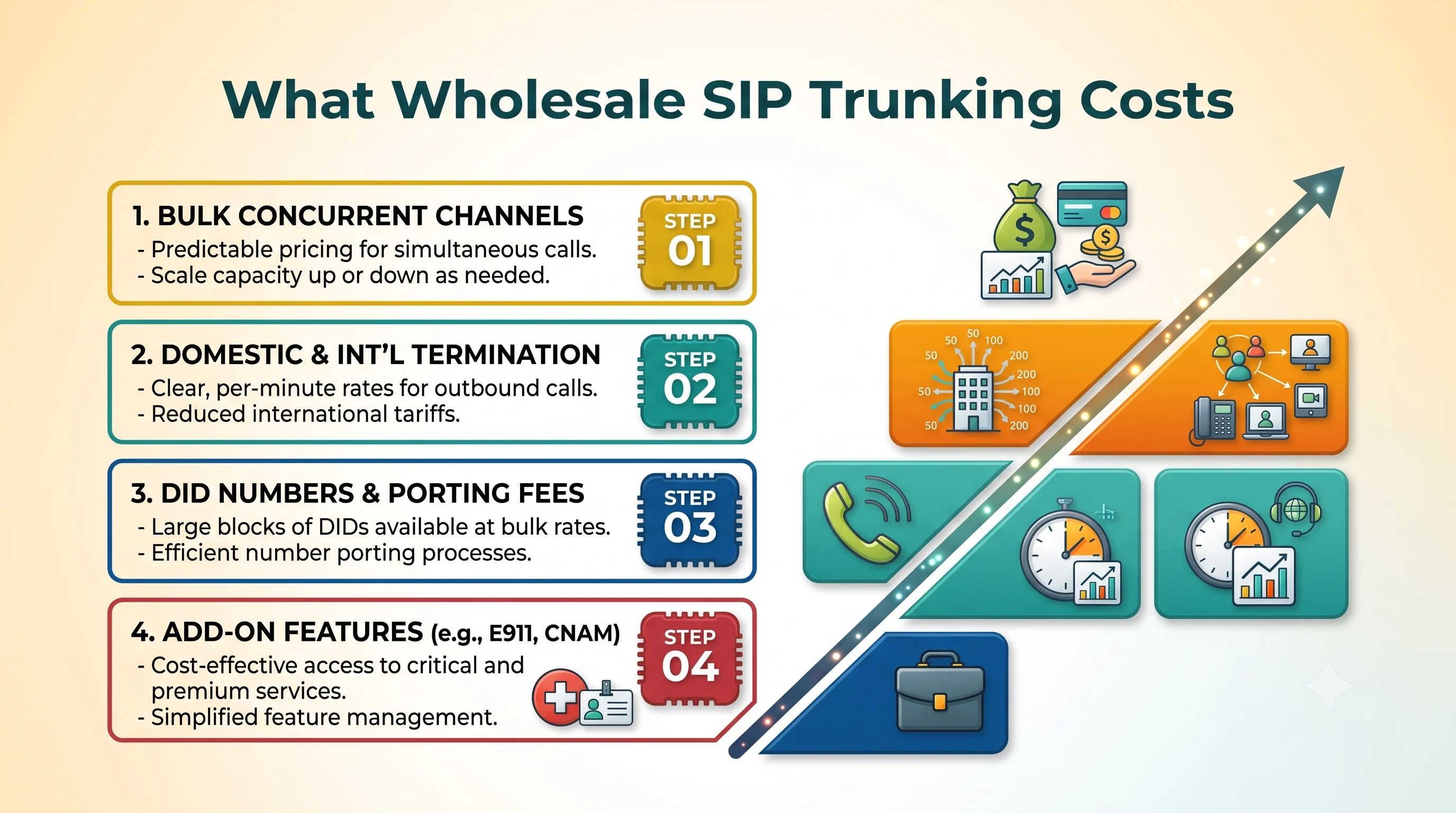
The headline rate is rarely the full story. Watch for add-ons that surprise first-time buyers:
- DID number fees: roughly $1–$5 per number each month.
- E911 charges: about $1.50–$3 per number, and mandatory in the US.
- Regulatory surcharges: 15–25% added on top of base rates.
- Bursting fees: billed when call volume exceeds your provisioned channels.
Resellers who buy wholesale and resell often see 50–75% margins, versus 15–25% on traditional agent commissions. Understanding VoIP termination pricing models helps you compare rate decks accurately against your real traffic profile.
6How to Choose a Wholesale SIP Trunking Provider
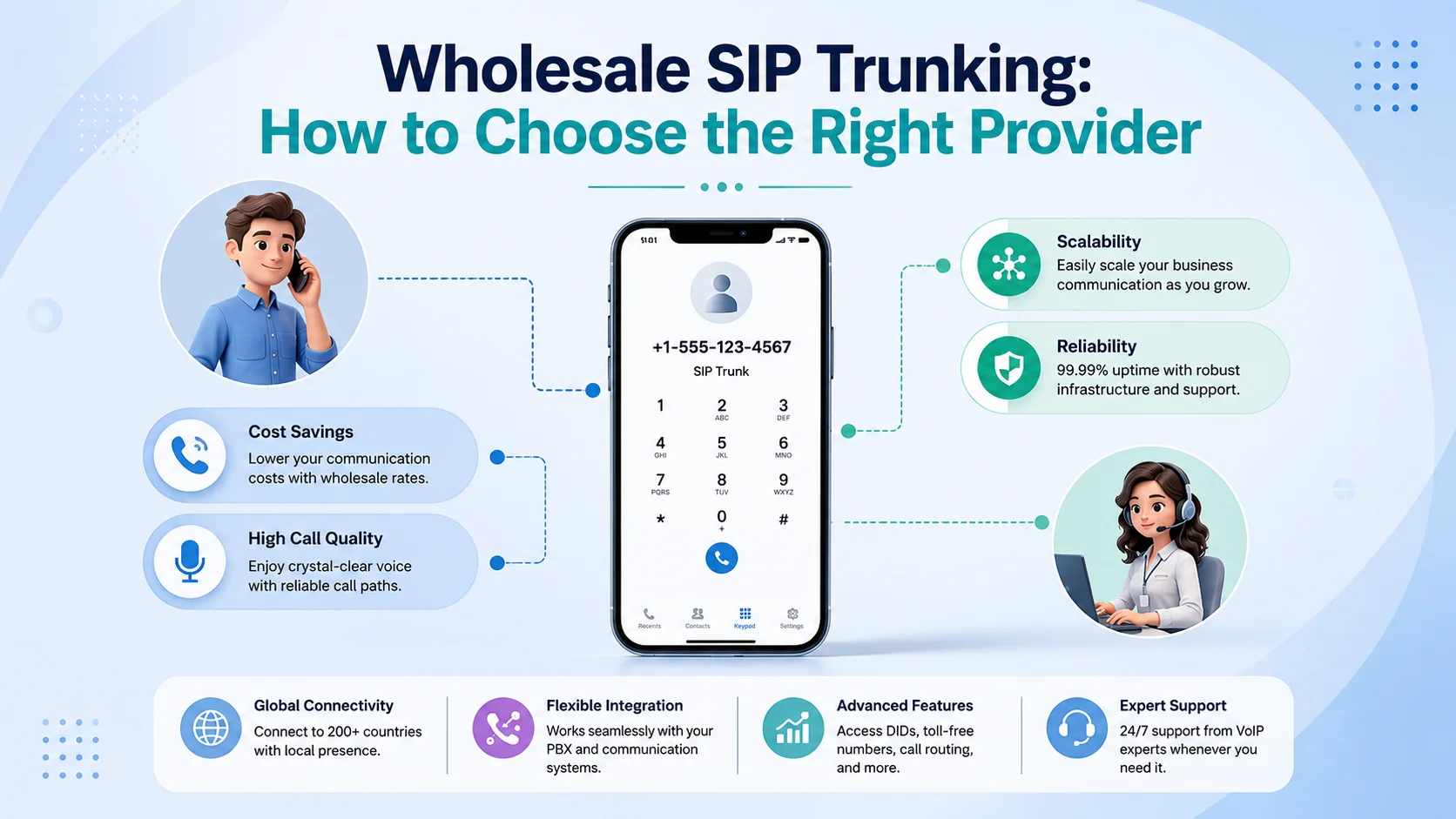
Weigh these factors before you commit. Each one protects either your call quality or your margin:
- Network quality: insist on Tier-1 carrier interconnects, redundancy, and proven uptime. Softtop maintains 99.99% uptime across 150+ countries — the kind of reliability revenue-critical calls demand.
- Pricing transparency: ask for a full rate deck and every surcharge in writing. Hidden regulatory and DID fees are the most common first-invoice shock.
- Provisioning speed: real-time activation of trunks and DID numbers beats multi-day waits and lets you launch or scale the same day.
- Support and SLAs: look for 24/7 technical help and clear service-level agreements, ideally with a named escalation path.
- Security and compliance: verify fraud detection, encrypted SIP, and support for E911 and STIR/SHAKEN call authentication.
- Scalability: confirm you can add channels and numbers without renegotiating your whole contract.
If you also route high call volumes, evaluate the provider's voice termination services alongside the trunk itself.
7How to Set Up Wholesale SIP Trunking
Getting live is faster than most people expect, usually a matter of days:
- 1Size your channels using the peak-concurrency method above.
- 2Choose a provider and confirm their SIP trunking services match your codec, security, and country needs.
- 3Configure your IP PBX with the SIP credentials and trunk details the provider supplies.
- 4Port your numbers or provision new DIDs, allowing time for porting if you are moving carriers.
- 5Test and go live by running calls in both directions, checking audio quality and caller ID, then cutting over live traffic.
A good provider supports you through each step and monitors the trunk after launch, so issues surface before your customers notice them.
8Conclusion
Wholesale SIP trunking has become the default way for businesses, resellers, and call centers to run voice affordably and at scale. By buying concurrent channels in bulk over IP, you cut per-minute costs, simplify your network, and gain the freedom to resize capacity on demand. The smart move is to size channels to peak concurrency, read every line of the rate deck, and judge providers on Tier-1 quality, transparent pricing, and fast support. Softtop brings those together with 99.99% uptime, 70+ global Points of Presence, coverage across 150+ countries, and more than a decade serving 1,000+ active clients. Match a provider's network and pricing to your real traffic, and your wholesale SIP trunking setup will pay for itself as you grow.