1Introduction
Every smartphone-era user has used an internet-based call at some point — but owning a free VoIP phone number you can share on a business card, assign to a team line, or port between providers is a different proposition entirely.
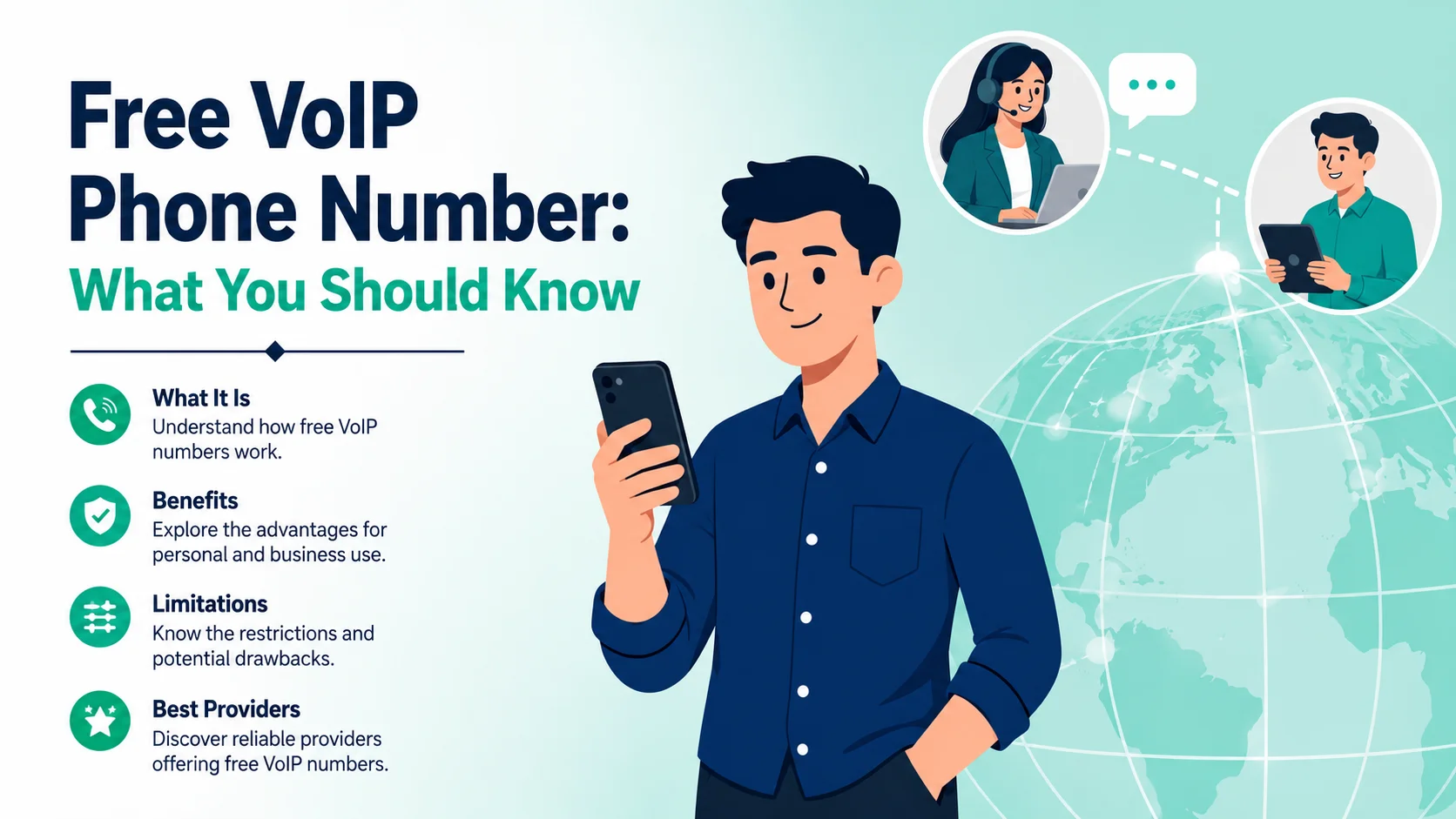
A free VoIP phone number gives you a real, dialable telephone number that routes calls and texts over the internet rather than through a mobile carrier's network. No SIM card, no monthly line rental, no physical phone required — just an app or a SIP-compatible device connected to the internet.
The catch, as with most free-tier services in telecoms, is in the details: usage caps, restricted destinations, missing features, and the question of whether the number is actually yours to keep. This guide breaks down what free VoIP numbers really include, where the limits are, who they suit, and when a low-cost paid plan closes the gap more effectively than chasing a free tier.
2What Is a Free VoIP Phone Number?
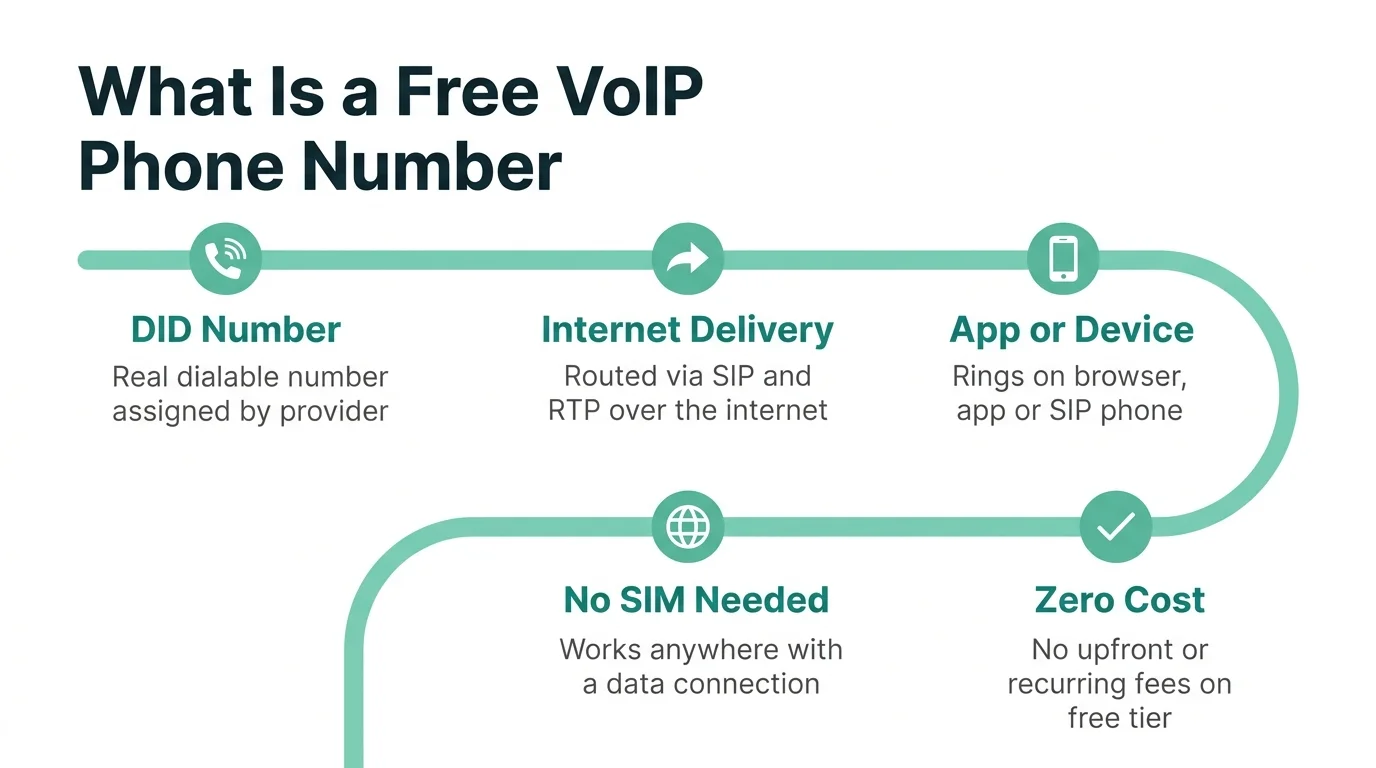
A free VoIP phone number is a telephone number provisioned over an internet-based telephony platform at no upfront or recurring cost to the user. Unlike mobile numbers tied to a SIM card or landline numbers tied to physical copper infrastructure, a VoIP number exists entirely in software — it can ring on a browser, a desktop app, a smartphone app, or any SIP-registered device.
The number itself is a real PSTN-dialable number assigned from a block allocated to the VoIP provider. From the perspective of the person calling you, it looks and behaves like any other phone number: they dial it, it rings, you answer.
Providers offering free numbers generate revenue through upselling to paid minute bundles, advertising within free-tier apps, charging for premium features such as voicemail transcription or call recording, and monetising outbound calling beyond a capped free allowance. Understanding a provider's business model gives you a clearer picture of how reliable and sustainable the free tier will be over time.
3How a Free VoIP Number Works
When someone dials your free VoIP number, the call originates on the PSTN and is routed to the VoIP provider's switching infrastructure. From there it is delivered over the internet as SIP signalling and RTP audio packets to your registered device.
The key steps in every call:
- Number assignment: The provider allocates a DID (Direct Inward Dialling) number from their number block in the country or area code you select.
- Registration: Your device or app registers to the provider's SIP server using credentials issued at signup.
- Inbound call delivery: Calls to your number are converted from PSTN to SIP and forwarded to your registered device.
- Outbound calling: Free plans typically cap outbound minutes or restrict destinations to domestic calls only.
Call quality depends on your internet connection, the provider's network infrastructure, and how efficiently the codec handles packet loss. On a stable broadband or Wi-Fi connection, VoIP call quality is indistinguishable from a traditional call. For operators looking beyond consumer apps, understanding how carrier-grade wholesale voice termination works gives important context on the infrastructure sitting beneath every VoIP call — see the wholesale voice termination platform for a deeper look.
4What Free VoIP Plans Typically Include
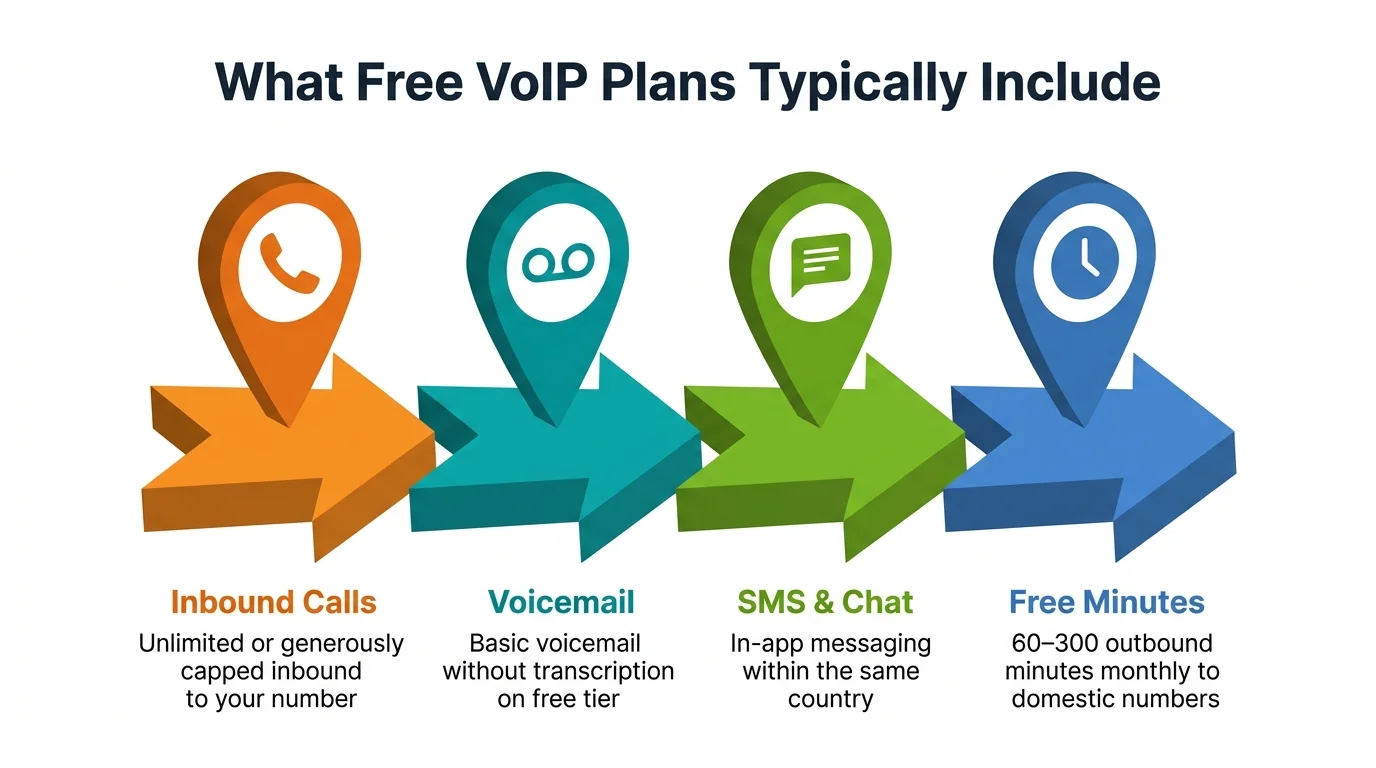
Most free VoIP phone number services include:
- One local or national DID number in a limited set of supported countries
- Inbound calls to that number — usually unlimited or generously capped
- A mobile or web app to receive calls and send messages
- Basic voicemail without transcription
- Limited outbound calling — commonly 60–300 free minutes per month to domestic destinations
Some providers extend free plans with Wi-Fi calling between app users at no extra cost, SMS and MMS messaging within the same country, call forwarding to one external number, and basic call history logs.
What free plans rarely include: toll-free numbers, international calling outside the home country, multiple simultaneous users, call recording, the ability to port your number to another provider, or any SLA-backed uptime guarantee.
5The Real Limits of Free VoIP Numbers
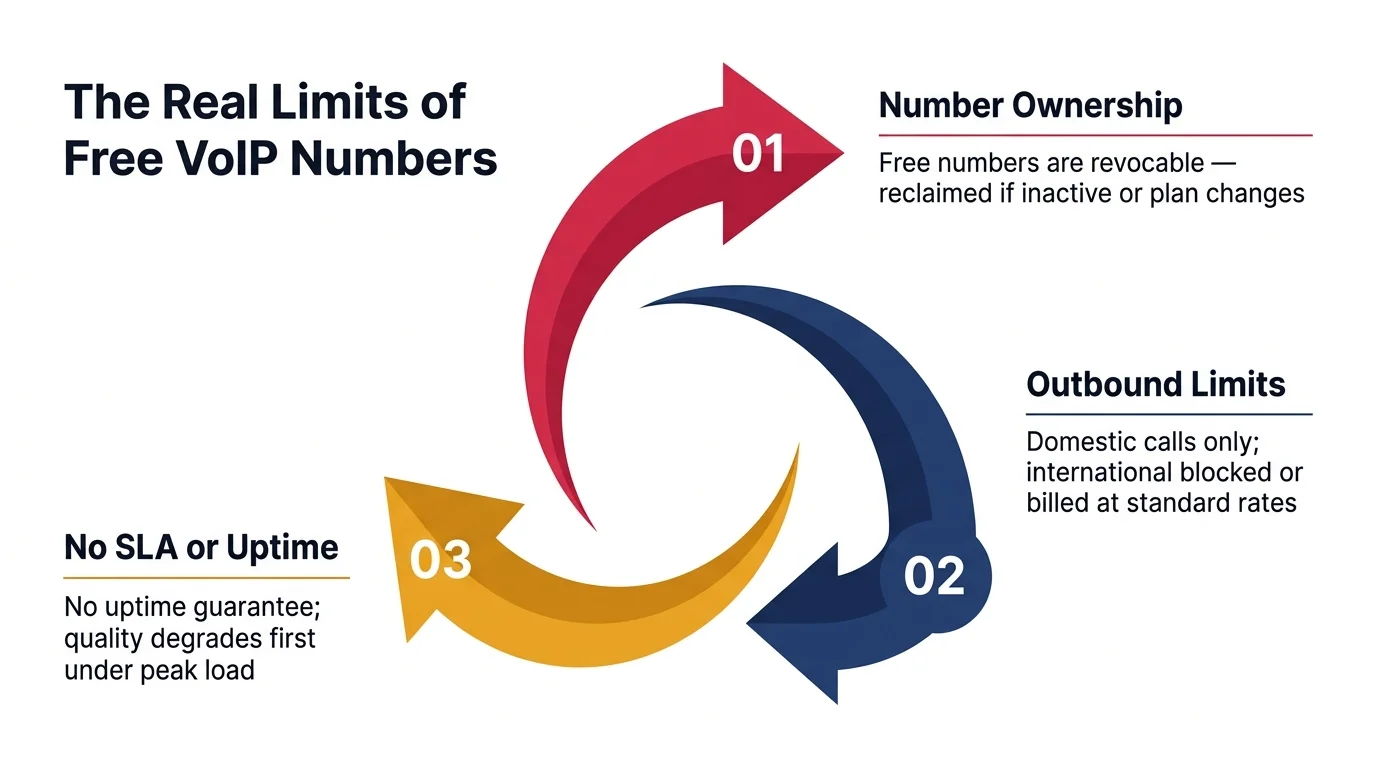
Free tiers in VoIP come with trade-offs that are easy to overlook at signup and costly to discover later:
Number ownership
Free numbers are issued on a revocable licence. If your account is inactive or the provider changes its free tier terms, the number is reclaimed and reassigned. Porting a free VoIP number to another carrier is either unsupported or requires upgrading to a paid plan first.
Outbound destination restrictions
Free outbound minutes cover domestic calls only in most cases. International calls — even to low-cost destinations — are billed at standard rates or blocked entirely on the free tier.
No business-grade SLA
Free-tier infrastructure carries no uptime guarantee. During peak load, call quality on free plans is typically the first to degrade. The FCC's guidance on VoIP service reliability explains what consumers should expect from VoIP providers in terms of emergency service access and network reliability standards.
Feature gaps for teams
IVR menus, team call routing, call recording, CRM integrations, and analytics dashboards are universally paywalled. For any use case beyond a single personal number, the free tier runs out of headroom quickly.
Advertising
App-supported free plans insert advertising into the user experience. For professional use, this creates a poor impression in client-facing situations.
SMS verification blocks
Free VoIP numbers resolve as "VoIP" on carrier lookup, and platforms with strict fraud filtering — WhatsApp, Instagram, Gmail — reject them at the OTP stage. If a signup keeps failing verification, see our guide to free non-VoIP numbers for options that pass those checks.
6Who Should Use a Free VoIP Number?
Free VoIP numbers are a practical fit for:
- Travellers and remote workers who want a local number in a country they are visiting without buying a SIM card
- Sole traders and freelancers who want a separate work number on their existing smartphone without paying for a second mobile line
- Developers and QA engineers who need a number to test call flows, IVR systems, or SMS applications without committing to a paid service
- Individuals in regions with high mobile termination rates who want to receive calls over Wi-Fi at no per-minute cost
They are not a good fit for contact centres routing calls across multiple agents, businesses building customer-facing IVR flows, any operation where number portability and long-term number ownership matters, or use cases that require international outbound calling at any meaningful scale.
7How to Get a Free VoIP Phone Number
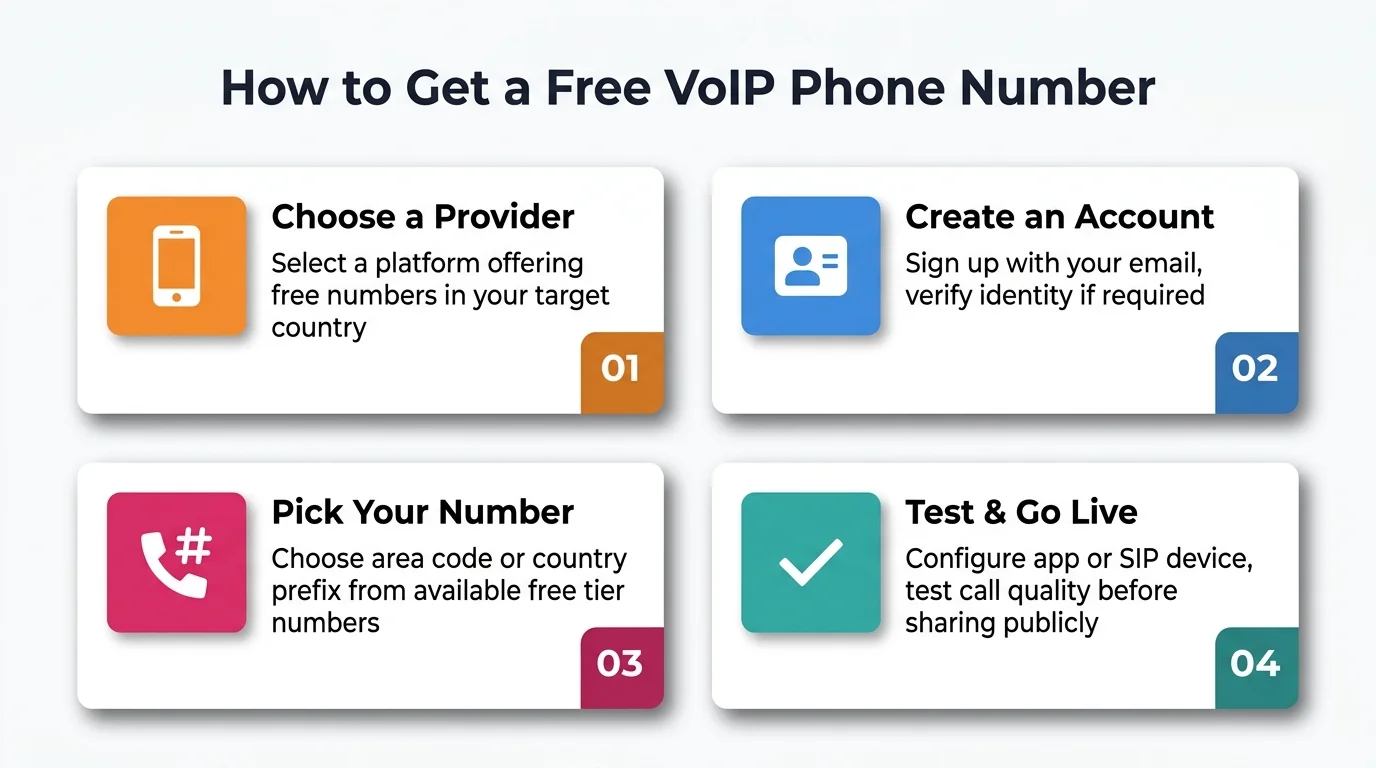
The process is straightforward on most platforms:
- 1Choose a provider that offers a free number in your target country and covers your primary use case on the free tier.
- 2Create an account with your email address. Most providers require email verification; some request a mobile number for identity confirmation.
- 3Select your number by choosing an area code or country prefix. Availability of specific area codes on free tiers is limited compared to paid plans.
- 4Download the app or configure your SIP device. On app-based platforms, install the iOS or Android client and sign in. On SIP-based platforms, enter your SIP credentials into a softphone such as Zoiper or Linphone.
- 5Test inbound and outbound calling to confirm audio quality and codec performance on your connection.
- 6Understand the number's terms before sharing it publicly — confirm portability status and the conditions under which the number can be reclaimed.
8When to Upgrade from Free to Paid
A paid VoIP plan is the right move when any of these conditions apply:
- You are sharing the number across a team or routing calls to multiple agents
- The number appears on marketing materials, business cards, or your website — meaning it must remain stable long-term
- You need outbound calling beyond domestic-only coverage
- Call recording, voicemail transcription, or CRM integration are part of your workflow
- Uptime matters: free plans offer no SLA; paid carrier-grade infrastructure guarantees 99.99% availability
For wholesale operators, resellers, and carriers, consumer free tiers are not an infrastructure solution. Volume-based per-second billing across CLI, CC, and A-Z routes is the appropriate model — wholesale VoIP rates with full destination coverage and no minimum commitment give a clearer picture of what professional-grade pricing looks like.
9Conclusion
A free VoIP phone number is a capable starting point for individuals who need a second number, a local presence in a market they are visiting, or a test environment for development work. The technology is real and functional — calls route correctly, quality is adequate on a stable connection, and the setup barrier is minimal.
The limitations are equally real: number ownership is conditional, outbound scope is narrow, and the features needed for any team or business use case are consistently paywalled. For personal use or short-term testing, a free VoIP number does the job. For professional use where the number is a long-term asset, a low-cost paid plan with portability rights and an uptime commitment is a better investment from day one.
10Frequently Asked Questions
Can I get a free VoIP phone number without a credit card?
Yes. Most providers offering free VoIP numbers require only an email address to create an account and claim a number. No payment method is required for the free tier, though some platforms request a mobile number for identity verification at signup.
Is a free VoIP number a real phone number that anyone can call?
Yes. Free VoIP numbers are real DID numbers assigned from the provider's allocated number block. Anyone can call them from any phone — mobile, landline, or VoIP — and the call routes through to your app or SIP device normally.
Can I keep a free VoIP number permanently?
Not reliably. Free numbers are held on a revocable basis and can be reclaimed if the account is inactive or if the provider changes its free tier terms. For a permanent number, a paid plan with portability rights is the only reliable option.
Can I use a free VoIP number for two-factor authentication (2FA)?
Some services accept VoIP numbers for SMS-based 2FA; others explicitly block VoIP numbers due to susceptibility to number recycling attacks. Verify whether the specific services you use accept VoIP numbers before relying on one for 2FA.
What is the difference between a free VoIP number and a virtual phone number?
A virtual phone number is any number not tied to a physical line — VoIP numbers are a subset of virtual numbers delivered over the internet via SIP and RTP. Not all virtual numbers are VoIP-based; some forward from the PSTN. Free VoIP numbers specifically use internet-based delivery to route calls to apps or SIP devices.