1Introduction
"Tier-1 carrier" is the single most overused phrase in a wholesale VoIP rate deck, and the least verified. Carrier tier isn't a marketing badge — it's a structural fact about a company's network: whether it owns switching infrastructure and holds direct interconnects with local operators, or whether it's leasing capacity from someone who does. That structural difference is what actually produces the gap in answer rates, latency, and per-minute pricing that shows up on your invoice.
Most buyer guides tell you what to look for in a termination provider — SLA terms, billing granularity, support hours. This one answers a narrower and more useful question: given a company calling itself a "Tier-1 wholesale carrier," how do you actually determine what tier it operates at, and why does that tier matter more than almost anything else on the rate sheet?
2What "Carrier Tier" Actually Means
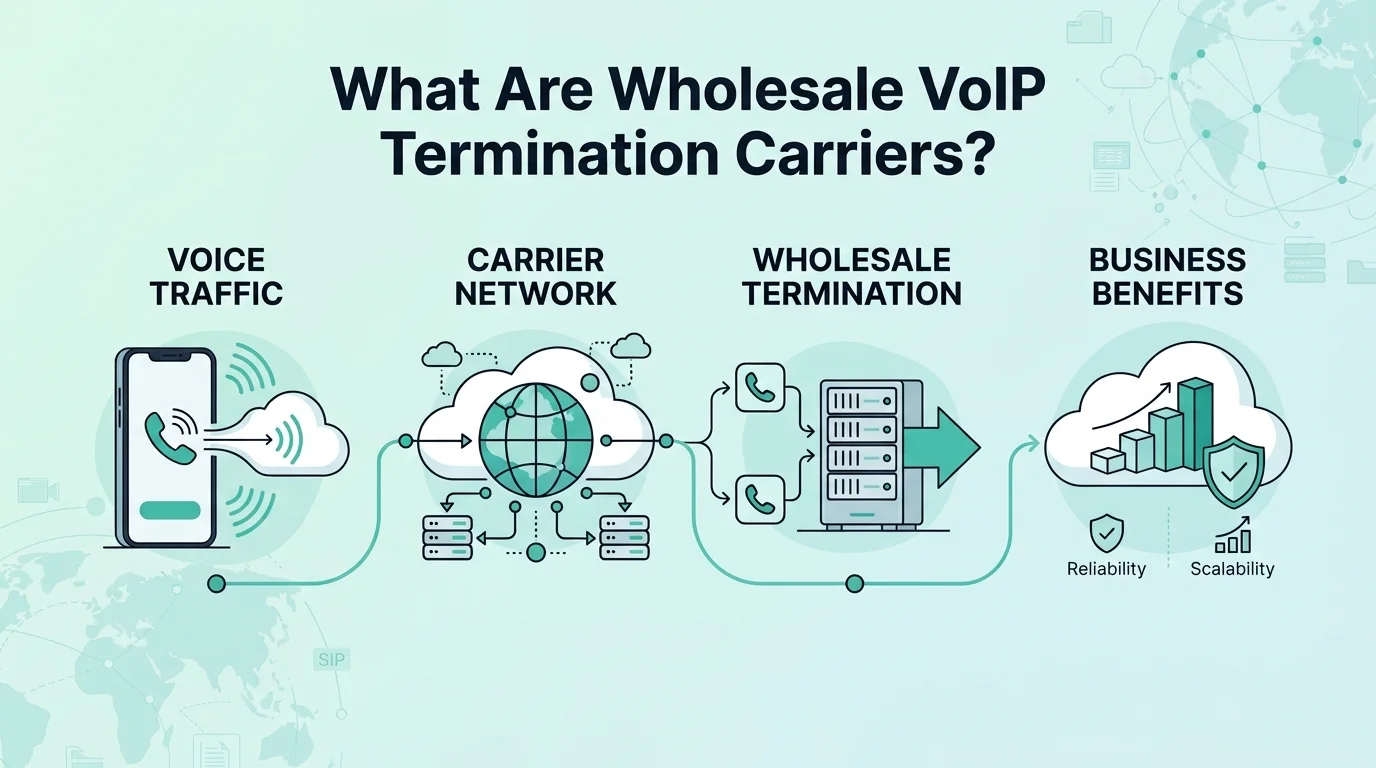
Carrier tier describes a company's position in the physical chain that completes a call, not its size or its marketing budget. A Tier-1 carrier owns switching infrastructure — soft switches and session border controllers — and holds direct, bilateral interconnect agreements with local telephone operators in the destination markets it serves. When a Tier-1 carrier hands off a call in a given country, that handoff happens across its own commercial relationship with the terminating network, with no other company sitting in between. This is the same structural concept that defines a SIP trunking provider's own network depth — ownership of the interconnect, not just a login to route traffic through one.
A Tier-2 carrier, by contrast, owns some infrastructure and some direct routes, but fills the rest of its coverage map by leasing capacity from Tier-1 providers. A reseller owns none of the underlying network — it buys capacity from Tier-1 or Tier-2 carriers and resells it, often under its own brand, with a markup and no visibility into (or control over) the actual path a call takes downstream.
3Direct Interconnects vs. Hop-Through Routing
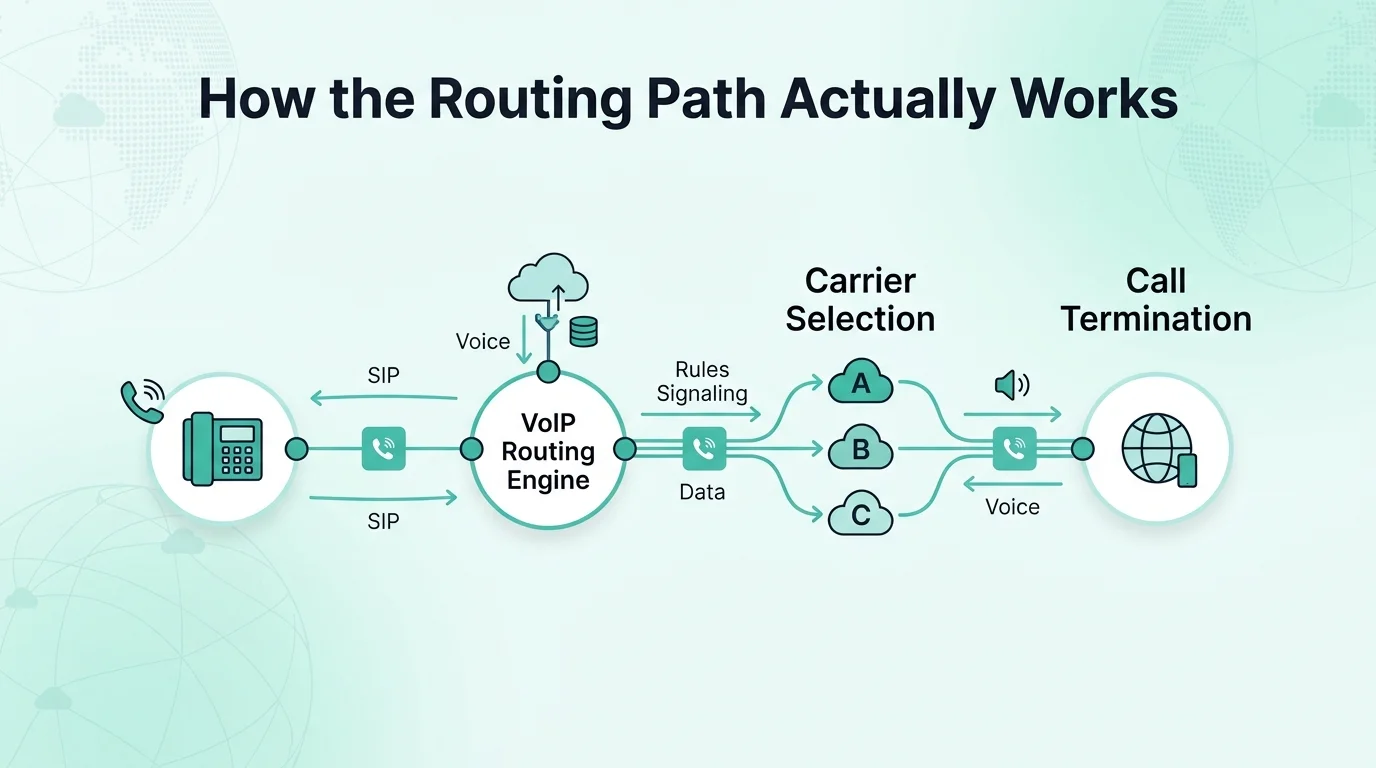
A direct interconnect is a single physical and commercial link between the originating carrier's switch and the destination network's switch. The call crosses one boundary. Hop-through routing means the call passes through one or more additional intermediary networks — each belonging to a different company — before it reaches the destination operator. Both can technically complete the call. They do not perform the same.
- Each hop adds a switching delay, typically 20–80ms, which accumulates into audible post-dial delay and, on longer chains, noticeable call setup lag.
- Each hop is a separate point of failure — a congested or misconfigured intermediate network can degrade or drop calls that would complete fine on a direct path.
- Each hop takes a margin, so a rate that looks competitive at the top of the chain often reflects three or four smaller markups stacked on top of the actual terminating cost.
- Each hop is a place where signaling can be altered or lost — CLI can get stripped, and STIR/SHAKEN attestation can degrade from A to B or C as the call crosses networks that don't originate the attestation themselves.
None of this is visible on a rate sheet. Two carriers can quote an identical per-minute rate to the same destination — one over a direct interconnect, one over three hops — and the buyer has no way to tell the difference from the number alone.
4How Tier Actually Shows Up in ASR, Latency, and Price
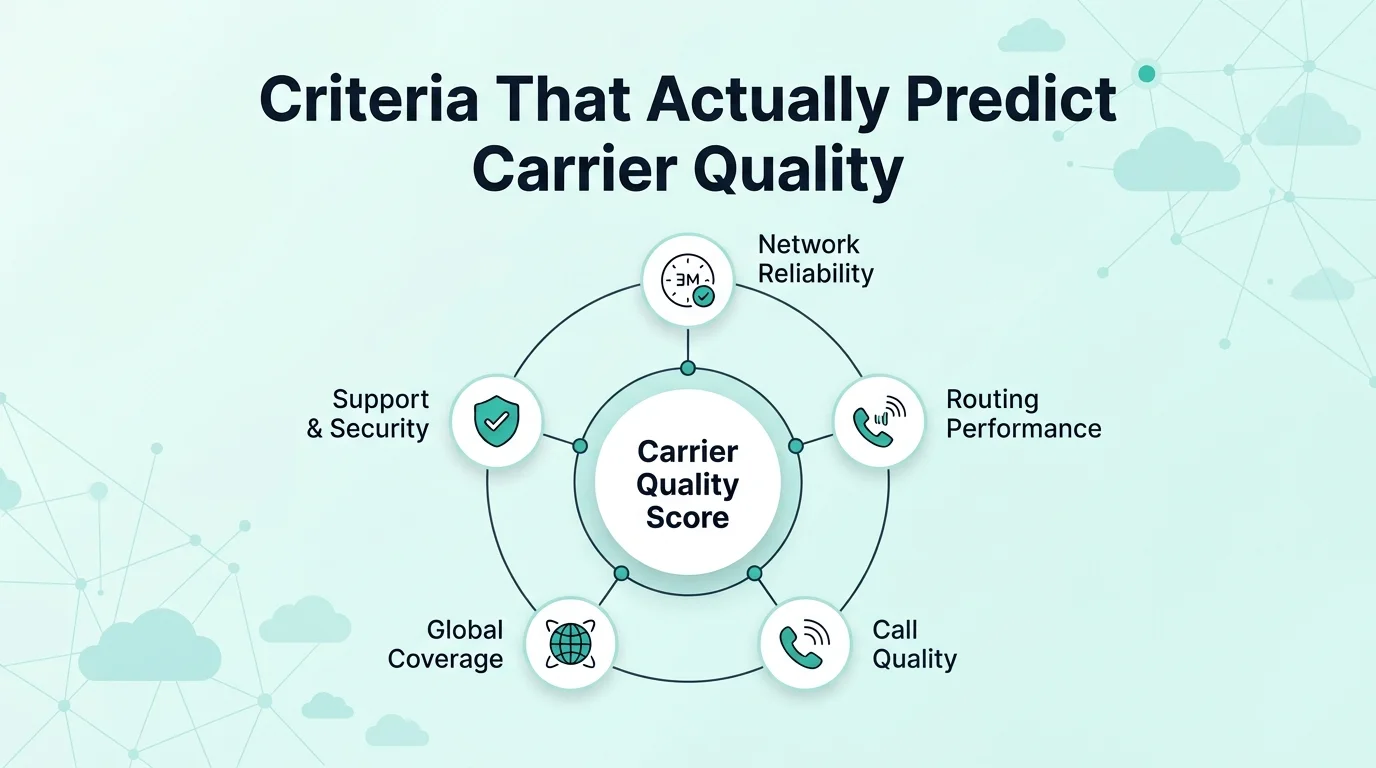
Tier is not a cosmetic label — it's the variable most predictive of the numbers that actually matter on a route:
- ASR (answer-seizure ratio): Tier-1 direct routes typically hold the highest and most stable ASR because the carrier controls the full path and can guarantee benchmarks contractually. ASR on hop-through reseller routes fluctuates with the health of networks the reseller doesn't operate and often can't see into.
- Post-dial delay and latency: every additional switching hop adds measurable setup time. A call routed through two or three resellers before termination will consistently show higher PDD than the same call on a direct interconnect, even when both eventually connect.
- Pricing structure: Tier-1 rates are usually higher per minute in isolation, but lower on a cost-per-completed-call basis once failed and dropped calls are accounted for. Reseller rates that look cheaper on the sheet often reflect several margins stacked between the buyer and the actual Tier-1 network doing the work.
- Attestation integrity: STIR/SHAKEN attestation is strongest when it originates at the carrier that owns the calling relationship. Attestation quality tends to degrade as a call passes through intermediate hop-through networks that aren't the attesting party.
5How to Identify Which Tier a Carrier Actually Operates At
Since tier claims aren't regulated or verified by any third party, the burden is on the buyer to confirm them. A handful of direct questions expose the difference reliably:
- Ask for the interconnect list by destination country, and ask specifically which of those are direct bilateral agreements versus leased capacity. A genuine Tier-1 carrier can produce this without hesitation.
- Ask who the underlying network is on any route the carrier doesn't own directly. A Tier-2 carrier or reseller should be able to name their upstream Tier-1 partner — refusal to disclose this is itself informative.
- Ask for live ASR by destination, not a blended average across the whole network. A blended number hides weak corridors behind strong ones and is close to useless for evaluating a specific route.
- Ask whether the company operates its own soft switches and session border controllers, or whether it resells capacity provisioned on someone else's switching platform.
- Run a small live-traffic trial on the specific destinations that matter to your business, and compare ASR and PDD against your current provider before committing volume — this settles the tier question empirically, regardless of what's claimed in a sales deck.
A carrier that answers all five questions specifically and without deflection is very likely operating at the tier it claims. Vague answers, blended statistics, or an unwillingness to name upstream partners are the clearest signal that a "Tier-1" label is being used loosely.
6A Reseller Isn't Automatically a Bad Choice — But the Label Matters
None of this makes reselling illegitimate. Many well-run resellers add real value — regional support, flexible contract terms, packaged billing — on top of capacity they source responsibly from solid Tier-1 or Tier-2 networks. The problem isn't reselling itself; it's a reseller marketing itself as a Tier-1 carrier and pricing accordingly, while a buyer assumes they're getting a direct interconnect they aren't.
Knowing which tier you're actually buying changes how you negotiate and what you can reasonably expect. A reseller's SLA is only as strong as the SLA their upstream Tier-1 partner offers them, and outages upstream will hit you regardless of what your contract with the reseller says. Buying reseller capacity with full knowledge of that fact is a legitimate business decision. Buying it under the impression it's a direct Tier-1 route is not.
7Conclusion
Carrier tier is a structural question with a factual answer, not a marketing distinction — and it's answerable if you ask the right questions before signing. A Tier-1 carrier owns its switching infrastructure and direct interconnects; a Tier-2 blends owned and leased routes; a reseller owns neither and depends entirely on someone else's network for the quality it delivers. Softtop operates as a Tier-1 provider with direct interconnects into 150+ countries, and shares live ASR by destination and interconnect detail with any prospective customer who requests a rate deck — the same verification standard this guide recommends applying to any carrier you evaluate.
8Frequently Asked Questions
What is the actual difference between a Tier-1 and Tier-2 wholesale VoIP carrier?
A Tier-1 carrier owns its switching infrastructure and holds direct, bilateral interconnect agreements with local operators in the markets it serves — no other company sits between it and the destination network. A Tier-2 carrier owns some direct routes but fills the rest of its coverage by leasing capacity from Tier-1 providers, so quality on those leased routes depends on a network it doesn't control.
Is a reseller the same thing as a Tier-2 carrier?
No. A Tier-2 carrier owns some of its own switching infrastructure and direct routes. A reseller typically owns none — it purchases capacity in bulk from Tier-1 or Tier-2 carriers and resells it, usually under its own brand, without operating any of the underlying network itself.
How does hop-through routing affect call quality compared to a direct interconnect?
Each intermediate hop between the originating carrier and the destination network adds switching delay, a new point of possible failure, and an added margin. Direct interconnects cross a single boundary and typically produce higher, more stable ASR and lower post-dial delay than the same call routed through two or three intermediary networks.
Why do two carriers quoting the same per-minute rate sometimes perform very differently?
Rate sheets don't disclose routing path. One carrier may complete the call over a direct Tier-1 interconnect, while another routes the identical destination through several hop-through resellers. The quoted rate can be identical while the underlying infrastructure — and therefore the resulting ASR, latency, and attestation quality — is completely different.
What questions should I ask a carrier to verify which tier they actually operate at?
Ask for their interconnect list by destination and which are direct versus leased, ask them to name their upstream Tier-1 partner on any route they don't own, request live ASR by destination rather than a blended average, and ask whether they operate their own switching infrastructure. Then confirm the answers with a small live-traffic trial before committing volume.