1Introduction
When someone sees a 703 area code on their caller ID, they think Northern Virginia — a corridor home to federal power, Fortune 500 headquarters, and one of the highest median incomes in the country. First assigned in 1947 as the original statewide Virginia code, 703 has since been refined to cover a compact, high-value region just across the Potomac from Washington, D.C.
In this guide, you'll find everything about 703: what cities it covers, the history behind its splits and overlays, how scammers exploit the code's government associations, and — if you want your own Northern Virginia number — a step-by-step path to claiming one.
2What Is the 703 Area Code?
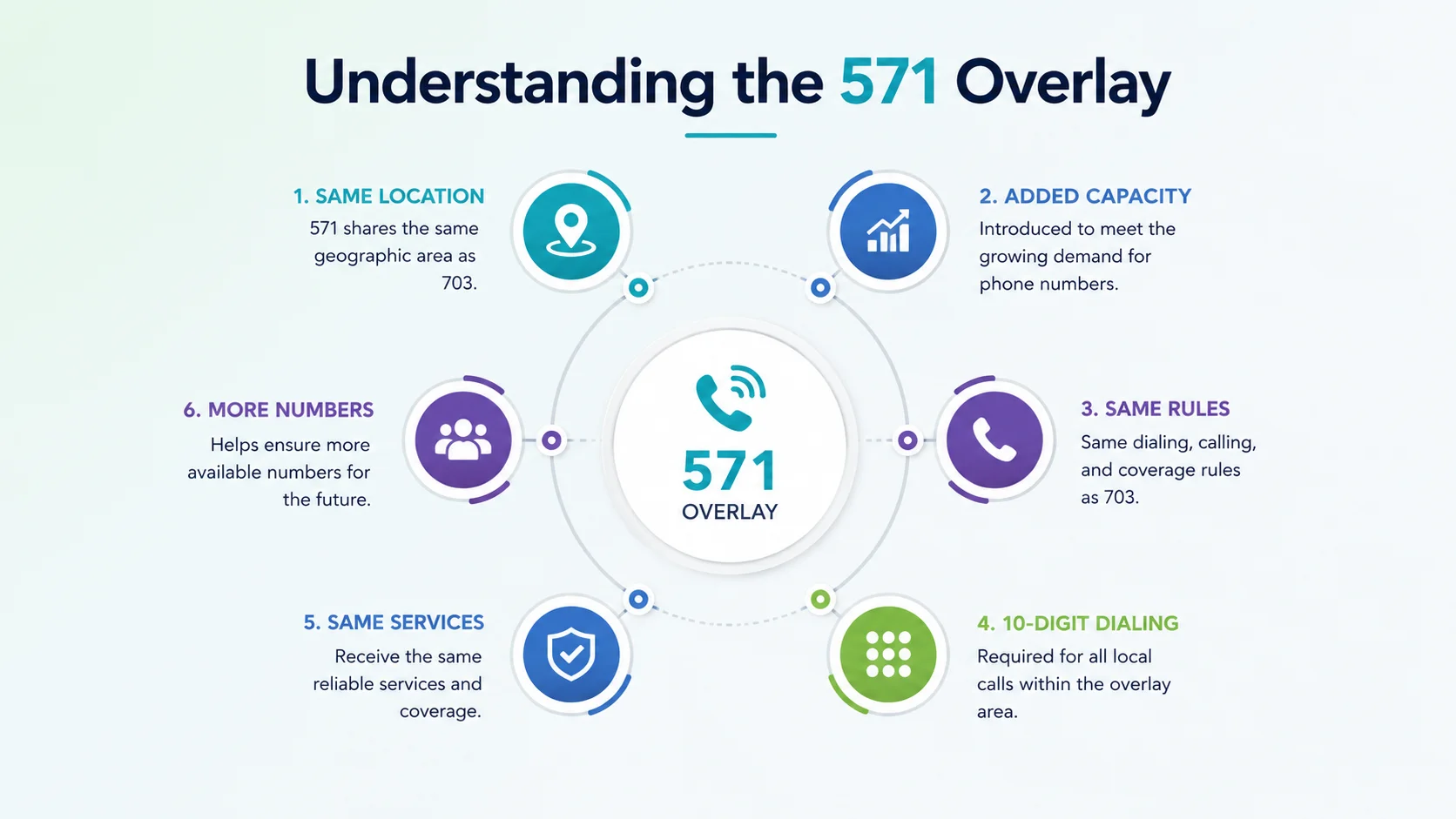
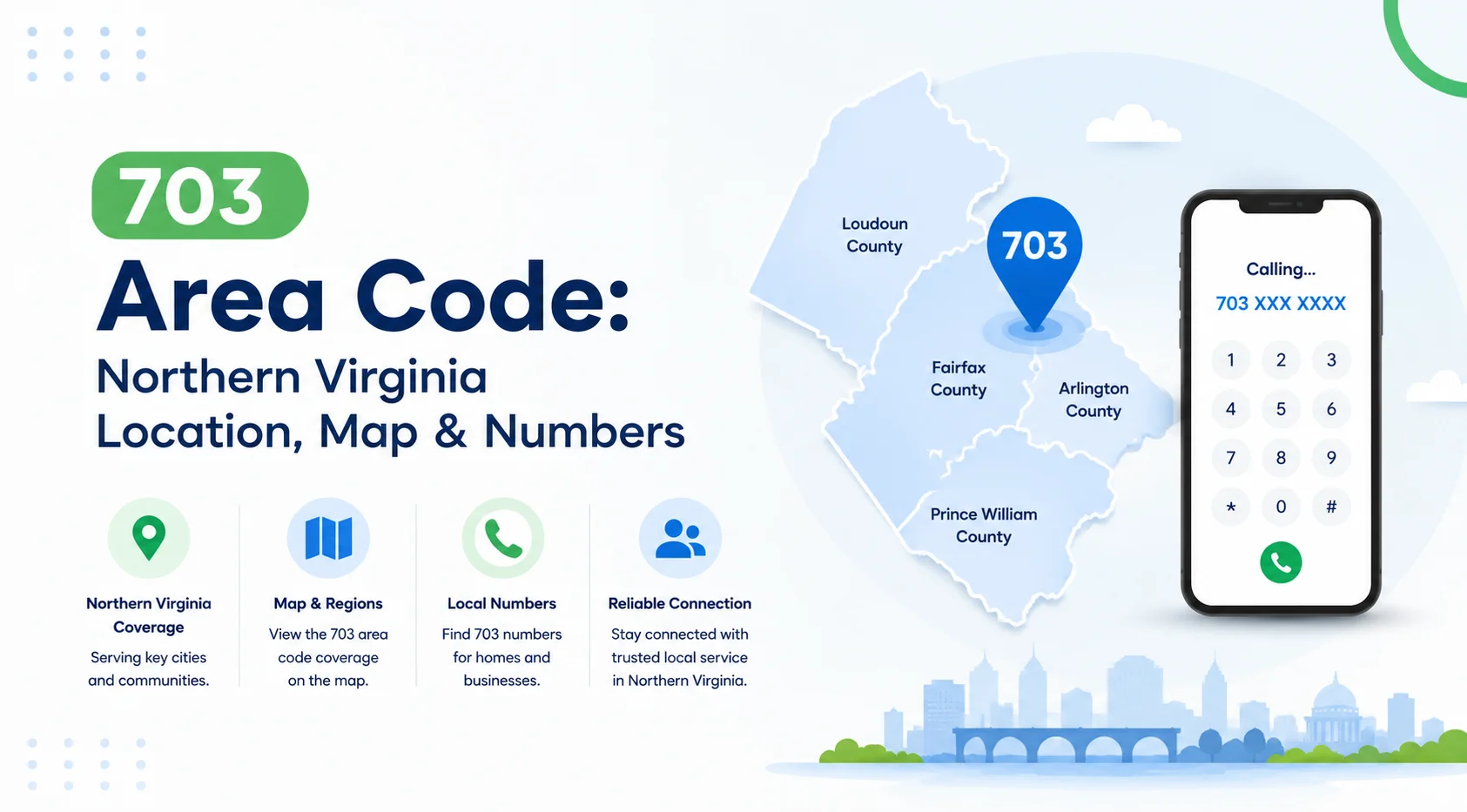
The 703 area code is a NANPA-administered code covering Northern Virginia, including Arlington County, the City of Alexandria, Fairfax County, Prince William County, Loudoun County, and several independent cities such as Falls Church and Manassas.
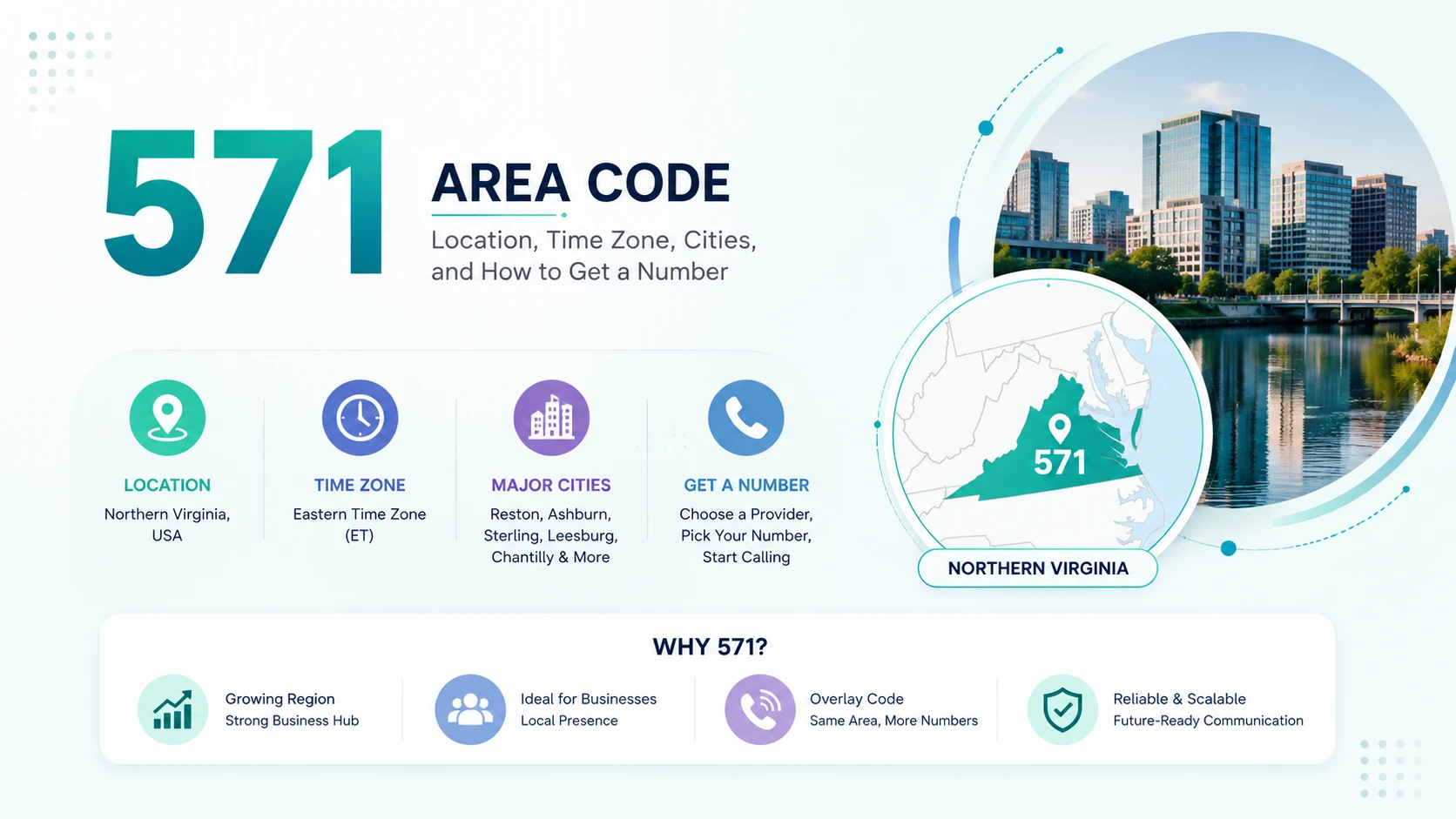
703 shares its territory with the 571 area code overlay, introduced in 2000 when the supply of available 703 numbers ran low. Both codes serve the same geographic footprint — callers within the region may have either prefix. All local calls within the 703/571 overlay zone require 10-digit dialing.
- Time zone: Eastern (UTC−5 standard, UTC−4 daylight)
- Overlay: 571 (active since March 1, 2000)
- Major cities: Arlington, Alexandria, Fairfax, Reston, McLean, Tysons
- Country: United States
3A Brief History of the 703 Area Code
The 703 area code has one of the longer histories in the NANP, spanning nearly eight decades of population growth, government expansion, and the tech boom that transformed Northern Virginia into a global hub.
| Year | Event |
|---|---|
| 1947 | 703 established as the single statewide area code for Virginia |
| 1973 | 804 split off to serve central and eastern Virginia, leaving 703 covering western and northern Virginia |
| 1995 | 540 split off to cover western Virginia; 703 narrowed to Northern Virginia only |
| 2000 | 571 overlay introduced for Northern Virginia due to exhaustion of 703 numbers |
| 2010s | Amazon HQ2 announced for Arlington; tech sector growth drives record demand for new numbers |
Each split and overlay reflects the region's growth. The 1995 creation of 540 for western Virginia concentrated 703 into the dense suburban corridor nearest Washington, D.C. — exactly the territory where number demand has been highest ever since.
4Cities and Counties in the 703 Area Code
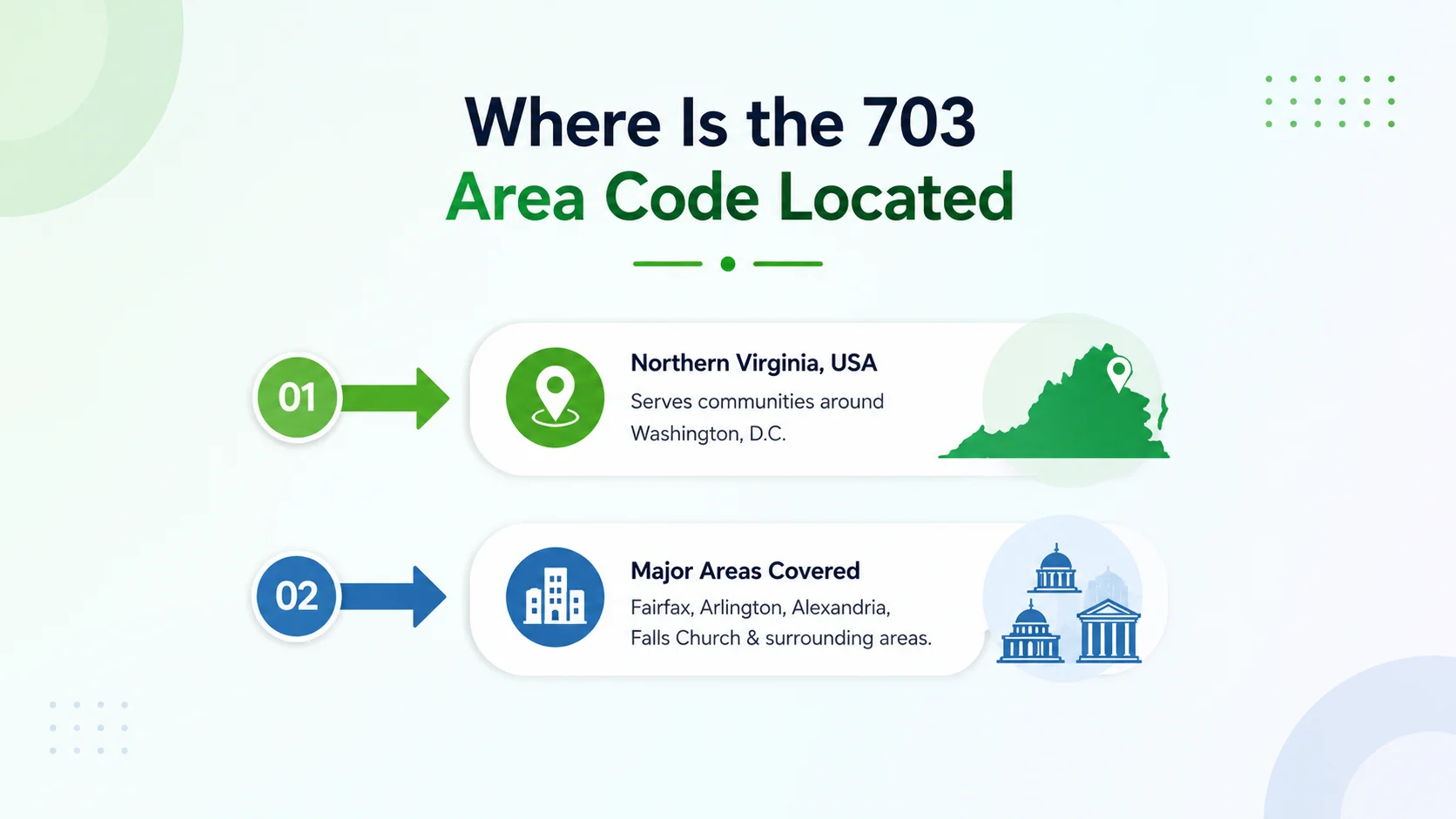
The 703 area code covers some of the most prosperous and strategically significant localities in the United States, sitting just across the Potomac from the 202 area code in Washington, D.C. Below is a breakdown by county and major city.
| County / Independent City | Notable Cities & Communities |
|---|---|
| Arlington County | Arlington, Rosslyn, Ballston, Crystal City (Amazon HQ2) |
| City of Alexandria | Old Town Alexandria, Del Ray, Potomac Yard |
| Fairfax County | Fairfax, Reston, McLean, Tysons, Herndon, Vienna |
| Prince William County | Manassas, Woodbridge, Dumfries, Gainesville |
| Loudoun County | Leesburg, Ashburn, Sterling, Lansdowne |
| Independent Cities | Falls Church, Manassas City, Manassas Park |
Loudoun County is known as the "Data Center Capital of the World" — more than 70% of the world's internet traffic passes through its data centers. Many of those facilities carry 703 numbers.
5Why a 703 Number Builds Local Trust in Northern Virginia
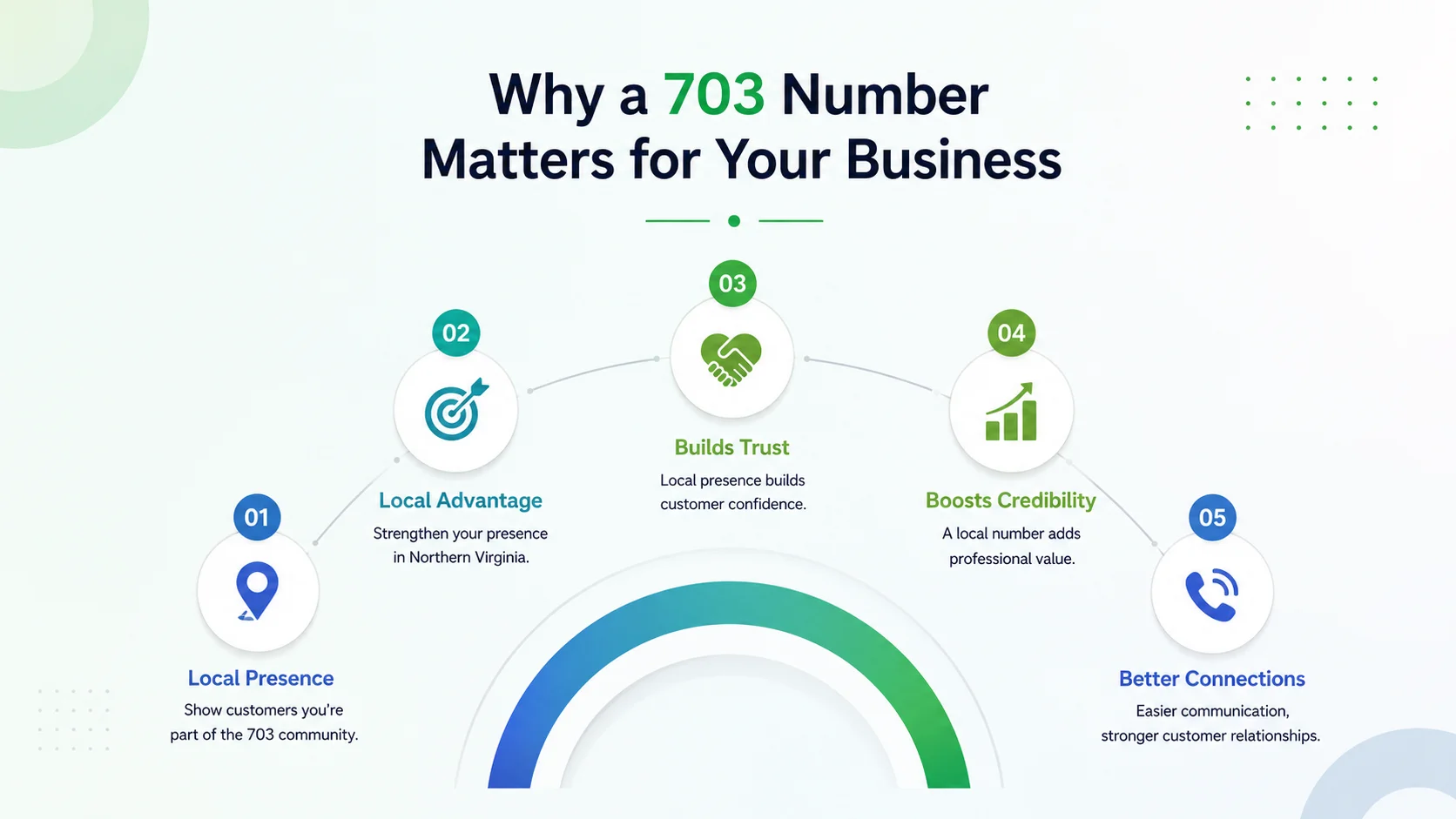
Northern Virginia businesses and professionals place high value on local credibility. A 703 area code signals presence in one of the country's most educated, high-income markets — and that perception directly affects whether someone picks up the phone.
Government and Contractor Credibility
Northern Virginia is home to more federal agencies and defense contractors than anywhere outside Washington proper. The Pentagon, CIA, DIA, NRO, and dozens of others operate in the 703 zone. If your business serves government clients or federal contracting agencies, a 703 number communicates that you're already in the room — not calling from across the country.
Tech Sector Recognition
Amazon HQ2 brought tens of thousands of tech workers to Arlington. Combined with established clusters in Reston and Tysons, Northern Virginia now rivals Silicon Valley corridors in tech employment density. Sales teams calling into this region see answer rates climb when the caller ID shows a local 703 prefix.
Businesses Using 703 Numbers
- Law firms and lobbying groups near Capitol Hill corridors
- Federal IT contractors in Reston and McLean
- Healthcare and insurance providers across Fairfax County
- Real estate agencies in Alexandria and Arlington
- Staffing firms serving the government contractor market
6How to Get a 703 Area Code Number
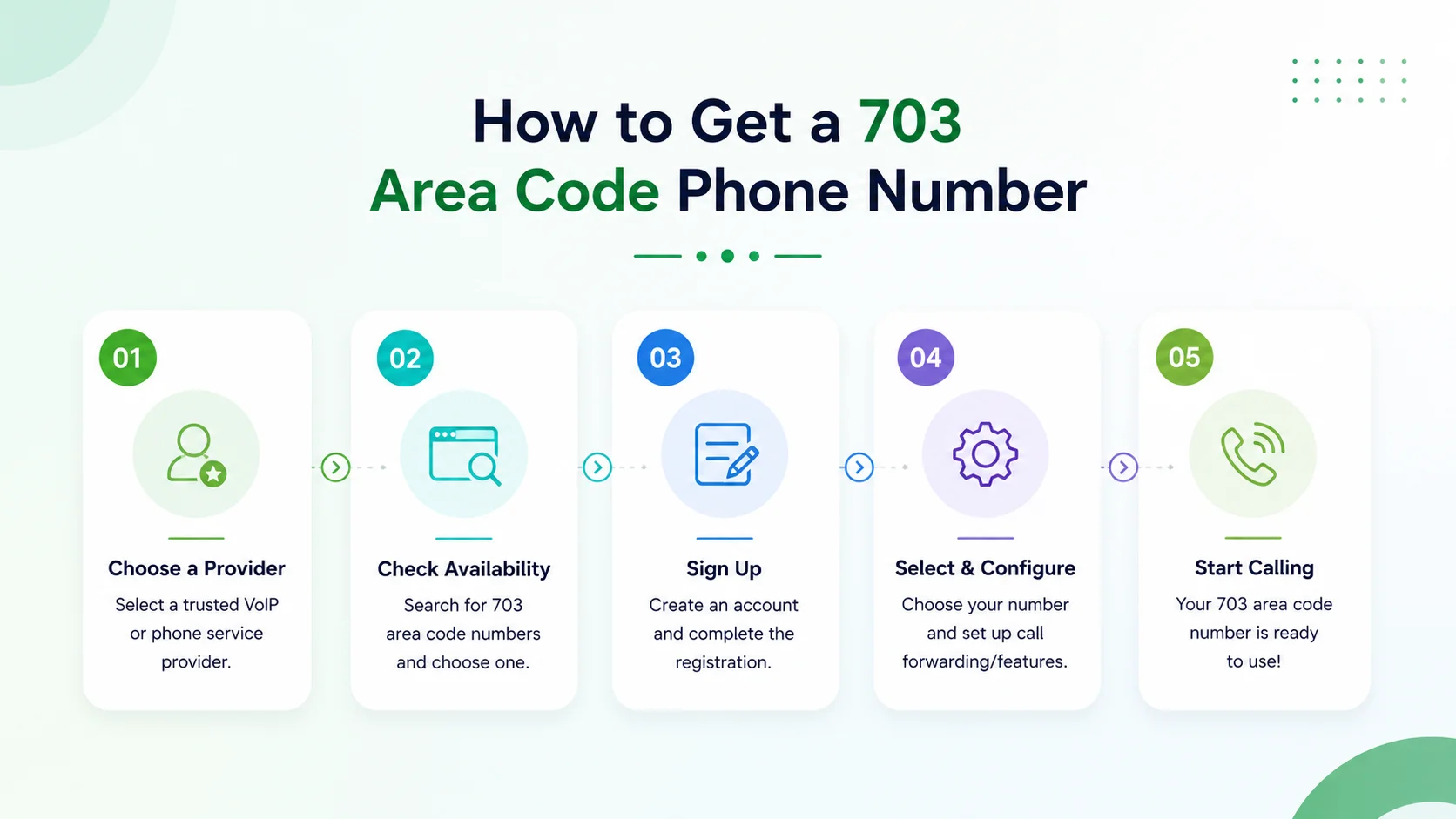
Getting a 703 number doesn't require a Northern Virginia address. Virtual phone providers like Softtop let you claim a local number and manage it entirely from the cloud in minutes.
Step 1: Choose a Provider
Select a virtual phone service that supports U.S. local numbers. Look for providers offering call routing, SMS, and voicemail in a single dashboard.
Step 2: Search Available 703 Numbers
Most platforms let you filter by area code. Enter "703" and browse available numbers — you may find numbers with memorable digit patterns for marketing use.
Step 3: Configure Routing
Set up call forwarding to your mobile, desk phone, or team queue. Enable voicemail transcription and business-hours rules so calls are handled professionally around the clock.
Step 4: Activate and Port (If Needed)
If you already have a 703 number from another carrier, number porting lets you transfer it to a new provider without losing the digits — typically completed within 1–5 business days.
Porting your existing 703 number is usually free with Softtop. You keep the same digits your clients already know, with upgraded call quality and features from day one.
7703 Area Code Scam Calls and Spoofing
Because 703 is synonymous with federal government agencies, it's a frequent choice for scammers impersonating the IRS, Social Security Administration, FBI, or other federal bodies. If you receive an unexpected 703 call demanding immediate payment or threatening legal action, treat it with suspicion.
Common 703 Scam Patterns
- IRS impersonation calls demanding gift card payments for back taxes
- Social Security Administration spoofs claiming your SSN has been suspended
- Fake FBI or DEA agents threatening arrest unless you wire money
- Robocalls offering bogus government grants or stimulus funds
How to Protect Yourself
The FTC's phone scam reporting page lets you flag suspicious numbers. Real federal agencies never demand payment over the phone or ask for gift cards — hang up immediately if a caller makes either request.
Carriers implementing STIR/SHAKEN caller ID authentication have reduced spoofed call volumes significantly, but spoofing still occurs. When in doubt, hang up and call the agency's official number directly using a number from their official website.
8Conclusion
The 703 area code represents one of the most strategically valuable local prefixes in the United States. It covers Northern Virginia's dense corridor of government agencies, defense contractors, tech companies, and affluent consumers — a market where local credibility translates directly into answered calls and closed deals.
Whether you're investigating an unknown 703 call or building a local presence in the Northern Virginia market, the code's history and geography give you a clear picture of who's on the other end of the line. And if you need your own 703 number, a virtual phone platform makes the process straightforward — no Virginia address required.
9Frequently Asked Questions
What cities are in the 703 area code?
703 covers Arlington, Alexandria, Fairfax, Reston, McLean, Tysons, Herndon, Leesburg, Ashburn, Woodbridge, Manassas, and Falls Church, among others. The code spans Arlington County, the City of Alexandria, Fairfax County, Prince William County, and Loudoun County.
Is 703 the same as 571?
Yes and no — 703 and 571 cover the same geographic area in Northern Virginia. The 571 overlay was added in 2000 when 703 numbers ran low. New numbers assigned in the region may have either prefix; callers can't choose which overlay they receive.
Why am I getting calls from a 703 number?
703 calls may come from a Northern Virginia resident or business, a virtual number holder who chose 703 for local presence, or a scammer spoofing the code to impersonate a federal agency. If the call is unexpected and pressures you for payment or personal information, hang up.
Can I get a 703 number without living in Virginia?
Yes. Virtual phone providers let you select a 703 number and route calls to any device anywhere in the world. No Virginia address or physical office is required.
What is the 703 area code time zone?
The 703 area code operates in the Eastern Time Zone — UTC−5 during standard time and UTC−4 during daylight saving time, which runs from the second Sunday in March through the first Sunday in November.
Is a 703 number a cell phone or landline?
703 numbers can be assigned to landlines, mobile phones, VoIP lines, or virtual numbers. The prefix alone doesn't tell you the line type — you'd need a number lookup tool to distinguish between mobile, landline, and VoIP.
How do I report a 703 scam call?
Report suspicious 703 calls to the FTC at reportfraud.ftc.gov or the FCC Consumer Complaint Center. You can also block the number through your carrier or phone settings. Real federal agencies will never call demanding immediate payment.
Need a 703 Northern Virginia number for your business? Softtop makes it simple — search available 703 numbers, set up call routing, and go live today. Visit softtop.tech to get started.