1Introduction
If a call lights up your screen with a 571 area code, there's a good chance it's coming from one of the most connected corners of the United States: Northern Virginia, just across the Potomac River from Washington, D.C. For businesses, the 571 prefix signals proximity to the nation's capital, a dense professional market, and a customer base that values a local presence.
This guide breaks down exactly where the 571 area code is located, which cities and counties it covers, the time zone it follows, why it shares territory with another well-known code, and how your business can claim a local 571 number — even if your team works from anywhere in the world.
2Where Is the 571 Area Code Located?
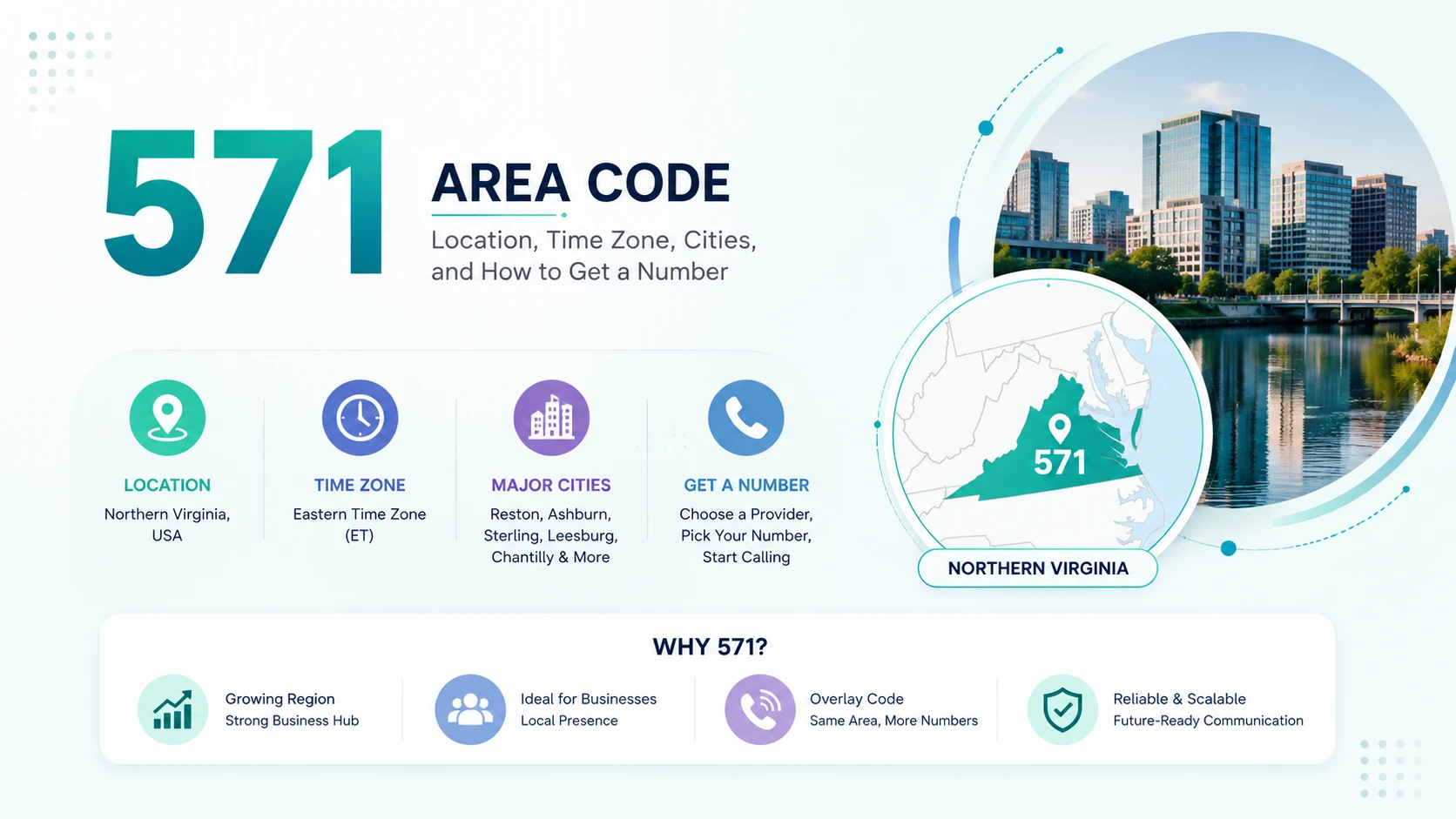
The 571 area code is located in Northern Virginia, the populous, fast-growing region that sits directly southwest of Washington, D.C. It is one of the most economically active zones in the country, home to federal contractors, technology firms, data centers, consulting practices, and a thriving small-business community. For businesses evaluating area code 571 as a market entry point, this proximity to federal agencies and Fortune 500 contractors makes it one of the most valuable regions to establish a local presence.
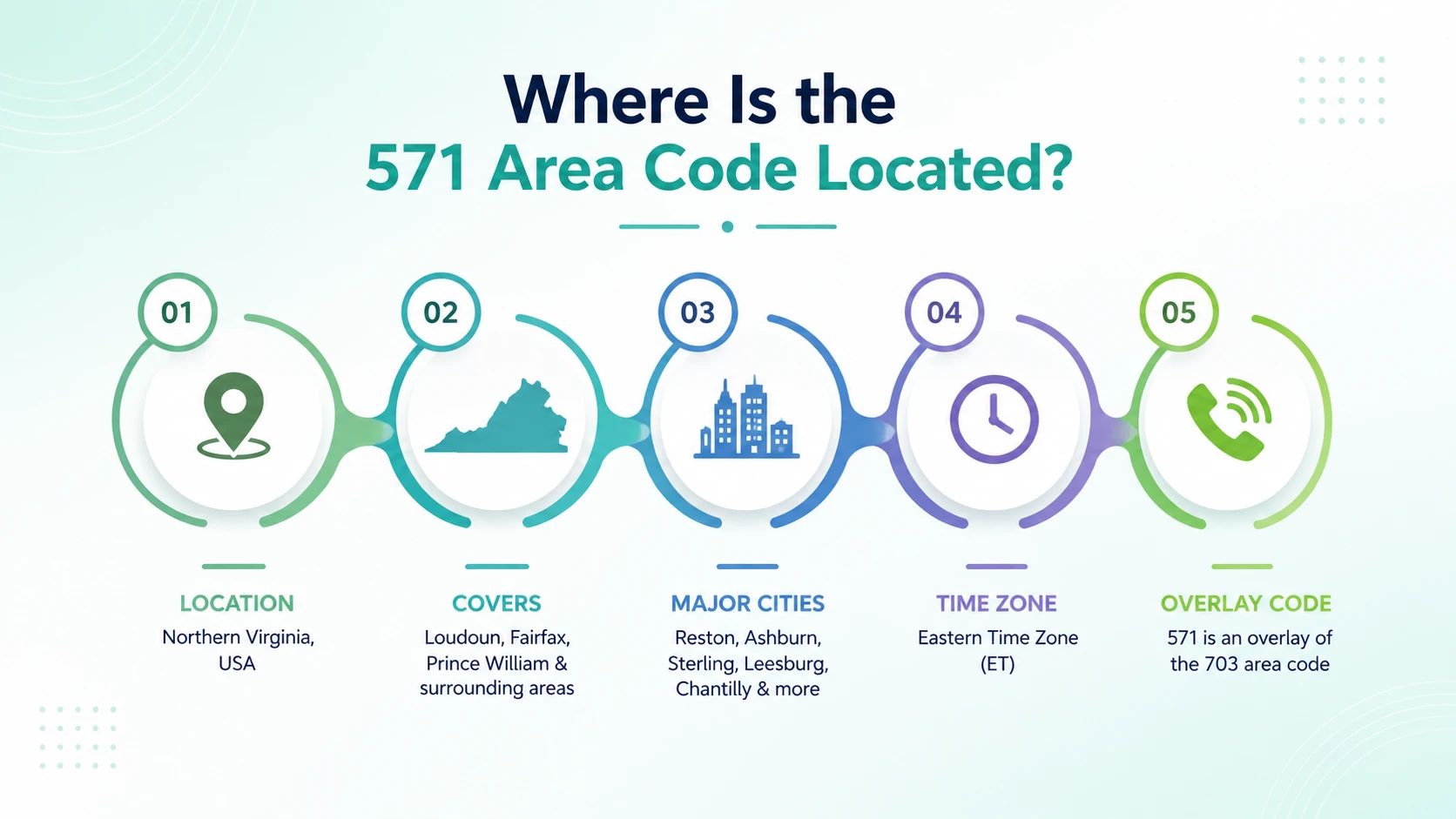
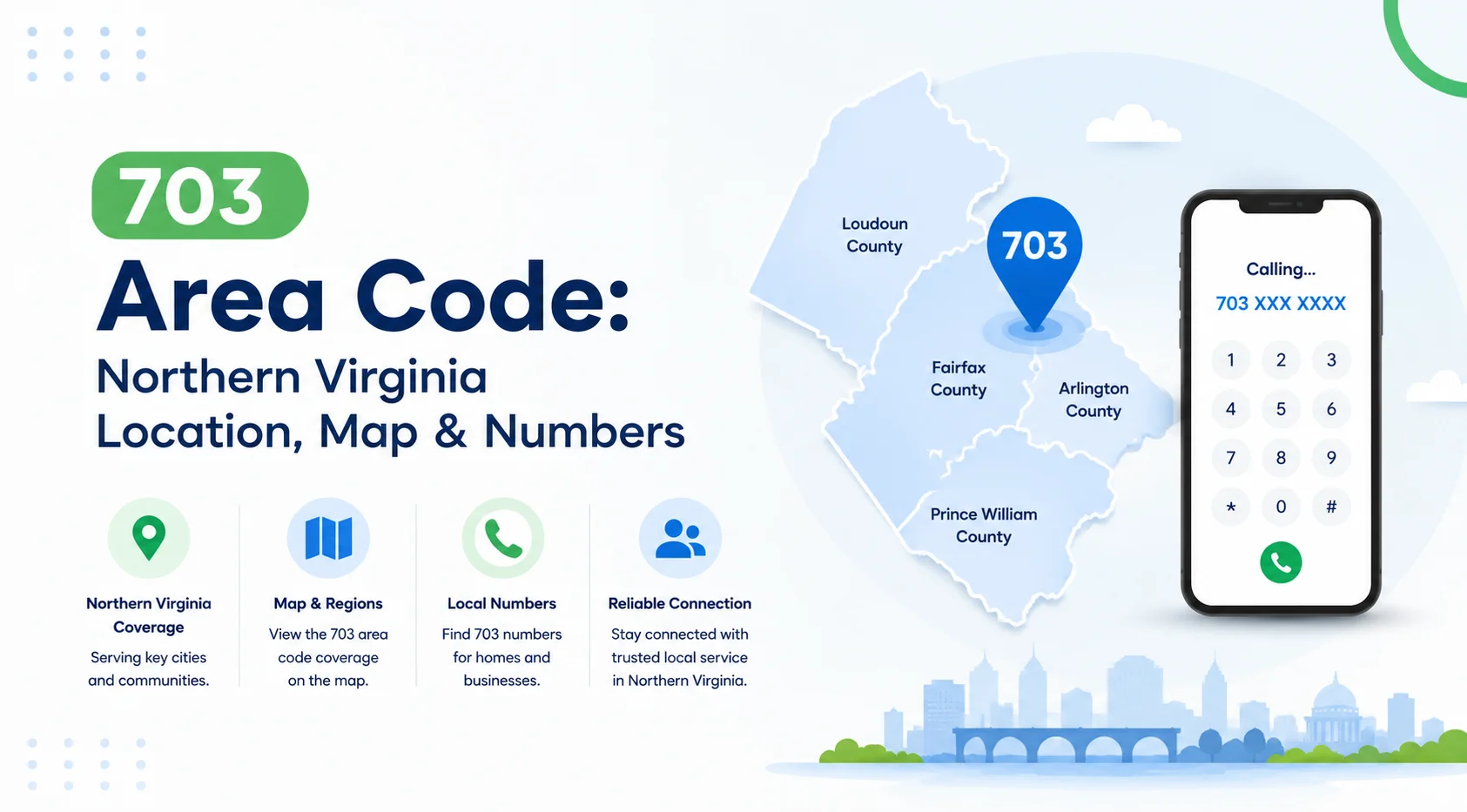
Rather than serving its own separate territory, 571 acts as an overlay, meaning it shares the exact same geographic footprint as the long-established 703 area code. Both codes blanket the same Northern Virginia communities, so a 571 number and a 703 number can sit on the same street, in the same office building, or even within the same company.
3Cities and Counties Covered by 571
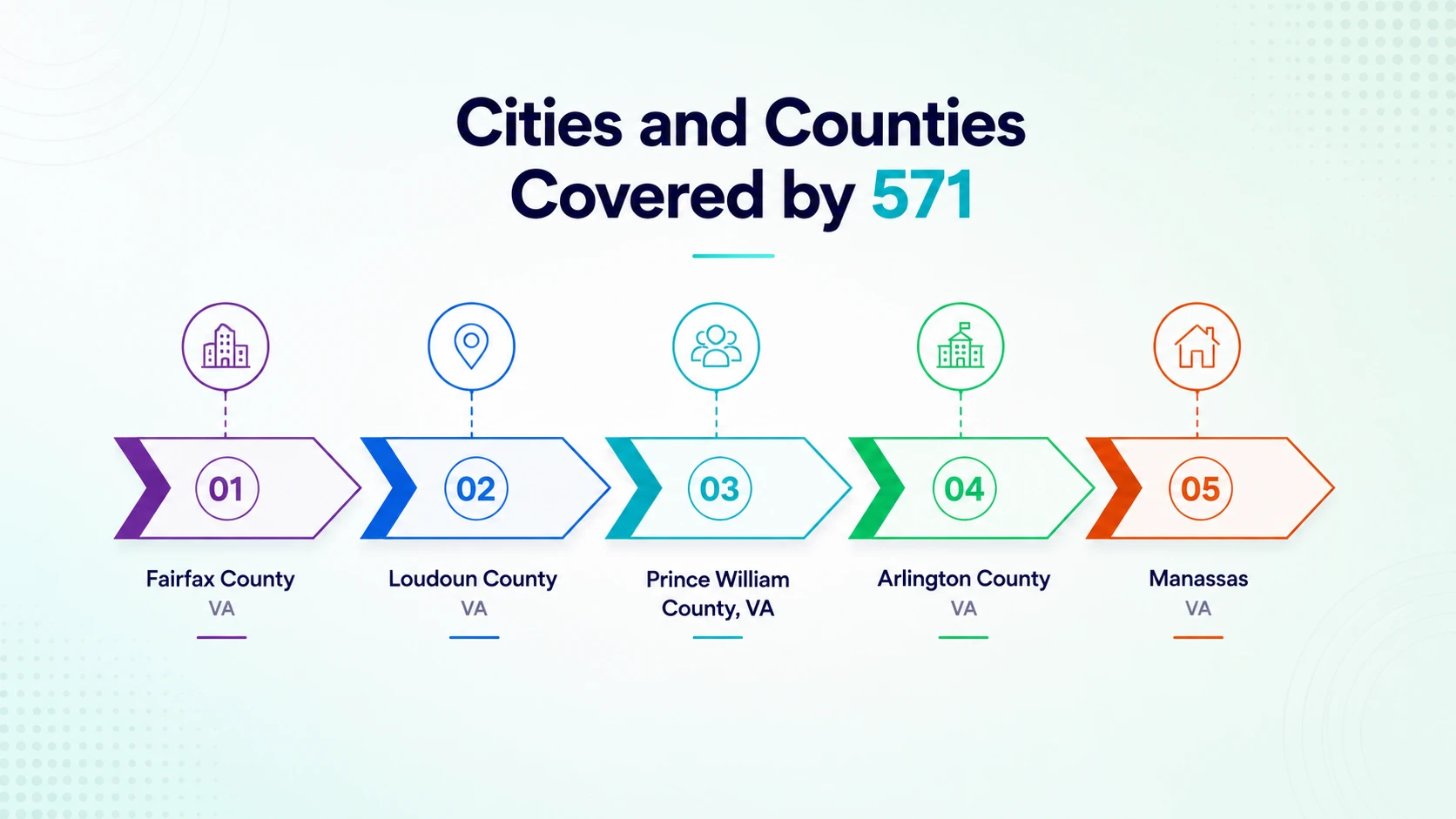
The 571 area code reaches across a wide stretch of Northern Virginia, covering independent cities, suburban hubs, and several counties. Major communities served include:
- Arlington — the largest city in the coverage area, with a population of roughly 233,000
- Alexandria — a historic riverfront city minutes from D.C.
- Fairfax and Falls Church — central Northern Virginia hubs
- Reston, McLean, and Tysons — major business and technology centers
- Ashburn and Leesburg — Loudoun County growth corridors known for data-center density
- Manassas and Manassas Park — historic and residential communities
- Springfield, Winchester, and Fredericksburg — additional regional centers
In total, the area code touches roughly 29 cities and towns. At the county level, 571 covers all of Arlington and Fairfax counties along with portions of Loudoun, Prince William, and Fauquier counties, plus the independent cities of Alexandria, Fairfax, Falls Church, Manassas, and Manassas Park. For anyone still wondering where is 571 area code exactly, the short answer is: anywhere within these Northern Virginia communities and their surrounding counties.
4571 Area Code Time Zone
The 571 area code operates in the Eastern Time Zone (America/New_York). That means:
- Eastern Standard Time (EST), UTC−5 during the standard-time months
- Eastern Daylight Time (EDT), UTC−4 when daylight saving time is in effect
If you're scheduling calls with customers or colleagues in the 571 region, plan around Eastern Time. This is the same time zone used by Washington, D.C., New York, and the rest of the U.S. East Coast, which makes coordination easy for businesses already operating on the eastern seaboard.
5A Brief History of the 571 Area Code
Understanding why 571 exists explains a lot about how phone numbers work in busy regions.
For decades, 703 served as the area code for a huge portion of Virginia. As Northern Virginia's population exploded and the demand for phone lines surged — with cell phones, fax machines, pagers, and second business lines all multiplying through the 1990s — the supply of available 703 numbers ran dangerously low.
To prevent the region from running out of numbers, regulators introduced area code 571 on March 1, 2000, as an overlay to the 703 area code. Instead of splitting the region in two and forcing half of all residents to change their numbers, the overlay approach simply layered a new code on top of the existing one. Everyone kept their current numbers, and new lines were assigned a 571 prefix as 703 inventory filled up. Understanding what is 571 area code ultimately comes down to overlay numbering: it exists purely to add capacity to 703, not to mark a new or separate region.
6Why You Must Dial 10 Digits
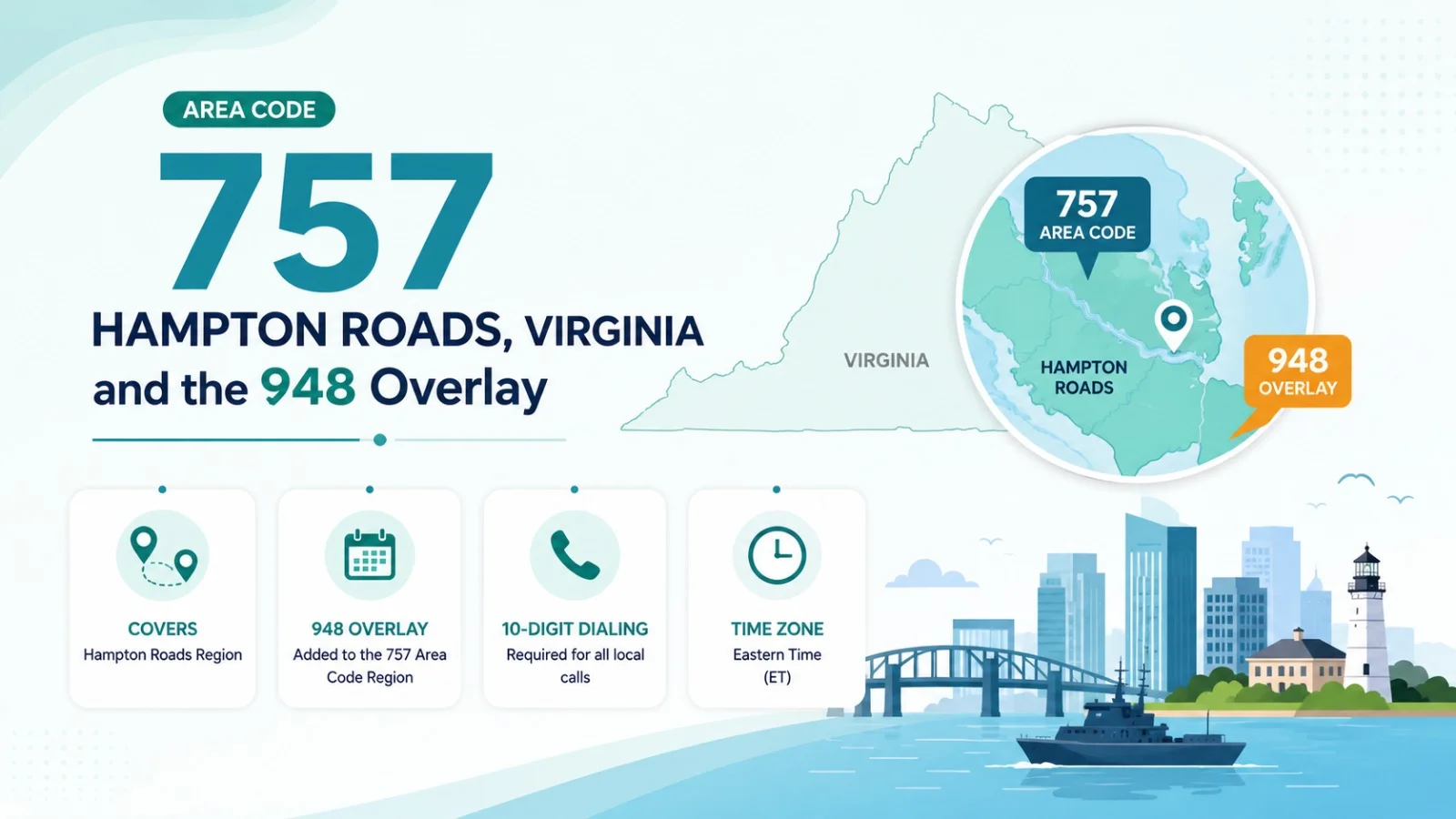
Because 571 and 703 share the same territory, 10-digit dialing is mandatory in the region, even for local calls. Two neighbors on the same block might have one a 703 number and the other a 571 number, so the full area code is always required to route a call correctly.
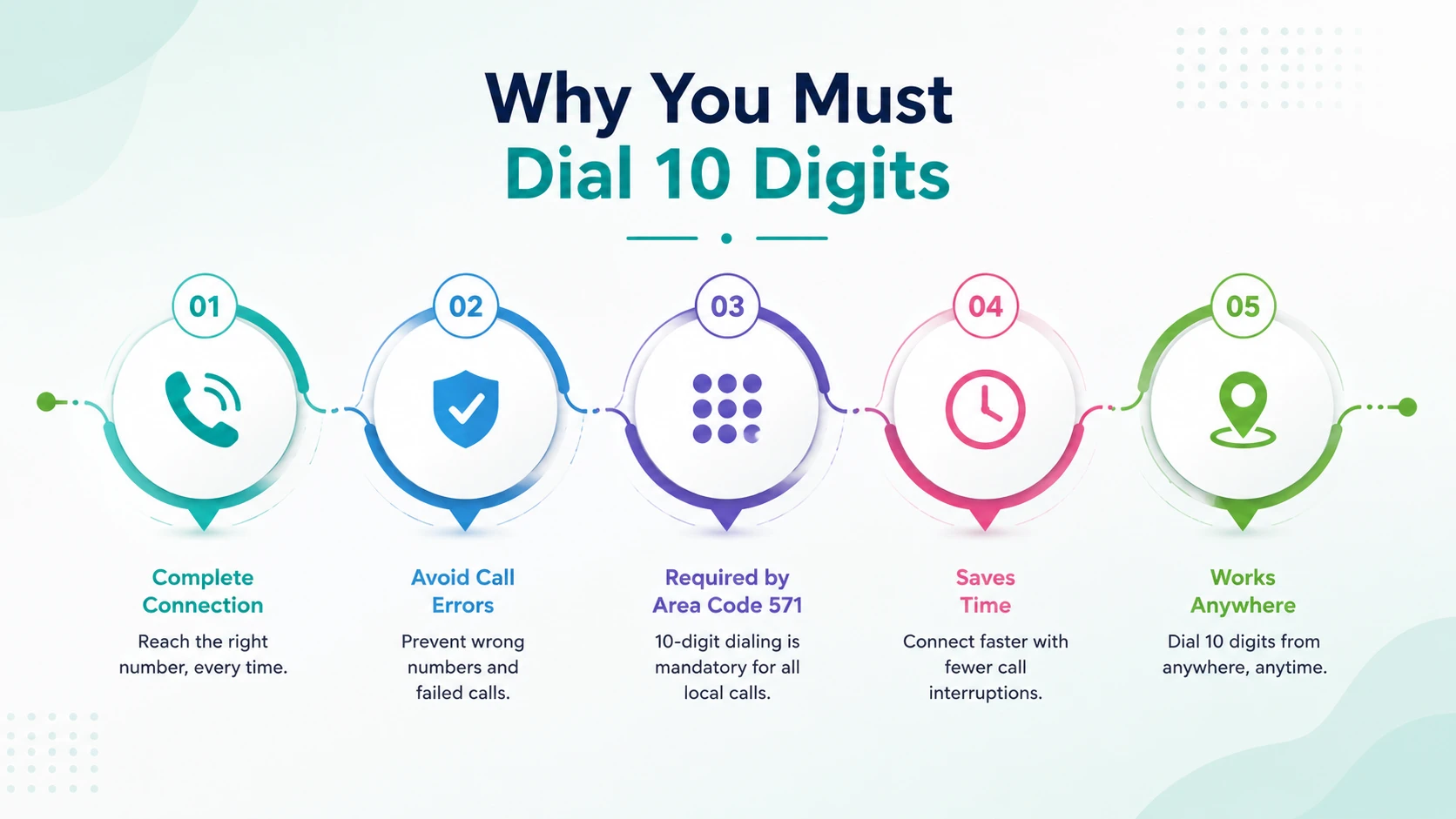
For businesses, this is a non-issue — modern phone systems dial the complete number automatically. But it's worth knowing that in 571/703 territory, there's no such thing as a "local" seven-digit call, a numbering-plan quirk documented by the Area code 571 on Wikipedia, which oversees every overlay region in the country.
7Is the 571 Area Code Used for Scam Calls?
Like every active U.S. area code, 571 numbers can be spoofed by bad actors who fake a local caller ID to seem trustworthy. This isn't a flaw in the 571 code itself — it's a broad problem across the entire phone network.
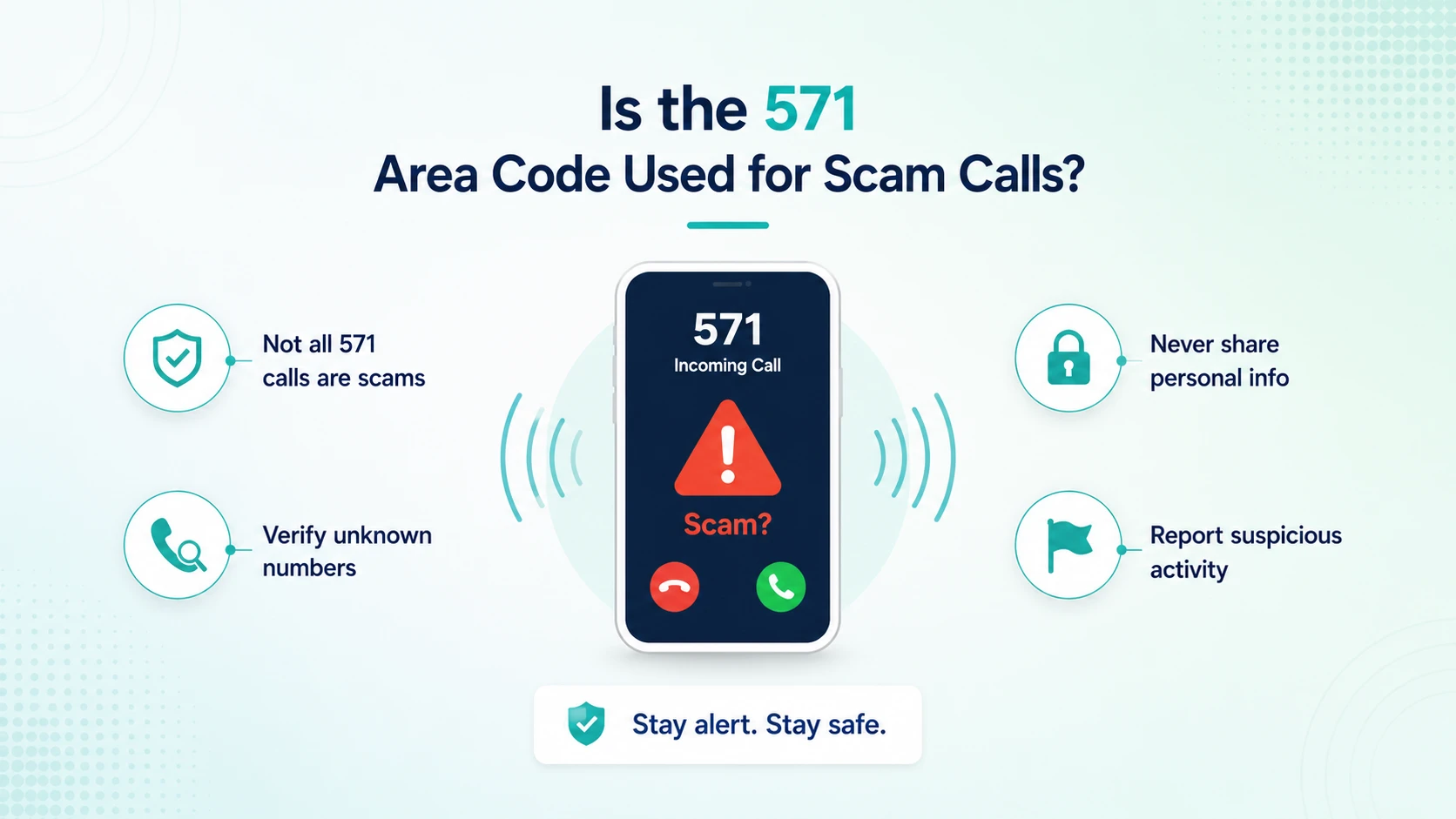
The most effective defense is caller authentication technology. Reputable communications providers implement STIR/SHAKEN call attestation, which cryptographically verifies that a call genuinely originates from the number it claims. Softtop applies full STIR/SHAKEN attestation on U.S. calls and carrier-grade fraud detection, so legitimate businesses using a 571 number are far less likely to be flagged or blocked, and far more likely to have their calls answered. Because area code 571 sits so close to Washington, D.C., it's also a common target for caller-ID spoofing aimed at government-adjacent businesses.
8How to Get a 571 Phone Number for Your Business
You don't need a physical office in Arlington or Alexandria to own a 571 number — the same cloud approach lets a business claim a 443 area code number for the Baltimore area just up the road in Maryland. With a cloud phone system, any business, anywhere in the world, can establish a credible local presence in Northern Virginia.
A local 571 number helps you:
- Build instant trust — local caller ID dramatically improves answer rates compared with unfamiliar or toll-free numbers.
- Reach a high-value market — Northern Virginia is dense with government, tech, and professional-services buyers.
- Stay reachable anywhere — route 571 calls to your team's desktops, mobiles, or browsers, no matter where they're based.
- Scale without hardware — add lines, extensions, and team members in minutes instead of weeks.
Softtop carries U.S. local numbers across 800+ area codes, including 571, with instant provisioning and no hardware to install. Each number plugs into the same carrier-grade platform that consolidates voice, SIP trunking, SMS, global numbers, and an AI contact center into one account, one dashboard, and one bill. Plans start from $12.99 per user per month, with a 14-day free trial and no credit card required. Knowing the exact 571 area code location — Northern Virginia's federal and tech corridor — helps sales and support teams position their outreach as genuinely local.
A cloud 571 number routes calls to your team anywhere in the world — giving you a credible Northern Virginia presence without renting a single square foot of office space.
9Conclusion
The 571 area code is far more than a string of digits — it's a gateway to one of the most influential business markets in the United States. Layered as an overlay over the historic 703 code in 2000, it serves Northern Virginia's cities and counties from Arlington and Alexandria to Reston, Ashburn, and beyond, all within the Eastern Time Zone and all requiring 10-digit dialing.
For businesses, a 571 number is a low-cost, high-impact way to project local credibility in the Washington, D.C. region while keeping your team free to work from anywhere. With Softtop, you can claim a 571 number in minutes and run it on a single, secure, carrier-grade platform built to make every conversation count.