1Introduction
The wholesale voice business model has quietly become one of the most profitable corners of telecom. Resellers, BPOs, SaaS vendors, and small carriers buy voice minutes in bulk from Tier-1 networks, mark them up modestly, and route them to end customers — without owning a single switch. Gross margins, done right, land between 15% and 40%.
This playbook breaks down how the wholesale voice business model actually works in 2026: who buys, who sells, where the margin sits, and what to look for in a partner. By the end you'll have both a buyer-side checklist and a builder-side roadmap. Softtop runs a Tier-1-interconnected voice network across 165+ countries with 99.99% uptime, and this guide draws on the questions our resellers ask most.
- →Wholesale voice business model: sells voice minutes in bulk to other businesses — resellers, contact centers, telcos — that resell or consume them at scale.
- →Margins come from the spread between buy and sell rates, plus value-add services like billing, fraud control, and SIP trunking.
- →Winners pick partners with direct interconnects, transparent A-Z rates, and per-second billing.
2What Is the Wholesale Voice Business Model?
A wholesale voice business buys voice termination capacity in bulk from Tier-1 or Tier-2 carriers and resells it to downstream customers — contact centers, SaaS apps embedding voice, regional ITSPs, or smaller resellers further down the chain. If you're new to the concept, see what wholesale voice is first.
The model exists because most businesses that need voice can't economically justify their own carrier interconnects. Negotiating direct routes with mobile operators in 80+ countries takes years and a six-figure legal budget. A wholesale provider does that work once and shares the result through SIP trunks, A-Z rate sheets, and DID inventories.
What you sell is not just minutes. The package usually includes voice wholesaler infrastructure, real-time CDR access, fraud monitoring, number provisioning, and SLAs. Customers pay for the bundle because building it in-house would cost more than the margin they'd save.
3How the Wholesale Voice Business Model Works
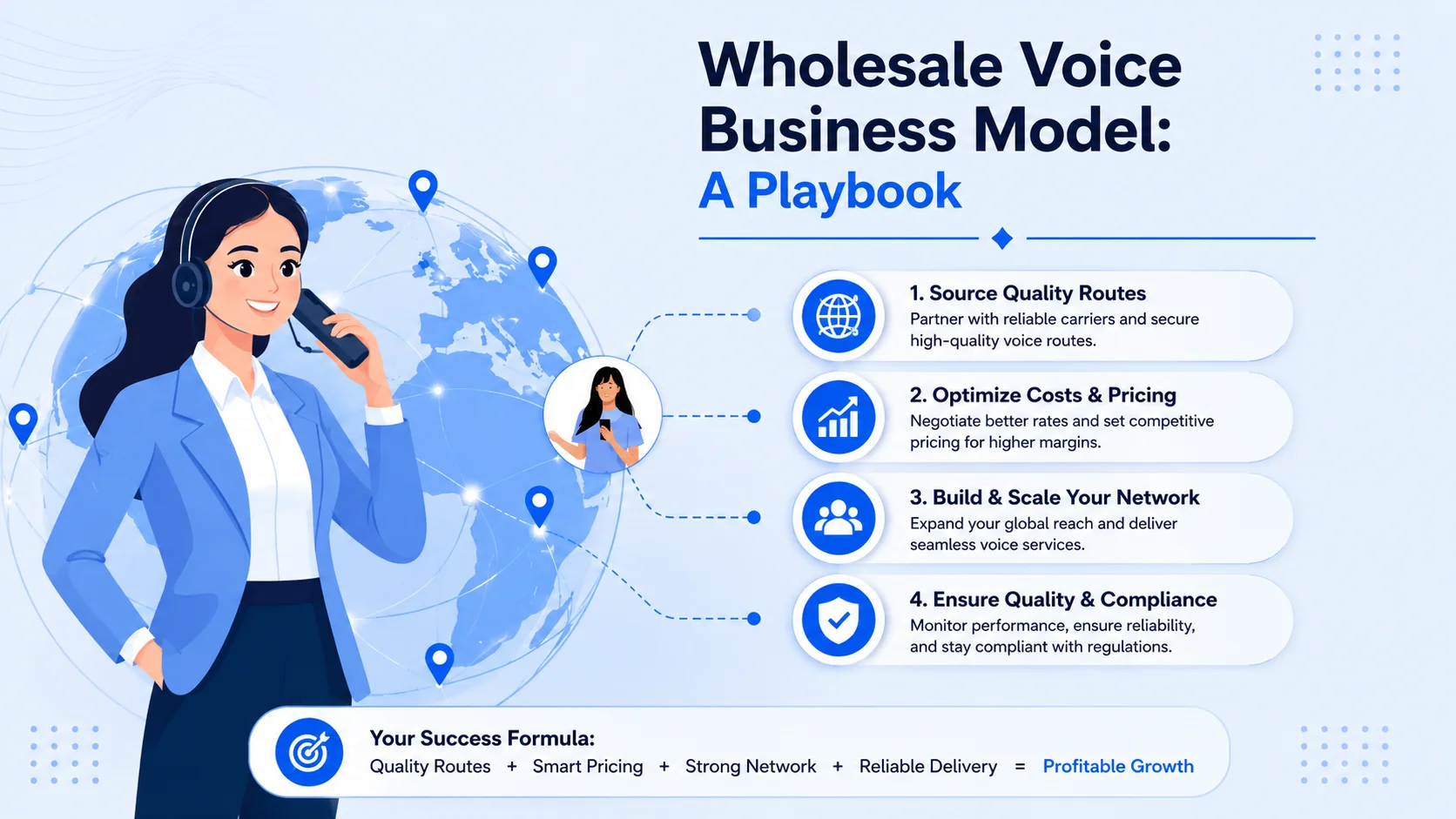
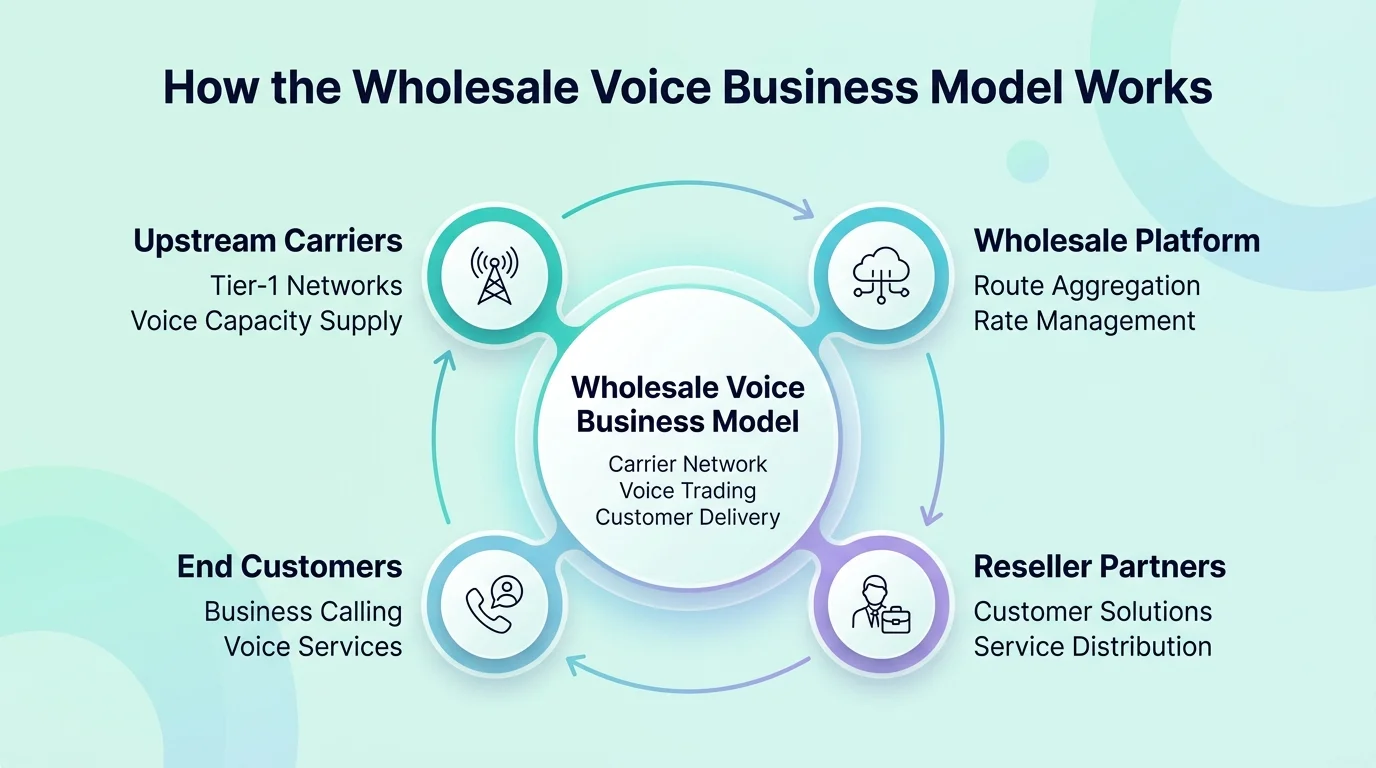
Every wholesale voice business runs on the same three-layer stack: procurement, routing, and billing.
Procurement
You sign interconnect agreements with upstream carriers and load their A-Z rate sheets into a routing engine. Most operators blend premium routes (higher cost, better ASR and MOS) with standard routes (cheaper, for non-critical traffic).
Routing
A softswitch or commercial SBC receives SIP traffic from customers, authenticates it, and picks an outbound route per call. Logic ranges from simple least-cost routing to ML-driven quality optimization. SIP signaling and RTP media follow standards defined by the IETF in RFC 3261.
Billing
Per-second billing is the 2026 standard. CDRs flow into a billing engine that rates each call, posts it to the customer's balance, and triggers alerts if usage exceeds caps. Margin lives in the spread between procurement and sell rate — typically 8–25% on raw minutes, plus 5–15% on value-add services.
4Who Profits From the Wholesale Voice Business Model
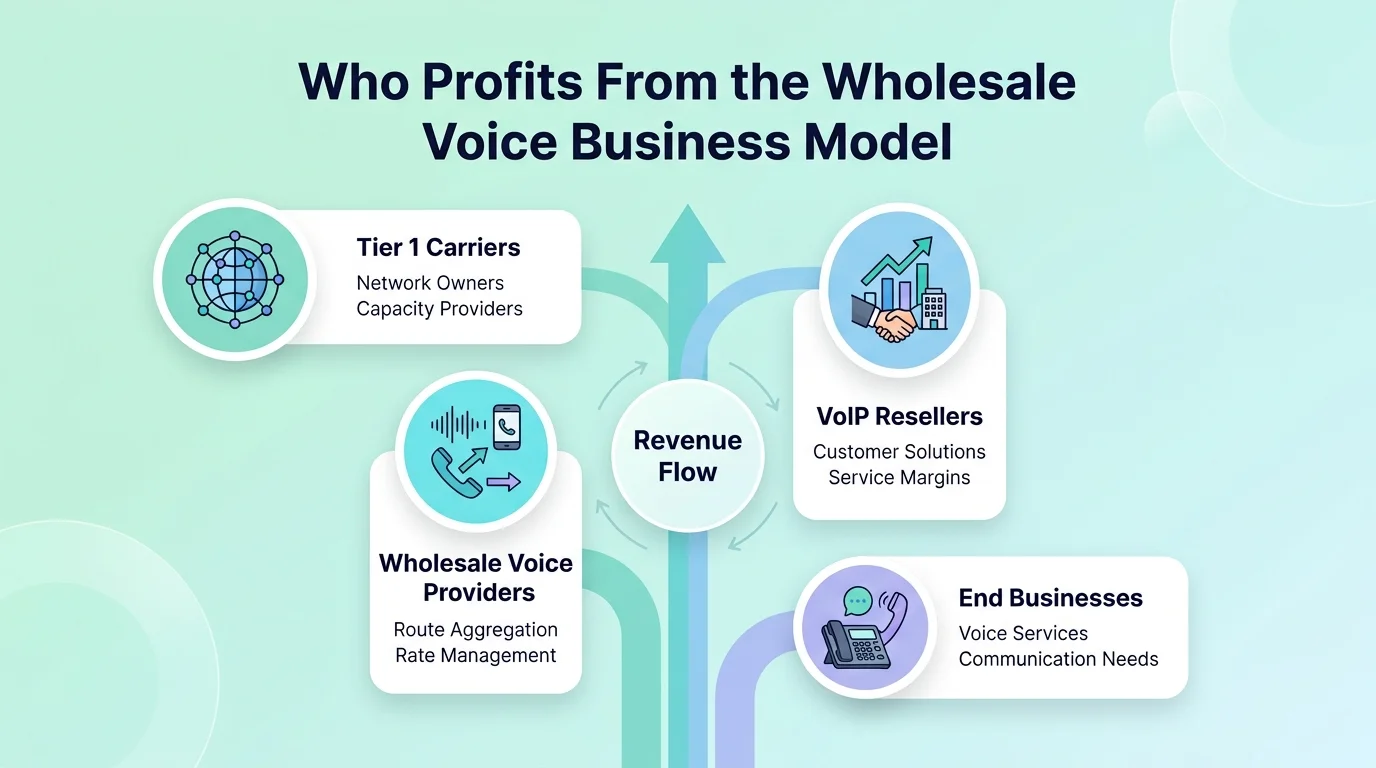
Three buyer profiles drive most of the demand in 2026.
Contact centers and BPOs
A 500-seat outbound BPO dialing the US, Mexico, and the Philippines burns through millions of minutes a month. Retail Tier-1 pricing would cost two to three times what wholesale delivers. Providers also bundle CLI routes and number rotation that compliance teams need.
SaaS vendors embedding voice
Modern CRMs, sales-engagement tools, and healthcare platforms ship with click-to-call built in. Voice is a direct margin line on every customer. Wholesale partners give them programmable APIs, per-second billing, and global DID coverage without forcing them to become a telco.
Regional ITSPs and resellers
Smaller telcos use a wholesale voice provider as the upstream behind their own retail offering. They buy at wholesale, layer their brand and support, and sell at retail. It's the classic VoIP reseller model — still the most common entry point into the wholesale market.
5Pricing and Margin Math You Should Actually Run
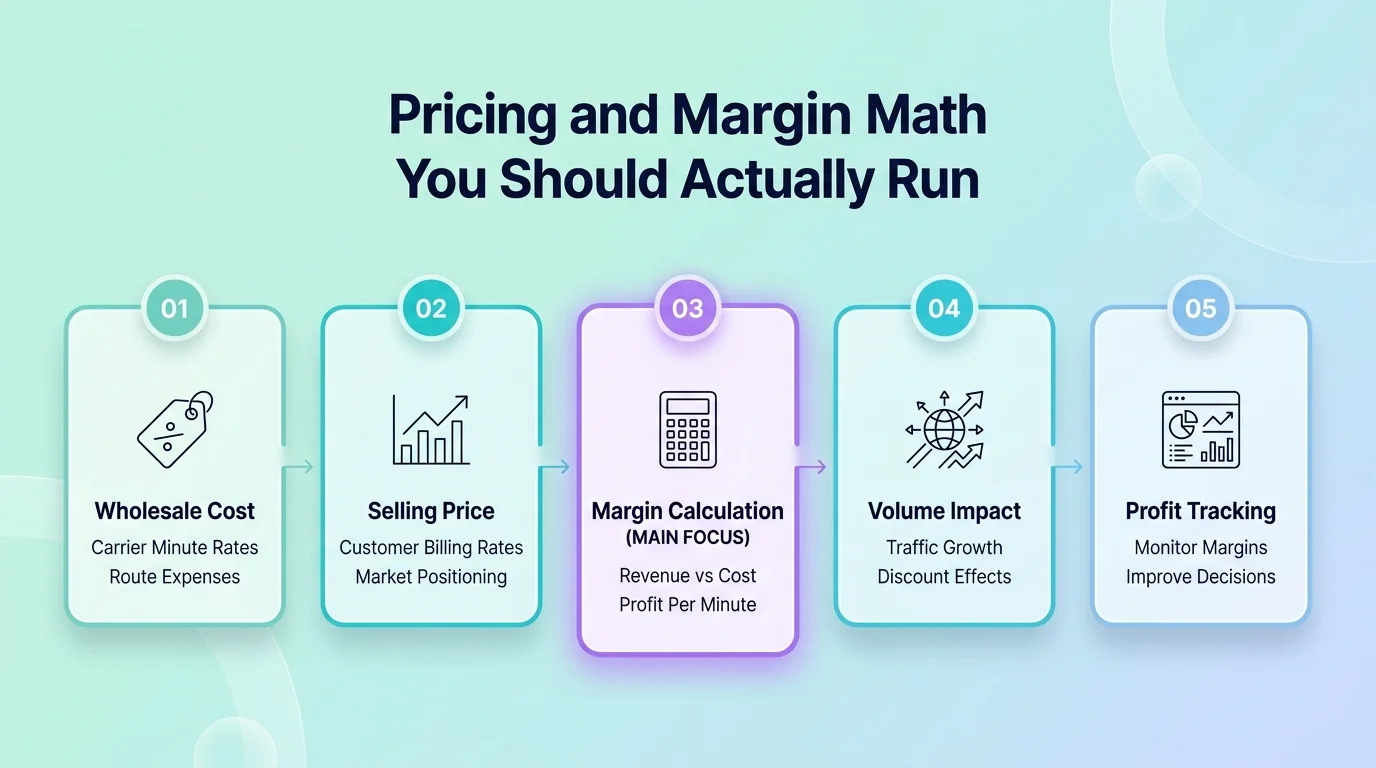
Most wholesale voice pitches lead with "competitive rates." The real test is what your unit economics look like after one month of live traffic. Run this before you sign.
The four numbers that decide margin
- Buy rate per destination: what the upstream charges per second.
- Sell rate per destination: what you charge downstream.
- ASR (Answer-Seizure Ratio): calls connected ÷ attempted. Low ASR destroys margin because failed calls still cost setup.
- Fraud loss: the Communications Fraud Control Association estimates toll fraud at $39B+ globally. Without spend caps, one incident wipes a month of margin.
A simple model
Buy a US route at $0.0050/min and sell at $0.0075/min — a $0.0025 spread, 33% gross margin on the surface. After a 78% ASR, an 8% chargeback from one fraudulent customer, and 2% bad debt, true margin lands closer to 16%. Pick a partner that publishes ASR and offers per-destination spend caps.
6How to Choose (or Become) a Wholesale Voice Provider
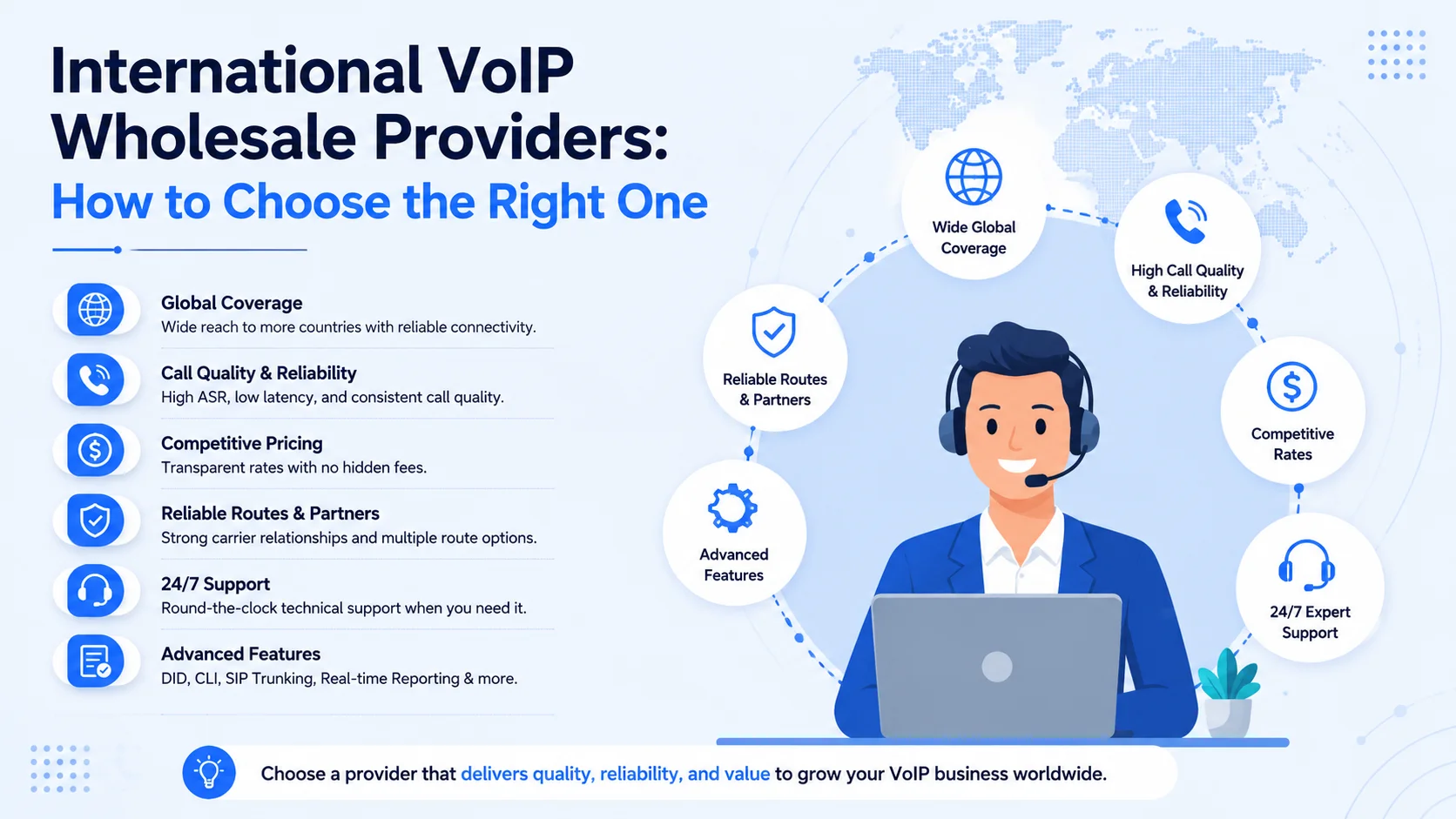
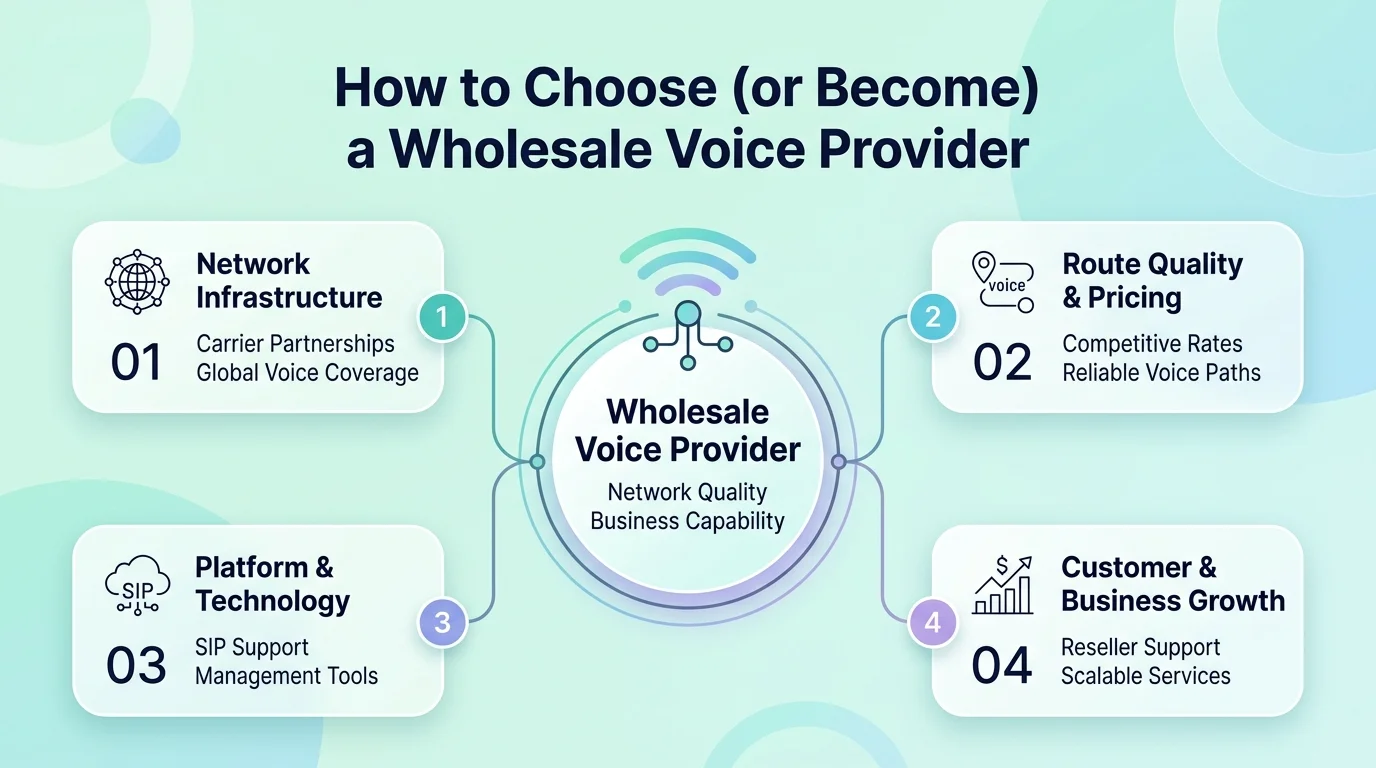
Buying from a wholesale provider or building one, the checklist is the same. Five items separate serious operators from resellers-of-resellers.
Direct interconnects, not resold routes
Ask where each route terminates. A Tier-1 carrier with direct peering will name the destination operator. A reseller will dodge. Each extra hop adds 30–80 ms of latency and a chance of packet loss.
Per-second, transparent billing
Per-minute billing rounds up and erodes margin. A downloadable A-Z rate sheet without a sales call is the 2026 minimum.
Quality metrics on demand
Live ASR, ACD, PDD, and MOS — ideally on a dashboard. Anything under 45% ASR on a major destination is a red flag.
Bundled services
Voice termination alone is rarely enough. Pair it with SIP trunking, DIDs, CLI routes, and SMS so customers consolidate vendors.
Fraud controls built in
IP authentication, per-destination spend caps, STIR/SHAKEN signing for US traffic, and real-time alerting. According to the ITU, IP voice keeps growing — and so does the attack surface.
7How Softtop Powers the Wholesale Voice Business Model
Softtop built its platform to be the upstream voice partner for resellers, BPOs, and SaaS vendors that need carrier-grade routing without becoming a carrier. We operate a Tier-1-interconnected network across 165+ countries with 99.99% measured uptime and direct peering with major mobile operators on every continent.
Three things our partners highlight. First, the platform exposes a downloadable A-Z rate sheet and per-second billing, so finance teams can model real margin in a spreadsheet rather than a support ticket. Second, every account ships with IP authentication, per-destination spend caps, and STIR/SHAKEN signing — fraud controls aligned with the wholesale voice business model. Third, you can bundle Wholesale VoIP termination with SIP trunks, DIDs, and SMS on one contract, which is what most downstream customers actually want.
Onboarding is short: most new partners send their first production call within 48 hours of signature. Send our team a recent CDR sample and we'll price your traffic against our routes for free.
8Conclusion
The wholesale voice business model rewards operators who treat voice as a margin-driven utility rather than a feature. Pick the wrong upstream and you absorb their latency, their fraud, and their billing surprises. Pick the right one and you can run a profitable voice business with a small team and no physical network.
The shortlist for a serious wholesale voice business model is unchanged: direct interconnects, per-second billing, transparent A-Z rates, live quality metrics, and built-in fraud controls. Softtop designed its platform around that checklist, which is why resellers and BPOs use us as their wholesale backbone in 2026.
9Frequently Asked Questions
What is the wholesale voice business model in simple terms?
It's a business that buys voice minutes in bulk from telecom carriers and resells them to other businesses — usually resellers, contact centers, or SaaS apps. The wholesale operator earns the spread between buy and sell rates, plus margin on value-add services like SIP trunks and DIDs.
Who buys wholesale voice services?
BPOs and outbound contact centers, SaaS vendors embedding voice, regional ITSPs reselling under their own brand, and enterprises with very high call volumes. Anyone whose voice spend is large enough that wholesale per-second pricing beats retail bundles.
How much margin can a wholesale voice provider make?
Raw minute spreads run 8–25%, but real net margin depends on ASR, fraud loss, and bundled services. Operators that add SIP trunks, DIDs, and fraud controls reach 20–40% blended margins; resellers of generic routes struggle to clear 10%.
Do I need my own infrastructure to run a wholesale voice business?
No. Most modern operators run on a softswitch or cloud SBC with upstream interconnects from a Tier-1 partner. You can start without owning hardware if your upstream offers direct routes, per-second billing, and proper fraud controls.
What's the biggest risk in this model?
Toll fraud. One unprotected SIP trunk can rack up tens of thousands in fraudulent international calls overnight. Per-destination spend caps, IP authentication, and real-time alerting are non-negotiable — confirm they exist before sending traffic.