1Introduction
A single international call route can make or break your margins. Wholesale VoIP voice services let businesses, carriers, and resellers buy voice capacity in bulk over IP networks, slashing per-minute rates and opening the door to global reach. Instead of leasing rigid phone lines, you tap into a high-capacity network that routes calls intelligently across borders.
The wholesale voice carrier market was valued at roughly $42.7 billion in 2024 and keeps climbing, proof that smart operators are moving fast. Softtop supports this shift with 70+ global Points of Presence and direct Tier-1 interconnects across 150+ countries. This guide explains what wholesale VoIP voice is, how it works, the benefits it delivers, and how to pick a provider that protects both your costs and your call quality.
2What Is Wholesale VoIP Voice?
Wholesale VoIP voice is a high-capacity telecom service that lets businesses and carriers buy voice minutes in bulk and route them over IP networks instead of the traditional PSTN. By converting calls into digital data packets, providers move traffic cheaply across the internet or dedicated links.
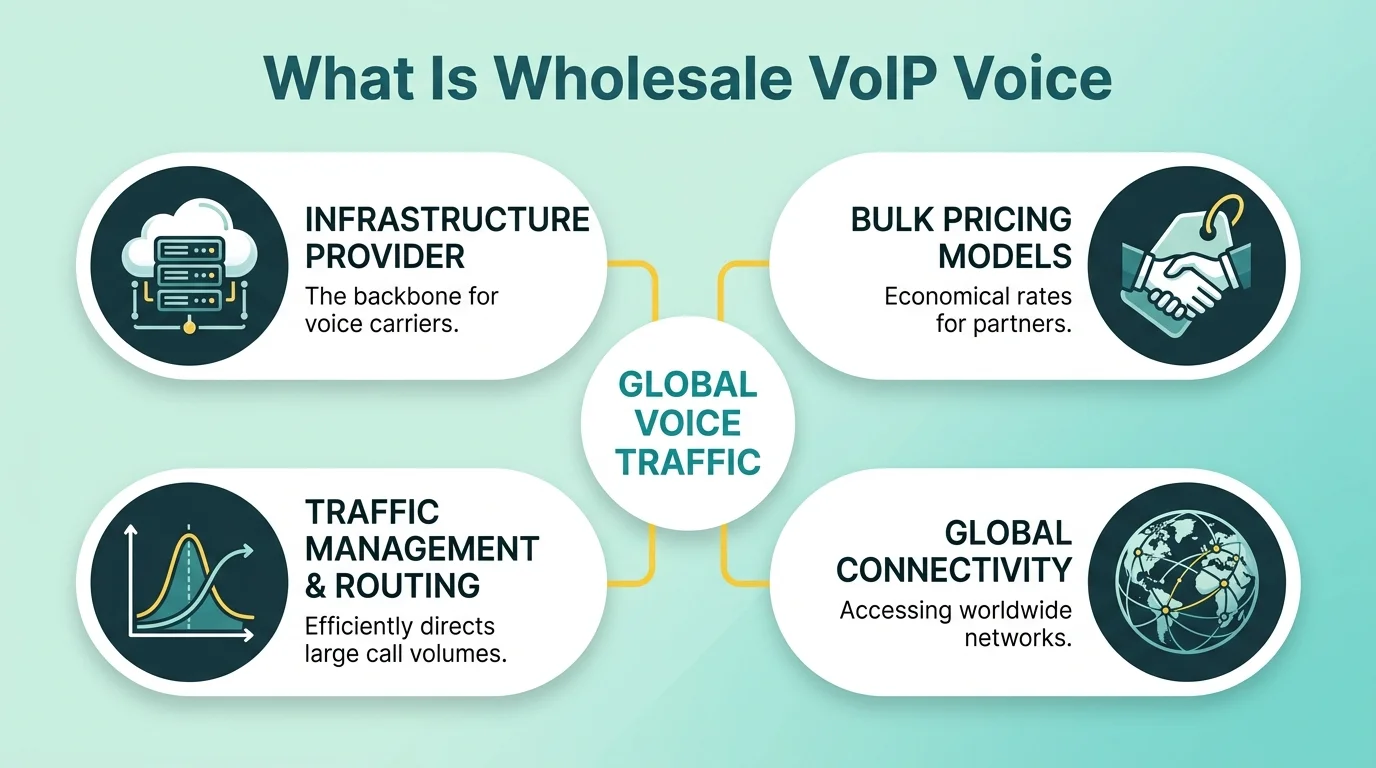
This model powers the everyday services you rely on: international long-distance, toll-free numbers, Direct Inward Dialing (DID) numbers, and unified communications. It is built for anyone handling large call volumes, often for resale. Because providers buy at carrier scale, the savings pass down to you, which is exactly why a wholesale agreement beats retail phone plans for high-traffic operations.
3How Wholesale VoIP Voice Works
A wholesale VoIP voice service digitises analog voice signals and sends them as packets across IP routes. A few core technologies make it run.
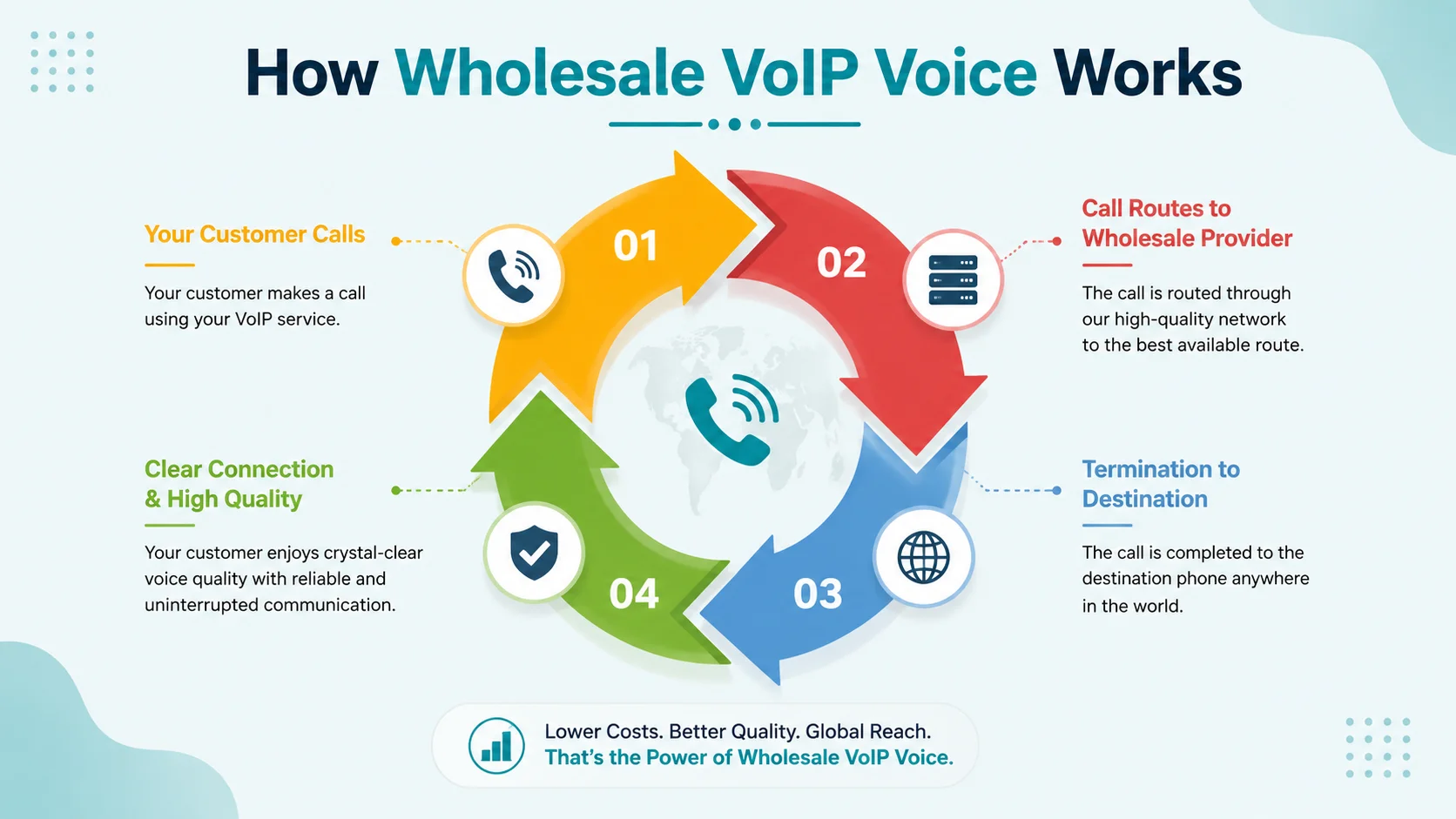
Wholesale VoIP platforms use SIP trunking as the primary pipeline. The Session Initiation Protocol, defined in IETF RFC 3261, connects your IP PBX or cloud phone system to the provider and delivers many concurrent voice channels over one connection. Call routing engines then apply Least Cost Routing (LCR) and quality-based logic to send each call down the most efficient path, drawing on direct interconnects with Tier-1 carriers.
The traffic itself splits into two flows. Termination, or A-Z termination, hands a call off to its final destination, whether another VoIP endpoint or a PSTN number. Origination receives an inbound PSTN call and carries it onto the VoIP network, usually toward a DID. Behind all of it, a 24/7 Network Operations Center watches quality and traffic so issues get caught early, giving you a software-controlled pipeline that replaces racks of legacy hardware.
4Key Benefits of Wholesale VoIP Voice
The appeal of wholesale VoIP voice comes down to economics and flexibility, and the numbers back it up.
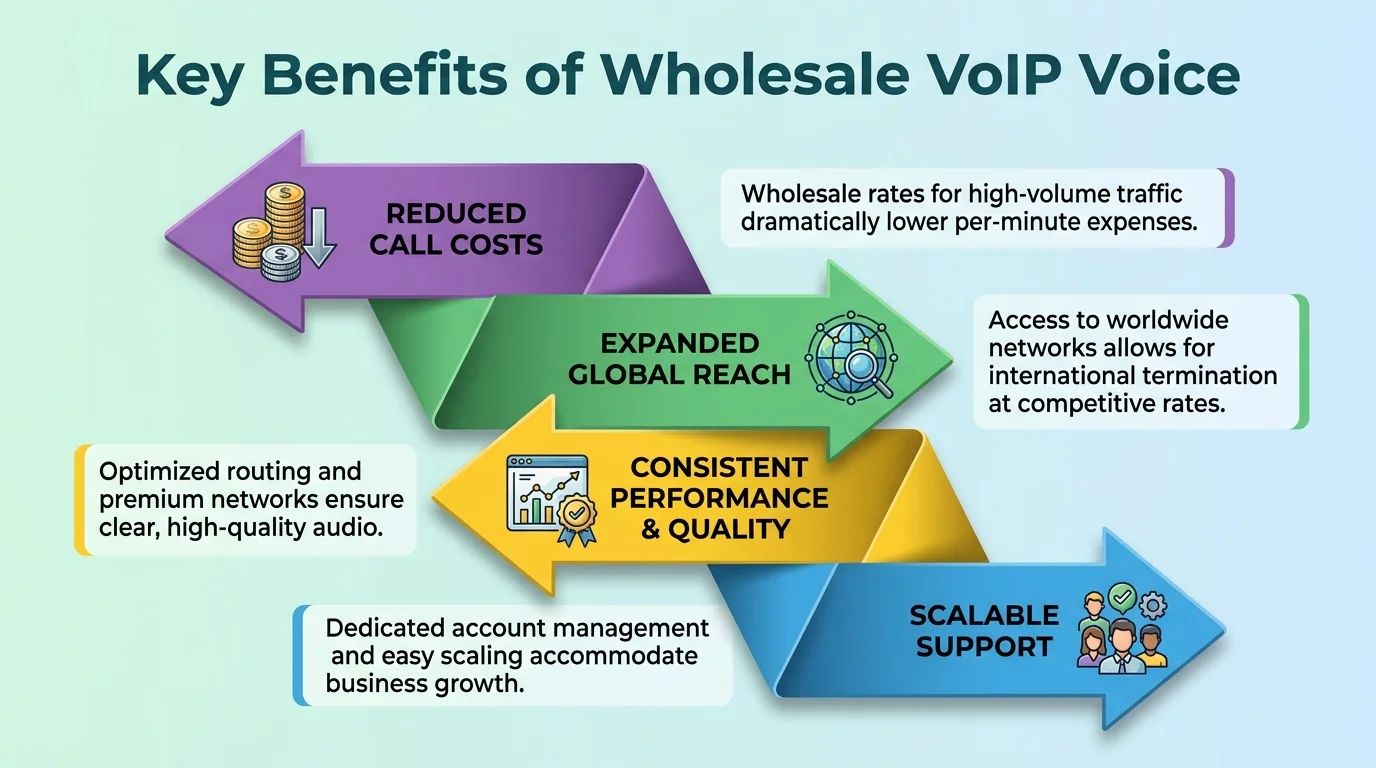
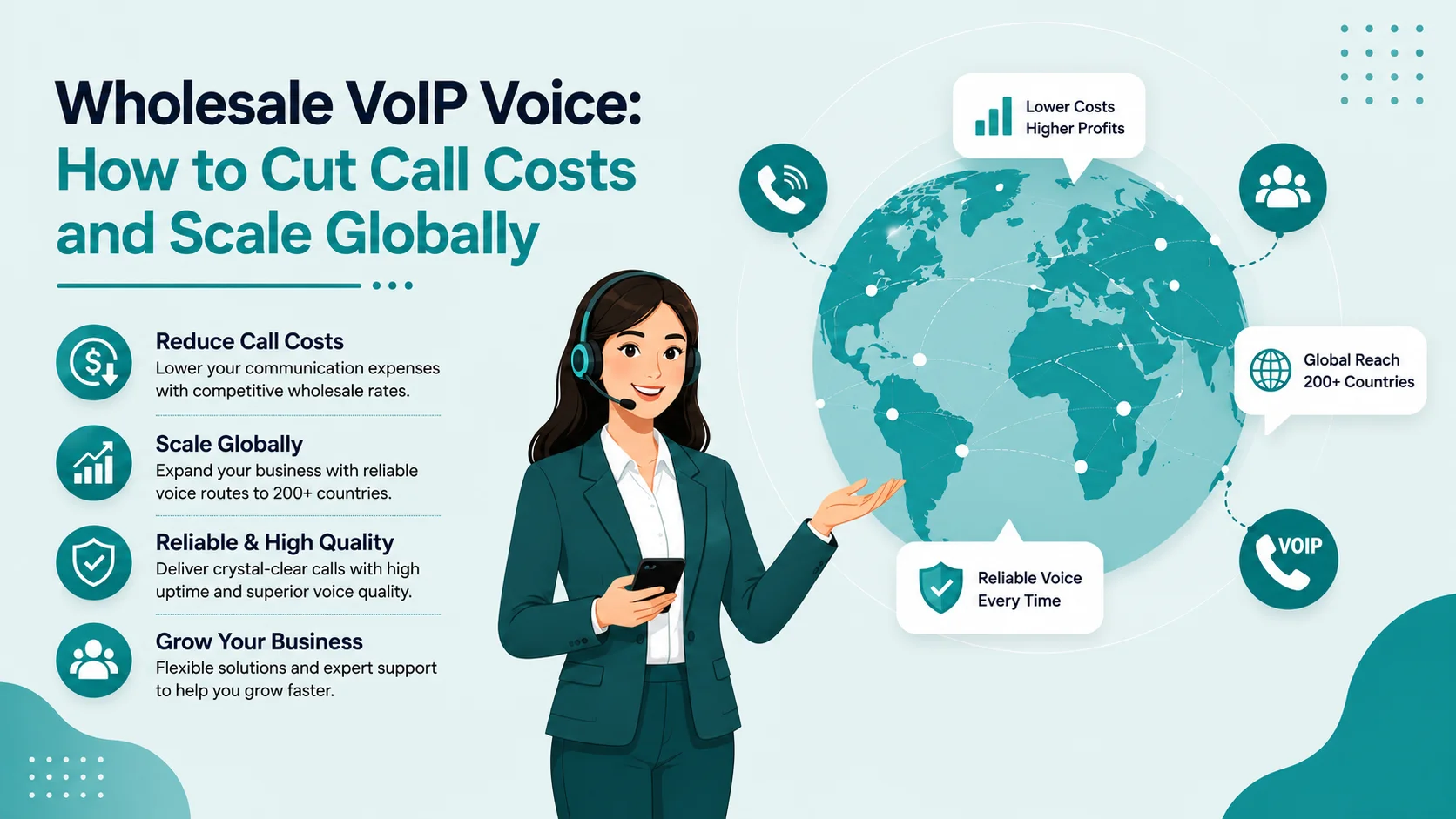
- Lower costs. Buying minutes in bulk drives per-minute rates down sharply, especially on international routes. Transparent billing increments and volume discounts improve your return on every dollar of traffic. With the wholesale voice market growing at roughly 12% a year, that pricing pressure only sharpens, rewarding businesses that lock in efficient routes early.
- Scalability. Add or remove channels and DIDs on demand without buying hardware. That elasticity suits seasonal call centers and fast-growing teams alike.
- Global coverage. Providers with wide networks reach customers worldwide. Softtop terminates traffic across 150+ countries with a 60%+ Answer Seizure Ratio, so you can open a line in a new market without local carrier contracts.
- Call quality and reliability. Tier-1 interconnects, redundancy, and SLAs keep voice clear. Softtop maintains 99.99% uptime so revenue-critical calls connect.
- Operational efficiency. APIs and automation let you manage routes, rates, and reporting programmatically instead of by hand.
5Core Features in a Wholesale Voice Portfolio
A capable wholesale VoIP voice provider ships far more than raw minutes. When you compare options, look for a portfolio that covers the full communication stack:
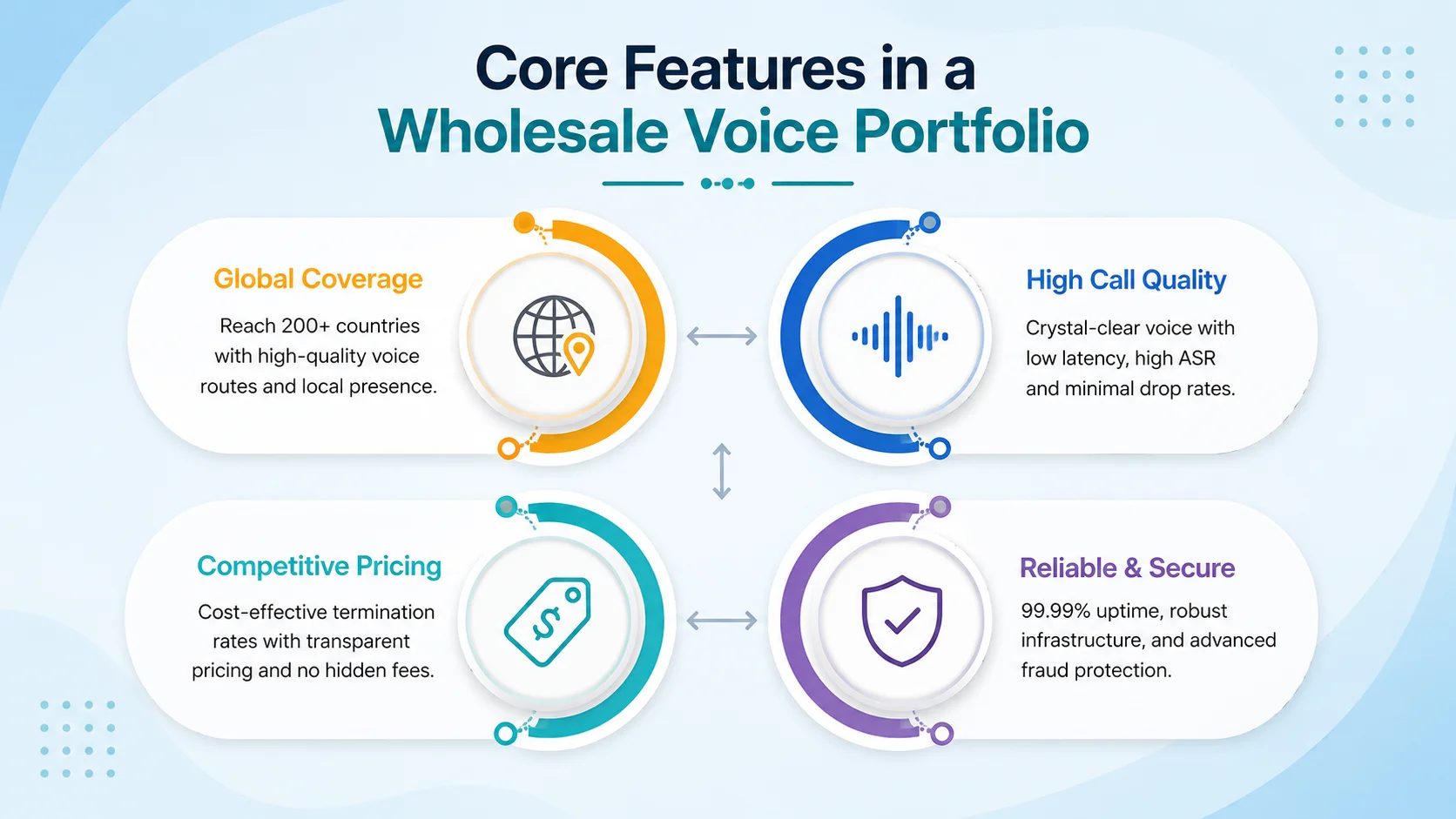
- Termination and origination. Global voice termination services plus inbound origination to DID numbers. A deep inventory of DIDs, virtual numbers, and toll-free numbers helps you build a local presence in new markets quickly.
- Routing intelligence. LCR, quality-based routing, call recording, IVR support, and caller ID handling so every call takes the cleanest, cheapest path available.
- Messaging. Bulk SMS and SMS APIs round out the suite, giving you omnichannel reach from the same provider relationship instead of stitching together separate vendors.
- Security and compliance. Real-time fraud detection, AES-encrypted SIP trunks, and compliance with E911, GDPR, and STIR/SHAKEN call authentication. Fraud can drain thousands from an unprotected account in a single weekend, so real-time alerting is worth its weight.
- Billing and reseller tools. Rate management, account control, and detailed reporting let you run a profitable voice business on top of the provider's network, set your own margins per route, and onboard customers without building back-office software from scratch.
6How to Choose a Wholesale VoIP Voice Provider
Picking the right partner shapes your margins and your reputation, so weigh four factors before you sign:
- Network quality and reach. Confirm Tier-1 carrier interconnects, broad country coverage, and proven redundancy. Softtop's 70+ Points of Presence and a decade of operating experience signal a network built to scale.
- Pricing transparency. Demand a clear rate deck, honest billing increments, and no hidden fees. Compare published wholesale VoIP rates against your traffic profile rather than headline numbers alone.
- Support and expertise. You want responsive, 24/7 technical help and clear SLAs. Onboarding speed tells you a lot about how a provider treats partners.
- Security and compliance. Verify fraud prevention, encryption, and regulatory coverage. In regulated fields like finance and healthcare, this protects you from costly violations.
If you also need scalable connectivity, evaluate dedicated SIP trunking providers alongside your termination contract.
7Who Uses Wholesale VoIP Voice
Wholesale VoIP voice serves several distinct buyers, each for slightly different reasons.
Carriers, resellers, and ITSPs buy minutes in bulk, then rebrand and resell them through white-label and reseller programs, building a voice business without heavy infrastructure spend. Call centers and BPOs lean on the model for low-cost, high-volume routing that flexes during peak campaigns, and they pair it with IVR and call recording to keep service levels high. Enterprises use SIP trunking and multi-country DIDs to cut costs and plant a local presence as they expand abroad, often integrating voice directly into their CRM through APIs. And regulated industries such as finance and healthcare gain the compliance, security, and fraud controls that keep sensitive conversations safe. Across all of them, the throughline is the same: predictable cost, dependable quality, and room to grow.
8Conclusion
Wholesale VoIP voice has become the practical foundation for affordable, scalable, global communication. By moving voice onto IP networks and buying capacity in bulk, businesses and resellers unlock dramatic cost savings, flexible scaling, and worldwide reach without sacrificing call quality. The technology rewards careful provider selection, so weigh network strength, pricing clarity, support, and security before committing.
Softtop brings all four together with 99.99% uptime, 70+ global Points of Presence, coverage across 150+ countries, and more than a decade serving 1,000+ active clients. Whether you are a carrier, a BPO, or an enterprise expanding overseas, explore Softtop's wholesale VoIP solutions to see the quality and savings for yourself.
9Frequently Asked Questions
What is wholesale VoIP voice?
Wholesale VoIP voice is the bulk supply of voice termination and origination over IP networks. Businesses, carriers, and resellers buy minutes at discounted, carrier-scale rates instead of retail prices, making it a cost-effective way to handle large call volumes and international traffic.
How does wholesale VoIP voice save money?
Buying voice capacity in bulk drives per-minute rates far below retail, especially on international routes. Transparent billing increments, volume discounts, and least-cost routing reduce waste, so high-traffic businesses see meaningful savings on every call they place or receive.
What is the difference between termination and origination?
Termination, or A-Z termination, routes a call to its final destination on another network or the PSTN. Origination receives an inbound PSTN call and carries it onto a VoIP network, typically delivering it to a DID number you control.
Is wholesale VoIP voice scalable?
Yes. You can add or remove SIP channels and DID numbers on demand without buying hardware. This elasticity suits growing teams, seasonal call centers, and resellers whose traffic rises and falls with their own customer demand.
What should I look for in a provider?
Prioritise Tier-1 network quality, broad country coverage, transparent pricing, 24/7 support, and strong security including STIR/SHAKEN and fraud detection. Proven uptime and operating history, such as Softtop's 99.99% network across 150+ countries, indicate a dependable partner.
How do I get started with wholesale VoIP voice?
Share your call volumes and destination markets with a reputable provider. They will map a routing and rate plan to your traffic, provision SIP trunks or DIDs, and onboard you, often within minutes for a trial.