1Introduction
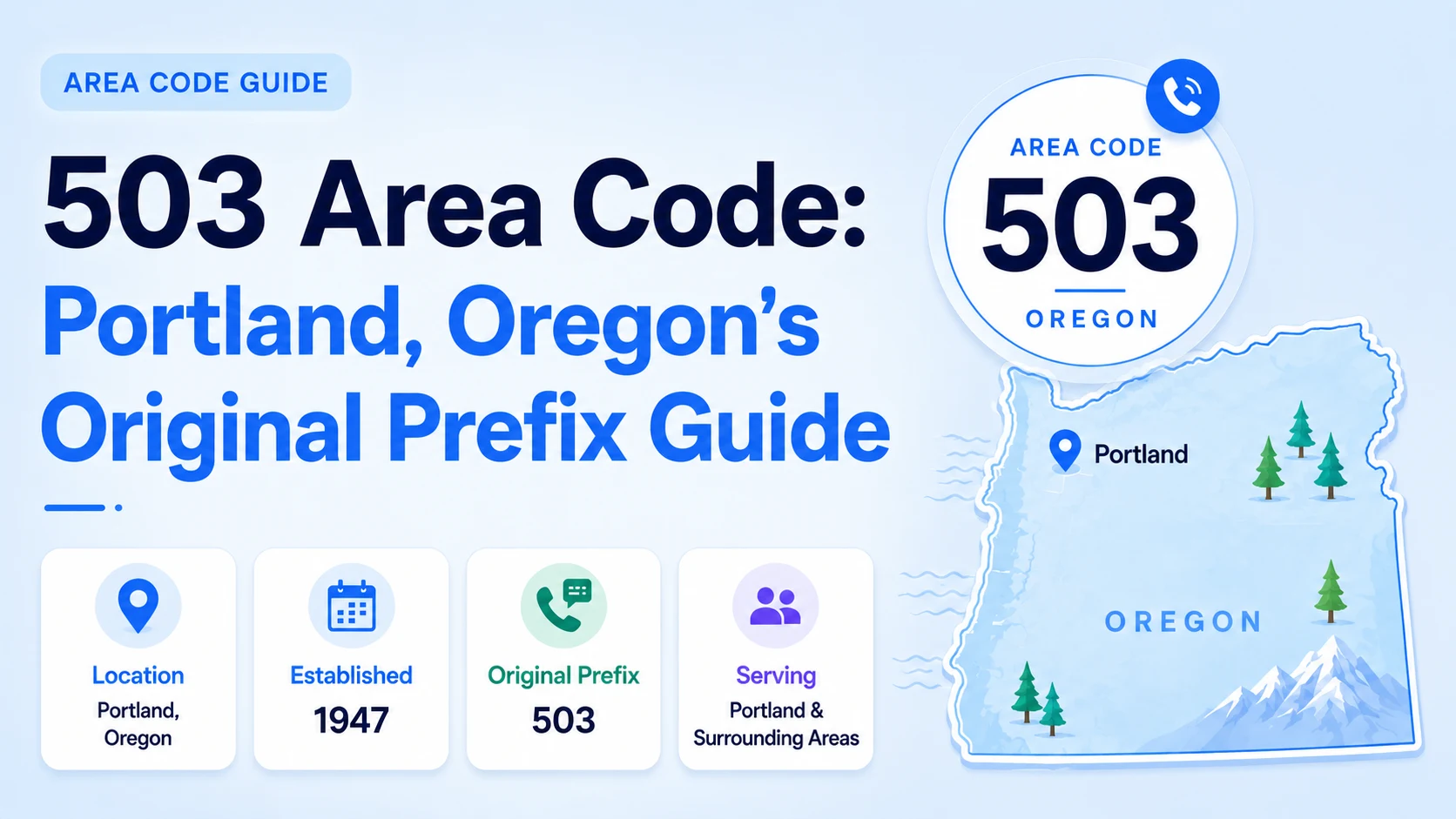
If a call or text just came in from a 503 number, you're hearing from northwestern Oregon. The 503 area code is one of the oldest dialing codes in the country, issued back in 1947, and it still anchors the Portland metro area today even after sharing its territory with a newer overlay code.
This guide covers exactly where the 503 area code sits, which cities and counties it reaches, its Pacific time zone and dialing rules, its history as one of Oregon's original prefixes, common scam-call concerns, and how to get a local 503 number for your own business — no Oregon office required.
2What Is 503 Area Code?
What is 503 area code, exactly? It's a telephone prefix assigned to northwestern Oregon under the North American Numbering Plan, the system that organizes phone numbers across the United States, Canada, and parts of the Caribbean. It's one of the original 86 area codes created in 1947, making it older than most of the numbering system itself.
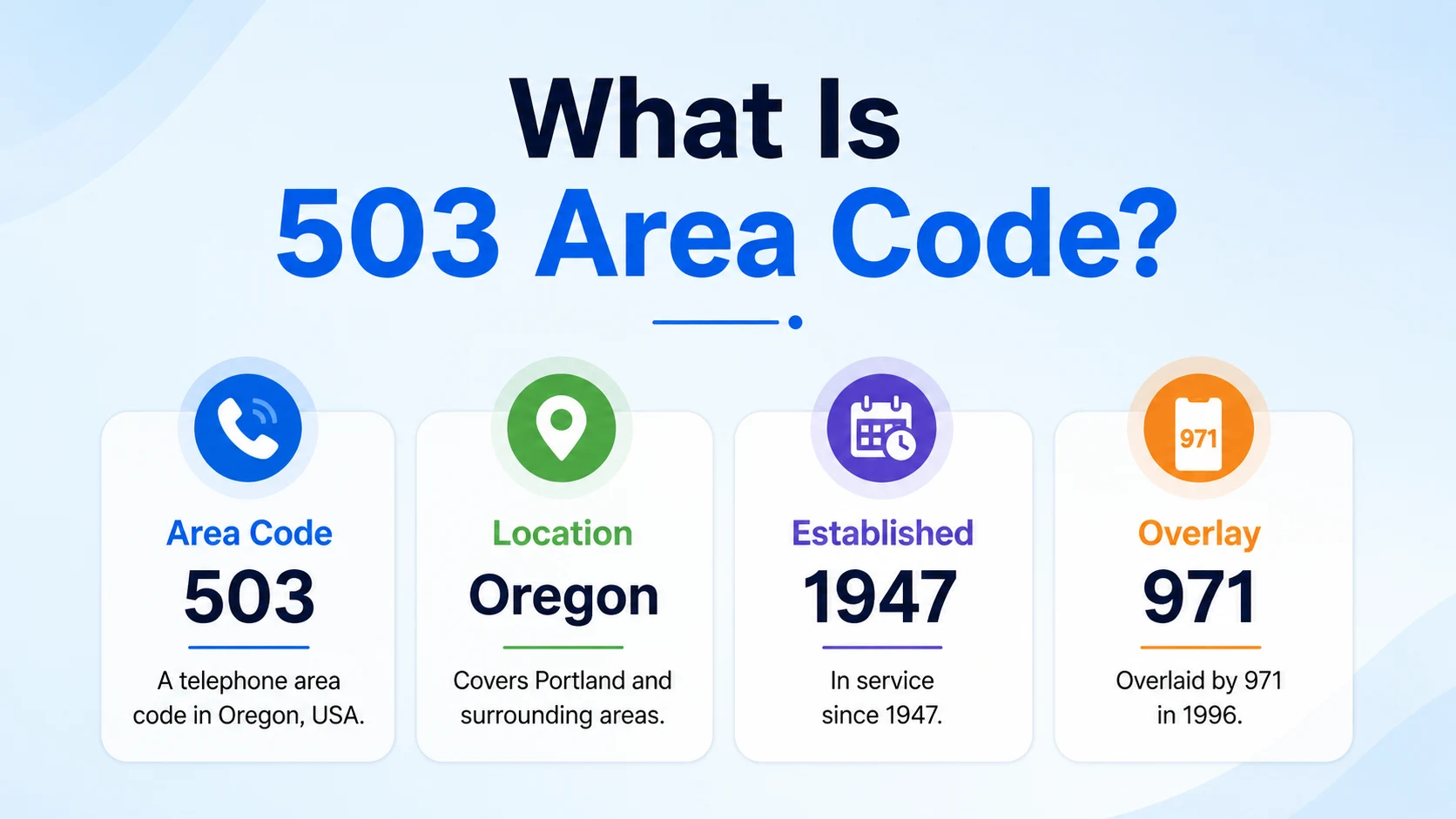
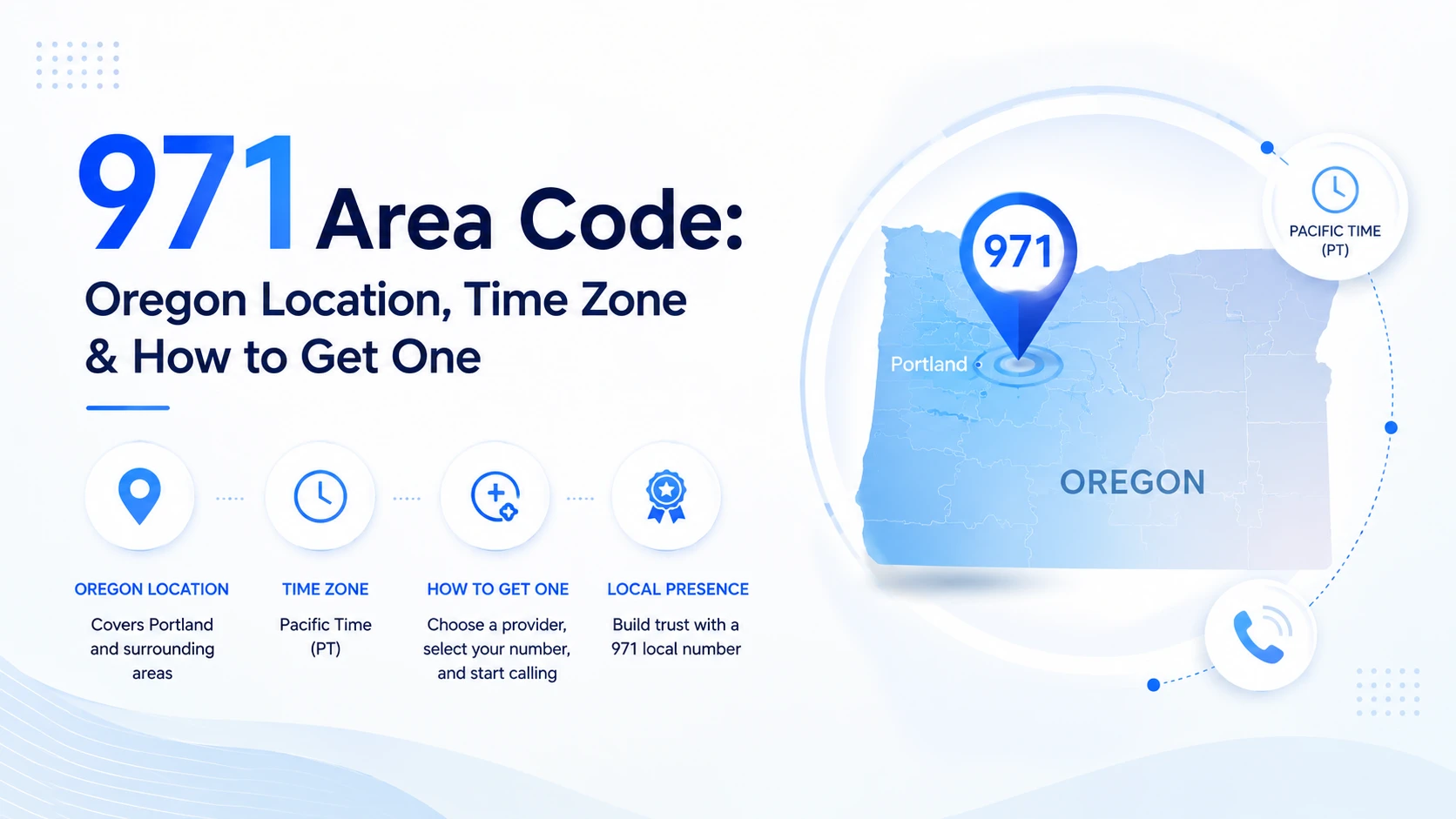
Today, this prefix shares its territory with a newer overlay code, 971 area code, so both route calls to the exact same region. Anyone asking what this number covers is really asking about one specific, well-defined slice of Oregon rather than a scattered or shifting territory. That single, stable footprint is part of why it still carries strong local recognition after nearly eighty years in service, long enough to outlast several generations of the phones that first dialed it.
3Where Is 503 Area Code Located?
Where is 503 area code located? It sits in the northwestern corner of Oregon, centered on the Portland metropolitan area and stretching south toward Salem and west toward the coast. It is not a statewide code — Oregon uses several area codes today — but it covers the most densely populated corridor in the state.
This prefix reaches roughly ten counties, including Multnomah, Washington, Clackamas, Marion, and Yamhill.
- Portland — Oregon's largest city and the anchor of the entire footprint
- Salem — the state capital
- Gresham — a major eastern suburb of Portland
- Hillsboro and Beaverton — key business and residential centers west of Portland
- Lake Oswego, Tigard, and Wilsonville — southern suburban communities
- McMinnville — the heart of Willamette Valley wine country
Just north along the coast, the 206 area code covers Seattle in a similar way — a single historic prefix anchoring a major Pacific Northwest metro. Businesses expanding across both markets often want a distinct local presence in each region instead of routing every call through one shared number, since customers in each city tend to respond better to a familiar local prefix than to an out-of-region one.
4503 Area Code Time Zone and Dialing Rules
This area code sits entirely in the Pacific Time Zone. That means Pacific Standard Time at UTC−8 during the winter months and Pacific Daylight Time at UTC−7 the rest of the year, a three-hour gap behind New York and other East Coast cities that any national sales or support team needs to plan around when scheduling calls.
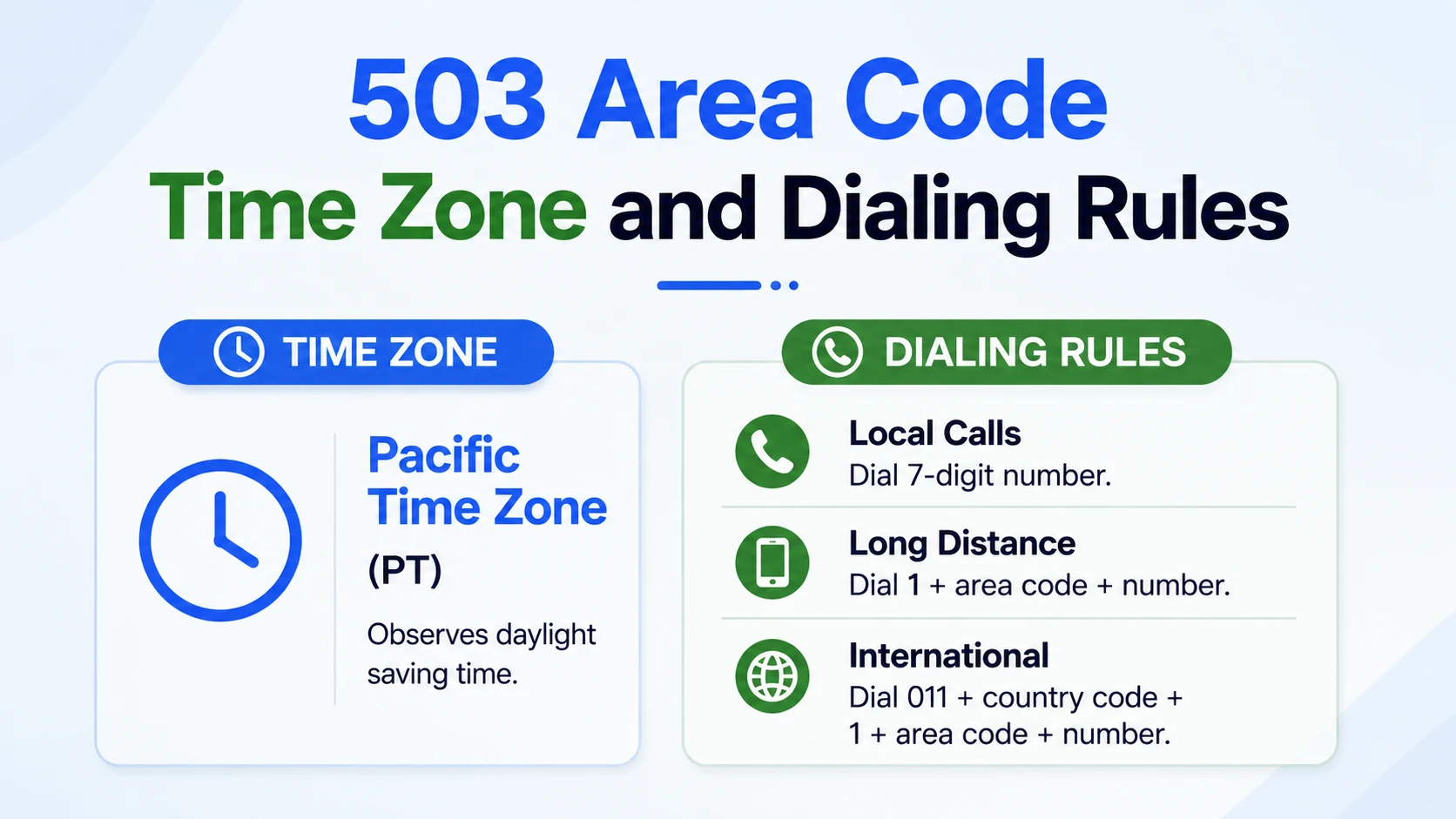
Because the 503 area code shares its footprint with the 971 overlay, ten-digit dialing is mandatory for every local call. Dropping the area code no longer works here, even for a call across the street, so businesses publishing this number should always list it in full on invoices, websites, and caller ID to avoid confusing customers still used to the old seven-digit habit from decades past.
5A Brief History of the 503 Area Code
This prefix went into service in 1947 as one of the original area codes created when the North American Numbering Plan launched, and for decades it covered the entire state of Oregon on its own. Population growth eventually forced a change: in 1995, regulators split off the 541 area code to cover the rest of the state, narrowing this one down to the northwestern corner it serves today.
That narrower footprint kept running short on new numbers anyway, so in 2000 regulators added area code 971 as an overlay rather than splitting the territory a second time. The FCC's numbering oversight page keeps the full regulatory record of every area code split and overlay in the country, including the exact activation date for each region. The result is that the 503 area code and its overlay now cover one identical region rather than two different places, which is why ten-digit dialing became mandatory for every local call placed inside it.
Few callers realize this prefix predates the interstate highway system connecting the cities it now serves, and it was already twenty years old before Oregon adopted its first statewide area code map redesign — a reminder of just how long it has quietly organized the region's phone network.
6Is the 503 Area Code Used for Scam Calls?
Like any active area code, 503 shows up on robocalls and spoofed scam attempts. Scammers often fake a local area code, including this one, so the call looks like it's coming from a neighbor rather than a stranger — a tactic that raises answer rates for fraudulent calls significantly compared to an obviously out-of-state number.
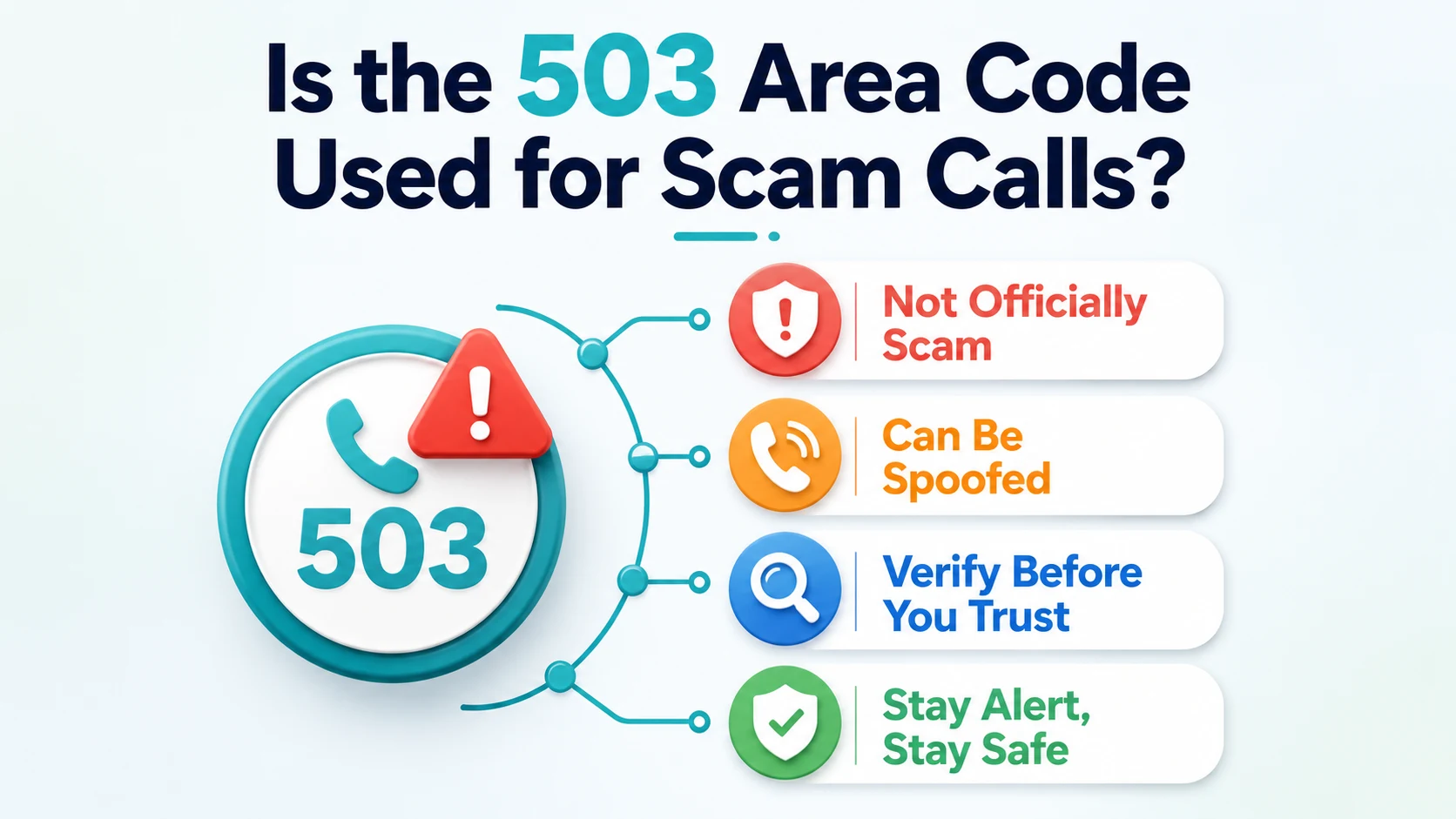
A few habits cut the risk: let unfamiliar numbers go to voicemail, never hand over financial or personal details to an unsolicited caller, and call back through an official number instead of trusting whatever a suspicious caller claims. Most calls placed from area code 503 are still genuine Oregon contacts, so normal caution is enough on its own — there's no need to block the entire prefix outright over a handful of bad actors.
7Why Businesses Choose Local Phone Numbers
Businesses often pick a number that matches the area code of the customers they want to reach, even when their office sits somewhere else entirely. A local area code signals familiarity, and Oregon customers tend to answer a call from this prefix faster than one from an unfamiliar or out-of-state number.
Virtual phone numbers make this easy. A cloud phone system can issue a local number in almost any area code and route the calls anywhere, so a company never needs a physical desk in Portland to sound like a Portland business. That flexibility matters most for remote teams, multi-region sales operations, and businesses testing a new market before committing to office space there, since a wrong bet on physical location is far more expensive to undo than a phone number.
Cloud phone systems add practical benefits beyond the local number itself: call recording, voicemail transcription, and CRM integration all come standard on most modern platforms. Softtop is one provider offering exactly this combination — local numbers across every US area code paired with cloud calling, business SMS, and an AI receptionist on a single account and one monthly bill.
Which region are your customers concentrated in, do you need one number or several across different cities, and will your team answer from a desk phone, a mobile app, or both at once? Getting those answers straight before signing up with any provider saves a painful switch later once call volume picks up.
8How to Get a 503 Area Code Phone Number
Getting a number in the 503 area code no longer requires living in Oregon or leasing office space in Portland, the same way a business can claim a 925 area code number for California's East Bay without leasing space there. Cloud and VoIP providers can issue a local number in minutes and connect it to a mobile app, a desk phone, or a full team inbox from anywhere in the world, with no hardware to install and no technician visit required.
Softtop provisions numbers in this area code instantly, with HD calling, two-way SMS, voicemail-to-email, and STIR/SHAKEN call authentication included so outbound calls aren't flagged as spam by carriers or mobile devices. Softtop customers can also pair the number with an AI receptionist that answers calls around the clock, which matters for any business that wants an authentic Oregon presence without staffing an actual Oregon office five days a week.
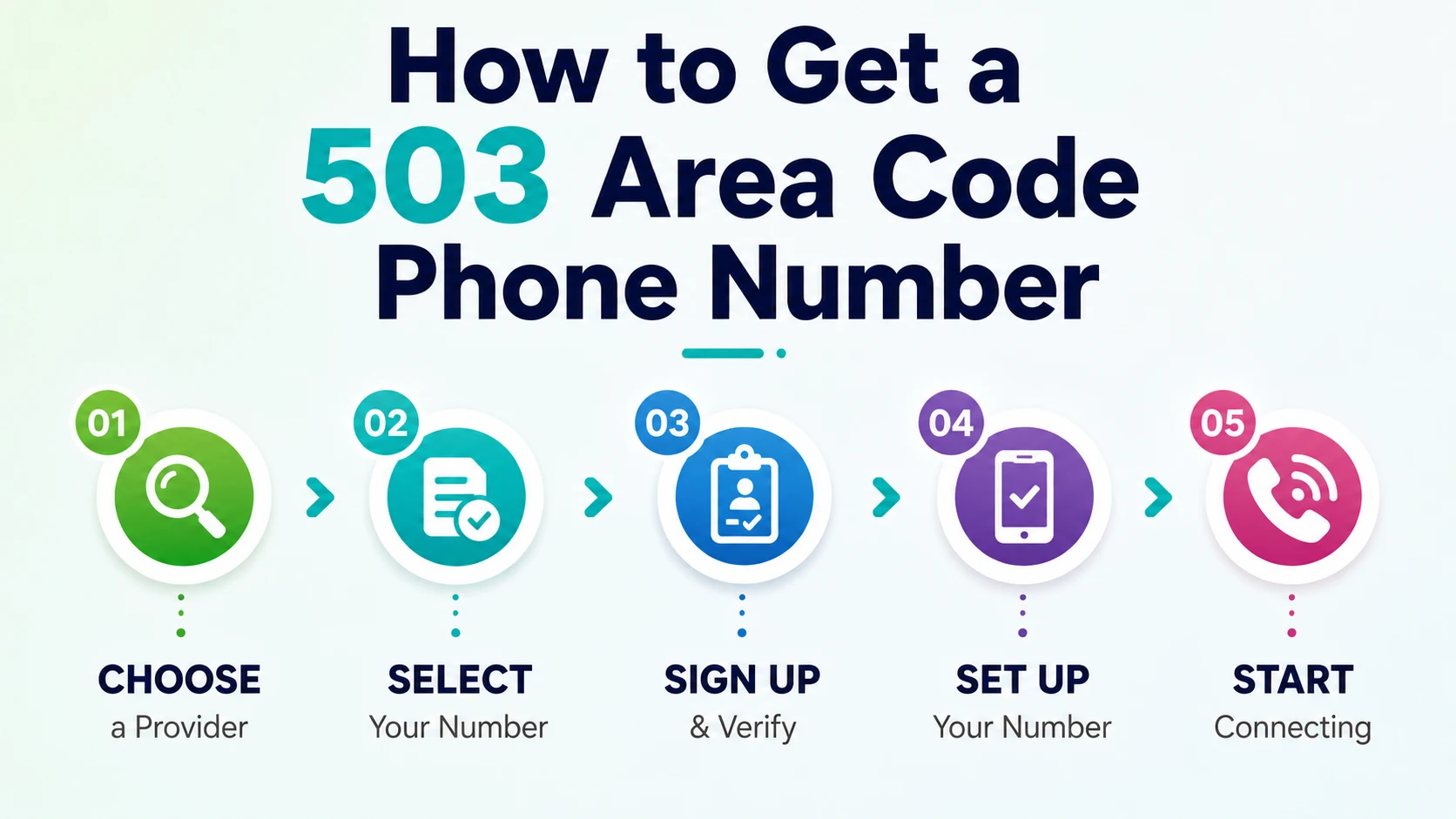
Setup is short: pick a provider, choose an available number from the ones on offer, and decide how incoming calls should route. Softtop's dashboard handles that routing in a few clicks, whether it goes to one phone, a shared team inbox, or an entire sales floor spread across several time zones.
9Conclusion
The 503 area code has anchored northwestern Oregon since 1947, and it still covers Portland, Salem, and the rest of the Willamette Valley today. It shares its territory with the newer 971 overlay, runs on Pacific Time, and requires ten-digit dialing for every local call placed inside it. Scam calls can spoof any prefix, including this one, so normal caution still applies to unfamiliar numbers. None of that history changes what the number means for daily use — it remains one of the clearest signals of a genuine Oregon presence available today.
For businesses, that signal is worth claiming even without an Oregon office. A 503 area code number tells local customers they're calling someone nearby, which builds trust faster than an out-of-state or toll-free line ever will. Cloud providers like Softtop make that number available in minutes, with call routing, recording, and an AI receptionist built in from day one. Claiming a number in the 503 area code today means Oregon customers see a familiar prefix the very next time your business calls.