1Introduction
When a 224 number shows up on your phone, it's coming from the northern and northwestern suburbs of Chicago — a high-income corridor that stretches from Evanston on Lake Michigan all the way out to Elgin and Crystal Lake. The 224 area code was introduced in 2001 as an overlay for the 847 code, which had run short of available numbers just five years after being carved out of the suburban 708 prefix.
In this guide you'll learn which cities and counties fall inside the 224/847 region, the full split-and-overlay history, why scammers target the code, and — if you need a northern Illinois number for your business — exactly how to claim one.
2What Is the 224 Area Code?
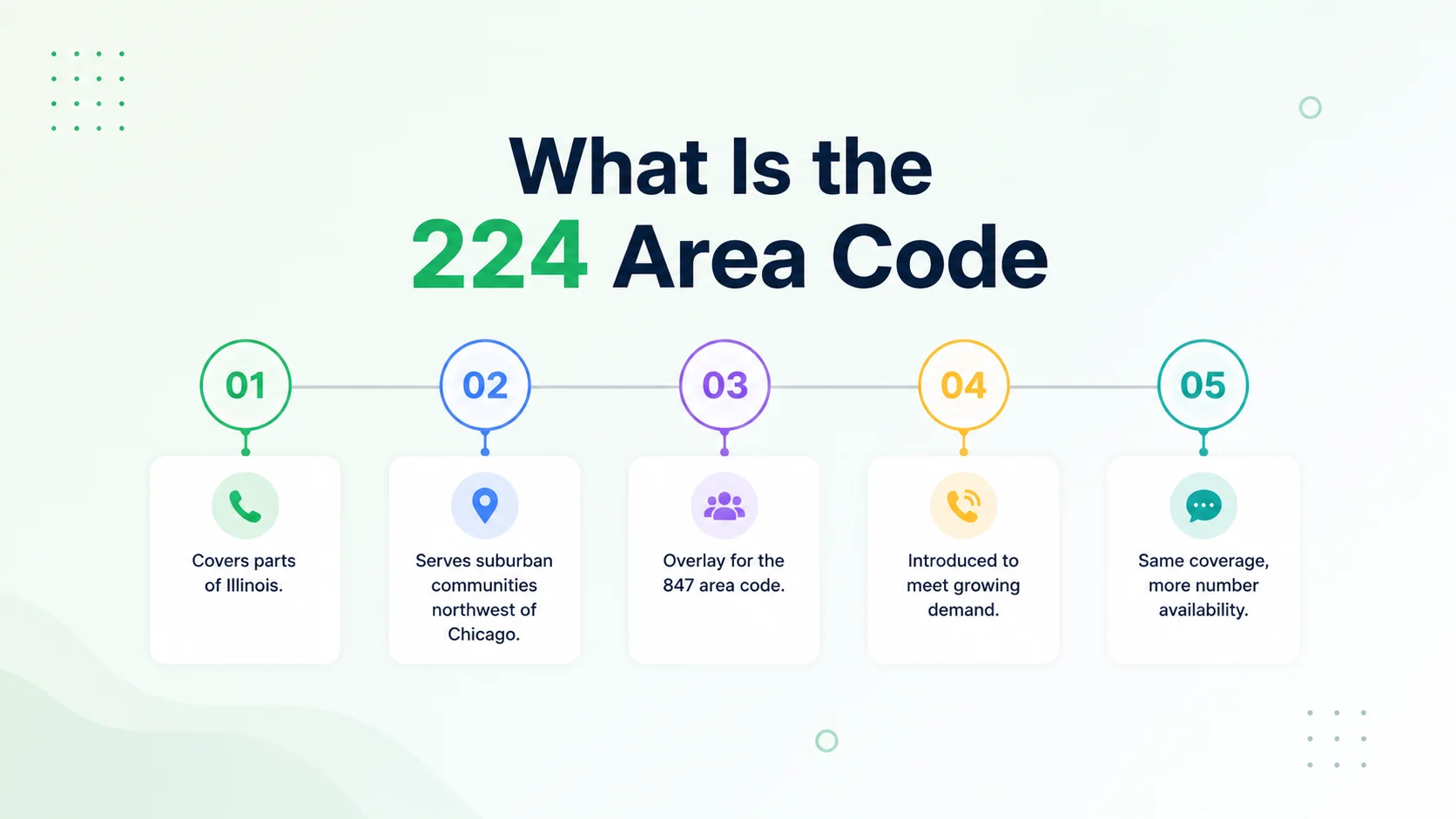
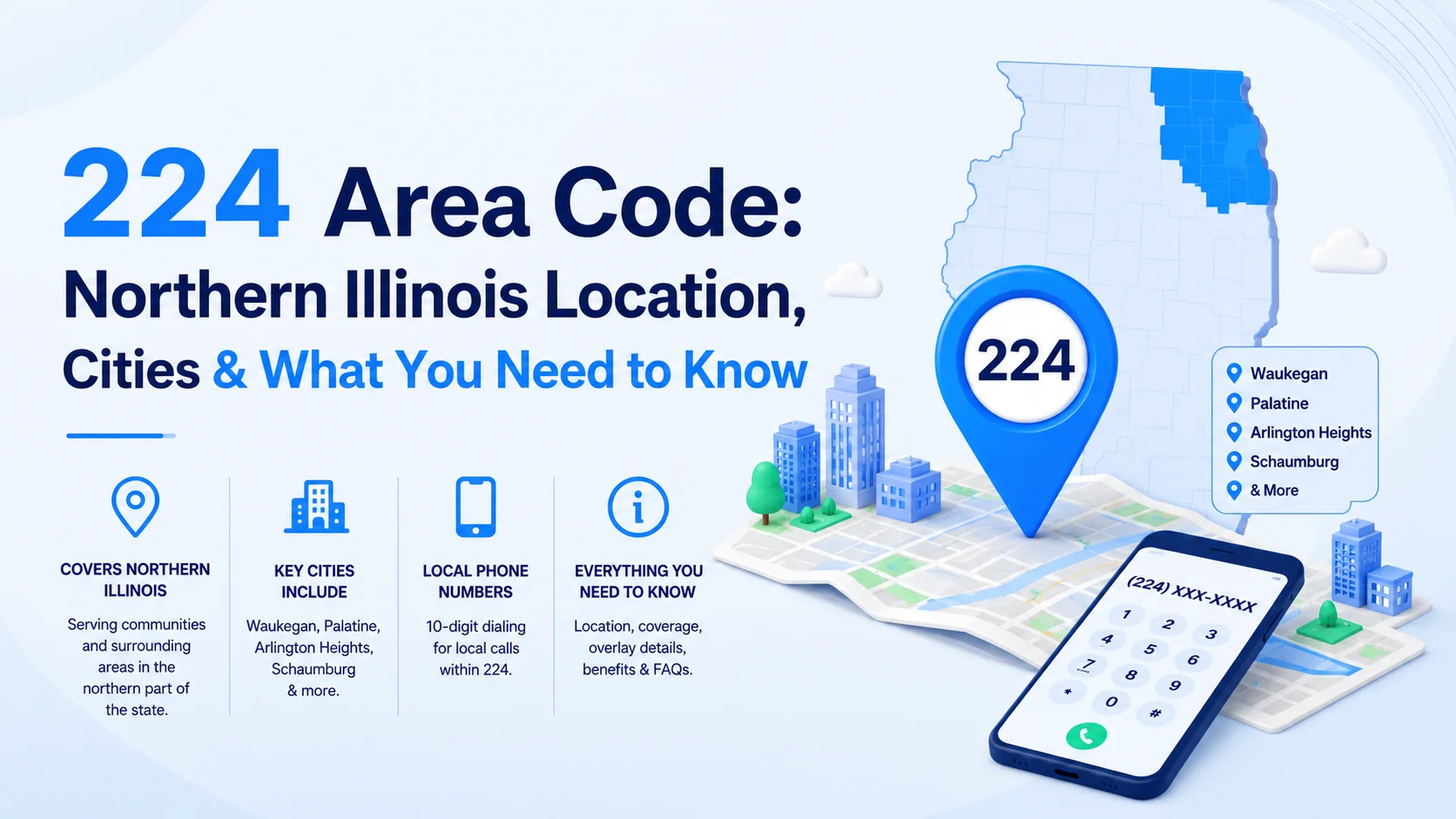
The 224 area code is a NANPA-administered overlay code serving the same geographic footprint as the 847 area code in northeastern Illinois. Because 224 is a true overlay, both codes cover identical territory — callers in the region may hold either prefix, and all local calls require 10-digit dialing.
The 224/847 region sits entirely in the Central Time Zone and forms the northern arc of the greater Chicago metropolitan area. It borders the 312/872 Chicago city codes to the south, the 815 code to the west, and Lake Michigan to the east.
- Time zone: Central (UTC−6 standard, UTC−5 daylight)
- Paired with: 847 (same geographic footprint)
- Major cities: Waukegan, Arlington Heights, Schaumburg, Evanston, Elgin, Palatine
- Neighboring codes: 312, 708, 630, 815
- Country: United States
3A Brief History of the 224 Area Code
The 224 area code is the product of decades of rapid suburban growth radiating outward from Chicago. Each split and overlay in this region reflects a new wave of population, business formation, and mobile-phone adoption.
| Year | Event |
|---|---|
| 1957 | 312 established as the single area code for all of Illinois |
| 1989 | 708 split from 312, taking Chicago's suburban communities; 312 retained for the city |
| 1996 | 847 split from 708 to serve the northern and northwestern Chicago suburbs; 630 and 815 also created |
| Jan 2001 | 224 overlay introduced for the 847 region as available numbers were exhausted |
| 2011 | 872 overlay added for Chicago's 312 zone — separate from 224/847 territory |
The 1996 split that created 847 was driven by the explosive growth of mobile phones and fax lines across the Chicago suburbs — the same national wave of mobile adoption that produced the 973 area code split in New Jersey just a year later. By 2001 — just five years later — those numbers were nearly exhausted, making the 224 overlay one of the fastest follow-on overlays in Illinois history.
4Cities and Counties in the 224 Area Code
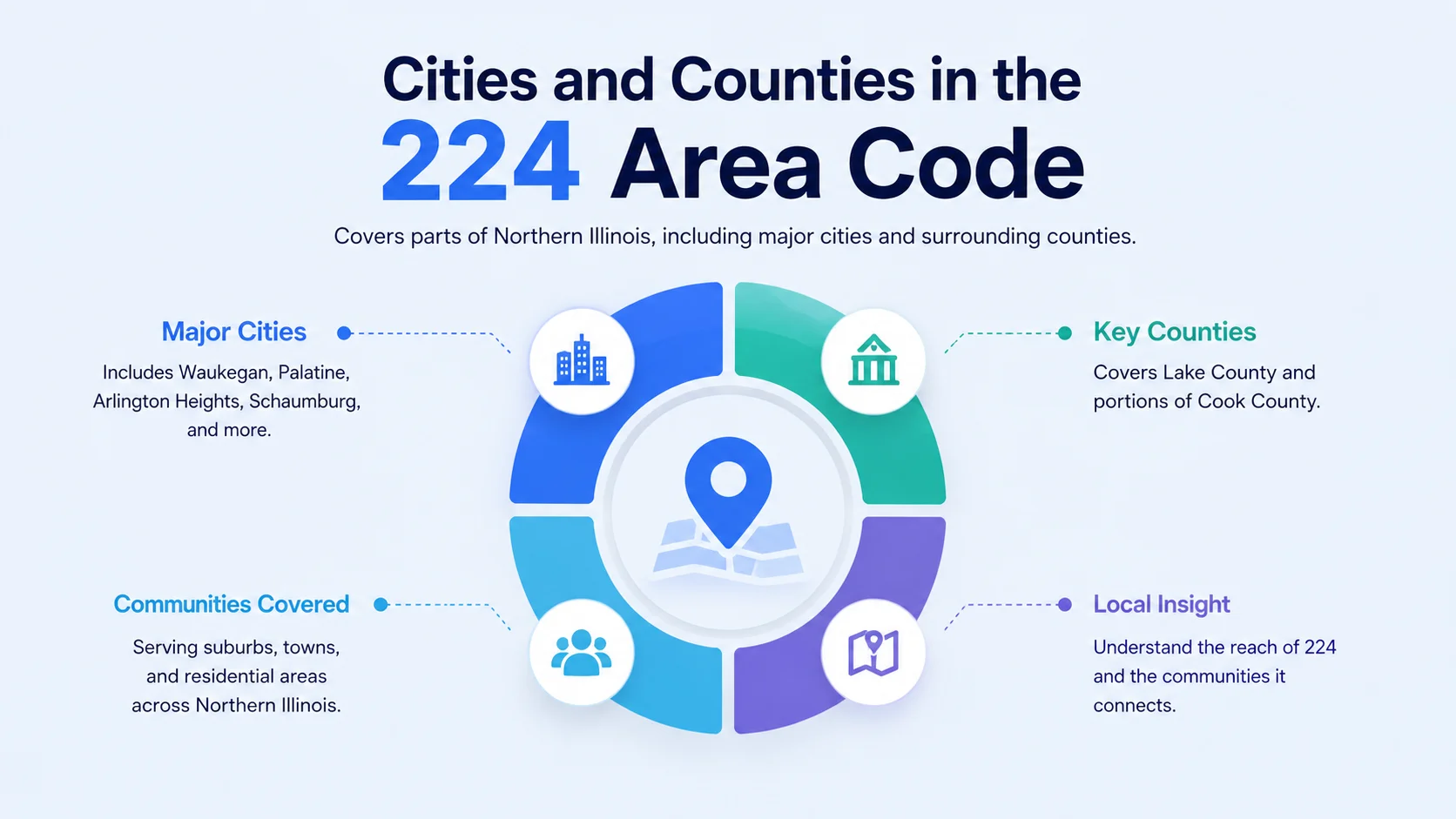
The 224 area code spans four counties in northeastern Illinois — including Cook County, one of the most populous counties in the United States — covering a diverse mix of lakefront communities, dense commercial suburbs, and quieter residential towns further from the city.
| County | Notable Cities & Communities |
|---|---|
| Lake County | Waukegan, North Chicago, Gurnee, Vernon Hills, Libertyville, Lake Forest, Highland Park, Zion, Winthrop Harbor, Deerfield, Northbrook |
| Cook County (N.) | Evanston, Skokie, Niles, Des Plaines, Arlington Heights, Palatine, Schaumburg, Mount Prospect, Rolling Meadows, Wheeling, Buffalo Grove |
| McHenry County | Crystal Lake, McHenry, Woodstock, Algonquin, Huntley, Lake in the Hills |
| Kane County (part) | Elgin, Carpentersville, South Elgin, Sleepy Hollow |
Schaumburg — one of the largest commercial centers in Illinois outside of Chicago — sits within the 224/847 footprint. Its Woodfield Mall corridor alone generates billions in annual retail and business-to-business transactions, making 224 a premium prefix for vendors and service providers in the region.
5Why a 224 Number Builds Local Trust in the Chicago Suburbs
The northern Chicago suburbs are among the wealthiest and most business-dense communities in the Midwest. Lake County and the northern Cook County corridor consistently rank among Illinois's top counties by median household income and business density. A 224 number immediately signals local presence in this high-value market.
Chicago Metro Credibility Without a City Address
Businesses that serve the Chicago metro but are based outside Illinois frequently lose deals because their out-of-state caller ID triggers skepticism. A 224 number reads as local to every prospect in the northern suburbs — improving answer rates and building rapport before the first word is spoken.
Corporate and Healthcare Hub
The 224/847 corridor is home to the headquarters of major corporations and hospital systems. Abbvie, Caterpillar Financial, and numerous regional healthcare networks operate out of Lake and northern Cook counties. Vendors, contractors, and professional services firms serving this ecosystem benefit directly from holding a recognized local prefix.
Industries That Benefit Most from a 224 Number
- Healthcare providers and specialist practices across Lake County
- Commercial real estate and property management firms in Schaumburg
- Staffing and recruiting agencies serving the corporate corridor
- Financial advisors and insurance agents in the northern suburbs
- Logistics and distribution companies near O'Hare International Airport
With Softtop's virtual number plans, businesses anywhere in the world can hold a 224 number and route calls, texts, and voicemail through a single dashboard — no Illinois office required.
6How to Get a 224 Area Code Number
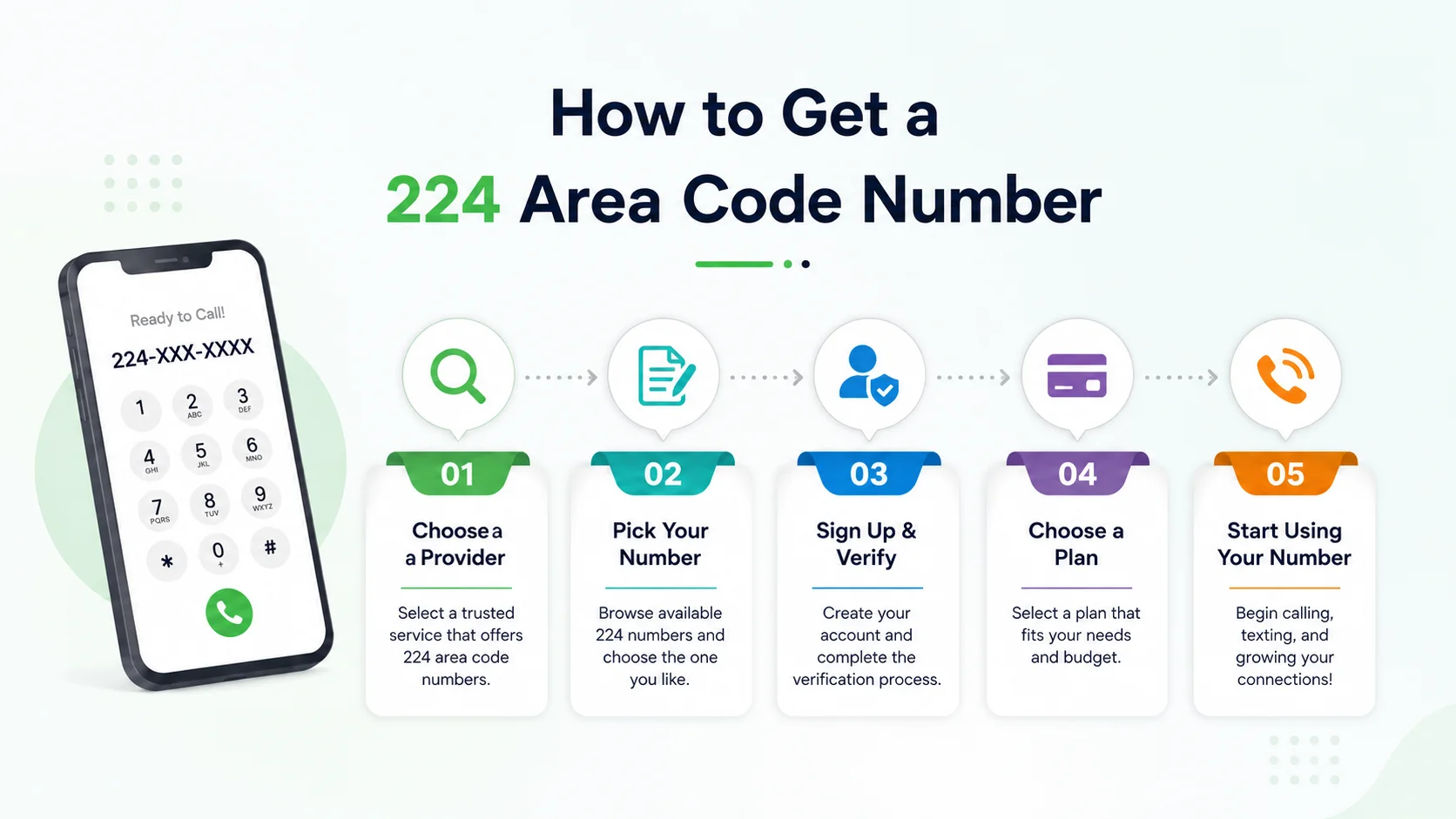
Claiming a 224 number is straightforward with a virtual phone provider. You don't need a physical address in Illinois — the entire setup happens in the cloud.
Step 1: Choose a Virtual Phone Provider
Select a provider that offers U.S. local numbers with call routing, SMS, and voicemail. Look for platforms with transparent pricing, reliable uptime, and a simple number management interface — the same essentials apply whether you're activating a 224 line or adding a 312 area code for downtown Chicago market coverage.
Step 2: Search for Available 224 Numbers
Filter the number search by area code 224. Many providers let you browse multiple options — including numbers with repeating digits or memorable patterns that work well in marketing campaigns.
Step 3: Configure Call Routing
Route inbound 224 calls to your mobile, desk phone, or team queue. Set up business-hours rules, an auto-attendant greeting, and voicemail transcription so every caller reaches a professional experience.
Step 4: Port an Existing Number (If Needed)
Already have a 224 or 847 number with another carrier? Number porting lets you transfer it to a new provider without losing the digits. Most ports complete within 1–5 business days.
Porting an existing 224 or 847 number is typically free with Softtop. Keep the number your clients already have saved and immediately upgrade your call quality, SMS, and voicemail features.
7224 Area Code Scam Calls and Spoofing
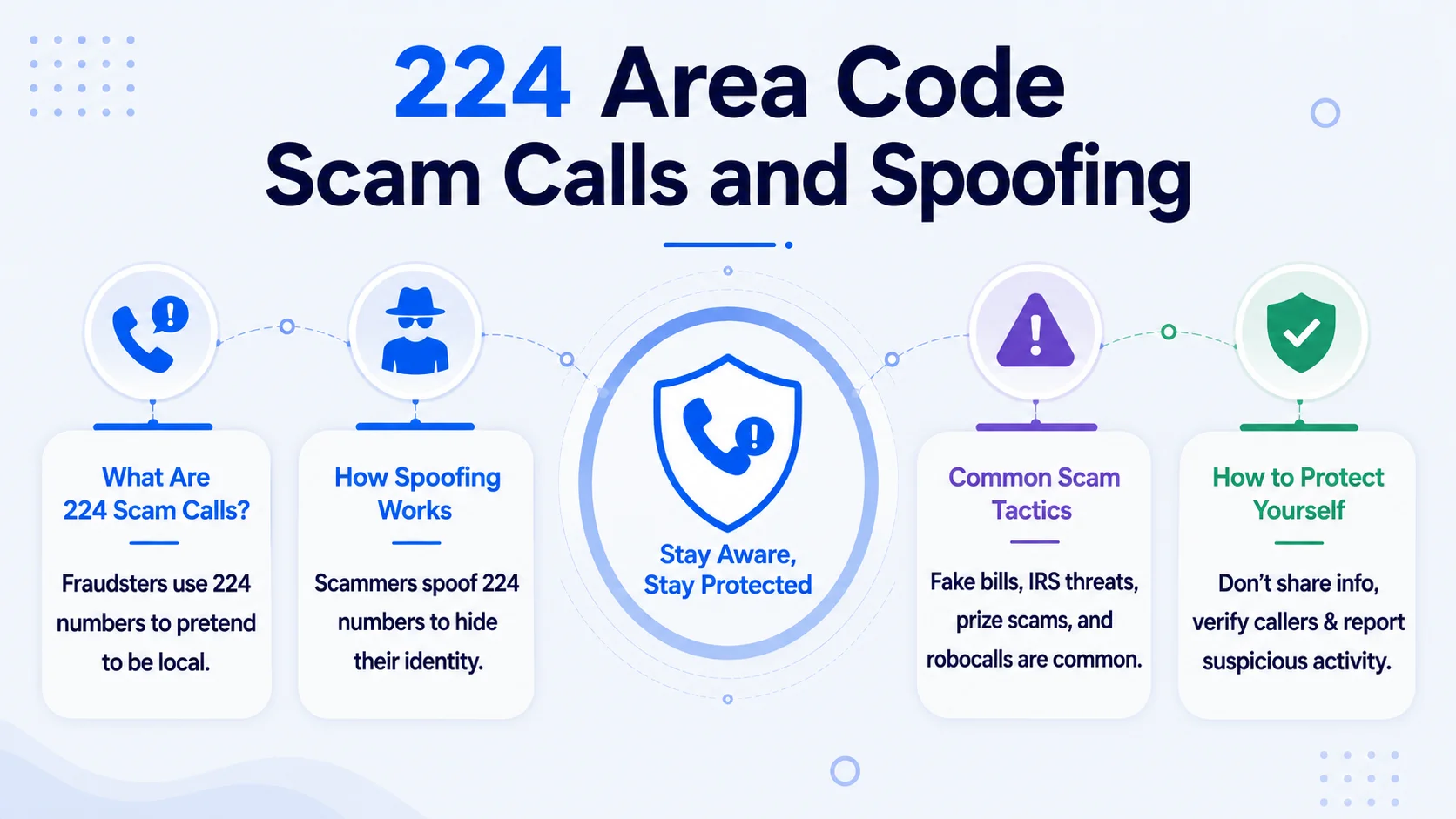
Because 224 reads as a wealthy Chicago-suburb prefix, it's a frequent choice for scammers using neighborhood spoofing — matching a local code to boost the odds that residents pick up. Fraudulent 224 calls are used to impersonate banks, healthcare providers, utility companies, and government agencies.
Common 224 Scam Patterns
- Neighborhood spoofing — callers match your 224 prefix to appear local
- Fake bank fraud alerts asking you to confirm account details
- Utility shutoff threats demanding immediate payment
- Bogus healthcare billing calls claiming unpaid balances
- Warranty and insurance robocalls targeting homeowners and vehicle owners
How to Protect Yourself
Report suspicious 224 calls to the FTC's phone scam center. Legitimate banks and utilities never demand immediate payment over the phone or ask you to read back a one-time code. When in doubt, hang up and call the institution using the number on their official website or your card.
Carriers implementing STIR/SHAKEN caller ID authentication have significantly reduced spoofed call volumes on certified networks. If your phone labels a 224 call as 'Spam Likely' or 'Scam Risk,' trust the label and let it go to voicemail.
8Conclusion
The 224 area code covers one of the most commercially significant regions in the Midwest — the northern and northwestern Chicago suburbs, spread across Lake, Cook, McHenry, and Kane counties. As an overlay for 847, it shares a territory packed with corporate headquarters, hospital systems, retail centers, and high-income residential communities.
Whether you're looking up an unfamiliar 224 caller or building local presence in the Chicago suburbs, understanding the code's geography and history gives you the full picture. And if you need a 224 number for your business, a virtual phone platform makes the process fast and simple — no Illinois address required.
9Frequently Asked Questions
What cities are in the 224 area code?
224 covers the northern and northwestern Chicago suburbs, including Waukegan, Evanston, Schaumburg, Arlington Heights, Palatine, Des Plaines, Elgin, Crystal Lake, Vernon Hills, Libertyville, Lake Forest, Skokie, and dozens more across Lake, Cook, McHenry, and Kane counties.
Is 224 the same as 847?
Yes — 224 and 847 cover the same geographic area in northern Illinois. The 224 overlay was added in 2001 when 847 numbers ran low. New numbers assigned in the region may carry either prefix; callers can't choose which one they receive.
Why did I get a call from a 224 number?
A 224 call may come from a northern Illinois resident or business, a virtual number holder who selected 224 for local Chicago-suburb credibility, or a scammer using neighborhood spoofing. If the call is unexpected and asks for payment or personal information, hang up immediately.
Can I get a 224 number without living in Illinois?
Yes. Virtual phone providers let you select a 224 area code number and route calls to any device, anywhere in the world. No Illinois address or physical office is needed.
What time zone is the 224 area code?
The 224 area code is in the Central Time Zone — UTC−6 during standard time and UTC−5 during daylight saving time, which runs from the second Sunday in March through the first Sunday in November.
Is 224 a cell phone or landline number?
224 numbers can be assigned to landlines, mobile phones, VoIP lines, or virtual numbers. The prefix alone doesn't indicate the line type — you'd need a number lookup tool to distinguish between mobile, landline, and VoIP.
How do I report a 224 area code scam call?
File a complaint at reportfraud.ftc.gov or through the FCC Consumer Complaint Center at consumercomplaints.fcc.gov. You can also block the number through your carrier or smartphone settings to stop future calls from the same source.
Need a 224 Chicago-suburb number for your business? Softtop makes it easy — search available 224 numbers, set up call routing, and go live today. Visit softtop.tech to get started.