1Introduction
If a call just came in from a 419 number, or you're weighing whether to add one to your business, you're looking at one of the oldest and most recognized area codes in the country. The 419 area code covers a wide swath of northwest Ohio, from the shores of Lake Erie down through the Toledo, Lima, and Mansfield markets, and it has quietly stayed intact since the very first nationwide numbering plan went live in 1947.
This guide breaks down exactly where the 419 area code sits, how it came to be, which cities and counties it serves, what time zone to expect when a call comes in, and why a growing number of businesses are picking up a 419 number even if they aren't based in Ohio. We'll also clear up the biggest point of confusion tied to this code: the difference between a legitimate 419 area code call and the infamous "419 scam."
2Where Is the 419 Area Code Located?
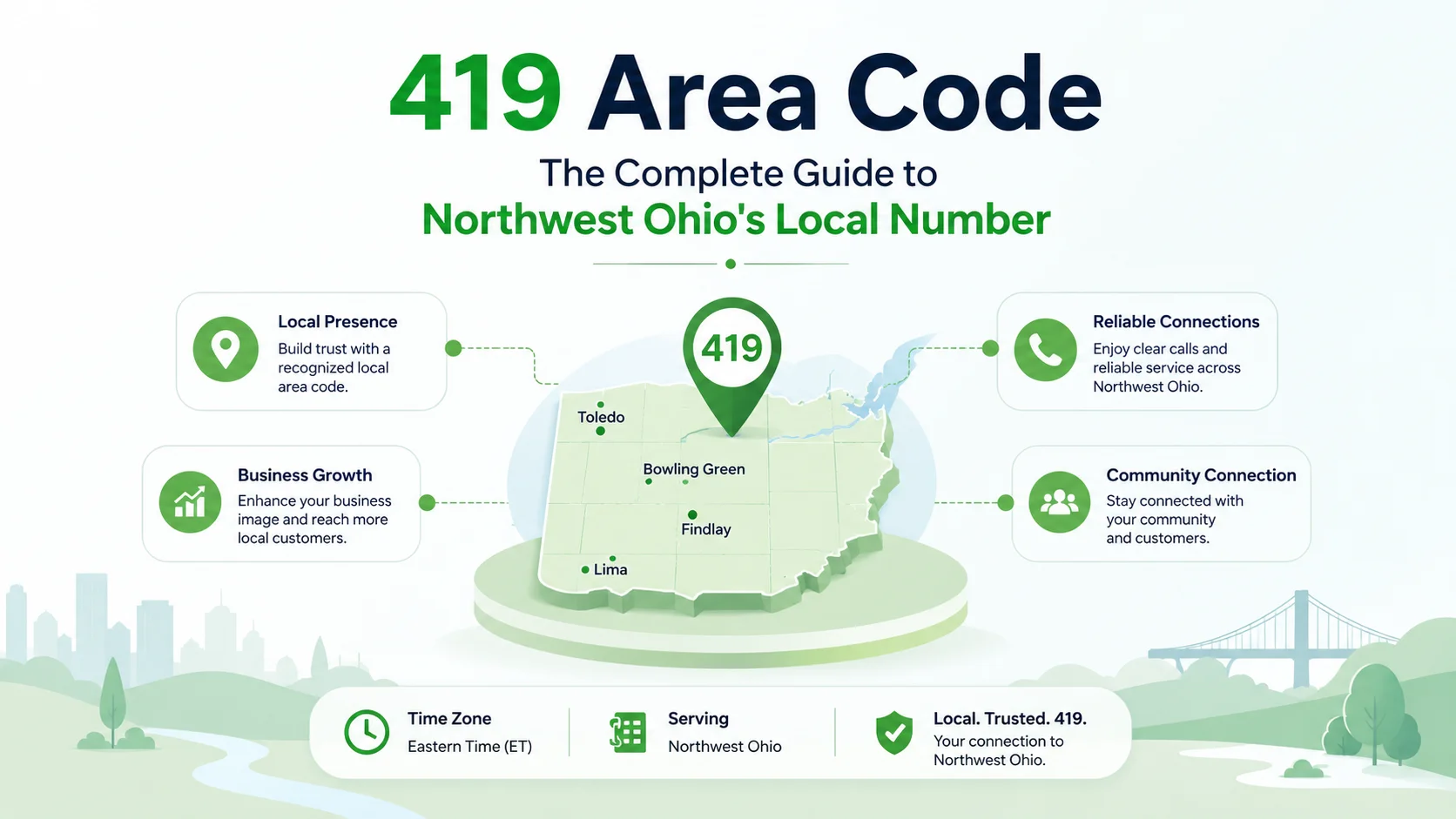
The 419 area code serves northwest Ohio, anchored by Toledo as its largest city, with Lima, Findlay, Mansfield, Sandusky, Fremont, Tiffin, and Bowling Green among the other major population centers in its footprint. The region stretches from the Michigan and Indiana state lines in the west and north, east toward Sandusky and the Lake Erie Islands, and south into rural farm country around Kenton and Wapakoneta.
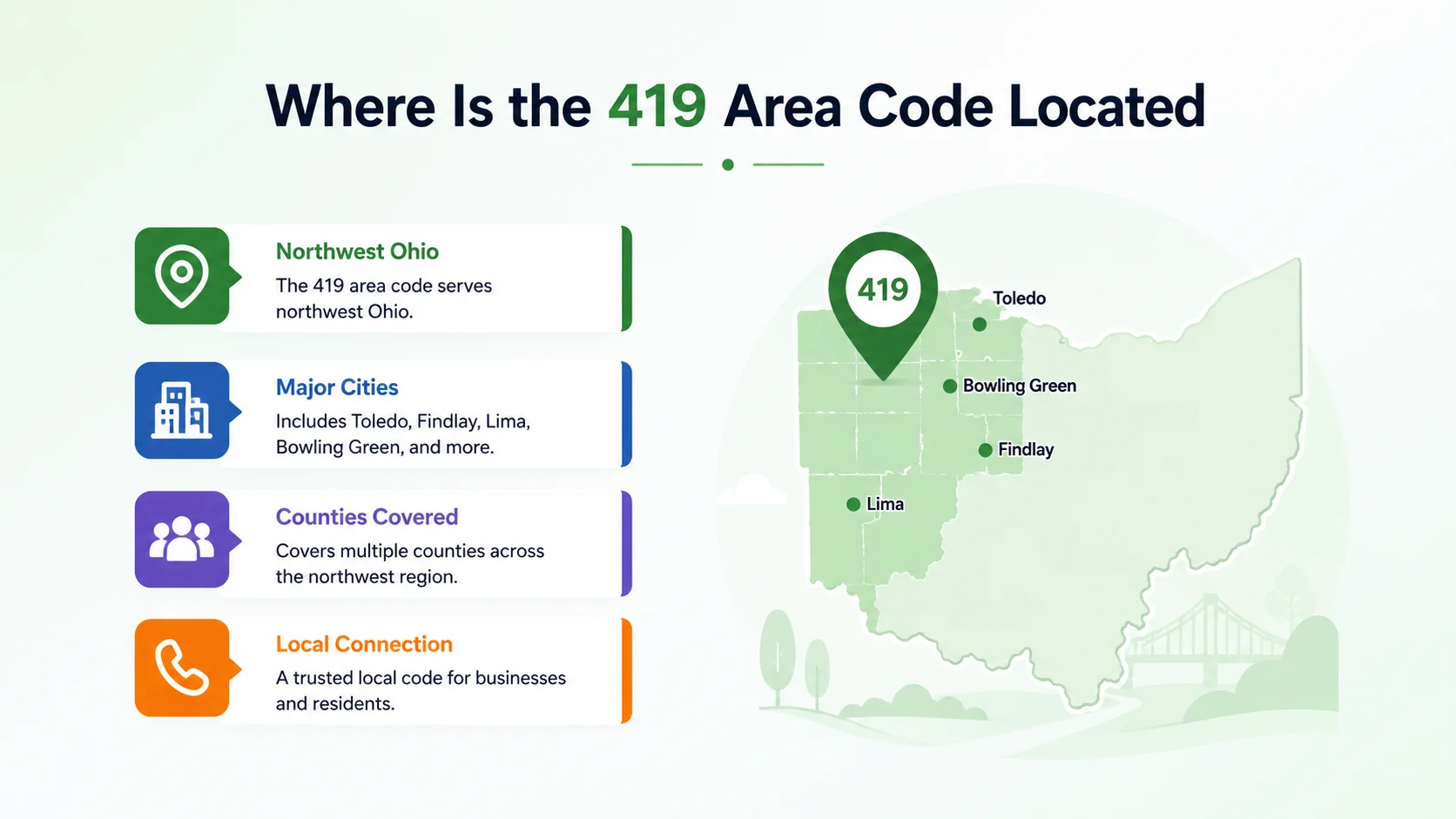
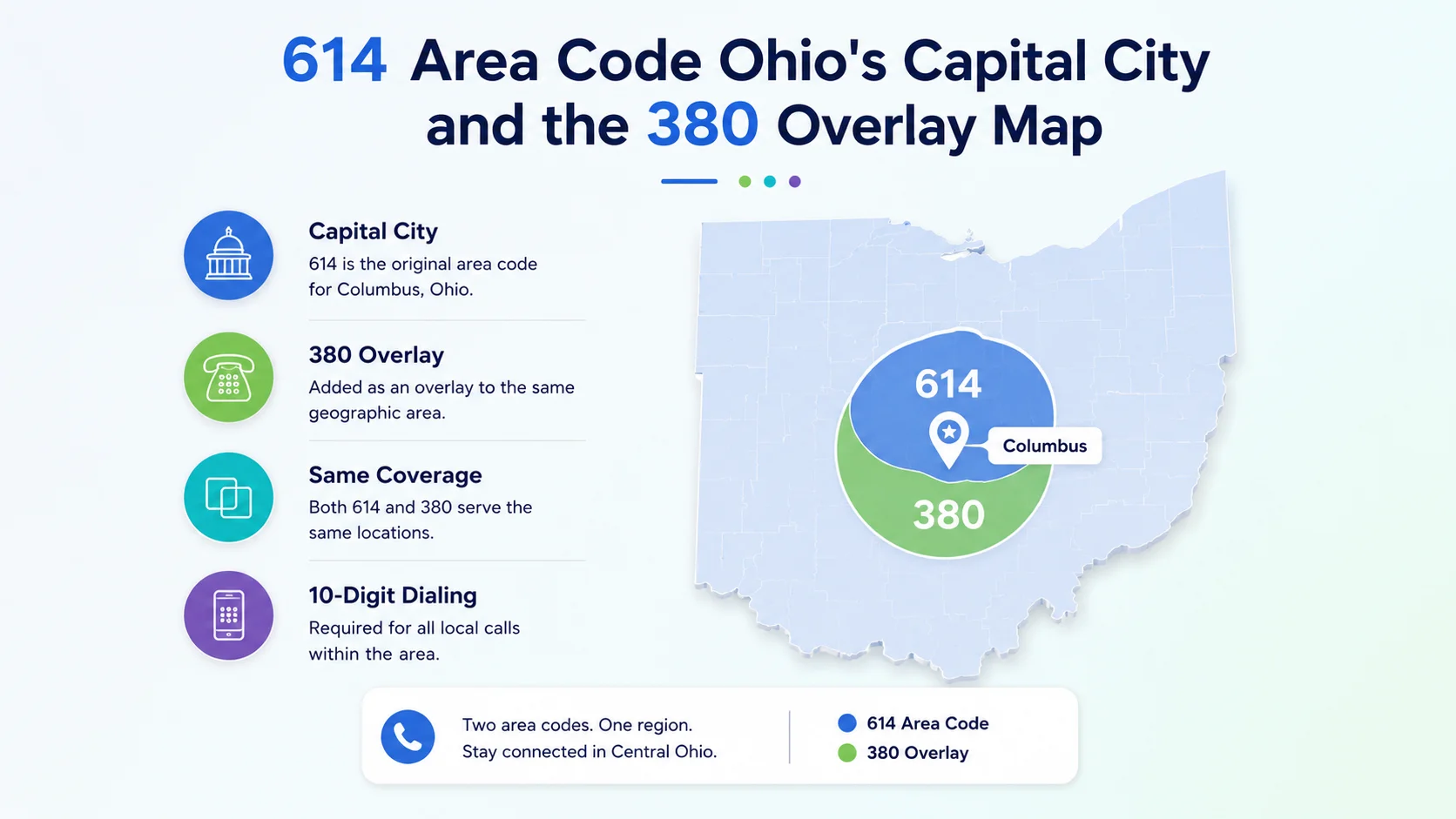
Geographically, this makes 419 one of the largest area codes in Ohio by land area, even though it shares its territory with the overlay code 567. Both codes cover the exact same region, meaning a business or resident could be assigned either number depending on availability, not on any difference in location.
3A Brief History of the 419 Area Code
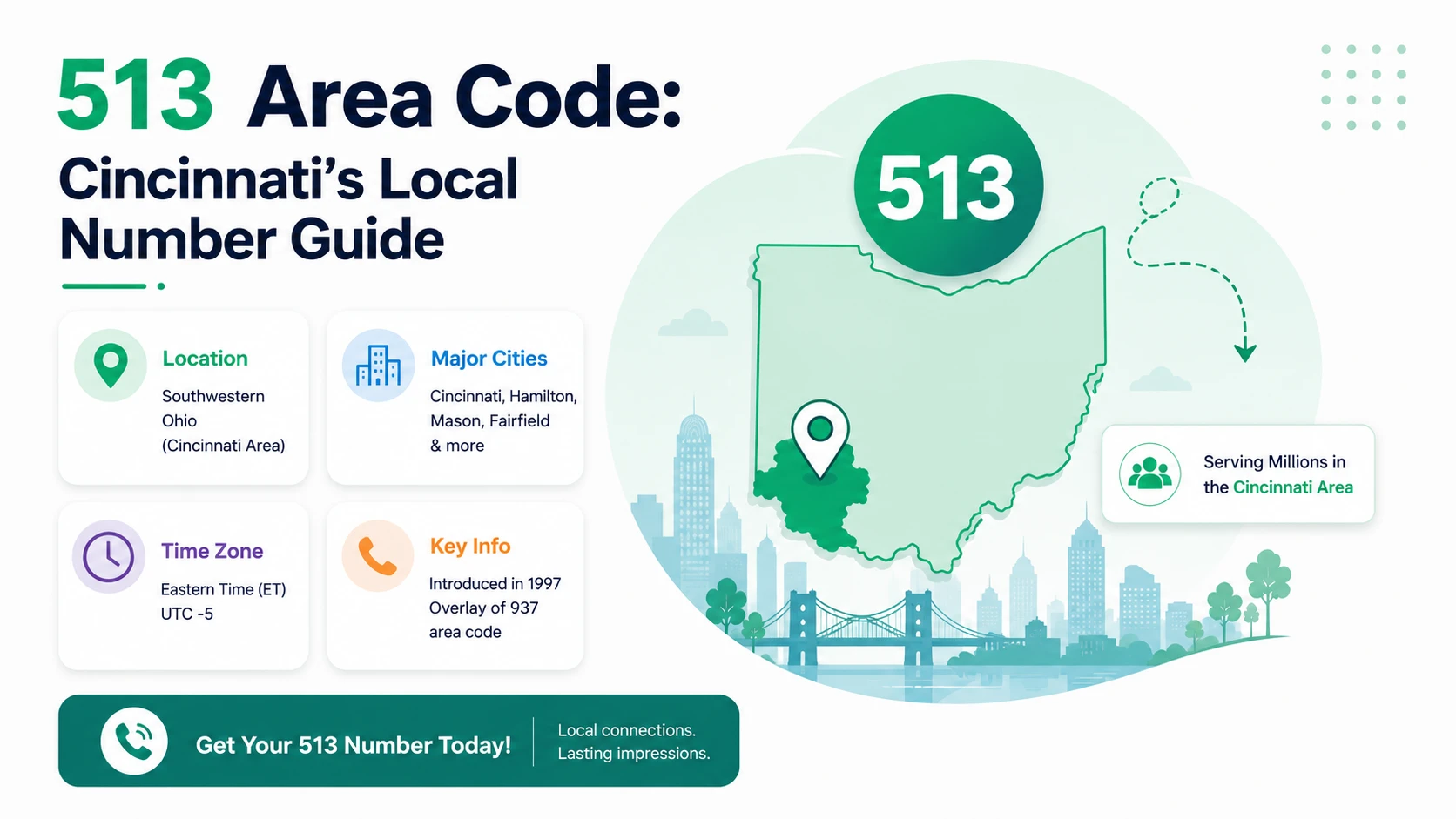
The 419 area code is one of the original 86 area codes created under the first North American numbering plan in 1947. Ohio was initially divided into four numbering plan areas in a rough quadrant layout, and 419 was assigned to the entire northwest quadrant of the state — the same 1947 rollout that gave the southwest quadrant its own code, the 513 area code around Cincinnati.
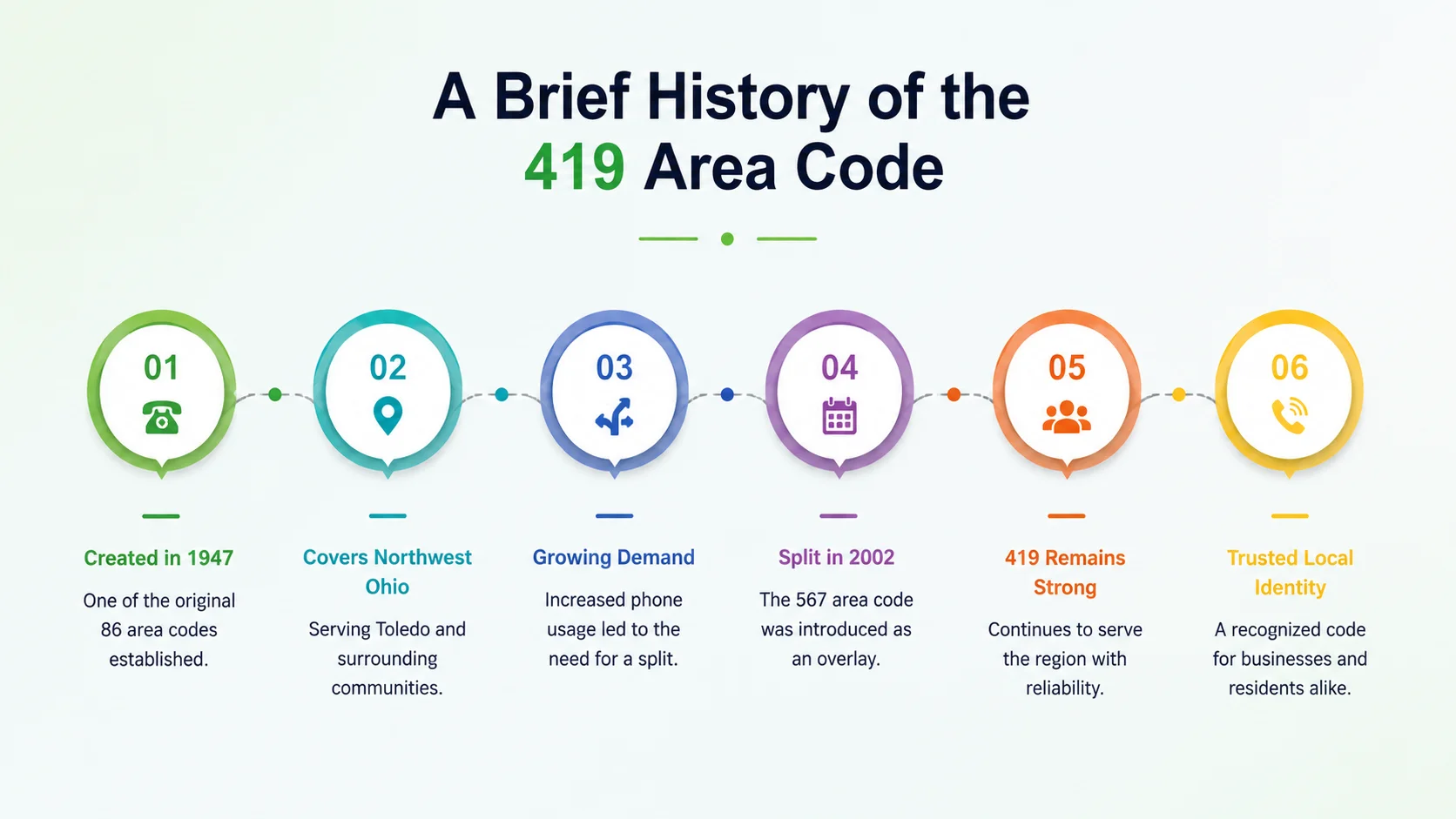
Unlike many of its original 1947 counterparts, 419 has never been split. As demand for phone numbers grew through the 1990s, the North American Numbering Plan Administrator opted for an overlay rather than dividing the territory. On January 1, 2002, the 567 area code launched as an overlay covering the identical geographic footprint as 419. That decision means anyone in the region may need to dial all ten digits, even for local calls, but it also means the original 1947 boundaries of 419 remain unchanged more than seven decades later.
| 419 Area Code | 567 Area Code | |
|---|---|---|
| Type | Original code — active since 1947 | Overlay code — added 2002 |
| Territory covered | Northwest Ohio | Identical footprint to 419 |
| New numbers issued since | 1947 | January 1, 2002 |
| Existing 419 numbers affected? | No — unchanged | Not applicable |
| Dialing requirement | 10 digits, mandatory | 10 digits, mandatory |
| Which one is "better"? | Neither — fully interchangeable | Neither — fully interchangeable |
In practice, which one you get comes down to whichever prefix has available numbers left in a given exchange at the time you sign up — not location, not call quality, and not local credibility. A 419 number and a 567 number ring the same way to anyone calling northwest Ohio.
4Cities and Counties in the 419 Area Code
The 419 area code spans more than a dozen counties across northwest Ohio. Some of the best-known cities and communities served include:
- Toledo and its suburbs, including Maumee, Perrysburg, Sylvania, and Oregon
- Lima, Delphos, and Bluffton in Allen County
- Findlay and Arlington in Hancock County
- Mansfield, Ontario, and Shelby in Richland County
- Bowling Green and Perrysburg in Wood County
- Sandusky, Fremont, and the Lake Erie Islands
- Tiffin and Fostoria in Seneca County
- Defiance, Napoleon, and Bryan in the state's northwest corner
- Wapakoneta, St. Marys, and Celina in Auglaize and Mercer counties
This mix of a mid-sized metro area, several college towns (home to the University of Toledo and Bowling Green State University), and dozens of smaller communities is part of what makes the 419 area code such a consistently active number range for both residential and business use.
5What Time Zone Is the 419 Area Code In?
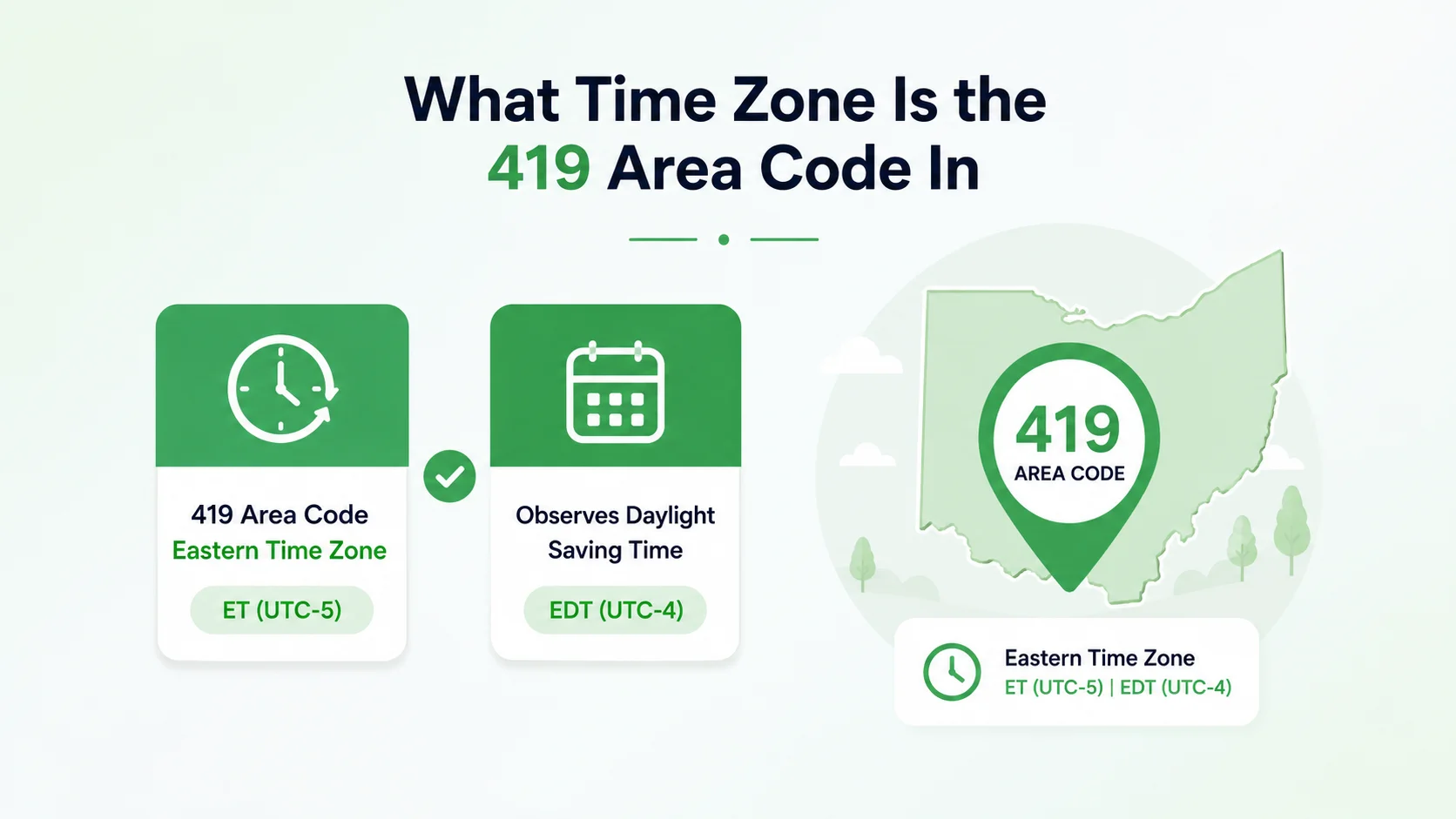
Every community covered by the 419 area code sits in the Eastern Time Zone, observing Eastern Standard Time in the winter and Eastern Daylight Time in the summer. That places 419 numbers on the same clock as New York, Atlanta, and Washington, D.C., which is worth knowing if you're scheduling calls or campaigns aimed at this region from a different part of the country.
6Is a 419 Area Code Number a Scam?
This is one of the most searched questions tied to this code, and it deserves a clear answer: no, the 419 area code itself is not a scam. The confusion comes from the term "419 scam," a nickname for Nigerian advance-fee fraud named after Section 419 of Nigeria's criminal code, which covers fraud offenses. That naming is a historical coincidence and has nothing to do with Ohio's telephone numbering.
That said, like virtually any active area code, 419 numbers do get spoofed by robocallers and scammers looking to appear local. Caller ID can be faked fairly easily, so a call showing a 419 number isn't proof it's actually originating in Ohio. The Federal Communications Commission publishes ongoing guidance on caller ID spoofing and how consumers and businesses can protect themselves, which is a useful reference if you're trying to separate legitimate 419 traffic from spoofed calls.
7Why Businesses Choose a 419 Area Code Number
Picking up a dedicated 419 number isn't limited to companies physically headquartered in Toledo or Lima. A local area code carries real weight with the people you're trying to reach, and businesses use it for a few practical reasons:
- Local trust: customers in northwest Ohio are more likely to answer or return a call from a familiar area code than an unfamiliar toll-free or out-of-state number
- Regional expansion: companies opening a satellite office, service territory, or sales region in the Toledo-to-Mansfield corridor can establish a local presence before ever renting space
- Marketing and tracking: a dedicated 419 line makes it easy to track how a specific regional campaign is performing, separate from national or other-area-code traffic
Consistency for a growing footprint: businesses already juggling numbers in other regions, such as a 505 area code line for Albuquerque or a 0141 area code line for Glasgow, often want a matching setup for northwest Ohio rather than a mismatched patchwork of providers.
A 419 number is only as useful as the platform behind it. Softtop's business phone system provisions local numbers like this instantly, with an AI receptionist, call routing, and CRM sync included from day one — no separate hardware or carrier contract required.
8How to Get a 419 Area Code Number
Getting a 419 number no longer requires a physical line running into a Toledo office. Modern business phone platforms provision local numbers instantly, over the internet, from anywhere in the country. In practice, that means a company can select a 419 number the same way it might select a number for a completely different region, and manage every line from one dashboard rather than juggling separate accounts.
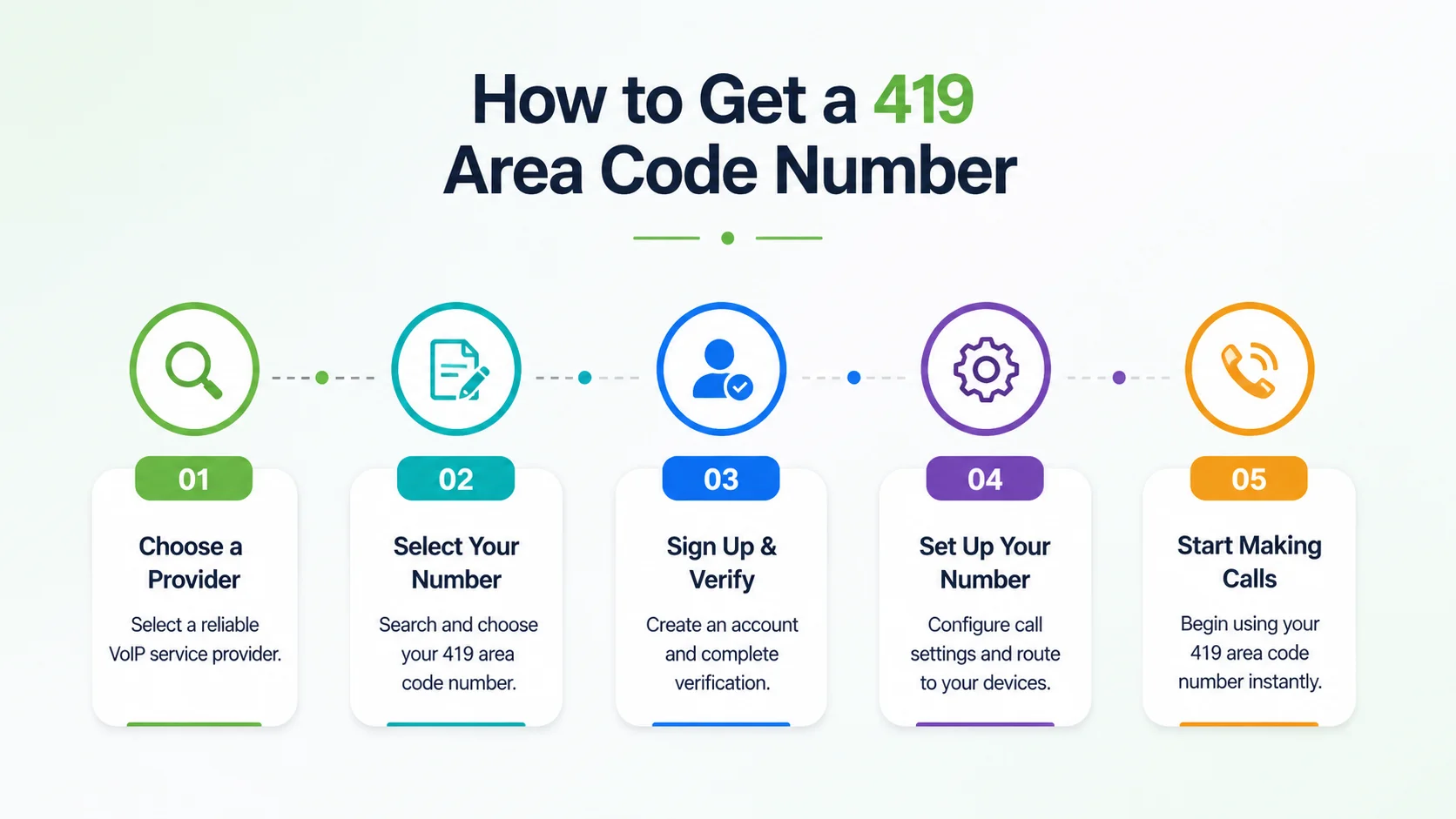
The process generally comes down to three steps: choose a provider with 419 numbers actually in inventory, confirm the specific prefix or exchange you want if you have a preference, and either provision a brand-new number or port an existing one over, typically without any service interruption. Businesses that already operate numbers in other regions can usually add a 419 line to the same account and route calls, voicemail, and texts through the same system they already use.
9Conclusion
The 419 area code has stayed remarkably stable since 1947, still covering the same northwest Ohio footprint that includes Toledo, Lima, Findlay, Mansfield, and dozens of smaller communities along Lake Erie and the surrounding farmland. It runs on Eastern Time, shares its territory with the 567 overlay, and has no real connection to the unrelated "419 scam" beyond a shared set of digits.
For businesses, a 419 number offers a straightforward way to establish a genuine local presence in one of Ohio's most active regional markets, whether that's for a new office, a regional sales push, or simply a more organized way to manage calls alongside numbers in other area codes.