1Introduction
The 505 area code is one of the oldest telephone codes in the western United States — and if you've ever watched Breaking Bad or Better Call Saul, you've heard it referenced. It's the dialing prefix for Albuquerque, Santa Fe, and much of central and northern New Mexico, a region defined by high-desert landscapes, a rich multicultural heritage, and a growing technology and healthcare economy.
Whether a 505 number just called you and you're wondering where it's from, or you're setting up a business presence in New Mexico's largest markets, this guide covers everything: which cities fall under 505, how the code came to be, what time zone it runs on, the scam patterns to watch for, and how to claim a 505 number without a physical New Mexico address.
2Where Is the 505 Area Code Located?
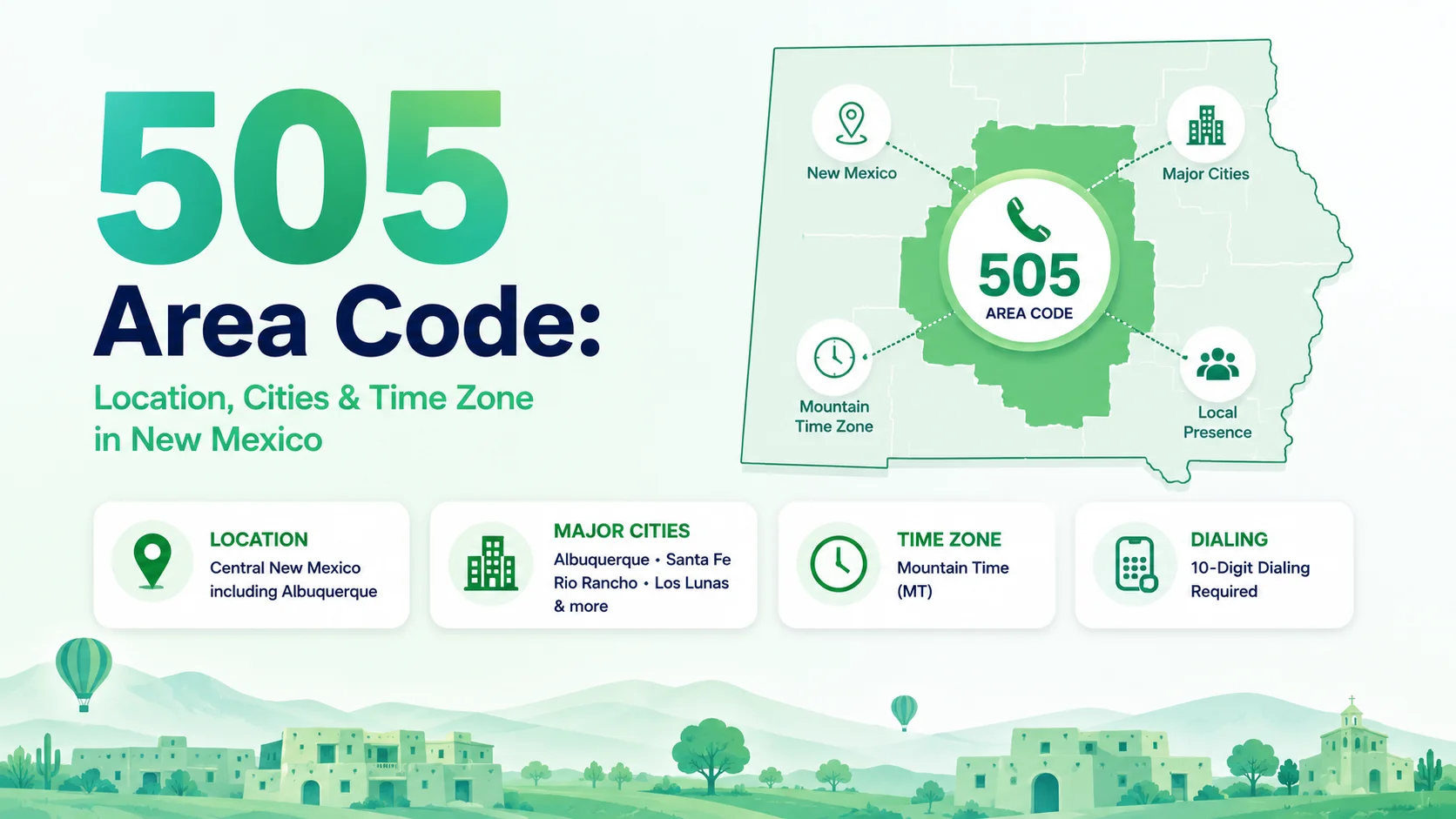
The 505 area code covers central and northern New Mexico, including the state's most populated urban centers and surrounding communities. It does not cover the entire state — the southern and eastern regions of New Mexico use the 575 area code, which split from 505 in 2007.
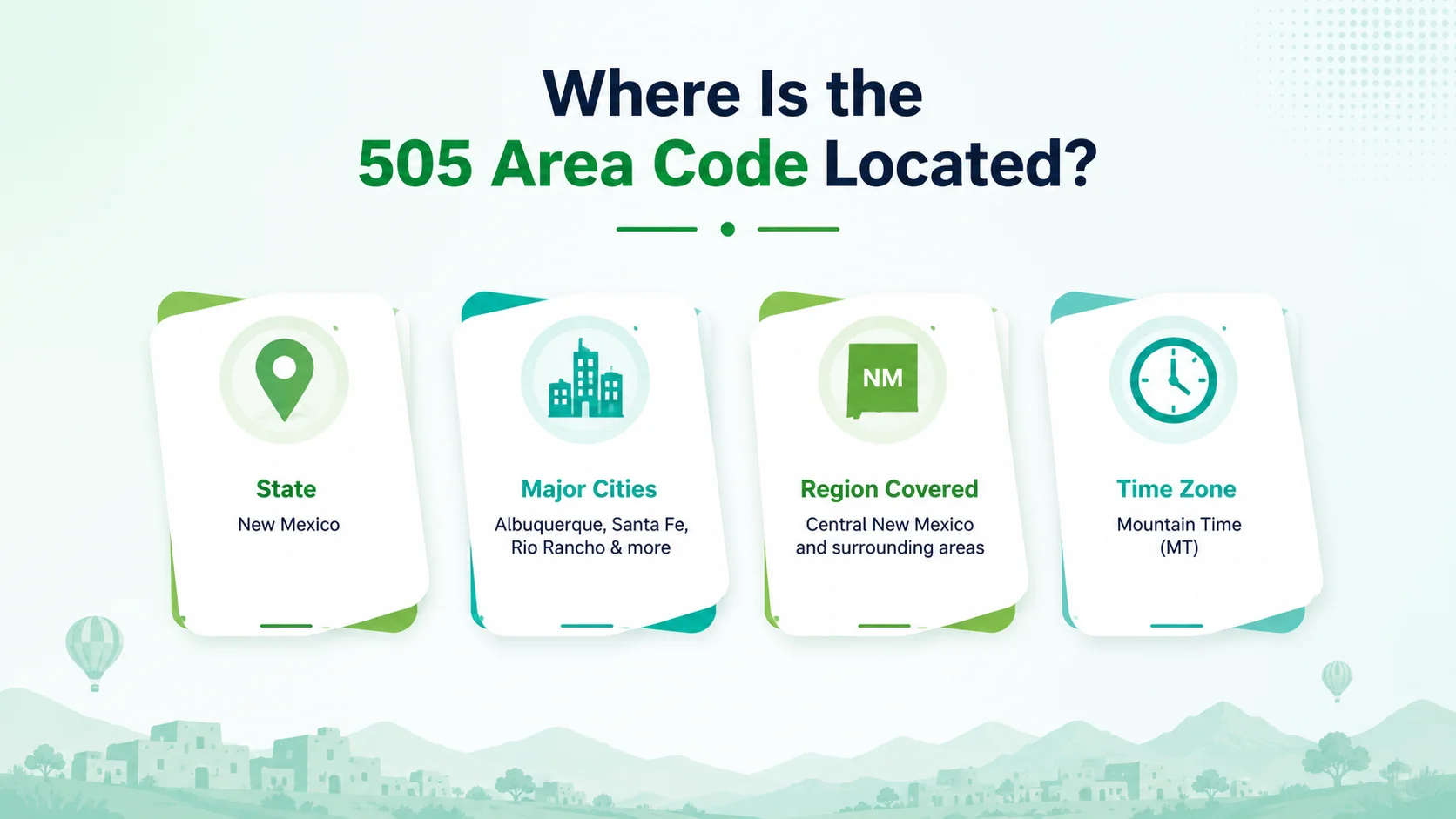
Major cities and communities in the 505 area code include:
- Albuquerque: New Mexico's largest city and economic hub
- Santa Fe: the state capital and a major arts and tourism destination
- Rio Rancho: one of the fastest-growing cities in the Southwest
- Los Alamos: home to Los Alamos National Laboratory
- Taos: a cultural and outdoor recreation hub in northern New Mexico
- Gallup: a commercial center on the western edge of the state
- Farmington: an energy and services hub in the northwestern corner
The 505 footprint spans an enormous geographic area. Most of New Mexico's population is concentrated in the Albuquerque metro and the Rio Grande corridor stretching north toward Taos and Santa Fe.
3A Brief History of the 505 Area Code
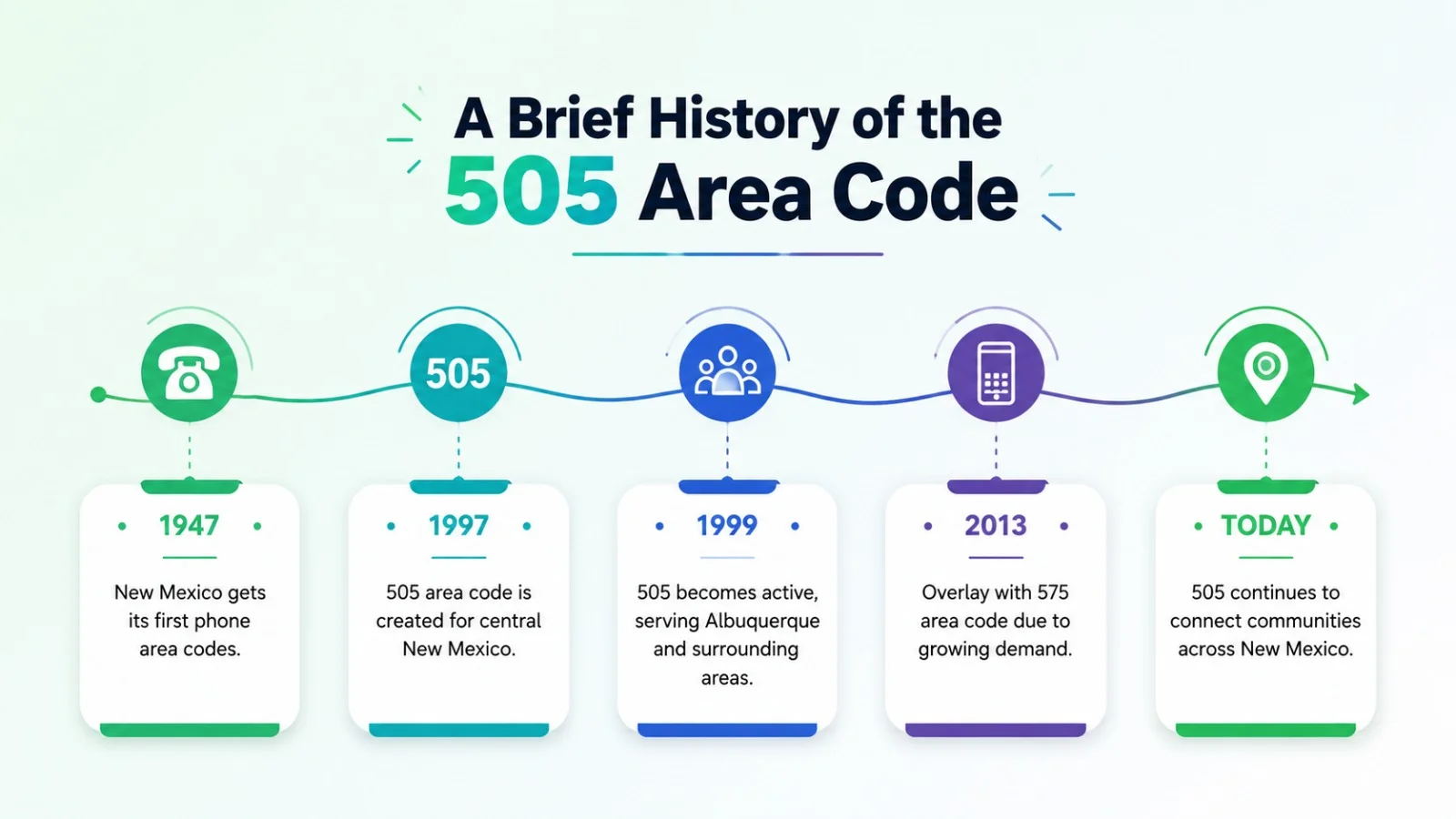
The 505 area code was one of the original codes established in 1947 under the North American Numbering Plan, when AT&T divided the continent into geographic regions for the first time. At launch, 505 covered the entirety of New Mexico — the whole state used a single code for nearly six decades. By the mid-2000s, the explosion of mobile phones, VoIP lines, and fax numbers had strained the 505 number pool. On March 15, 2007, regulators split the state, assigning southern and eastern New Mexico — including Las Cruces, Roswell, and Alamogordo — to a new area code, echoing the same single-code-to-split pattern behind Utah's 385 area code. Central and northern New Mexico kept the original 505 digits that residents had dialed since before most of them were born.
4What Time Zone Is the 505 Area Code In?
Every 505 number operates on Mountain Time, matching the rest of New Mexico:
- Mountain Standard Time (MST): UTC−7, observed in fall and winter
- Mountain Daylight Time (MDT): UTC−6, observed from mid-March through early November
For East Coast businesses coordinating with Albuquerque or Santa Fe, New Mexico runs two hours behind New York year-round. For West Coast callers, New Mexico is one hour ahead of Pacific Time.
5Who Uses 505 Area Code Numbers?
The 505 area code serves a wide cross-section of New Mexico's population: government agencies at the state and federal level, university campuses including the University of New Mexico, and a growing cluster of technology, national security, and biomedical employers anchored by Sandia National Laboratories, Kirtland Air Force Base, and regional health systems.
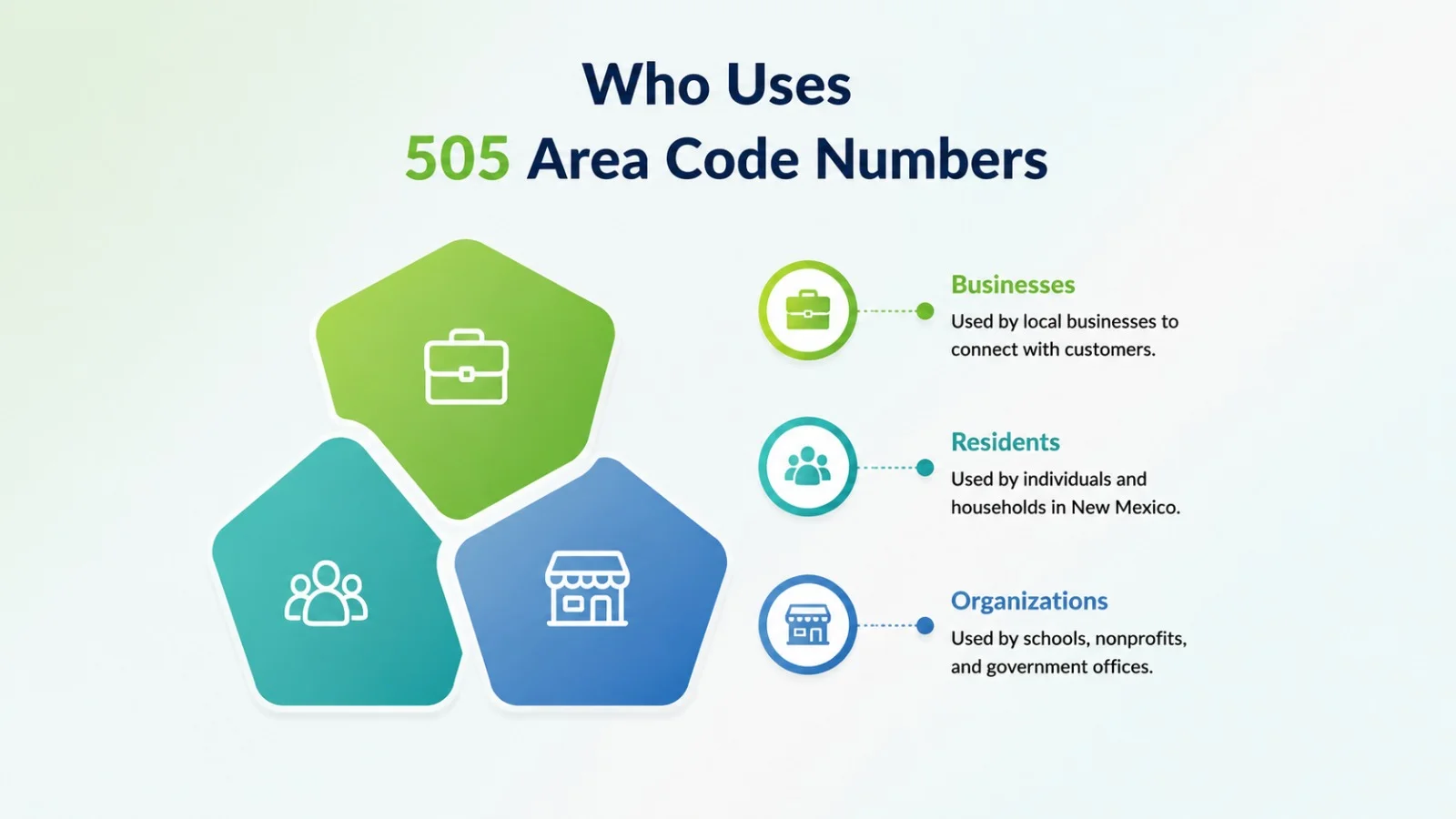
Beyond Albuquerque's urban core, the 505 footprint includes resort communities like Taos and the Santa Fe arts district, alongside Navajo Nation communities and agricultural towns across the high desert. Businesses ranging from independent contractors to national retailers use 505 numbers to signal local roots in one of the Southwest's most distinctive markets.
6Is the 505 Area Code a Scam? What to Watch For
The 505 area code itself is entirely legitimate — it's the assigned dialing prefix for one of the largest states in the American Southwest. But like all active area codes, 505 is frequently targeted by scammers who use caller ID spoofing to make fraudulent calls appear to come from a familiar New Mexico number.
Common scam patterns reported against 505 numbers include:
- IRS and Social Security impersonation: callers claim you owe back taxes or that your Social Security number has been suspended, demanding immediate payment by wire transfer or gift card
- Utility shutoff threats: fake representatives from regional utilities threaten to cut power within hours unless you pay immediately
- One-ring (Wangiri) scams: a 505 number calls once and hangs up, hoping you'll call back a premium-rate line
- Neighbor spoofing: the first six digits of the fake caller ID match your own number to increase the odds you pick up
If you receive a suspicious call from a 505 number, hang up without providing any information, verify the caller by dialing the organization's official number directly, and report it to the Federal Trade Commission. Spoofing makes the area code look local — the call itself is almost always from elsewhere.
7How to Get a 505 Area Code Phone Number
Getting a 505 number no longer requires a New Mexico address or a local carrier. Cloud-based business phone platforms can provision a 505 local number in minutes, regardless of where your team is located:
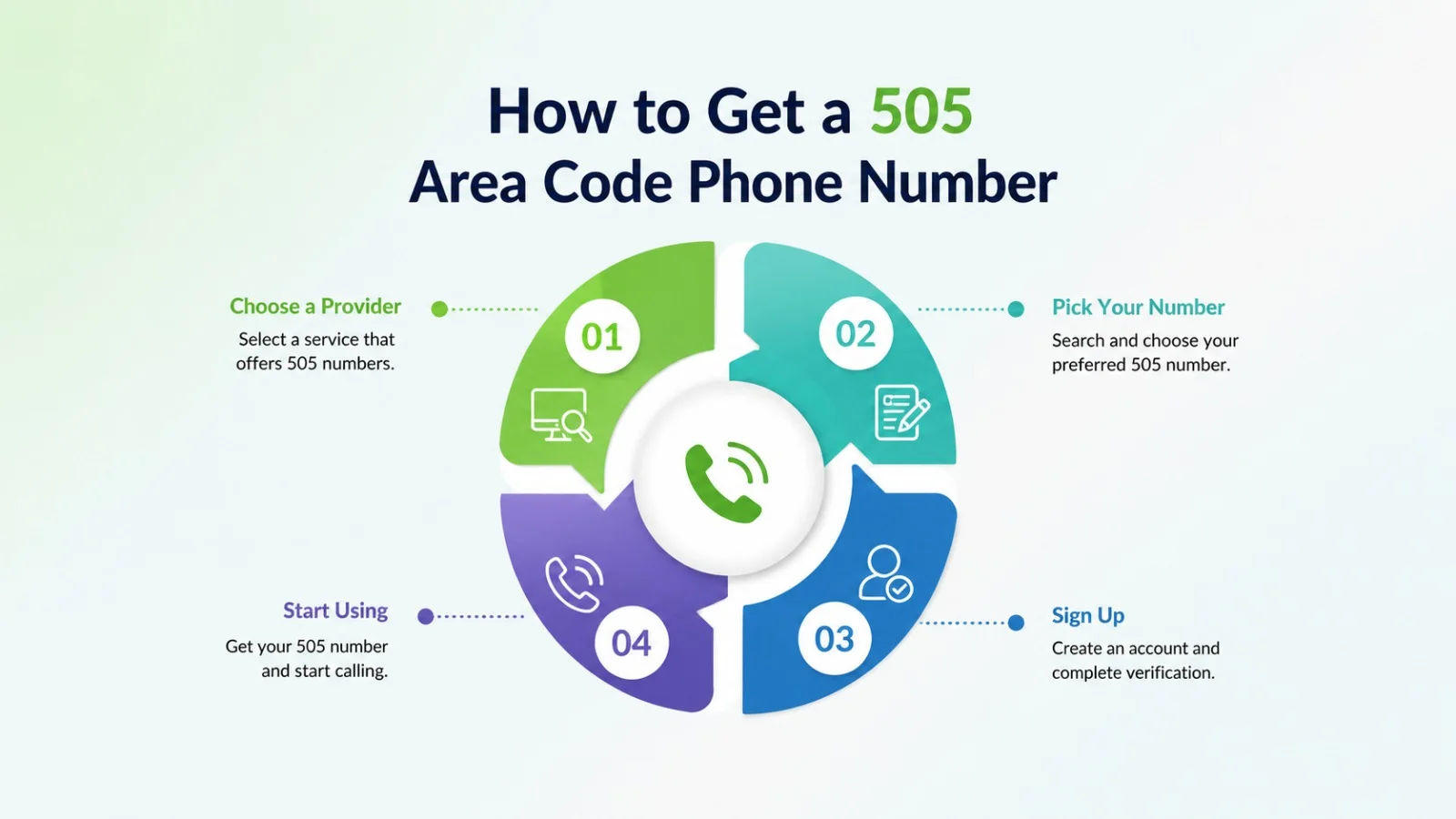
- 1Choose a provider that supports US local number inventory — Softtop covers all 50 states including New Mexico
- 2Search available 505 numbers — select a standard local number or browse for a memorable vanity sequence
- 3Set up call routing — direct inbound calls to a desk phone, mobile, softphone app, or auto-attendant
- 4Activate features — call recording, voicemail-to-email, SMS, and AI Receptionist from day one
- 5Go live instantly — no hardware, no technician, no SIM required
If you already have a 505 number with another provider, porting it to Softtop typically takes five to ten business days with zero port-out fees.
8Why Businesses Choose a Local 505 Number
A 505 number does more than route calls — it establishes local credibility in a state where regional identity runs deep. The same logic that makes a 661 area code valuable in California's Central Valley applies here: residents consistently answer numbers that look local, and a recognizable area code builds trust before anyone says a word.
- Higher answer rates: local area codes consistently outperform toll-free and out-of-state numbers in regional markets
- Instant Southwest presence: for businesses expanding into Albuquerque, Santa Fe, or the broader New Mexico market, a 505 number signals an established footprint without the overhead of a physical office
- Remote team flexibility: cloud delivery means your New Mexico number rings wherever your team actually works
- Enterprise-ready features: call recording with PII redaction, STIR/SHAKEN attestation, and 99.999% uptime SLA
9Conclusion
The 505 area code carries nearly eight decades of history — it's been New Mexico's dialing prefix since the original North American Numbering Plan launched in 1947, long before Albuquerque's tech economy emerged and long before the state became a backdrop for some of television's most iconic storytelling. Today it serves the state's most populous and economically active cities, running on Mountain Time and covering everything from national laboratories to high-desert resort communities.
For residents, 505 is simply home. For businesses, it's a direct signal of investment in one of the Southwest's most distinctive and fast-growing regional markets. And with cloud phone platforms removing the geographic barrier, a 505 number is now accessible to any business — anywhere in the country — that wants to build a genuine New Mexico presence without setting foot in the state.