1Introduction
If a call just came in from a number starting with 770, or you're a business owner weighing a local number for the Atlanta market, you're in the right place. The 770 area code is one of the busiest and most recognizable codes in Georgia, covering a vast ring of suburbs around the city. Since it launched in the mid-1990s, 770 has become a defining identity for hundreds of communities surrounding Atlanta's urban core.
This guide covers exactly where the 770 area code reaches, how it came to exist, which time zone it follows, whether the robocalls you might be seeing from 770 numbers are something to worry about, and how to get a 770 number of your own if you're expanding into the Atlanta suburbs.
2Where Is the 770 Area Code Located?
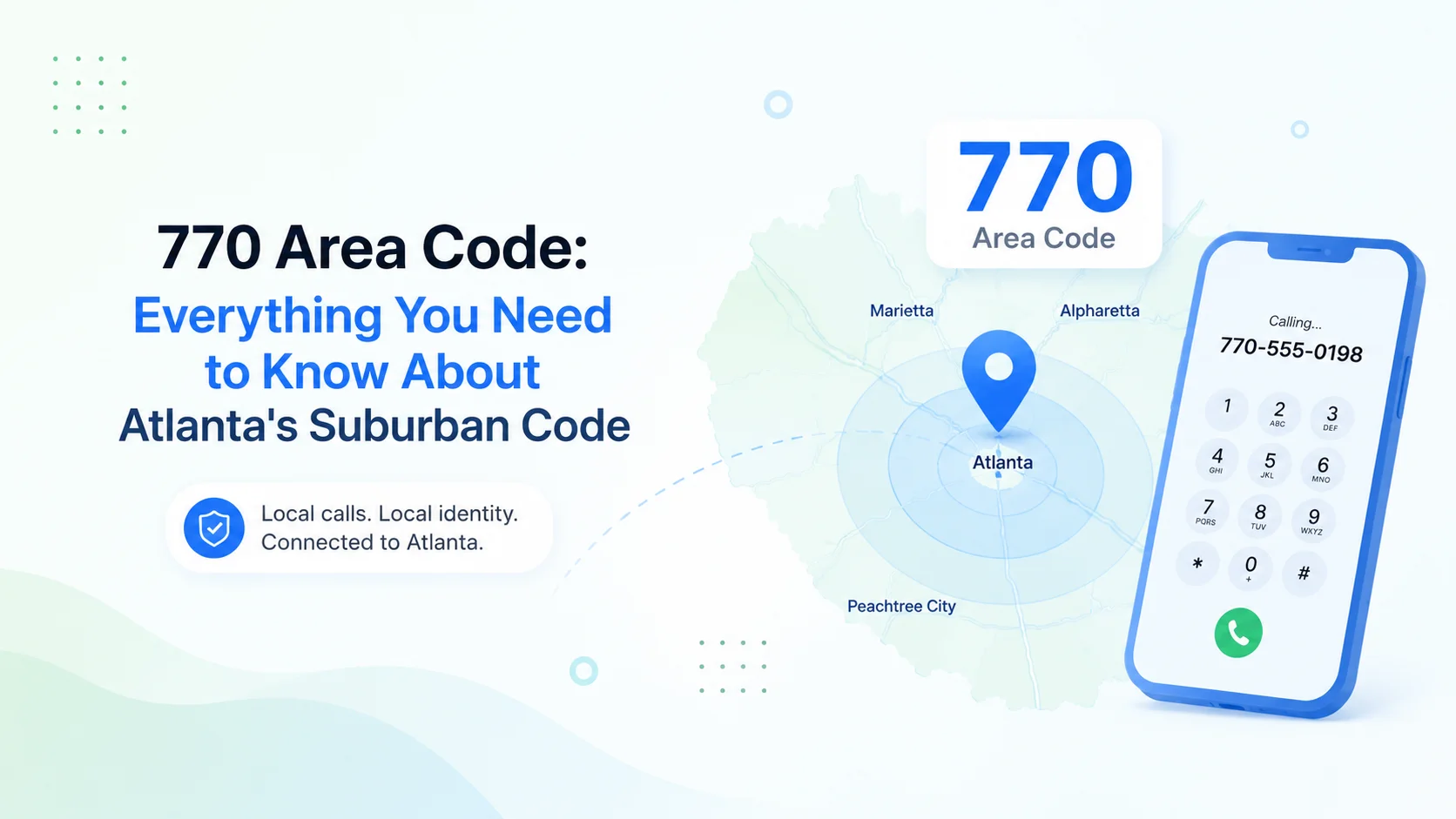
The 770 area code serves the suburban ring around Atlanta, Georgia — not the city's downtown core, which mostly falls under area code 404. Roughly speaking, 770 covers the territory outside Interstate 285, the beltway locals call "the Perimeter," while 404 covers most of what's inside it.
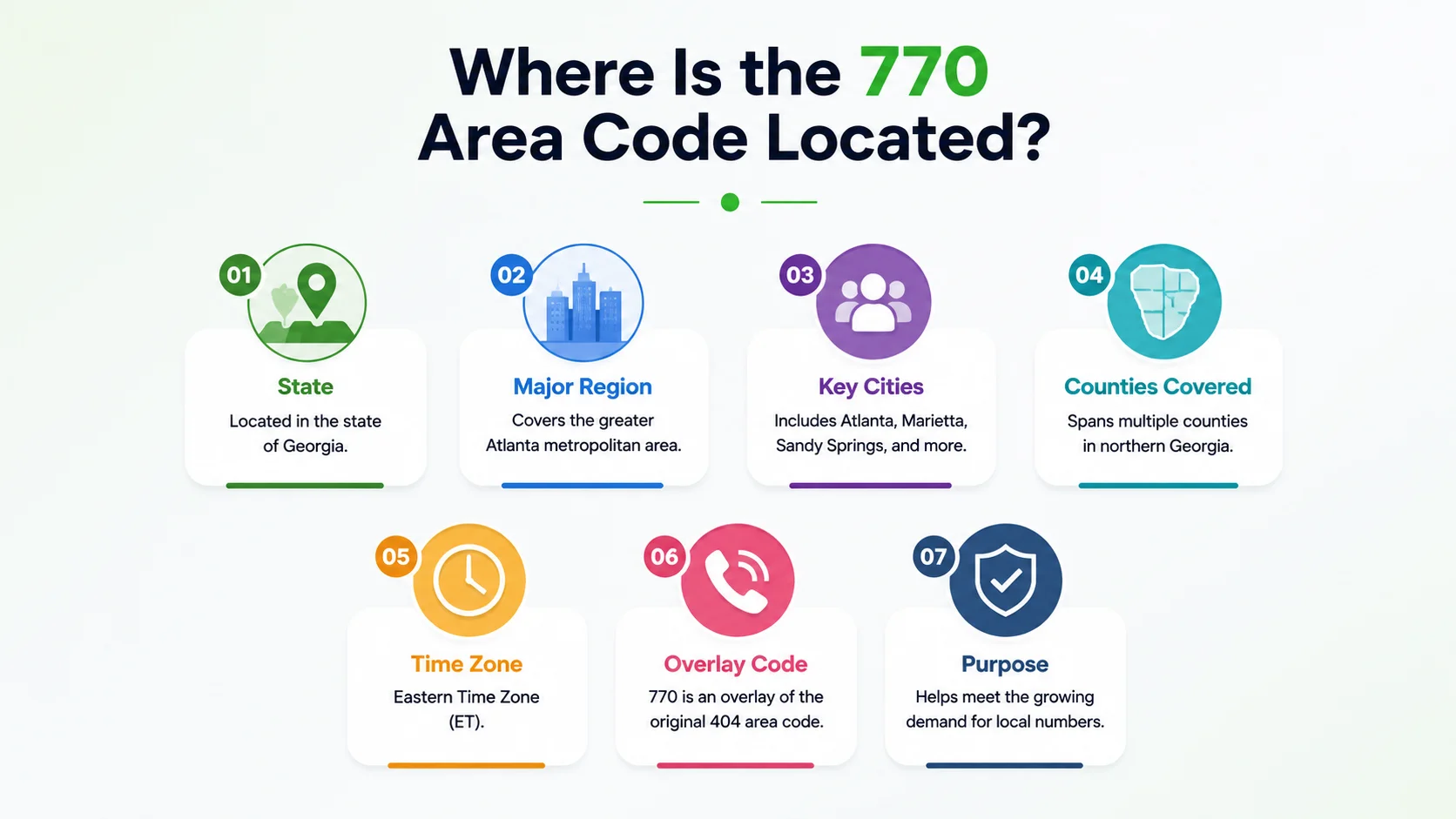
In practice, 770 spans all or part of 29 counties across North Georgia, reaching cities such as:
- Marietta and Smyrna: Cobb County
- Alpharetta and Roswell: North Fulton/Cherokee area
- Duluth and Lawrenceville: Gwinnett County
- Gainesville: Hall County
- Cartersville: Bartow County
- Douglasville: Douglas County
- Peachtree City: Fayette County
Because it wraps almost entirely around Atlanta rather than sitting inside it, 770 is often described as Georgia's "suburban" area code, even though several of its cities are major economic centers in their own right. Cobb, Gwinnett, and Fulton counties alone are home to major corporate campuses, hospital systems, and universities, which is part of why 770 remains one of the highest-volume area codes issued anywhere in the Southeast. Businesses headquartered in these counties often serve customers across the entire metro, not just their home city, so the 770 identity carries real regional weight beyond any single town.
3Understanding the 770 Overlay System
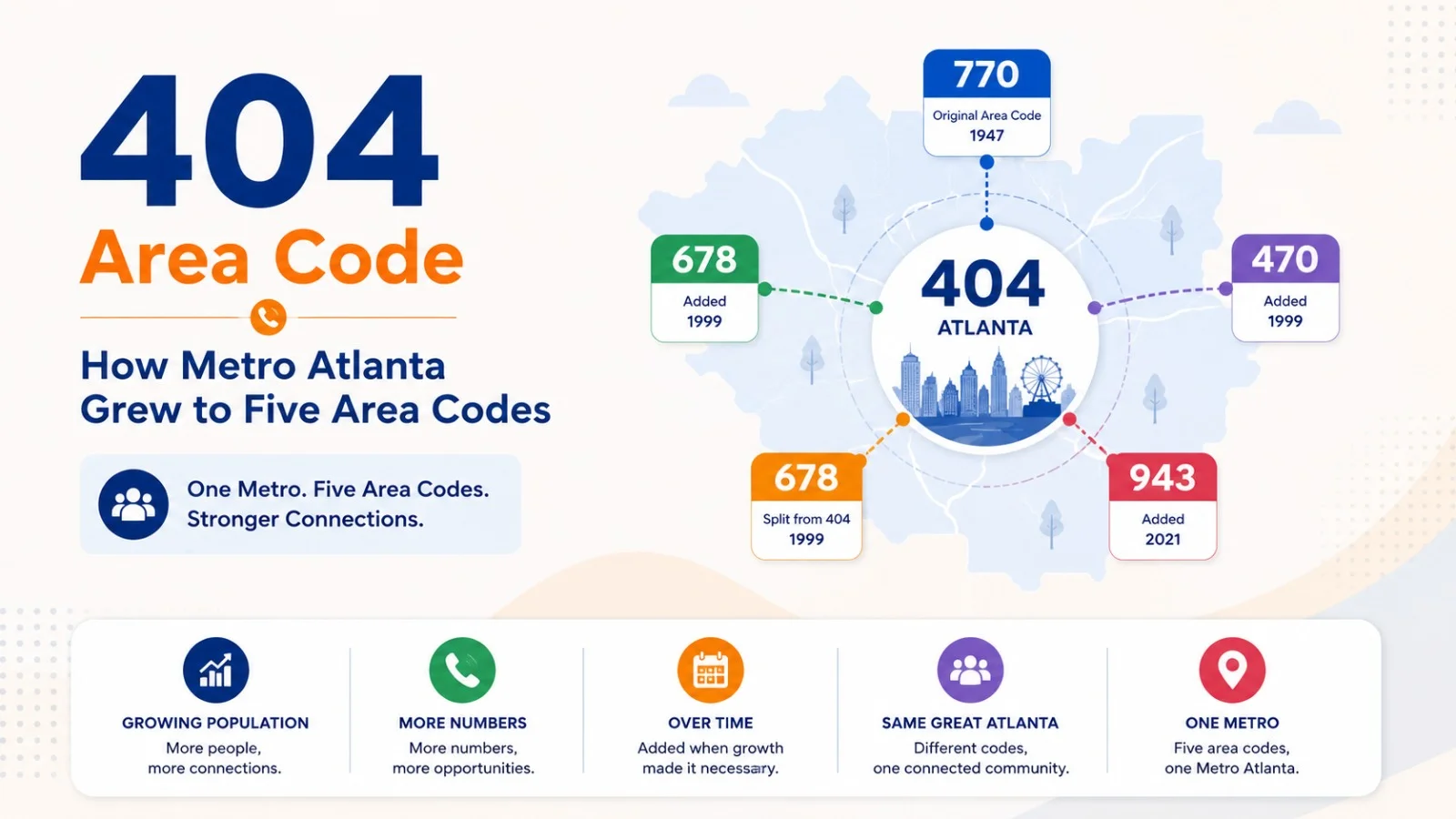
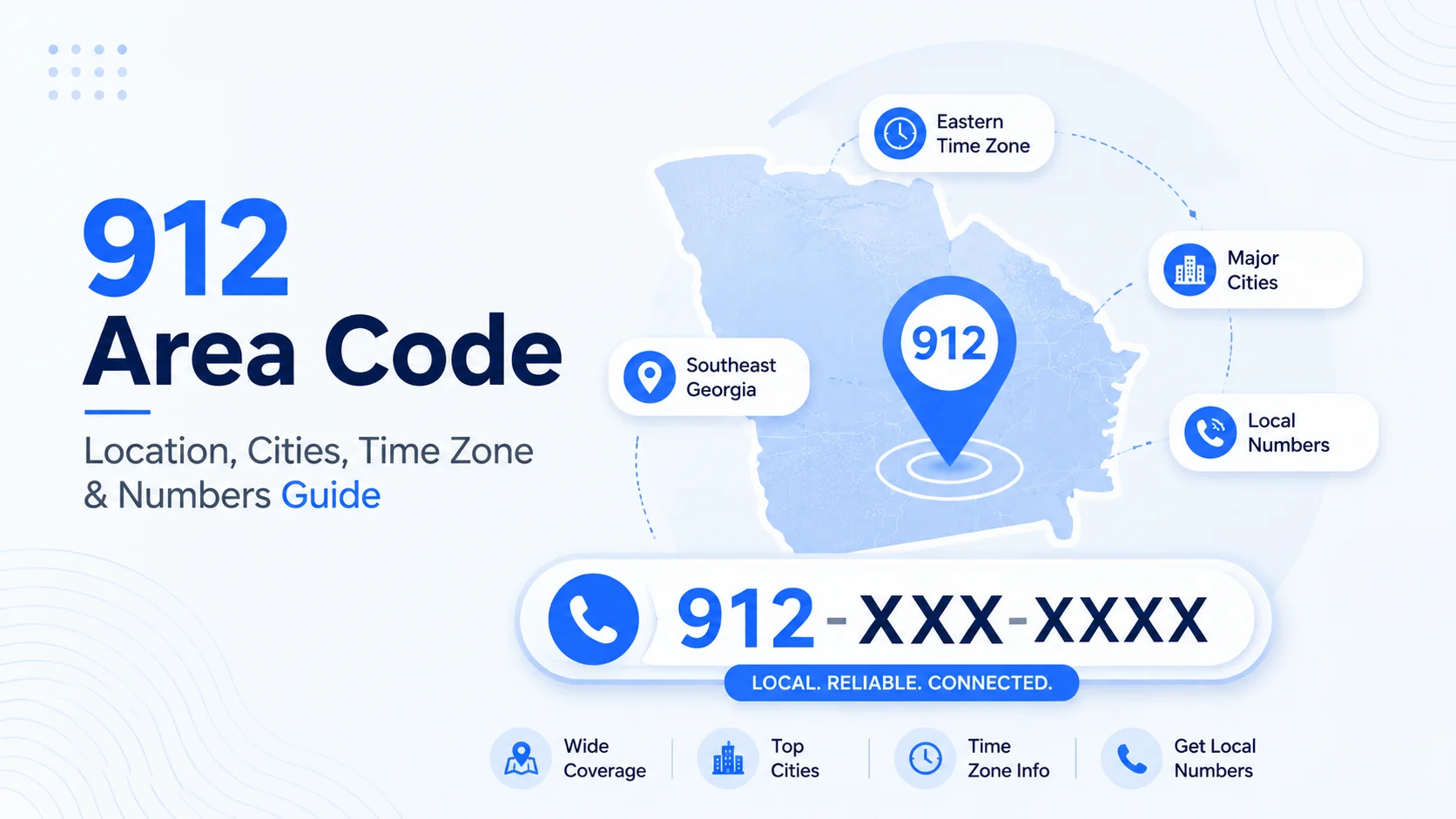
Because 770 operates under an overlay plan rather than a strict geographic split, it doesn't have exclusive rights to its territory anymore. A new phone number issued in a historically "770" city like Marietta or Roswell might just as easily be a 678 or 943 number, since all three codes now share the same footprint alongside 404 — the same kind of overlay crowding that plays out for a 912 area code number down in Savannah. That's also why Atlanta was the first US metro required to dial all ten digits for every local call, a policy that rolled out ahead of the 1996 Summer Olympics and has remained in place ever since.
If your business already carries a 678 area code number alongside a 770 line, that's completely normal for the region — both numbers can ring the same desk, and callers within the metro pay no long-distance charges either way. The mandatory ten-digit dialing rule can trip up new residents and out-of-state employees who are used to dialing seven digits for a local call, so it's worth flagging to any team member who's relocating to a 770 city for the first time.
4A Brief History of the 770 Area Code
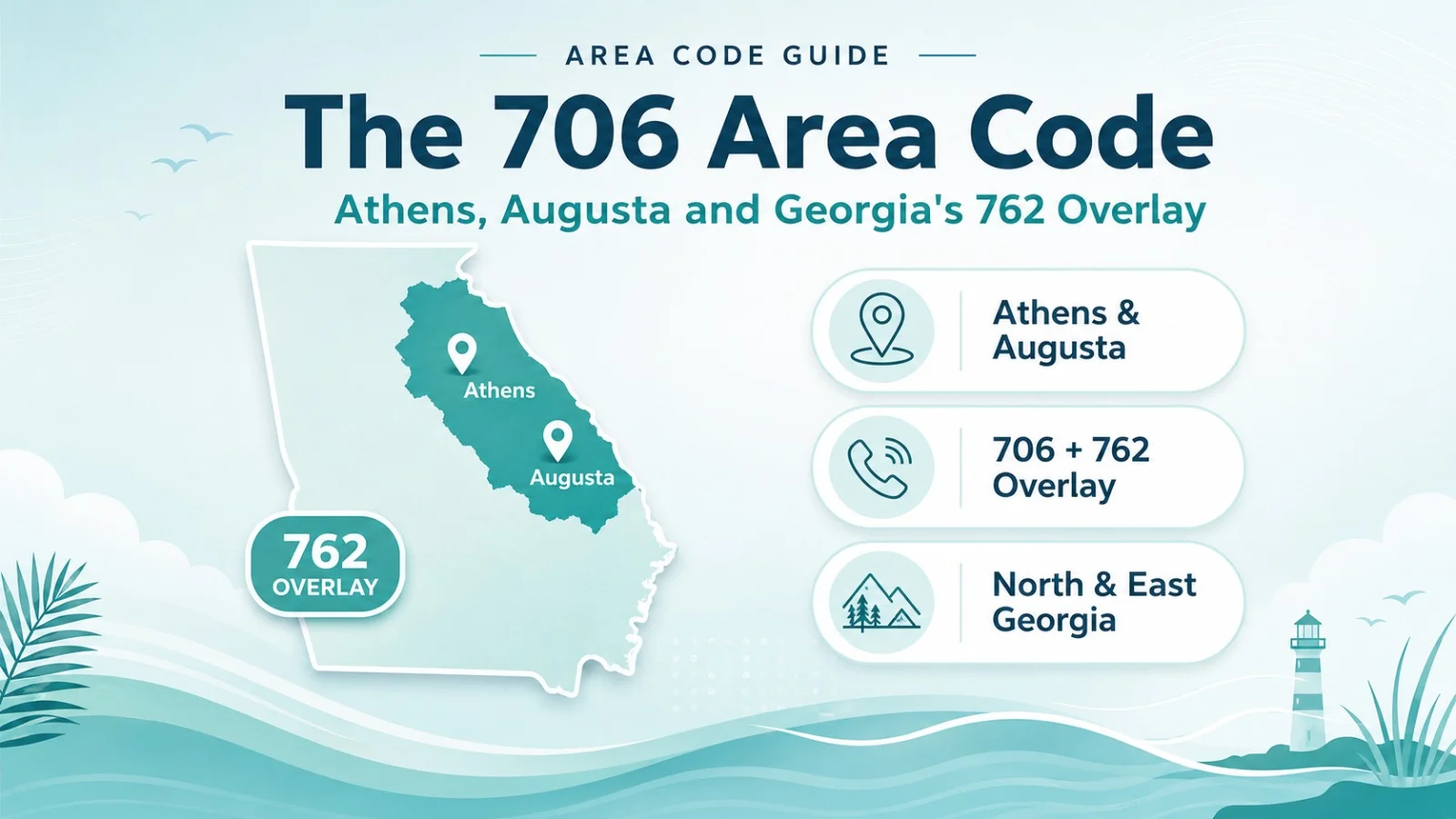
Area code 770 dates back to August 1, 1995, when it split off from area code 404. At the time, 404 covered the entire Atlanta metro area, but explosive growth in mobile phones, fax machines, and pagers throughout the early 1990s pushed the code toward exhaustion. Regulators tried a stopgap fix in 1992 by carving out area code 706 for outlying North Georgia counties, but residents in the fast-growing exurbs objected to losing their 404 identity, and BellSouth returned several of those communities to 404 within a few years. That reversal accelerated the need for a new code, and 770 launched just three years later to relieve the pressure for good.
As Atlanta kept growing, even 770 and 404 combined eventually ran short of numbers. Overlay codes 678 and 470 were added in later years, and a third overlay, area code 943, went into service in March 2022, according to planning documentation filed with the Area code 770 on Wikipedia. Today, four area codes — 404, 770, 678, and 943 — all share the same geographic footprint across metro Atlanta.
5What Time Zone Is the 770 Area Code In?
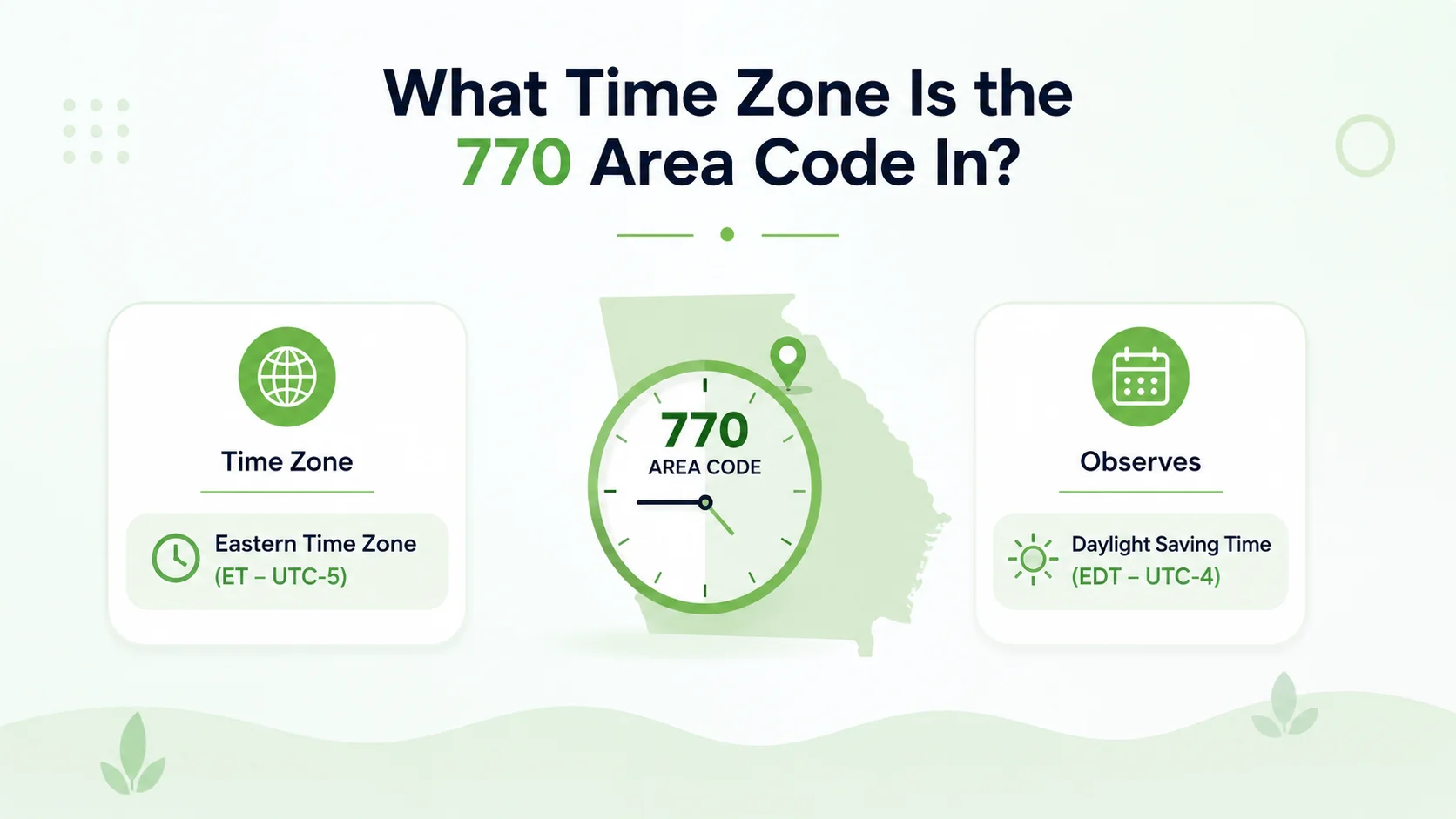
The entire 770 area code sits in the Eastern Time Zone (America/New_York), observing Eastern Standard Time (UTC−5) in winter and Eastern Daylight Time (UTC−4) during daylight saving months. Because the area code covers one contiguous region of North Georgia rather than spanning multiple states, there's no internal time difference to account for — a call placed from Marietta to Gainesville, both inside 770, is always on the same clock. Businesses scheduling calls with 770-area customers can safely treat the entire code as a single Eastern Time block.
6Are 770 Area Code Calls a Scam?
Not inherently. The 770 area code is a legitimate, high-volume code used by millions of real residents and businesses, not a scam prefix in itself. That said, its size and familiarity make it an attractive target for spoofing. Robocall trackers have repeatedly flagged 770 among the most-spoofed codes in Georgia, with scammers impersonating law firms over fake "civil complaints," running car-warranty robocalls, posing as charity collectors, or sending unsolicited home-buying offers to homeowners.
The area code itself carries no fraud risk — the risk comes from caller ID spoofing, a tactic scammers can apply to any area code in the country. If an unexpected 770 call demands payment, threatens legal action, or asks for personal information, treat it the way you'd treat any unsolicited call: verify independently before responding, and don't trust caller ID alone.
7How to Get a 770 Area Code Number for Your Business
Companies expanding into the Atlanta suburbs often want a local 770 number so customers see a familiar area code before they even answer — local numbers tend to get picked up more often than out-of-state or toll-free ones. Getting one no longer requires a physical office in Georgia; cloud-based business phone providers can provision a 770 DID (direct inward dial) number in minutes, route it to any device, and pair it with call recording, auto-attendants, and CRM logging out of the box.
If your business also serves customers closer to downtown Atlanta, it's worth pairing a 770 number with a 404 line, since the two codes together cover essentially the entire metro without any long-distance charges between them — the same multi-line approach that works well for a business also holding a 717 area code number in Pennsylvania. Many growing teams keep both: 770 for suburban outreach and 404 for the urban core, all managed from the same dashboard.
Before choosing a number, check whether your provider offers instant provisioning, number porting if you're switching from an existing carrier, and multi-line support so your team isn't stuck sharing a single extension. It's also worth confirming E911 support and vanity or memorable number options if brand recall matters for your sales or support line. Most modern providers let you hold a number before purchase, order numbers in bulk if you're staffing up a full sales team, and reassign a line to a different employee or department without changing the number customers already know.
For remote or hybrid teams, a cloud-hosted 770 number also means no physical hardware is required at all — calls can route to a desktop app, a mobile phone, or a browser-based softphone depending on where an employee happens to be working that day, while every call is still logged against the same customer record.
8Conclusion
The 770 area code has been part of Atlanta's suburban identity for three decades, expanding from a single relief code in 1995 into a shared numbering region alongside 404, 678, and 943. Whether you're trying to figure out where an unfamiliar call came from, researching a move to North Georgia, or setting up a local presence for your business, the fundamentals are straightforward: 770 covers the counties ringing Atlanta, runs on Eastern Time, and — like any widely used area code — occasionally gets exploited by robocallers who have nothing to do with the real communities it serves.
For businesses, a 770 number remains one of the simplest ways to look and sound local to Atlanta's suburban customer base.