1Introduction
If you've ever gotten a call from a 716 number, or you're thinking about setting up a business line with one, it helps to know exactly what you're dealing with. The 716 area code covers a specific corner of New York State, carries nearly 80 years of telecom history, and — like most well-known area codes — has become a target for phone scammers hoping to sound local and trustworthy.
This guide breaks down where 716 is located, how it came to be, what to do if you get a suspicious call from it, and how to claim a 716 number for your own business.
2Where Is the 716 Area Code Located?
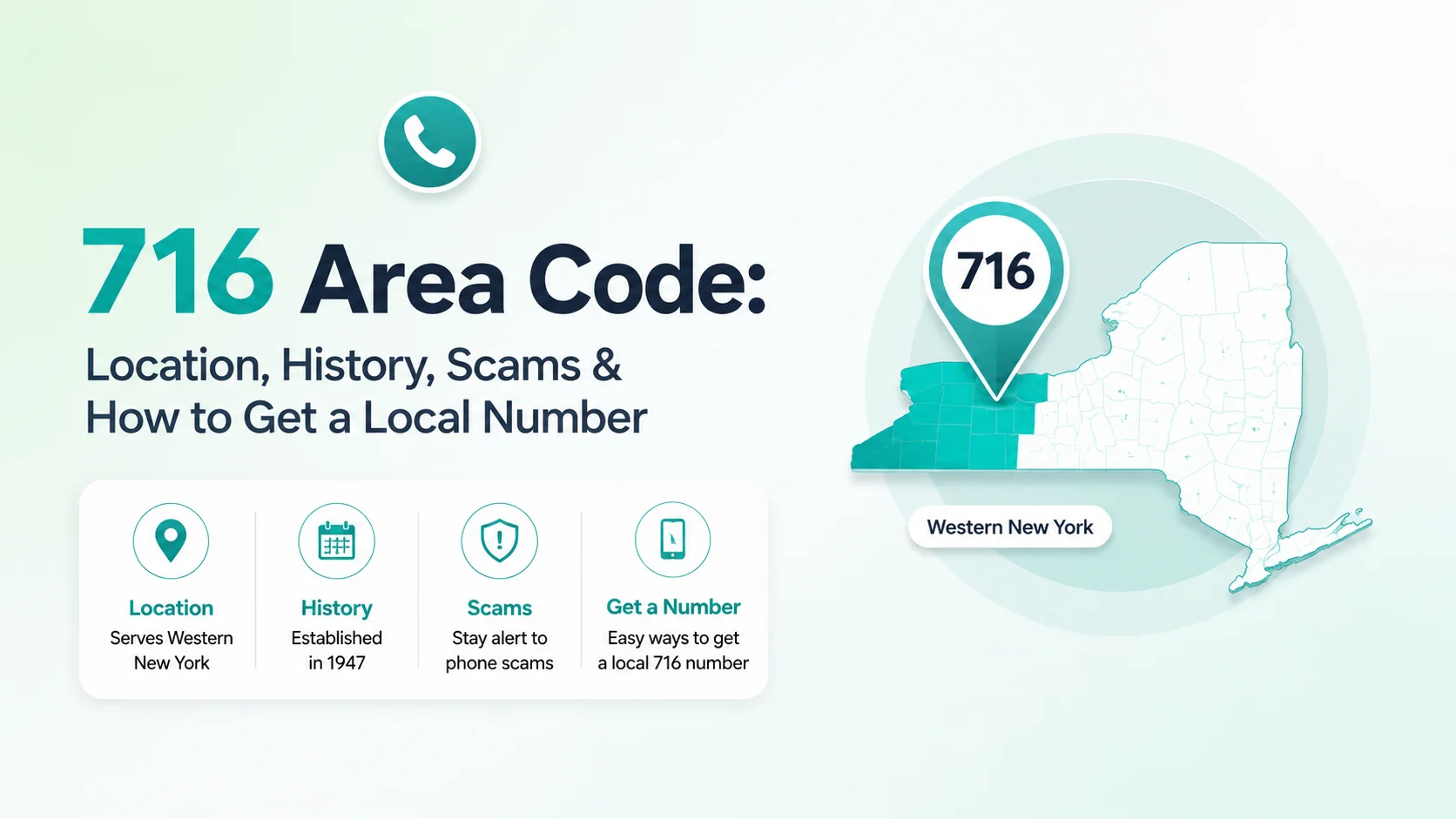
The 716 area code serves western New York State, anchored by the Buffalo–Niagara Falls metropolitan area. It's one of the more recognizable regional codes in the Northeast, largely because of its association with Buffalo's sports teams and its position along the Canadian border.
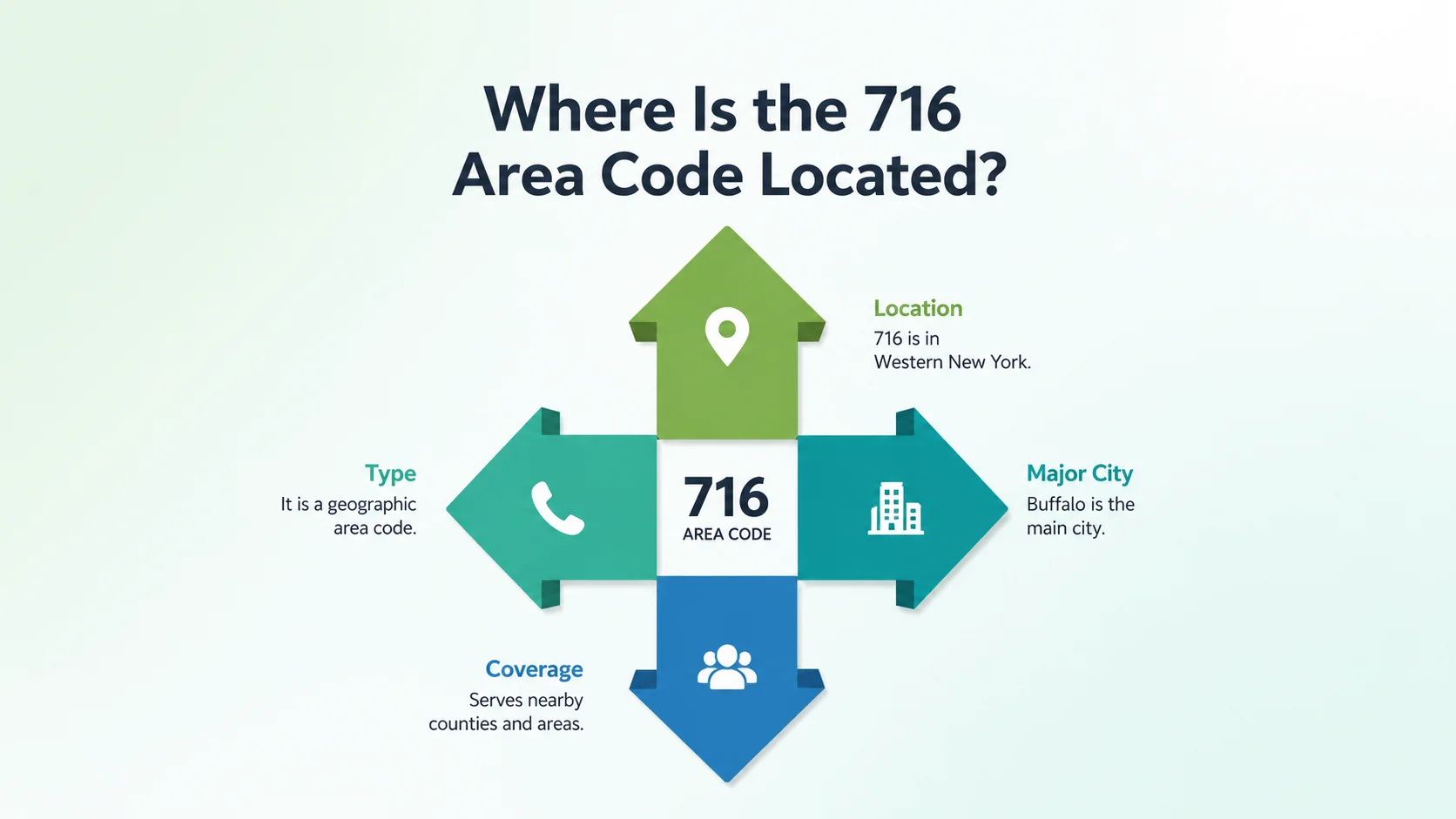
Counties and communities served by 716 include:
- Erie County: Buffalo, Cheektowaga, Amherst, Tonawanda, Hamburg
- Niagara County: Niagara Falls, North Tonawanda, Lockport
- Chautauqua County: Jamestown, Dunkirk
- Cattaraugus County: Olean, Salamanca
In total, the 716 area code footprint reaches roughly 130+ cities and towns across the westernmost tip of the state. It sits in the Eastern Time Zone, the same zone used across most of New York, so scheduling calls with a 716 contact follows standard ET business hours.
Because the region borders Ontario, Canada, residents near Niagara Falls sometimes interact with both 716 numbers and nearby Canadian area codes, which is worth knowing if you're trying to identify an unfamiliar caller.
3The History of Area Code 716
Area code 716 has a longer history than most people realize:
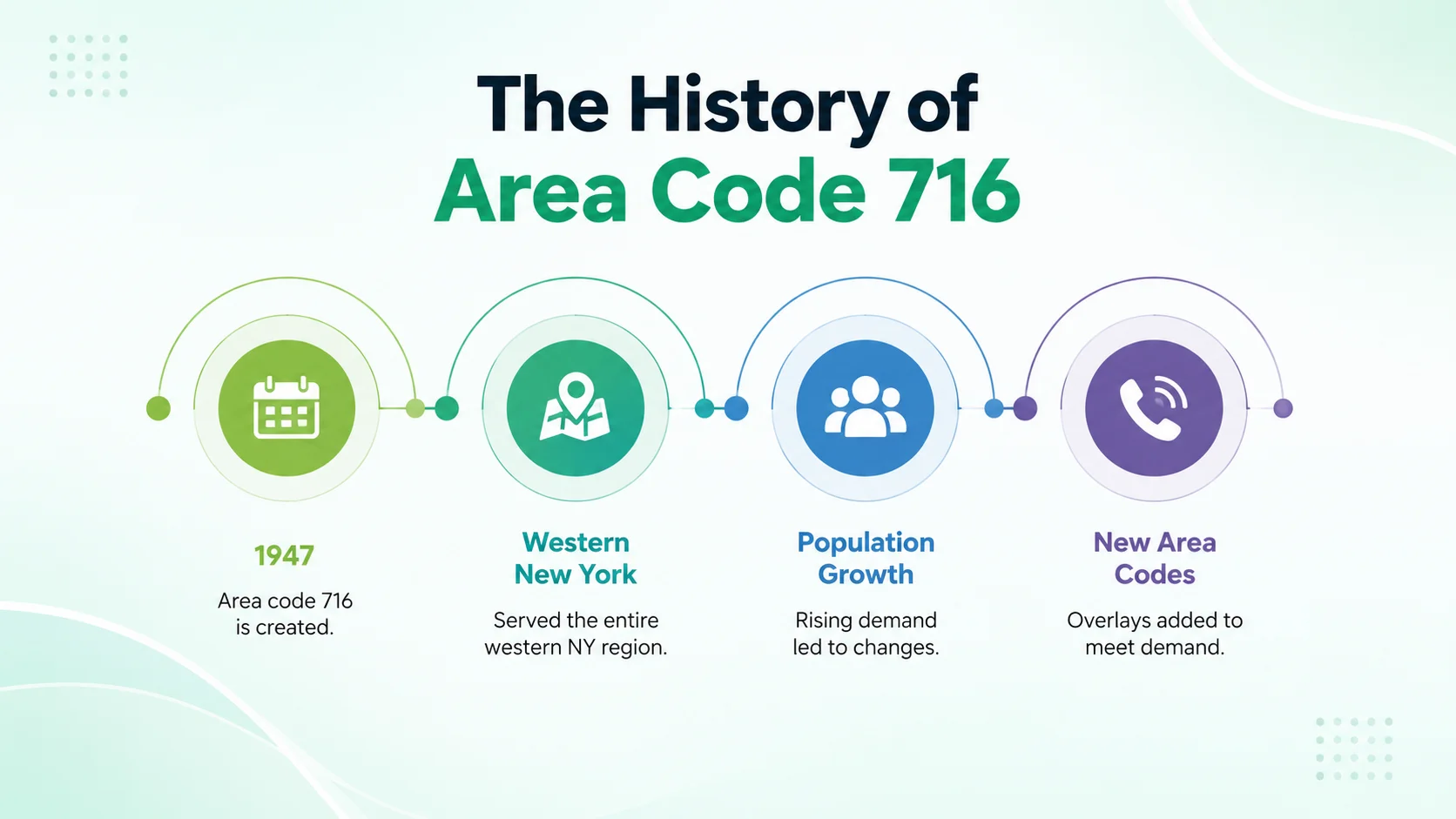
- 1947: 716 was activated as one of the original area codes assigned under the North American Numbering Plan, initially covering a much larger swath of western and central New York, including what's now Rochester
- 1954: the first split carved out the 607 area code to serve the Southern Tier, reducing 716's footprint
In 2001, a second, larger split created area code 585 for the Rochester region, leaving 716 to cover only the Buffalo–Niagara Falls area and surrounding counties as it does today — the same kind of numbering pressure that, downstate, eventually shaped the 917 area code overlay in New York City. That history matters for a practical reason: it explains why some long-time residents still associate 716 with a wider region, and why callers from Rochester today use 585, not 716.
4The 624 Overlay: Why You Might See a New Prefix
As available 716 combinations ran low, regulators introduced area code 624 as an all-services overlay for the same geographic region, with numbers going into service in late 2023. An overlay means new phone lines in the 716 territory may be assigned a 624 number instead, while every existing 716 number stays exactly the same — no forced changes, no reassignments.
One practical side effect of the overlay: local calls within the region may now require 10-digit dialing (area code plus number) rather than just seven digits, even for calls that stay within the same neighborhood. If your business phone system or PBX still assumes 7-digit local dialing, this is a good moment to check your call routing settings.
5Is a Call From a 716 Number a Scam?
Not every 716 call is suspicious, but the area code has been widely reported in spam and scam databases, particularly around Buffalo and Amherst. Because scammers frequently "spoof" caller ID to display a local area code, a call showing 716 doesn't guarantee the caller is actually in western New York.
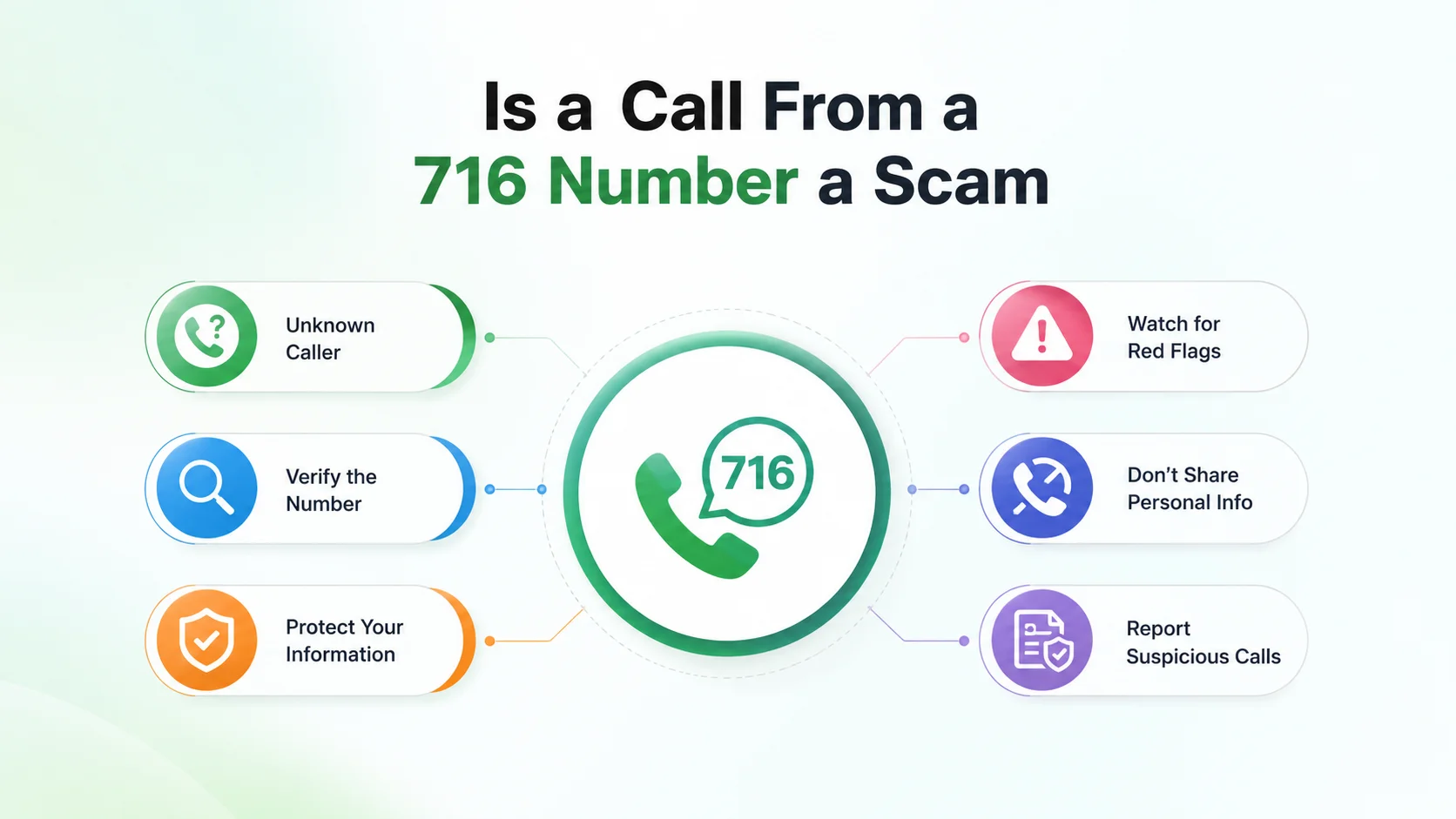
Common scam patterns reported by 716 recipients include:
- Fake government or legal threats: callers posing as the IRS, Social Security Administration, or law enforcement, using pressure tactics about fines, frozen accounts, or arrest warrants
- Prize and sweepstakes scams: messages claiming you've won a large cash prize but must pay "taxes" or "fees" upfront, often via gift cards
- Fake benefits or insurance offers: calls about Medicare, disability benefits, or health devices designed to phish personal or insurance information
- Robocalls and auto-warranty pitches: automated messages about vehicle warranties or account "verification" that request sensitive details
How to protect yourself:
- Don't give out Social Security numbers, banking details, or payment information to unsolicited callers, even if the number looks local
- Let unknown 716 numbers go to voicemail and call the organization back using a number from their official website
- Register your number on the National Do Not Call Registry and report persistent scam calls to the FCC or FTC
- Use call-screening or spam-labeling features on your phone or business phone system to flag suspicious numbers automatically
If your business regularly fields inbound calls, this is also where having a modern phone system pays off — features like spam labeling, call recording, and AI-assisted call screening can filter out nuisance calls before they ever reach your team. The Federal Trade Commission tracks these patterns nationally and is worth bookmarking if you're getting repeat contact from an unfamiliar 716 number.
6How to Get a 716 Area Code Phone Number for Your Business
Plenty of businesses outside western New York deliberately choose a 716 number to build a local presence in the Buffalo–Niagara Falls market, whether they're opening a satellite office, running local marketing campaigns, or simply want a New York-based line for regional customers.
Getting a 716 number today doesn't require a physical office in Buffalo or a traditional phone line. With a cloud-based business phone provider, the process typically looks like this:
- 1Choose a provider that offers local DIDs in the 716 area code
- 2Search and select an available 716 number, or request a specific vanity number if one is available
- 3Set up call routing: decide how calls should ring — to a desk phone, a mobile app, a shared team inbox, or an auto-attendant
- 4Go live: most providers can provision a new local number instantly, with no hardware or on-site installation required
If you already have an existing 716 number and simply want to move it to a new provider, standard number porting usually takes about 5–10 business days and shouldn't involve any downtime when handled correctly.
7Why a Local 716 Number Helps Your Business
A local area code carries real weight with customers, and 716 is no exception:
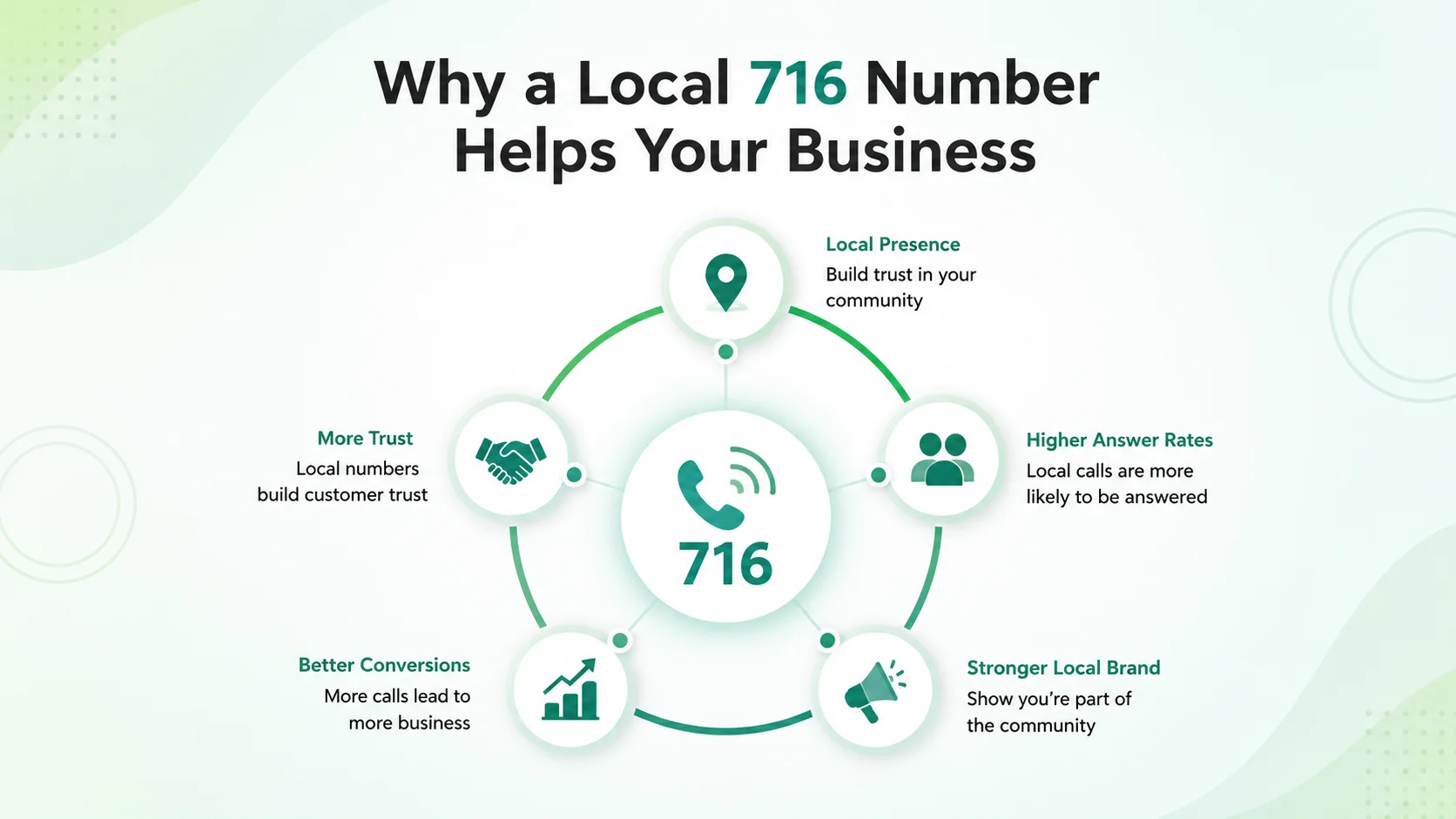
- Builds regional trust: customers in Buffalo and Niagara Falls are more likely to answer and engage with a number that looks local
- Supports local SEO and marketing: a matching area code reinforces location-based ad campaigns and directory listings
- Keeps costs predictable: cloud numbers avoid the cost of physical lines or a second office lease
- Scales with your team: add more 716 lines or extensions as your business grows in the region, without new hardware
Softtop's platform includes local number provisioning across 800+ US area codes — from 716 in Buffalo to the 630 area code in suburban Chicago — along with unlimited US calling, call recording, and an AI Receptionist that answers every call — even during peak volume — so a new Buffalo-area line never goes unanswered. Numbers are provisioned instantly, porting is fee-free, and everything runs on the same carrier-grade network backing Softtop's five-nines uptime SLA.
8Final Thoughts
The 716 area code is more than a string of digits — it's tied to Buffalo, Niagara Falls, and the surrounding western New York communities, with a numbering history stretching back to 1947 and a newer 624 overlay easing the way for future growth. Whether you picked up a 716 call you didn't recognize or you're evaluating a local number for your own business, understanding the region, the risks, and the setup process puts you in a better position either way.
If a 716 call catches you off guard, treat it the way you would any unfamiliar number: verify before you trust it. And if you're looking to establish a genuine local presence in western New York, a cloud-hosted 716 number backed by real call management tools is a faster, more flexible option than a traditional phone line.