1Introduction
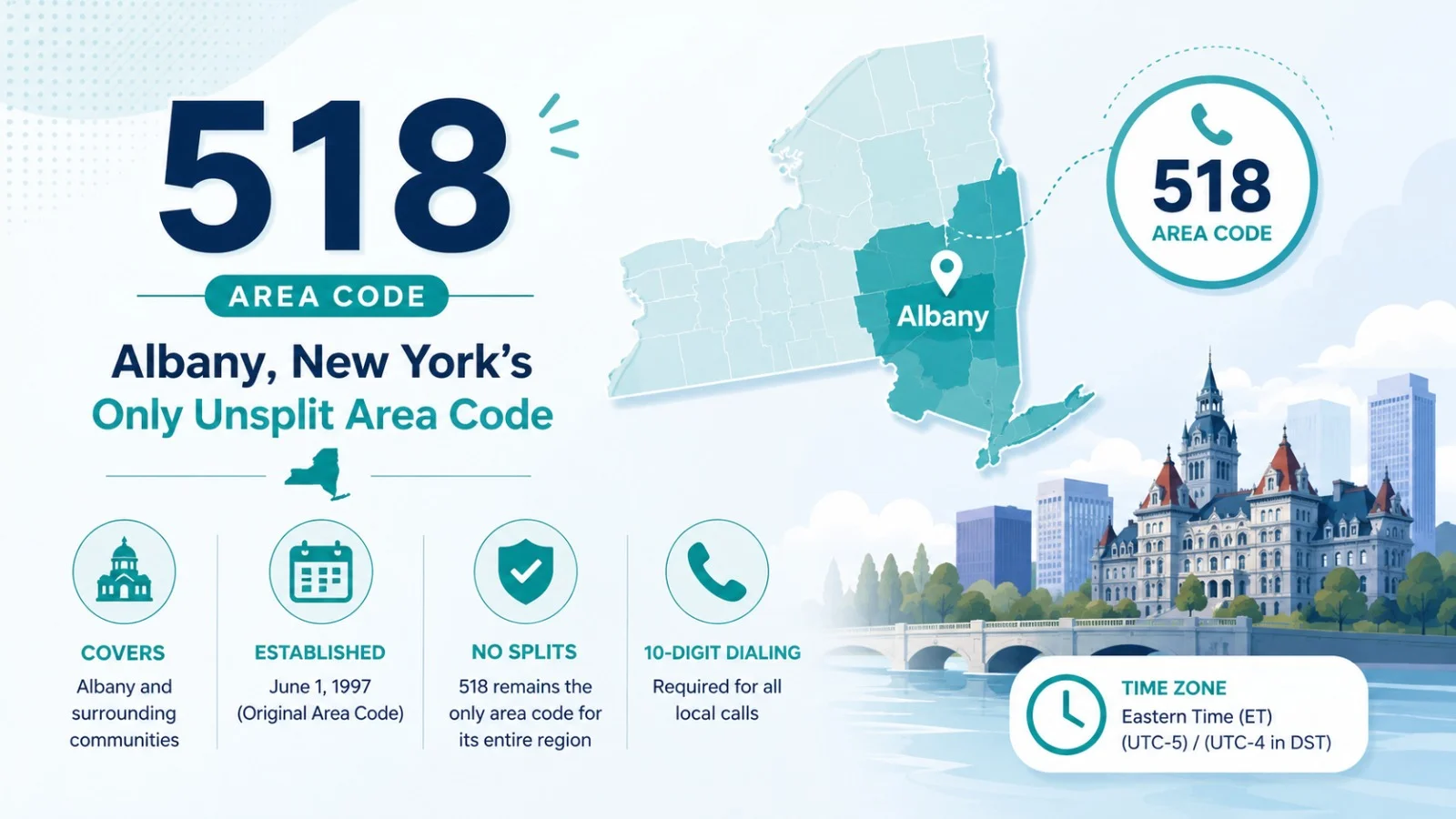
If a call from the 518 area code just showed up on your phone, you're hearing from Albany and the wide swath of northeastern New York around it — a region that holds a quiet distinction in telecom history: it's the only one of New York's five original area codes that has never once been split.
This guide covers everything worth knowing about the 518 area code: where it's located, which cities and communities it covers, what time zone it runs on, the overlay that now shares its territory, the scam patterns to watch for, and how to get a local 518 number if you're opening a business or expanding into the Capital Region.
2Where Is the 518 Area Code Located?
The 518 area code covers Albany and a vast stretch of northeastern New York, including the entire Adirondack Park. It's one of the largest area codes by land area in the state, home to New York's seat of state government, a growing tech and nanotechnology sector, and some of the most visited outdoor destinations in the Northeast.
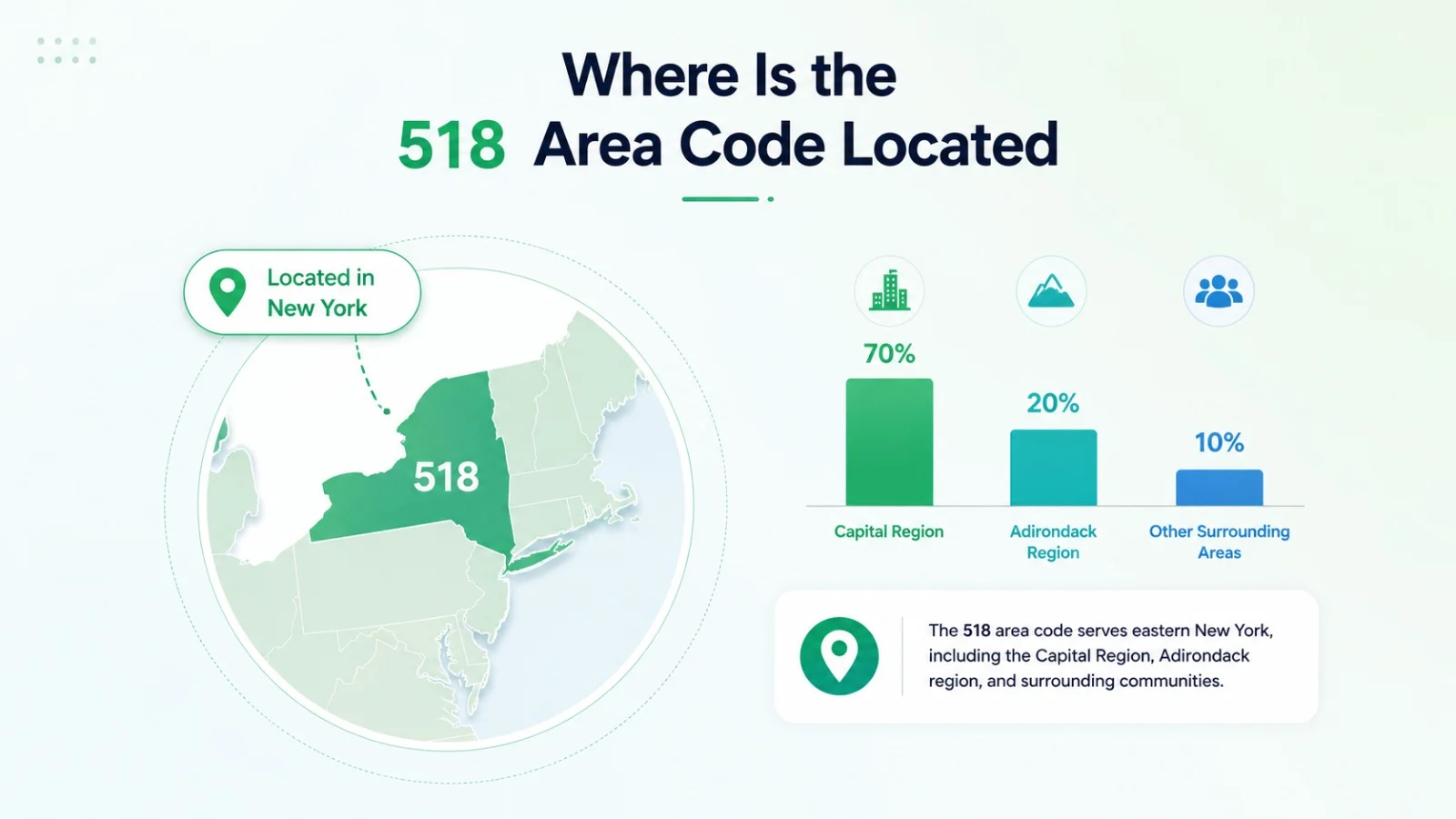
Major cities and communities in the 518 area code include:
- Albany: New York's capital city and the anchor of the numbering plan area
- Schenectady and Troy: established industrial cities forming the core of the Capital Region
- Saratoga Springs: a historic spa and racing city north of Albany
- Glens Falls and Plattsburgh: gateway communities to the Adirondacks and Lake Champlain
- Lake Placid: a mountain resort town famous for hosting two Winter Olympics
Geographically, the 518 numbering plan area covers the entire Capital Region along with the Adirondacks and the state's northeastern border with Vermont and Massachusetts.
3A Brief History of the 518 Area Code
The 518 area code went into service in 1947 as one of the original 86 area codes assigned when the North American Numbering Plan was created, and one of just five original numbering plan areas covering New York State. What makes its history genuinely distinctive is what didn't happen: while most of New York's original area codes were eventually split into smaller regions as the state's population grew, 518 is the only one that has kept its exact original boundaries for more than seventy-five years.
That's a rare feat compared to a code like 917 area code, introduced decades later just to serve New York City's growing mobile and pager demand — a reminder of how differently downstate and upstate New York have grown.
4The 838 Overlay and 10-Digit Dialing
By the mid-2010s, growth across the Capital Region and North Country finally pushed 518 toward exhaustion. Rather than splitting the region for the first time in its history, the New York Public Service Commission approved 838 as an all-services overlay covering the exact same territory as 518 in September 2016, according to an detailed overlay coverage from PTC Connect, with new numbers assigned starting September 19, 2017.
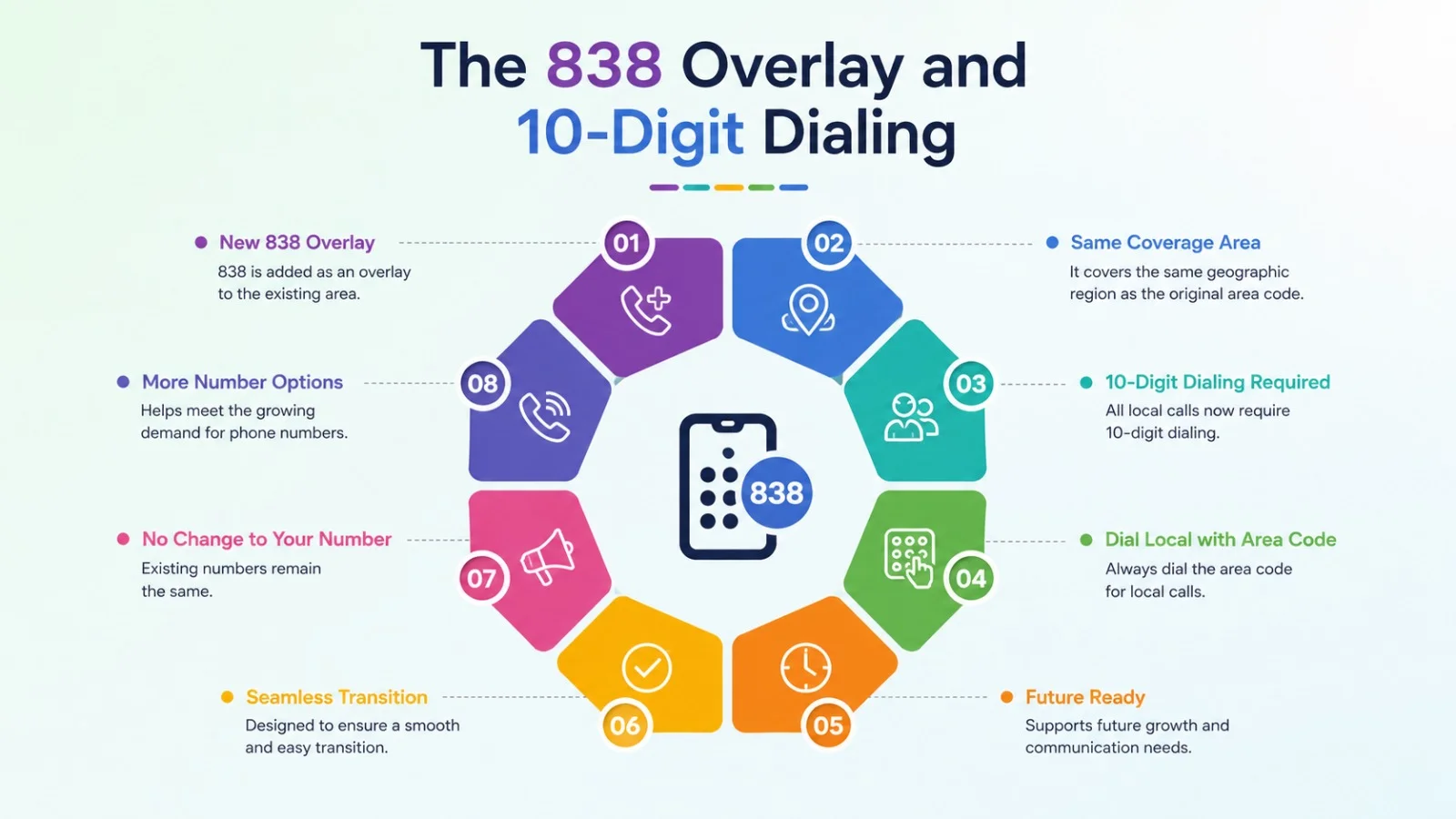
Because 518 and 838 now share the same territory, every call in the region — even between two neighbors calling each other in the same Albany zip code — requires the full area code plus the seven-digit number. Mandatory 10-digit dialing took effect August 20, 2017, about a month ahead of the new area code's activation.
5What Time Zone Does the 518 Area Code Use?
The entire 518 area code sits in the Eastern Time Zone, observing:
- Eastern Standard Time (EST): UTC−5, in the winter months
- Eastern Daylight Time (EDT): UTC−4, from early March through early November
That means a 518 number keeps the same business hours as New York City, Boston, and the rest of the East Coast — helpful to keep in mind when coordinating with West Coast teams or customers.
6Is 518 a Scam Area Code? What to Watch For
Area code 518 itself is completely legitimate — it's simply the dialing code for a large, real part of upstate New York. But like most active area codes, it's frequently spoofed by scammers who fake a local caller ID so residents are more likely to answer a call that looks like it's coming from their own neighborhood.
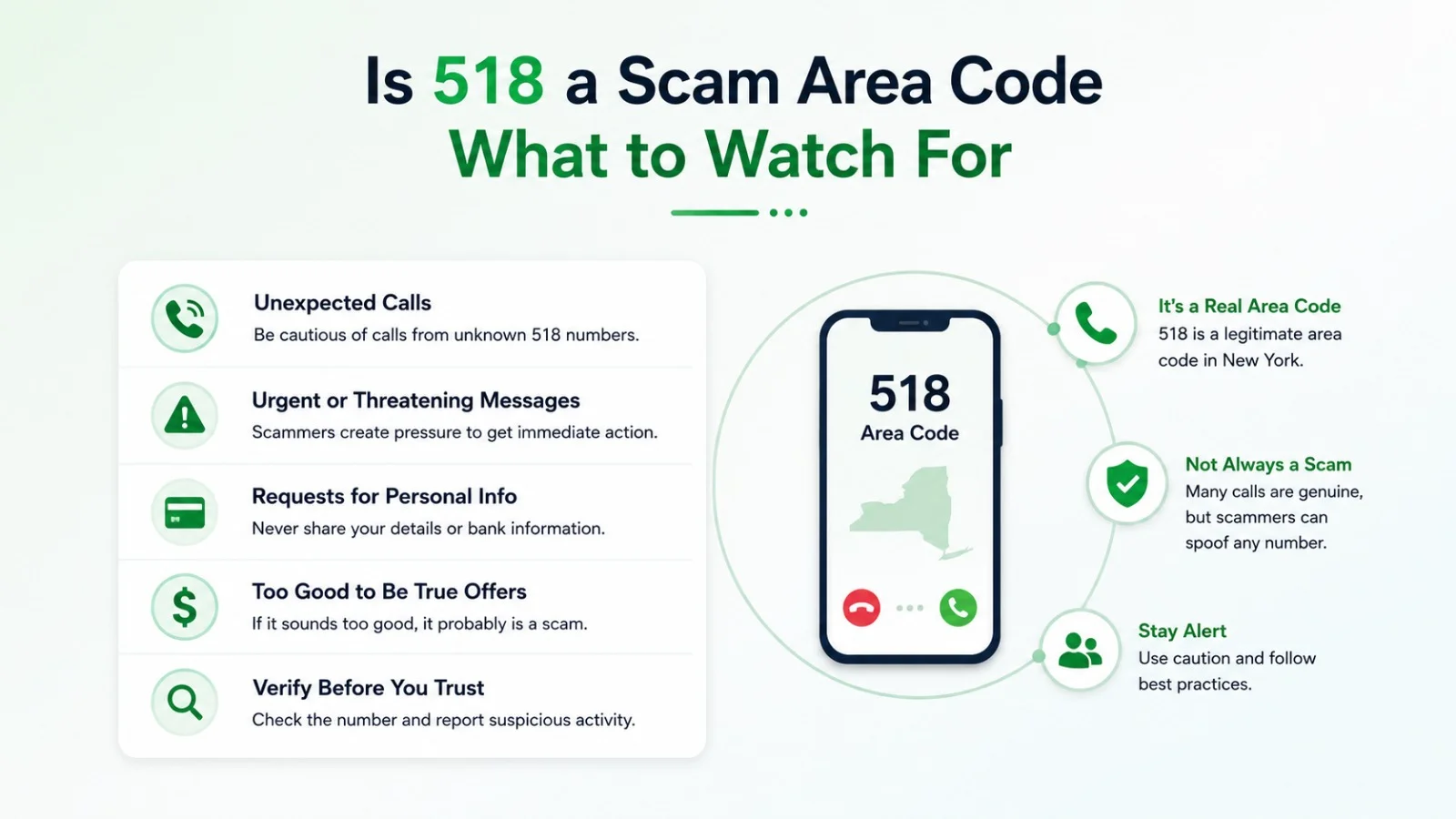
Common scams reported against 518 numbers include:
- Government impersonation: callers posing as the IRS, Social Security Administration, or a process server threatening legal action or claiming your identity was stolen
- One-ring (Wangiri) scams: a call rings once and disappears, hoping you'll call back a premium-rate number
- Fake state agency scams: bogus calls exploiting Albany's status as New York's seat of state government
- Neighbor spoofing: scammers deliberately match the first six digits of your own number to appear more trustworthy
If you receive a suspicious call from a 518 number, don't share personal or financial information, hang up on any recorded message demanding immediate payment, and report the call to the Federal Trade Commission. The area code isn't the problem — caller ID spoofing simply makes it easy for bad actors to borrow it.
7How to Get a 518 Area Code Phone Number
If you want a 518 number for personal or business use, the fastest option today is a cloud business phone platform. With a provider like Softtop, getting a 518 number takes just a few steps:
- 1Sign up for a free trial — no credit card required
- 2Open your number inventory and search New York → 518
- 3Choose a local DID, toll-free number, or vanity number from Softtop's US inventory of 800+ area codes
- 4Assign it to a team, an AI Receptionist, or an individual extension
- 5Go live in minutes with unlimited US calling included
Because Softtop provisions numbers instantly and supports number porting with zero port-out fees, you can also move an existing 518 number onto the platform in five to ten business days if you're switching providers rather than starting fresh.
8Why Businesses Choose a Local 518 Number
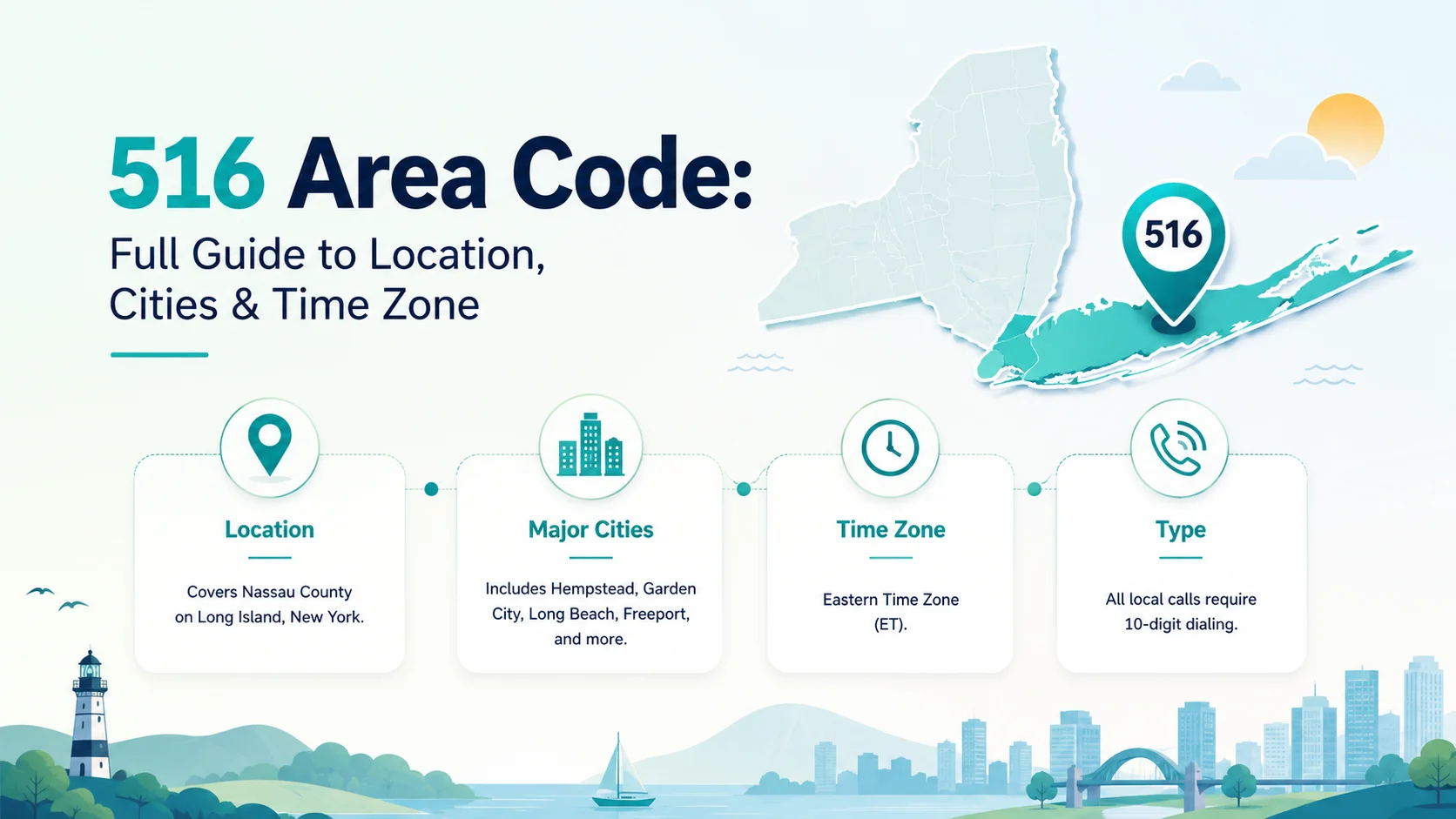
Beyond simple geography, a local 518 number gives a business real advantages when reaching customers across Albany and the Capital Region — a market that shares its state with the 516 area code region further south on Long Island:
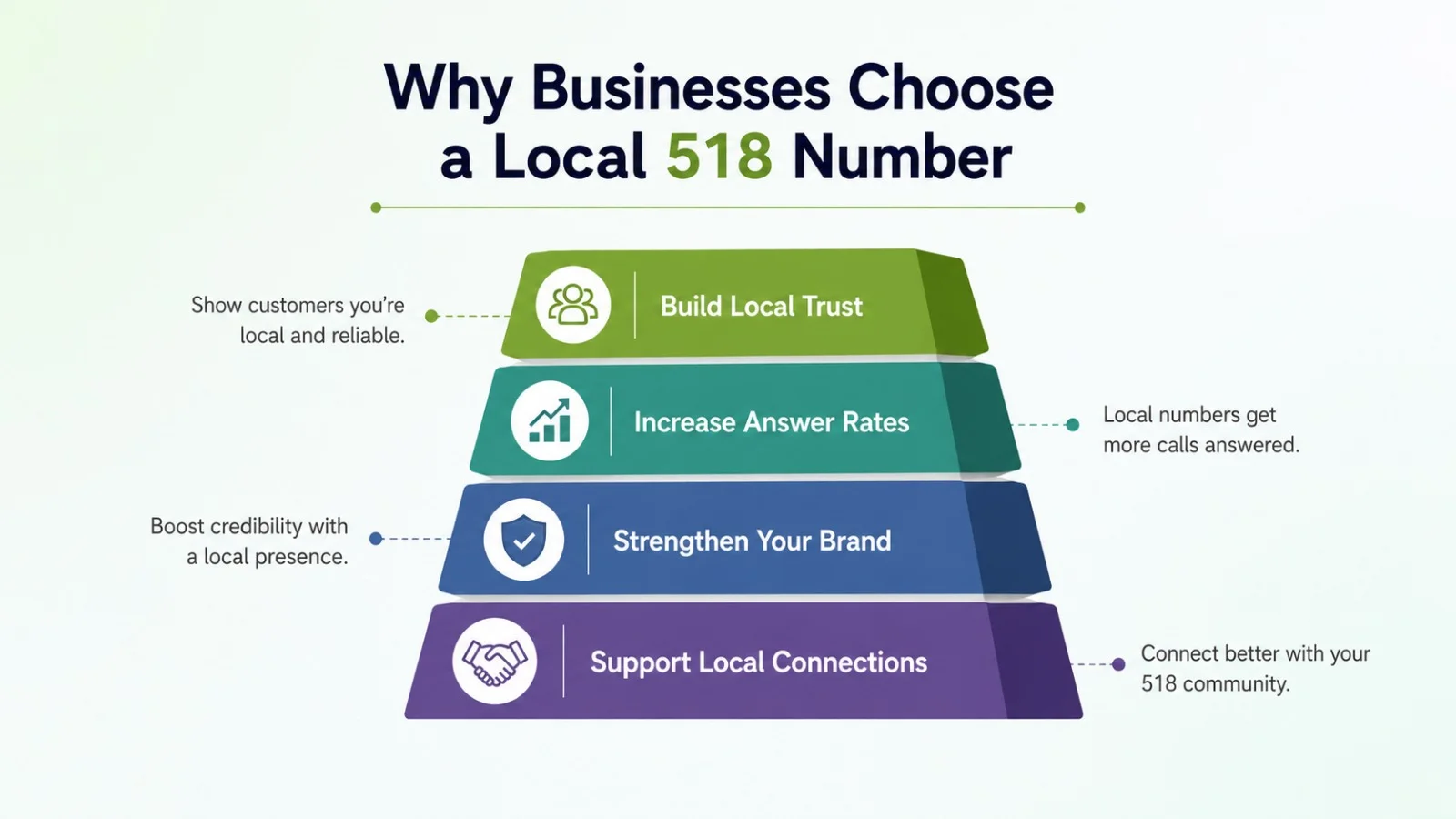
- Higher answer rates: people are more likely to pick up a call that looks local
- Regional trust: a familiar area code signals you're accessible and invested in the community
- Marketing consistency: a local number pairs naturally with localized ads, listings, and campaigns
- No physical office required: cloud phone systems let you serve the region without leasing space there
On Softtop, every 518 number is backed by the same tools used across the platform: an AI Receptionist that answers every call in under a second, full call recording and transcription, CRM sync with HubSpot and Salesforce, and 99.999% uptime backed by an SLA.
9Conclusion
The 518 area code has anchored Albany and northeastern New York since 1947, holding the same boundaries longer than any other original New York area code before finally gaining the 838 overlay in 2017. It's a rare case of an area code growing entirely through new number combinations rather than geographic division.
Like any widely used area code, 518 is also a target for caller ID spoofing, so a little healthy skepticism toward unexpected calls goes a long way. And if your business wants to build a genuine local presence in the Capital Region, getting a number no longer requires a physical office or a new phone line — a cloud platform can have you calling, texting, and answering customers as a local business within minutes.
Whether you're trying to identify an unfamiliar call or planning your next market expansion, understanding the 518 area code — its geography, history, and quirks — puts you one step ahead.