Introduction
VoIP (Voice over Internet Protocol) termination is a crucial service in the telecommunications industry, allowing voice calls to be transmitted over the internet and delivered to their final destination, whether on a traditional phone network or another VoIP network. As businesses increasingly rely on global communication, VoIP termination companies play an essential role in bridging the gap between digital and traditional telephony.
VoIP termination companies provide the infrastructure and services necessary to route voice calls from one network to another, ensuring high-quality connections and seamless communication. These companies offer various services, including intelligent call routing, competitive pricing, and global coverage, making them indispensable partners for businesses aiming to enhance their communication capabilities.
What is VoIP Termination?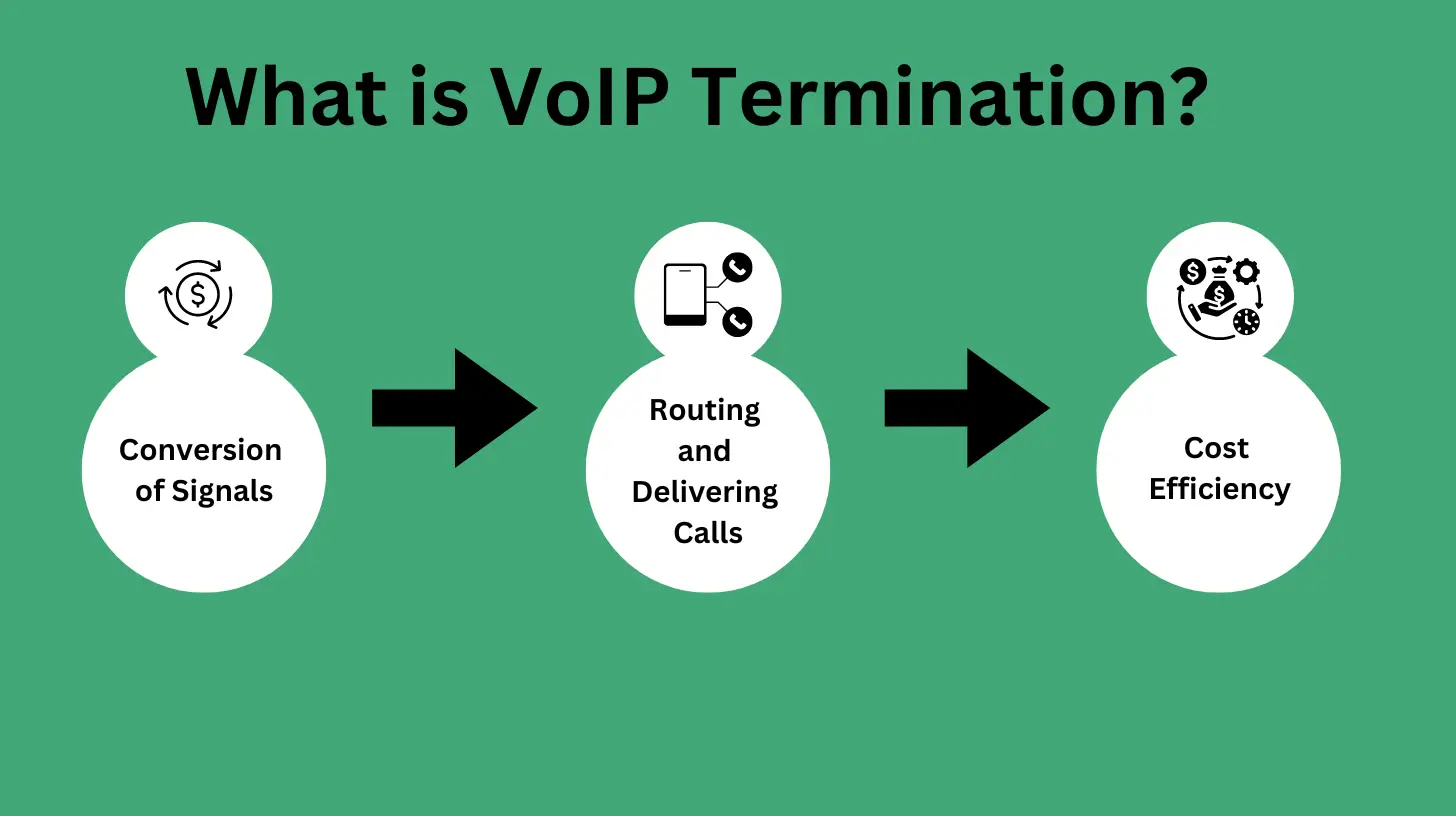
VoIP termination, also known as
voice termination or
call termination, refers to the process of routing and delivering voice calls over the internet from the originating point to the final recipient’s phone number. In simpler terms, it’s about transferring calls made over the Internet Protocol (IP) network to their destination in the Public Switched Telephone Network (PSTN) or another IP network.
Role in Connecting Calls Between Networks:
- Conversion of Signals: VoIP termination involves converting voice signals from an IP network into the appropriate format for delivery to a traditional phone network (PSTN) or another VoIP network. This conversion is essential for seamless communication between different types of networks.
- Routing and Delivering Calls: VoIP termination providers handle the routing of voice data packets across various networks to ensure that the call reaches its intended recipient. This involves choosing the best paths to minimize latency and maintain call quality.
- Cost Efficiency: By using VoIP termination, businesses can reduce the costs associated with international and long-distance calls. VoIP providers often offer competitive rates compared to traditional phone services, allowing companies to save on communication expenses.
Importance of VoIP Termination for Businesses
VoIP termination plays a vital role in enabling global communication and connectivity by allowing voice calls to be routed over the internet and delivered to any destination worldwide. Here’s how it facilitates international communication:
Global Reach and Accessibility
VoIP termination providers offer extensive global reach, allowing users to connect with contacts worldwide. This is achieved through partnerships with local carriers and the ability to offer local, toll-free, and international numbers. Businesses can thus establish a presence in multiple countries without needing a physical office.
Seamless Integration Across Networks
VoIP termination bridges the gap between different communication networks, such as IP networks and traditional PSTN. This integration ensures that calls can be initiated on one type of network and terminated on another, providing seamless connectivity across various platforms and devices.
Enhanced Call Quality and Reliability
With advanced routing technologies and the use of high-quality network partners, VoIP termination providers can maintain high call quality and reliability. Features such as intelligent call routing, redundancy, and failover support help ensure that calls are clear and uninterrupted, even when traversing international boundaries.
How VoIP Termination Helps Grow Your Business
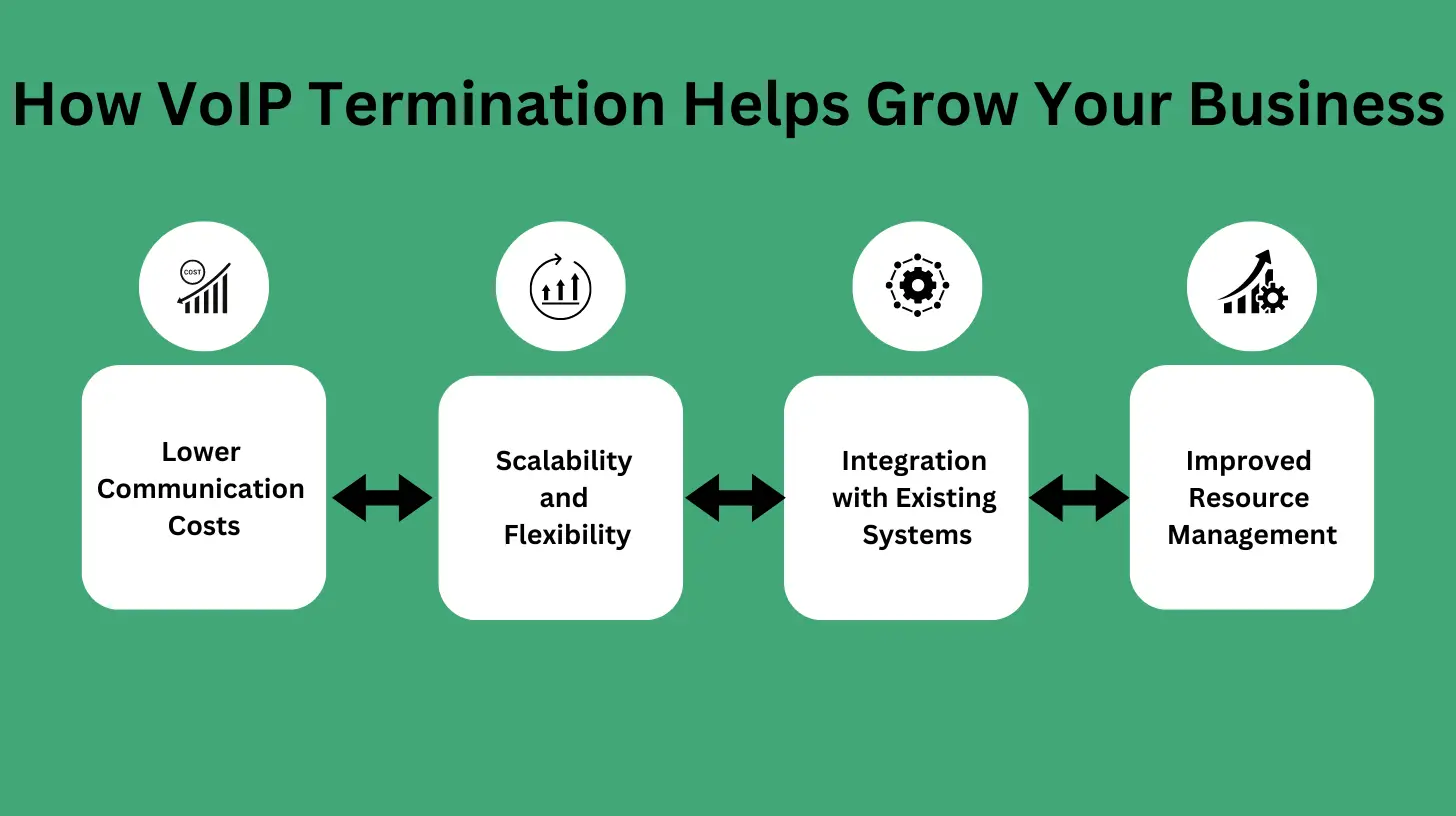
Lower Communication Costs:
- VoIP termination routes calls over the internet instead of traditional phone lines, significantly reducing long-distance and international calling costs. This is especially beneficial for businesses that handle a large volume of calls globally.
- Providers often offer competitive pricing models, including wholesale rates, which allow businesses to manage communication expenses more effectively.
Scalability and Flexibility:
- VoIP systems are easily scalable, allowing businesses to expand or reduce their communication capabilities based on demand. This flexibility means businesses can adjust without investing in new infrastructure, saving time and money.
- The ability to quickly scale up during peak times or scale down during slow periods helps optimize resource use and costs.
Integration with Existing Systems:
VoIP termination can be integrated with existing PBX systems and other communication platforms, streamlining operations and reducing the need for additional hardware.
This integration allows businesses to manage their communication systems more efficiently, improving operational workflows and reducing overhead costs.
Improved Resource Management:
With features like centralized call management and intelligent routing, businesses can optimize their resources and reduce the need for extensive IT support.
Automated processes and efficient call handling free up human resources to focus on core business activities, enhancing overall efficiency.
How VoIP Termination Works
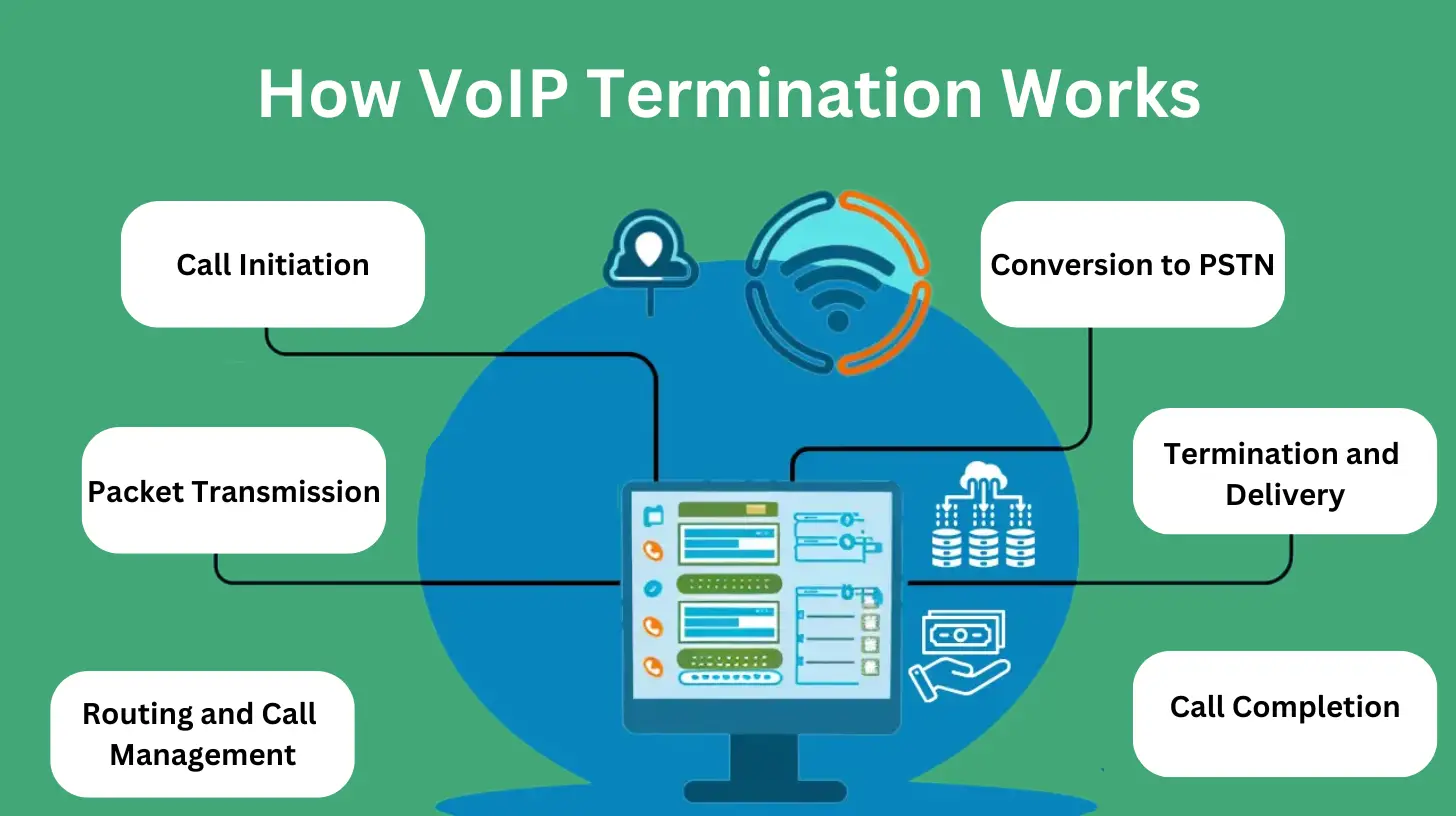
VoIP termination involves the process of routing voice calls from a Voice over Internet Protocol (VoIP) network to the destination’s telephone network, whether it’s a Public Switched Telephone Network (PSTN) or another VoIP network. Here’s a step-by-step explanation of how the process works:
- Call Initiation: A call is initiated from a VoIP-enabled device, such as an IP phone, softphone, or mobile app. The voice data is captured and converted into digital packets using a codec.
- Packet Transmission: The digital voice packets are transmitted over the internet through the VoIP provider’s network. These packets are routed using protocols such as SIP (Session Initiation Protocol) or H.323, which manage the call setup, management, and teardown.
- Routing and Call Management: The VoIP provider’s system routes the call through its network to the destination network. This may involve multiple hops across various networks, where the provider ensures the most cost-effective and high-quality routing through least-cost routing (LCR) and intelligent routing techniques.
- Conversion to PSTN: When the call reaches the edge of the VoIP network, it needs to be converted back to analog signals to be compatible with the PSTN. A VoIP gateway performs this conversion and manages the handoff between digital and analog systems.
- Termination and Delivery: The call is then delivered to the recipient’s phone number through the traditional telephone network. The call is completed when the recipient answers, and the conversation takes place as usual.
- Call Completion: Once the call is ended, the VoIP system manages the termination of the call session, releasing network resources and updating call records for billing and reporting purposes.
Benefits of VoIP Termination for Businesses
Cost Savings
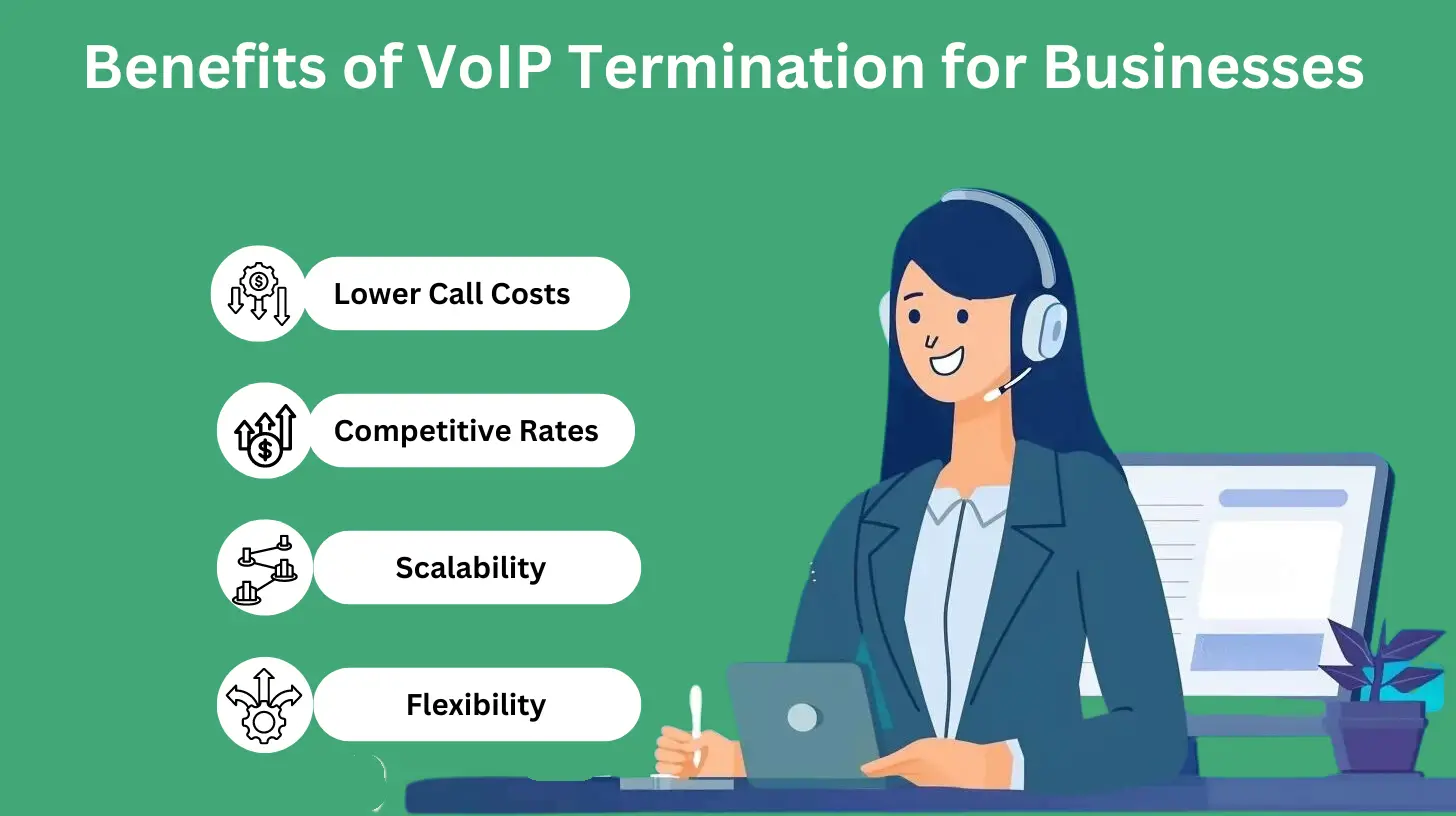
- Lower Call Costs: VoIP termination allows businesses to reduce long-distance and international calling costs significantly. Since calls are transmitted over the internet, the need for traditional phone lines and their associated expenses is eliminated.
- Competitive Rates: VoIP providers often offer competitive pricing models, including wholesale rates, which can lead to substantial savings for businesses that handle a large volume of calls.
Increased Flexibility and Scalability
- Scalability: VoIP systems can easily scale to accommodate business growth. Whether a company needs to add more lines or expand to new locations, VoIP solutions can be adjusted without extensive infrastructure changes.
- Flexibility: Businesses can manage their communication systems from anywhere with internet access, allowing for remote work and distributed teams.
Improved Call Quality and Reliability
- High-Quality Connections: VoIP termination ensures high-quality voice calls with features like intelligent routing and redundancy. These technologies help minimize latency and packet loss, providing clearer communication.
- Reliability: VoIP systems offer high uptime and failover options, ensuring that businesses maintain communication even during outages or peak times.
Choosing the Right VoIP Termination Provider
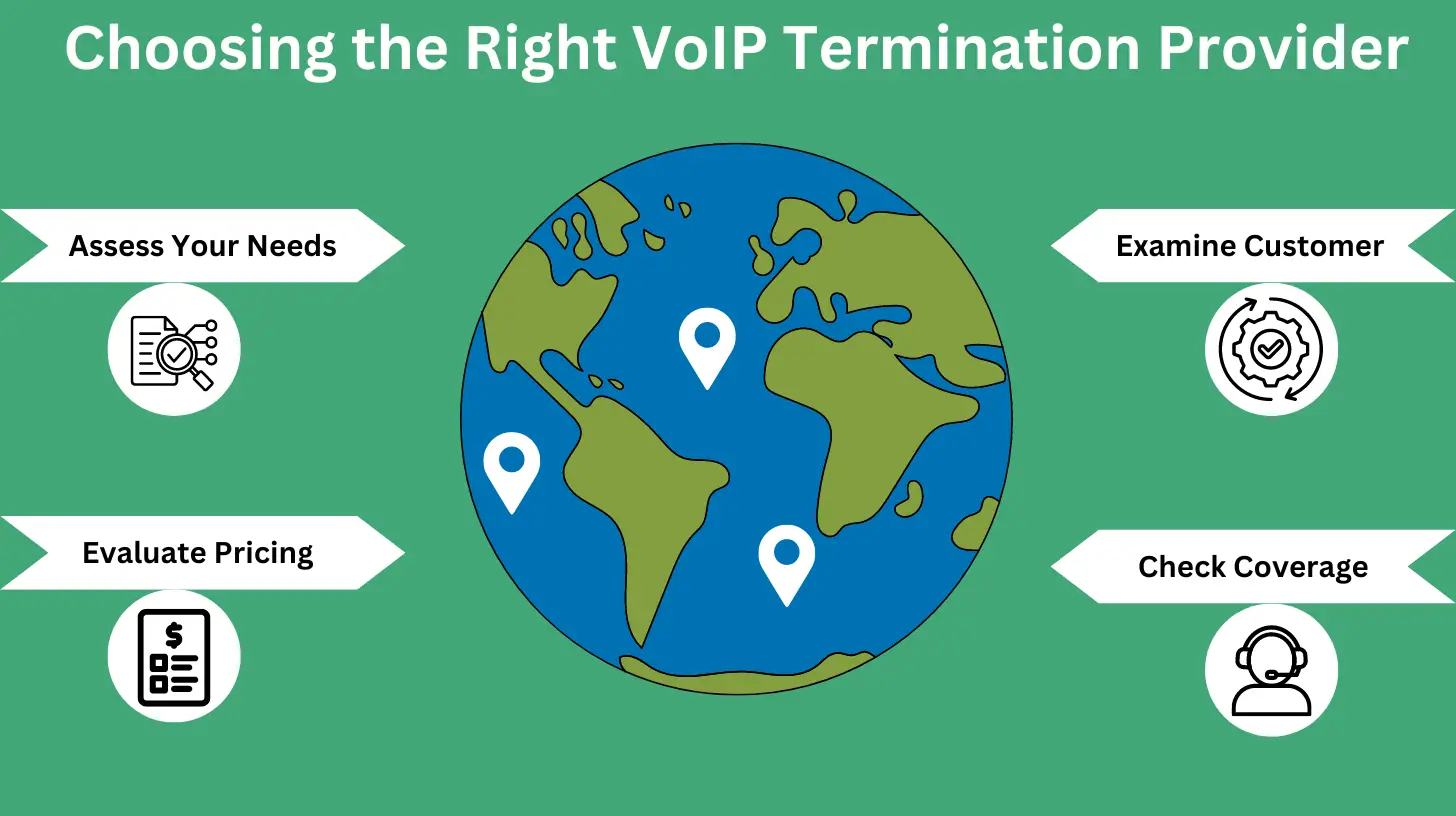
- Assess Your Needs: Determine the number of users, call volume, and specific features required to support your business operations.
- Evaluate Pricing: Compare pricing models and ensure transparency in costs, including any hidden fees or surcharges.
- Check Coverage: Ensure the provider offers coverage in all necessary regions, especially if your business operates internationally.
- Examine Customer Support: Look for providers with robust customer support, including 24/7 availability and multiple contact channels.
- Consider Security: Security features such as encryption, fraud detection, and compliance with industry standards are crucial for protecting sensitive information.
Factors Affecting the Price Structure of VoIP Termination Services
The price structure of
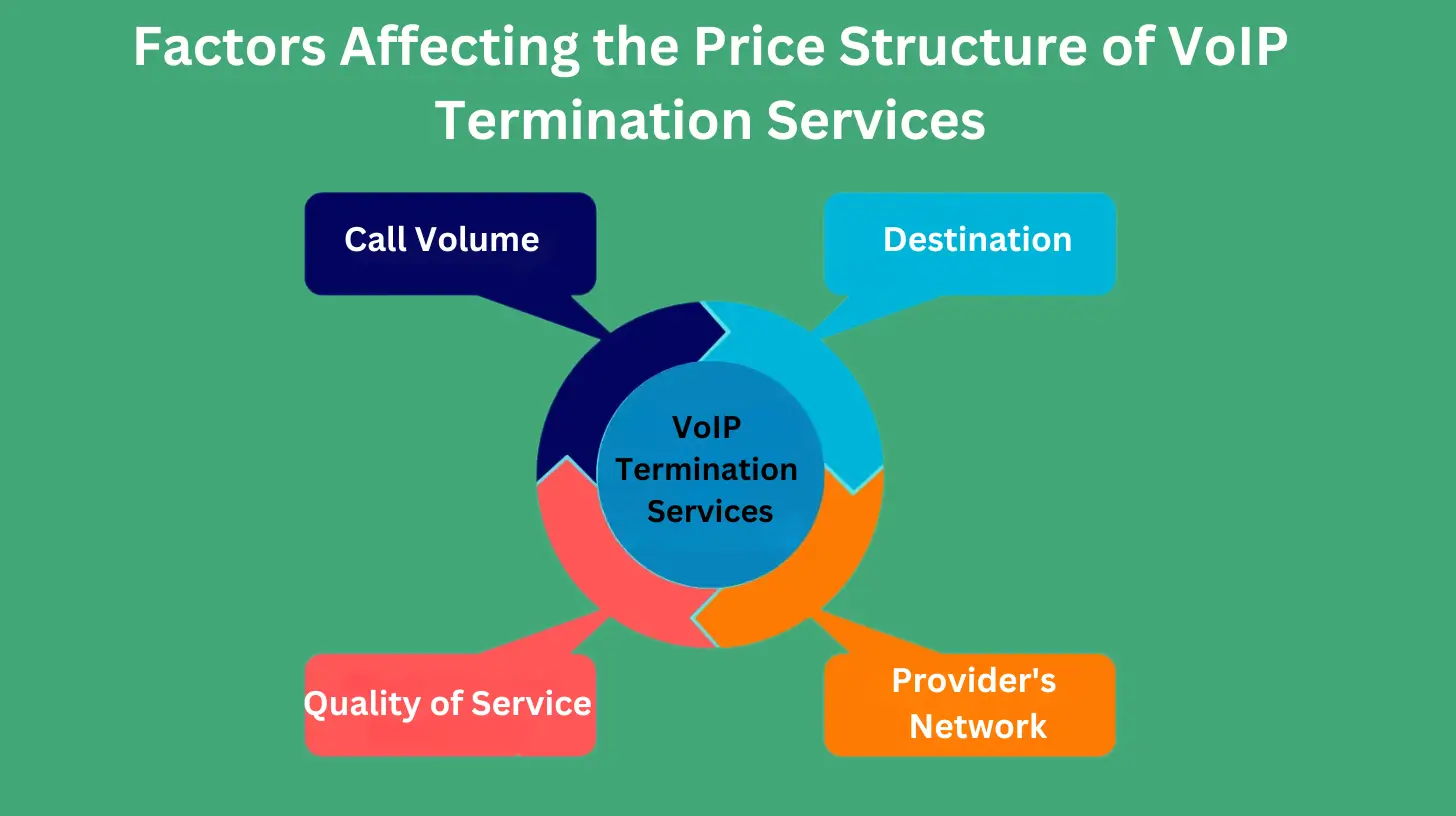
VoIP termination services can vary significantly depending on several factors. Understanding these factors can help businesses make informed decisions when selecting a VoIP termination provider. Here are the key factors that affect the price structure:
| Factor |
Description |
| Call Volume |
Higher call volumes typically lead to lower rates per minute. Providers offer discounts for large volumes to incentivize businesses to use their services. |
| Destination and Coverage |
Calls to popular destinations like the US, UK, and Canada are often cheaper. Calls to international destinations, especially in Africa and Asia, can be more expensive. Providers may charge differently for calls to mobile and landline numbers. |
| Quality of Service (QoS) |
High-quality services with advanced features like call recording and analytics may be more expensive. Basic services with lower QoS may be cheaper. |
| Provider’s Network and Infrastructure |
Providers with their own network infrastructure may offer better rates. Those relying on third-party networks may charge more. |
| Competition and Market Dynamics |
Providers may adjust pricing based on market conditions and competition. New entrants may offer lower rates to gain market share. |
Top VoIP Termination Companies
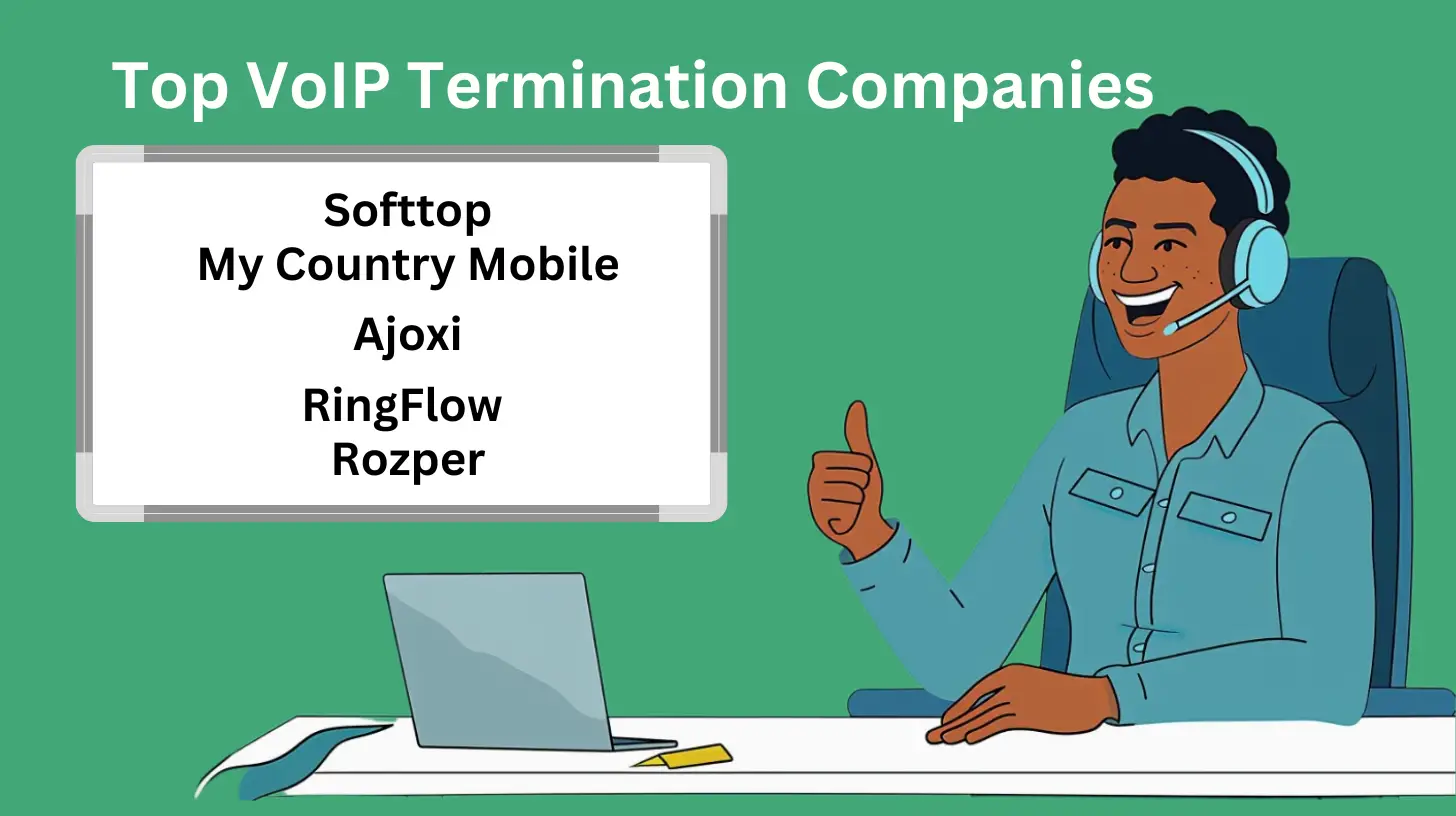
Softtop
Overview: Softtop is a cloud communications platform that offers a wide range of communication APIs for developers, including voice, messaging, and video.
Strengths: Provides robust APIs, global reach, scalability, and flexibility for businesses of all sizes.
My Country Mobile
Overview: My Country Mobile is a leading provider of cloud communication services that offer VoIP solutions for businesses and residential customers.
Strengths: Known for excellent customer service, integration capabilities, and comprehensive communication solutions.
Ajoxi
Overview: Ajoxi offers unified communications as a service (UCaaS), providing solutions for voice, video, team messaging, and collaboration.
Strengths: Reliable service with a strong mobile app, easy-to-use interface, and a wide range of features.
Ringflow
Overview: Ringflow provides a range of business communication solutions, including
VoIP services, contact centers, and CRM integration.
Strengths: Focuses on customer service and offers feature-rich VoIP solutions tailored for different business needs.
Rozper
Overview: Rozper specializes in international call forwarding and VoIP termination services, offering local, toll-free, and international numbers.
Strengths: Strong global coverage, high-quality voice services, and advanced routing capabilities.
Conclusion
VoIP termination is a vital component of modern business communication, offering cost-effective solutions for international and long-distance calls. By converting and routing voice signals efficiently, VoIP termination ensures seamless connectivity across networks. Its scalability and flexibility allow businesses to adapt to changing needs, while its global reach and high-quality service enhance customer satisfaction. Selecting the right VoIP termination provider involves evaluating factors like pricing, coverage, and support to ensure alignment with business goals. Embracing VoIP termination can lead to significant improvements in operational efficiency and global communication capabilities.