1Introduction
Wholesale voice termination is the carrier-to-carrier service that completes outbound voice calls from an originating network onto the public switched telephone network at the destination. It is the invisible last mile behind every VoIP platform, contact center, and softphone app — the layer that takes a SIP call off your network and hands it to a mobile tower or landline anywhere in the world. Businesses that route meaningful call volume rarely interact with this layer directly, but the wholesale voice termination provider behind their platform determines call quality, per-minute cost, and regulatory standing in every market they serve.
For carriers, resellers, ITSPs, and communications platforms, choosing a wholesale voice termination partner is a structural decision, not a line-item purchase. This guide breaks down how termination actually works, what drives pricing, which quality metrics separate a usable route from a broken one, and how to evaluate a provider before committing volume.
2What Is Wholesale Voice Termination?
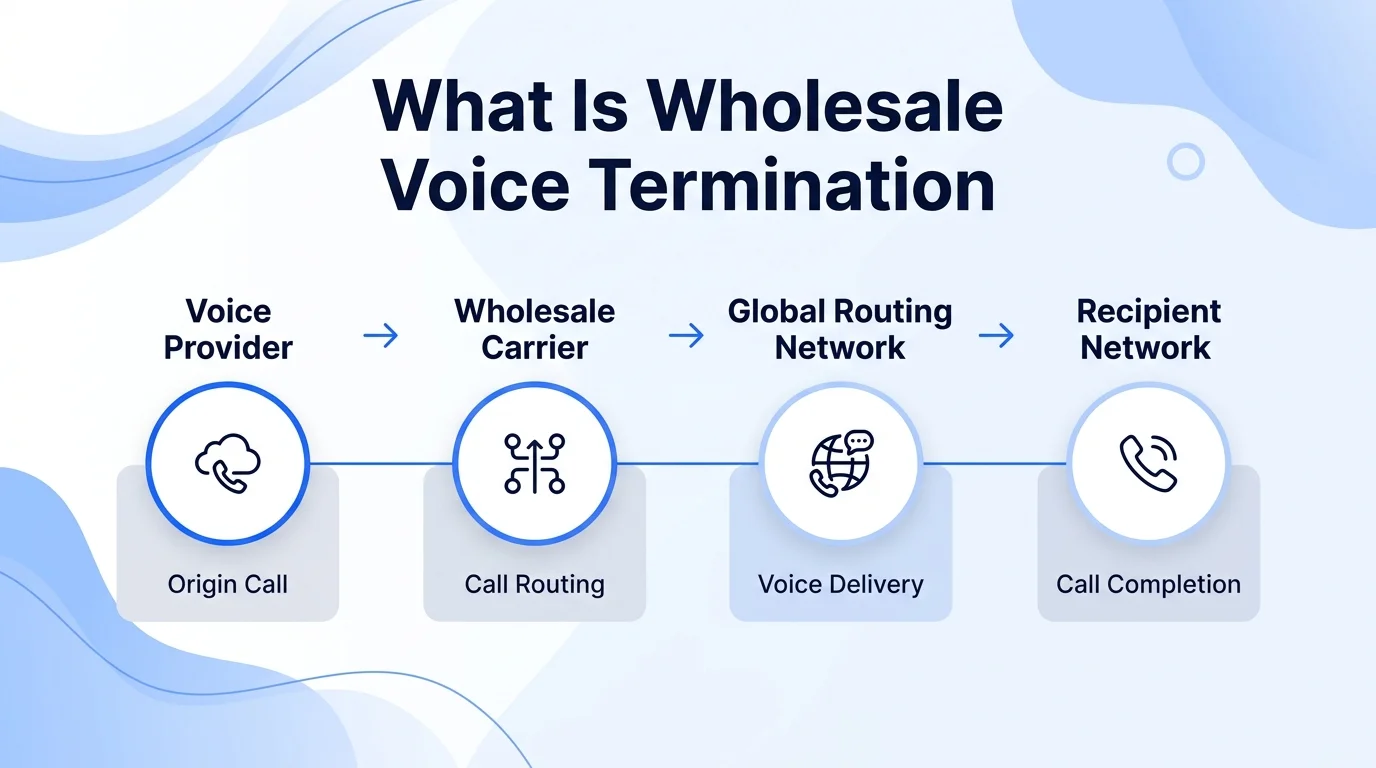
Wholesale voice termination is the bulk service of completing outbound calls on behalf of carriers, resellers, and enterprises that generate high call volume. Rather than negotiating individual interconnects with every telecom operator worldwide, a business buys termination capacity from a wholesale provider that already holds those relationships — paying per-minute (or per-second) rates instead of building its own global network.
The wholesale provider sits between the originating platform and the destination network. Calls arrive as SIP traffic from a softswitch, hosted PBX, or CPaaS platform, and the provider's switching infrastructure routes each one to the correct destination carrier based on the dialed number, available routes, and configured quality profile. This is what turns a call placed inside a browser-based dialer into a ringing phone thousands of miles away, typically in under a second.
3How the Call Actually Travels
Understanding the routing path clarifies why quality and price vary so much between providers:
- Origination — the calling platform sends the call as SIP traffic to the wholesale termination provider.
- Route lookup — the provider's switch checks the dialed number against its routing tables, matching it to available carrier paths for that destination.
- Path selection — a route is chosen based on cost, quality tier, and current network health, favoring direct interconnects where available.
- Termination — the destination carrier completes the call to the dialed number and returns call-progress signaling back through the chain.
Every intermediate hop between the originating platform and the destination network adds latency and risk. A provider that owns direct interconnects in a given country will typically outperform one reselling capacity from a third party, even when the quoted rate looks identical.
4A-Z Termination and Route Types
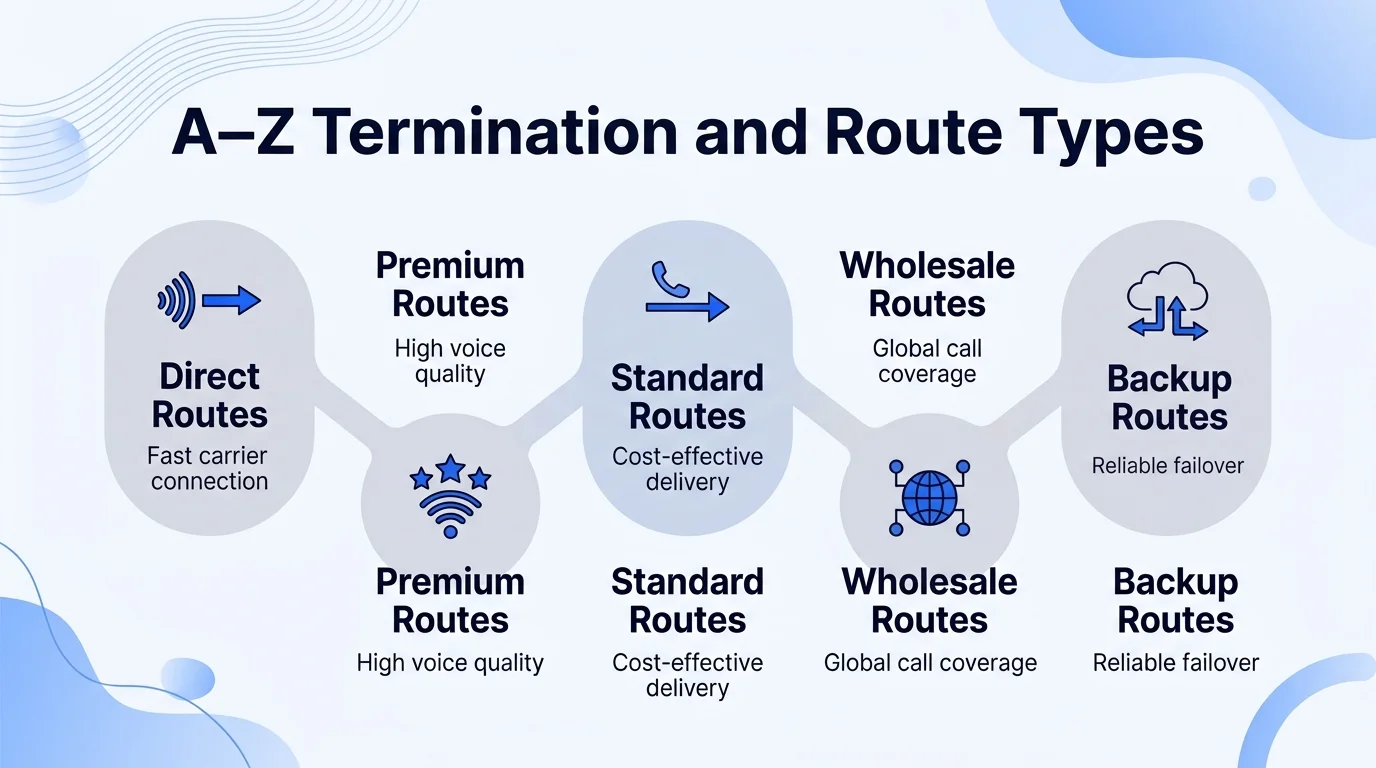
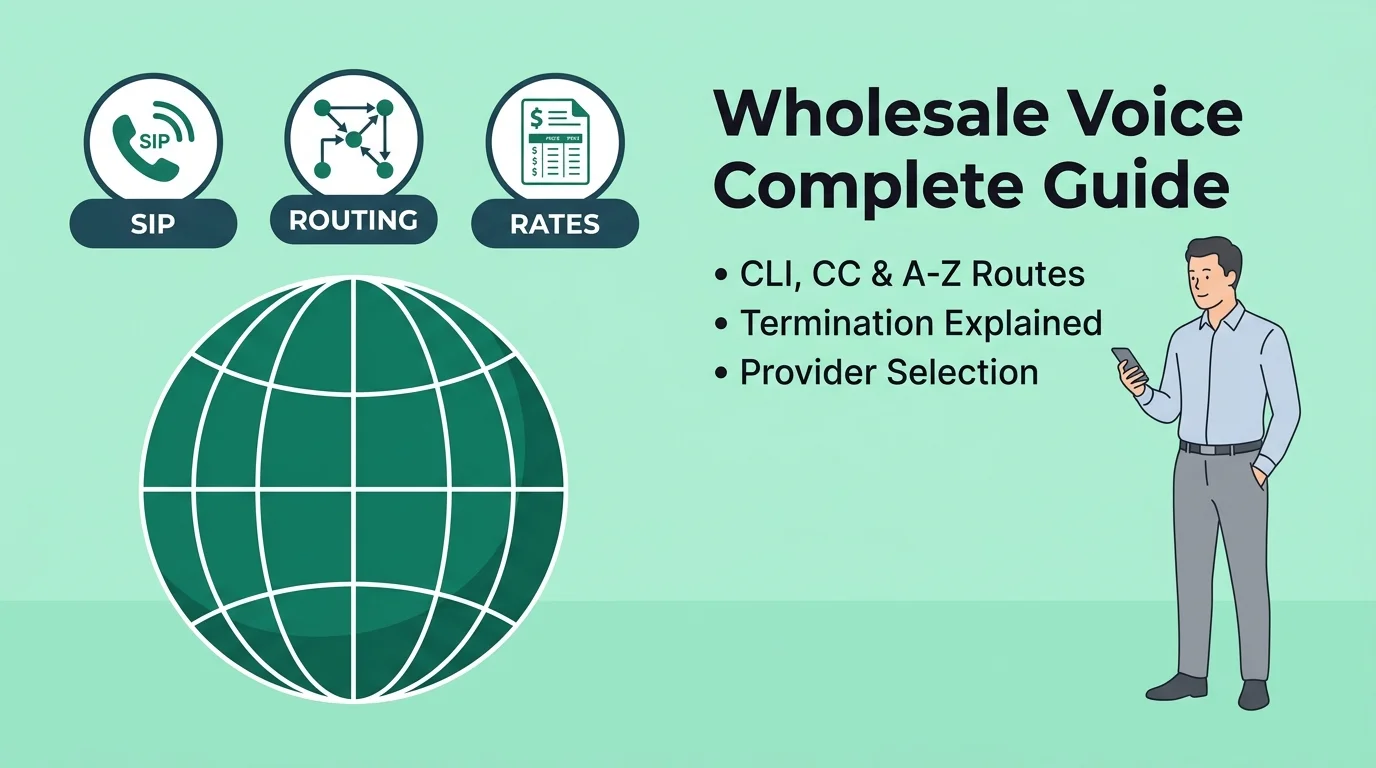
Most wholesale voice termination is sold as A-Z termination — meaning the provider can complete calls to any country code, from Afghanistan to Zimbabwe, under one contract. Underneath that single label sit several distinct route types, each with a different cost and quality profile:
- CLI (Caller Line Identification) routes pass the real originating number to the destination network. They're required in most regulated markets, essential for any customer-facing use case where a callback matters, and typically carry the highest ASR and the highest per-minute cost.
- Non-CLI routes omit or alter the caller ID. They're cheaper and suitable for high-volume outbound campaigns where the caller's number isn't operationally important, but they face higher blocking rates as destination carriers tighten anti-fraud filtering.
- CC (country-code) routes sit at the lowest price point and the lowest reliability tier, appropriate only for narrow, cost-sensitive use cases where occasional call failure is tolerable.
Matching route type to traffic type is one of the highest-leverage decisions a buyer makes — using a premium CLI route for low-value bulk traffic wastes margin, while running customer support calls over a non-CLI route damages both call quality and brand trust.
5What Drives Wholesale Voice Termination Rates
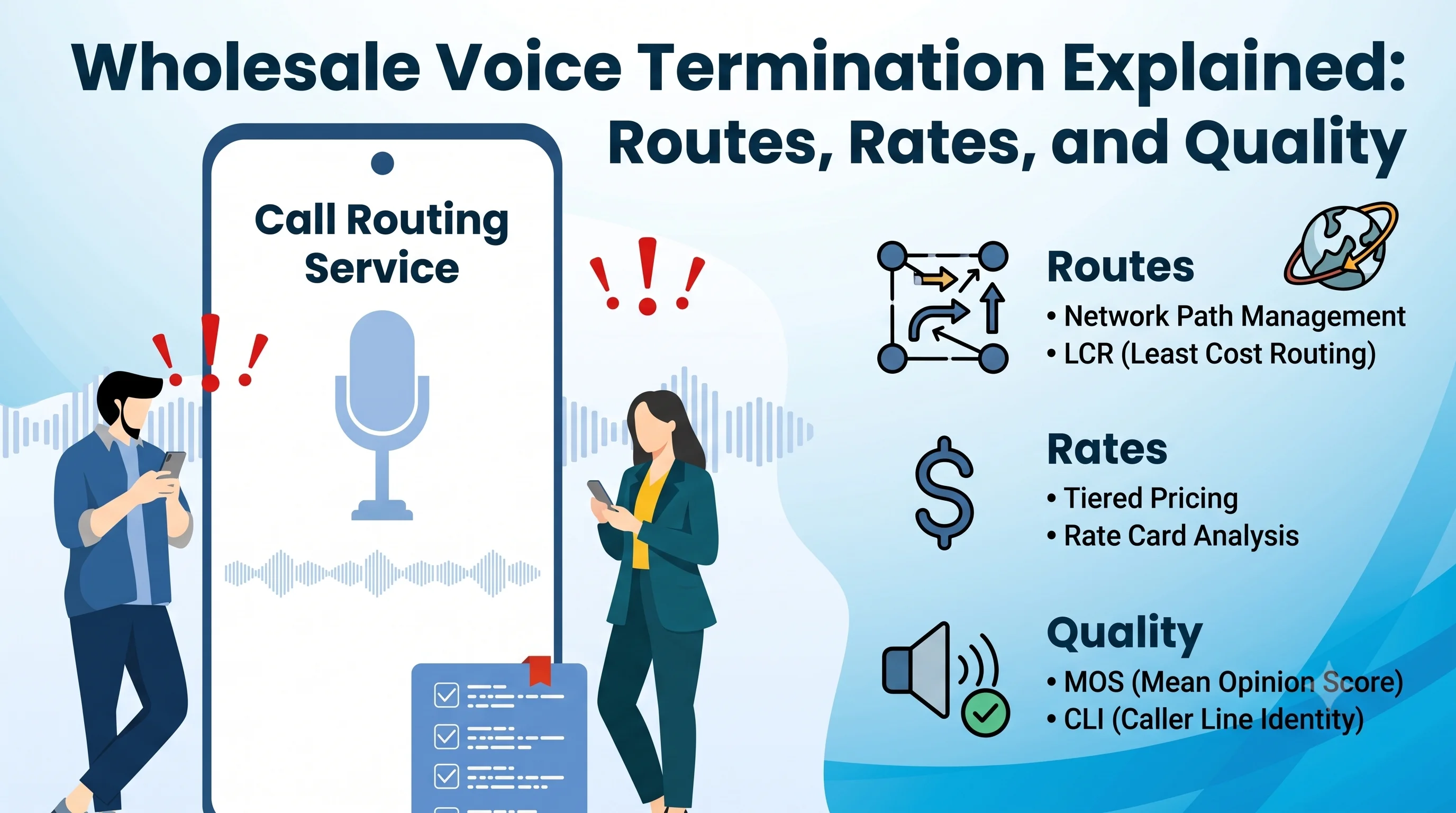
Wholesale pricing looks simple on a rate sheet and gets complicated once you factor in the variables that actually move cost. Destination is the largest driver: US and Western European fixed-line termination often starts near $0.003–0.005 per minute, mobile termination runs several times higher, and destinations with thin carrier competition can run five to ten times the US baseline. Route type adds another layer on top — CLI routes typically carry a 20–40% premium over non-CLI on the same destination, reflecting the cost of maintaining compliant, direct interconnects.
Billing model can matter more than the headline rate. A provider charging a lower per-minute rate but billing in six-second increments, or applying false answer supervision (FAS) — charging for calls that were never actually answered — can end up costing more per completed call than a provider with a slightly higher rate and true per-second, FAS-free billing. Always model total cost against actual traffic patterns rather than comparing headline numbers in isolation.
6Quality Metrics That Actually Matter
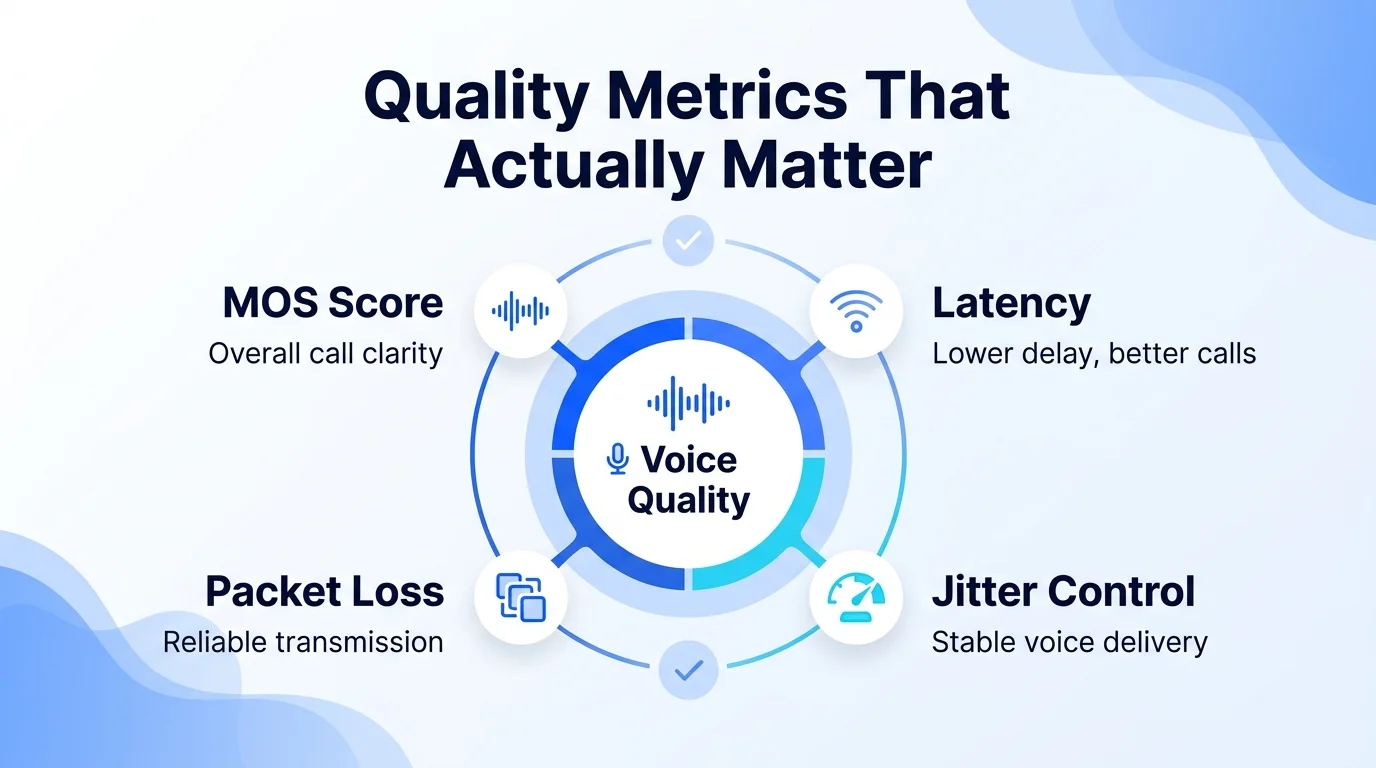
Three metrics separate a wholesale voice termination route worth paying for from one that quietly bleeds margin:
ASR — Answer Seizure Ratio
The percentage of call attempts that result in an answered call. Premium CLI routes typically land in the 60–80% range on major destinations; anything consistently below 40–50% signals route quality problems or carrier blocking.
ACD — Average Call Duration
The mean length of completed calls. A healthy ACD for the traffic type in question suggests calls are genuinely connecting and holding; an unusually low ACD on what should be high-engagement traffic often points to audio issues or premature disconnects.
PDD — Post-Dial Delay
The time between the last dialed digit and the first ring. Anything over 5–6 seconds is a red flag, since most callers hang up before the delay resolves.
Request live, route-level data for these three metrics — not blended network averages — before committing volume to any provider.
7How to Evaluate a Wholesale Voice Termination Provider
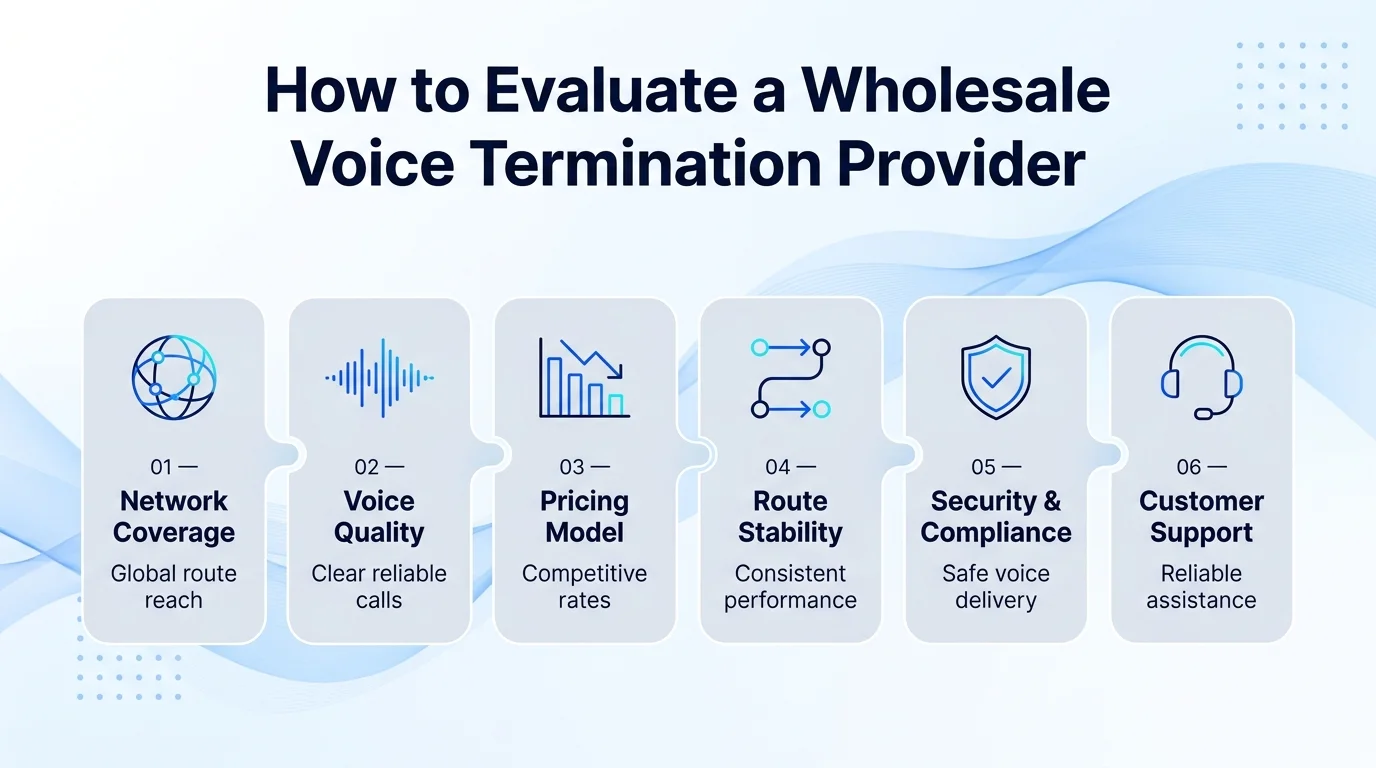
A rate sheet alone tells you almost nothing about how a provider will actually perform. Evaluate against these criteria instead:
- Network ownership — direct Tier-1 interconnects versus resold, multi-hop capacity
- Live ASR, ACD, and PDD data by destination, not network-wide averages
- CLI delivery policy — which destinations get real caller ID passed through
- STIR/SHAKEN attestation for any US-originating traffic, required under the FCC's call authentication rules
- Billing granularity — true per-second, FAS-free billing versus rounded increments and hidden charges
- Uptime SLA — a contractual number backed by defined service credits, not a marketing claim
- Support model — a 24/7 network operations center with a defined response-time commitment
The strongest wholesale voice termination providers combine direct interconnects across a wide destination footprint with transparent billing, full CLI delivery, current compliance attestation, and a real, credit-backed uptime SLA. Most teams evaluating a switch request a rate deck and a short live-traffic trial to compare real-world ASR against their existing provider before shifting volume.
8Red Flags to Avoid
A handful of warning signs reliably predict a poor wholesale termination relationship:
- Rates meaningfully below the rest of the market with no clear explanation
- No published SLA, or one with no defined credit terms
- FAS billing or six-second increments buried in the contract
- Reluctance to share live ASR data or allow a trial period
- Support only available during business hours for a service that runs continuously
None of these disqualify a provider in isolation, but two or more together are a strong signal to keep evaluating alternatives — for a deeper breakdown of carrier tiers and evaluation criteria, see our wholesale VoIP termination carriers guide.
9Conclusion
Wholesale voice termination is a structural infrastructure choice, not a commodity purchase — the provider behind that layer shapes call quality, cost per completed call, and compliance posture across every market a business serves. A provider that owns direct interconnects, publishes real ASR data by destination, bills transparently with no hidden charges, and backs its uptime with a contractual SLA will consistently outperform a cheaper alternative once true cost per connected call is considered.
Evaluate on cost-per-completed-call rather than cost-per-minute, request a live trial before committing volume, and treat the red flags above as non-negotiable filters.
10Frequently Asked Questions
What is the difference between wholesale voice termination and retail VoIP?
Retail VoIP sells finished phone service to a single business for its own employees. Wholesale voice termination sells raw, bulk call-completion capacity to carriers, resellers, and platforms that then deliver voice service downstream to their own customers, typically at a fraction of retail per-minute cost.
What does A-Z termination mean?
A-Z termination means a provider can complete calls to any country code — from Afghanistan to Zimbabwe — under a single contract, rather than requiring separate agreements per destination or region.
Why do CLI routes cost more than non-CLI routes?
CLI routes preserve the real caller ID end-to-end, which requires direct, compliant interconnects and is often a legal requirement in regulated markets. That infrastructure and compliance overhead is reflected in a higher per-minute rate, offset by meaningfully higher answer rates.
What is a good ASR for wholesale voice termination?
On premium CLI routes to major destinations, a healthy ASR typically falls in the 60–80% range. Consistently lower figures on a given route usually indicate carrier blocking, route congestion, or grey-route quality issues.
How do I evaluate a wholesale voice termination provider before committing volume?
Request live ASR, ACD, and PDD data by destination rather than network averages, confirm whether interconnects are direct or resold, verify STIR/SHAKEN attestation for US traffic, and run a short live-traffic trial alongside your current provider before shifting meaningful volume.