1Introduction
Most bad VoIP termination vendors don't reveal themselves in a demo call — they reveal themselves three months in, when routes degrade, invoices stop matching CDRs, or the account manager who promised Tier-1 access stops answering the phone. By then you've already migrated traffic, trained your team, and built your margins around numbers that were never real.
The wholesale voice industry has a low barrier to entry: anyone with a SIP softswitch and a rate sheet can call themselves a termination provider. Distinguishing a genuine carrier-grade vendor from a reseller wearing a carrier's marketing language requires a due-diligence process that goes well beyond comparing per-minute rates.
This checklist walks through the specific questions, verification steps, and red flags that separate a vendor worth signing from one that will cost you far more than the rate sheet suggests.
Before signing with any VoIP termination vendor, verify how long they've actually operated, request live customer references, confirm Tier-1 interconnects independently rather than trusting marketing copy, ask specific fraud-control questions, and test support response times pre-contract. Bait-and-switch rate quotes and unverifiable claims are the two most common scam patterns in this industry.
2Financial Stability and Track Record: How Long Have They Actually Operated?
Why Tenure Matters More Than a Polished Website
A modern-looking website and a slick sales deck can be assembled in a weekend. Genuine carrier infrastructure — interconnect agreements, peering arrangements, billing systems capable of reconciling millions of minutes — cannot. When vetting a VoIP termination vendor, start by establishing how long the company has actually been operating under its current name, not just how long its domain has existed.
What to Actually Check
Look up the company's registration and incorporation date through the relevant business registry — Companies House in the UK, a Secretary of State filing in the US, or the equivalent in the vendor's jurisdiction. Cross-reference this against how long the domain has been registered using a WHOIS lookup; a mismatch, where the company claims a decade of operation but the domain is two years old, is worth asking about directly.
Also ask directly: has the company ever operated under a different name, been acquired, or gone through a corporate restructuring? Frequent rebranding is sometimes legitimate business evolution, but it is also a pattern used by operators trying to outrun a damaged reputation from a prior name. A vendor with nothing to hide will answer this without hesitation.
3Checking References and Independent Reviews
Any vendor can produce two glowing testimonials on their homepage. What they cannot easily fabricate is a pattern across independent, third-party sources — and that pattern is where the real signal lives.
Ask for Live Customer References, Not Just Case Studies
Request direct contact with two or three existing customers who run traffic volumes comparable to yours, and actually call them. Ask specifically about billing disputes, unplanned downtime, and how quickly support resolved a real incident — not just whether they are "satisfied." A vendor that refuses to provide any live reference, or only offers written testimonials they control, is signaling something. For comparison, review how established wholesale voice providers typically present verifiable customer relationships.
Where Independent Reviews Actually Live
Beyond direct references, check industry-specific forums and communities where telecom operators discuss vendors candidly — these conversations are far harder to manufacture than a testimonials page. Search the company name alongside terms like "complaint," "scam," or "unpaid" to surface disputes that wouldn't otherwise appear in a standard search. A handful of negative posts over several years is normal for any large vendor; a recent cluster of similar complaints about non-payment or vanishing support is not.
4Verifying Real Tier-1 Interconnects vs. Marketing Claims
"Direct Tier-1 Connections" Is the Most Overused Phrase in This Industry
Nearly every termination vendor's homepage claims direct Tier-1 carrier relationships. Most of that traffic is, in reality, purchased from an upstream aggregator and relabeled. This distinction matters because every additional hop between you and the terminating carrier adds latency, degrades ASR, and gives you one more point of failure with zero visibility.
A genuine Tier-1 provider can name their interconnect partners by market without hesitation, because those relationships are a matter of contractual and technical record, not a trade secret. If a sales representative deflects a direct question about named carrier partners with vague language about a "global partner network," treat that as a warning sign rather than standard confidentiality.
Verify With Live Traffic, Not a Rate Card
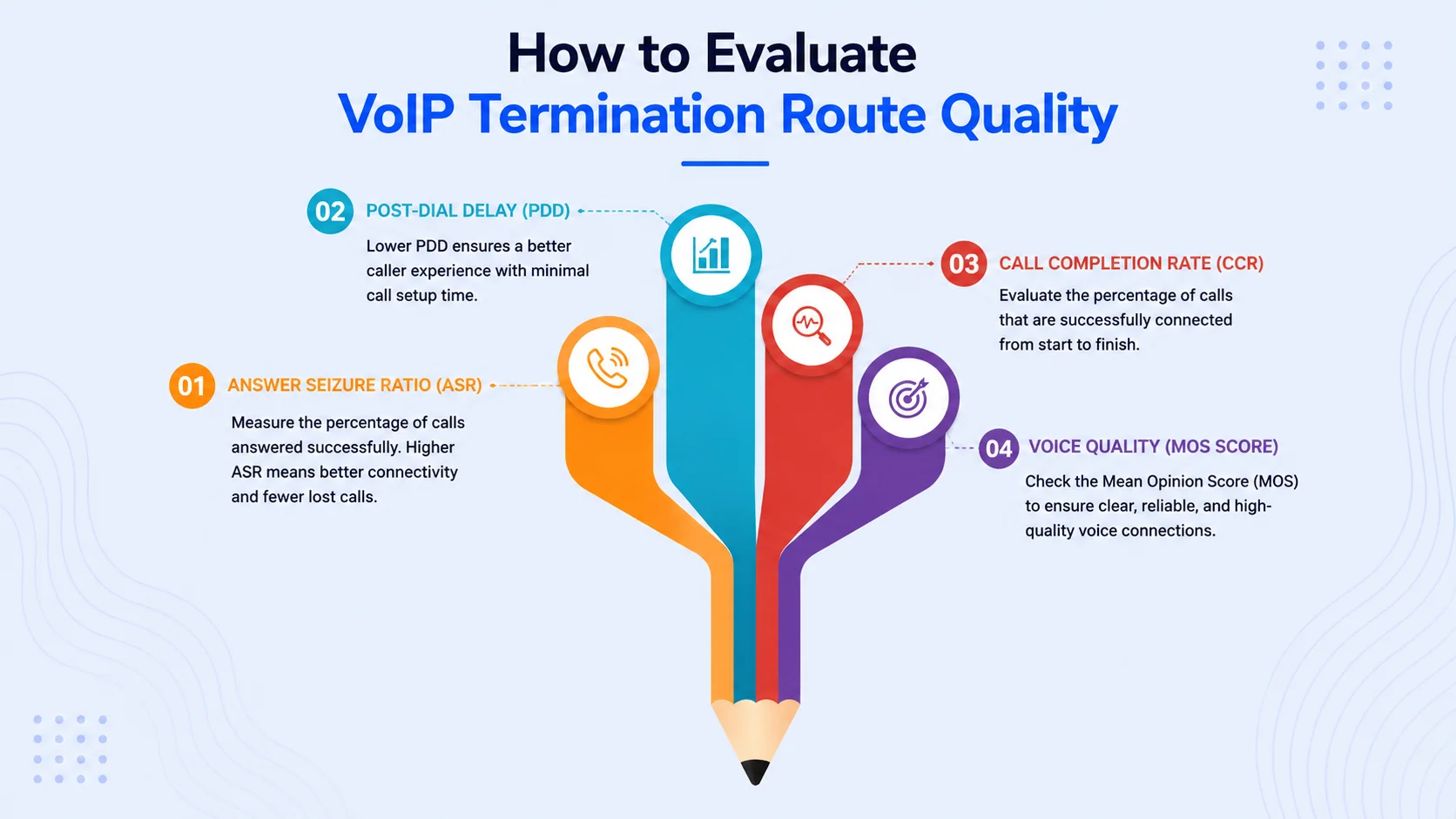
Request a small test batch of live calls to your top five destinations before committing any volume, and independently measure ASR, Post Dial Delay, and audio quality yourself rather than relying on the vendor's self-reported figures. Softtop's Voice Termination platform, for example, will support this kind of test batch — a vendor that resists a small, low-risk pilot before a full contract has something to hide.
5Fraud Control and Security Practices to Ask About
A termination vendor's fraud posture is not a footnote — it is one of the clearest indicators of operational maturity, because building real fraud controls costs money and engineering time that a fly-by-night reseller has no incentive to spend.
Specific Questions to Ask Before Signing
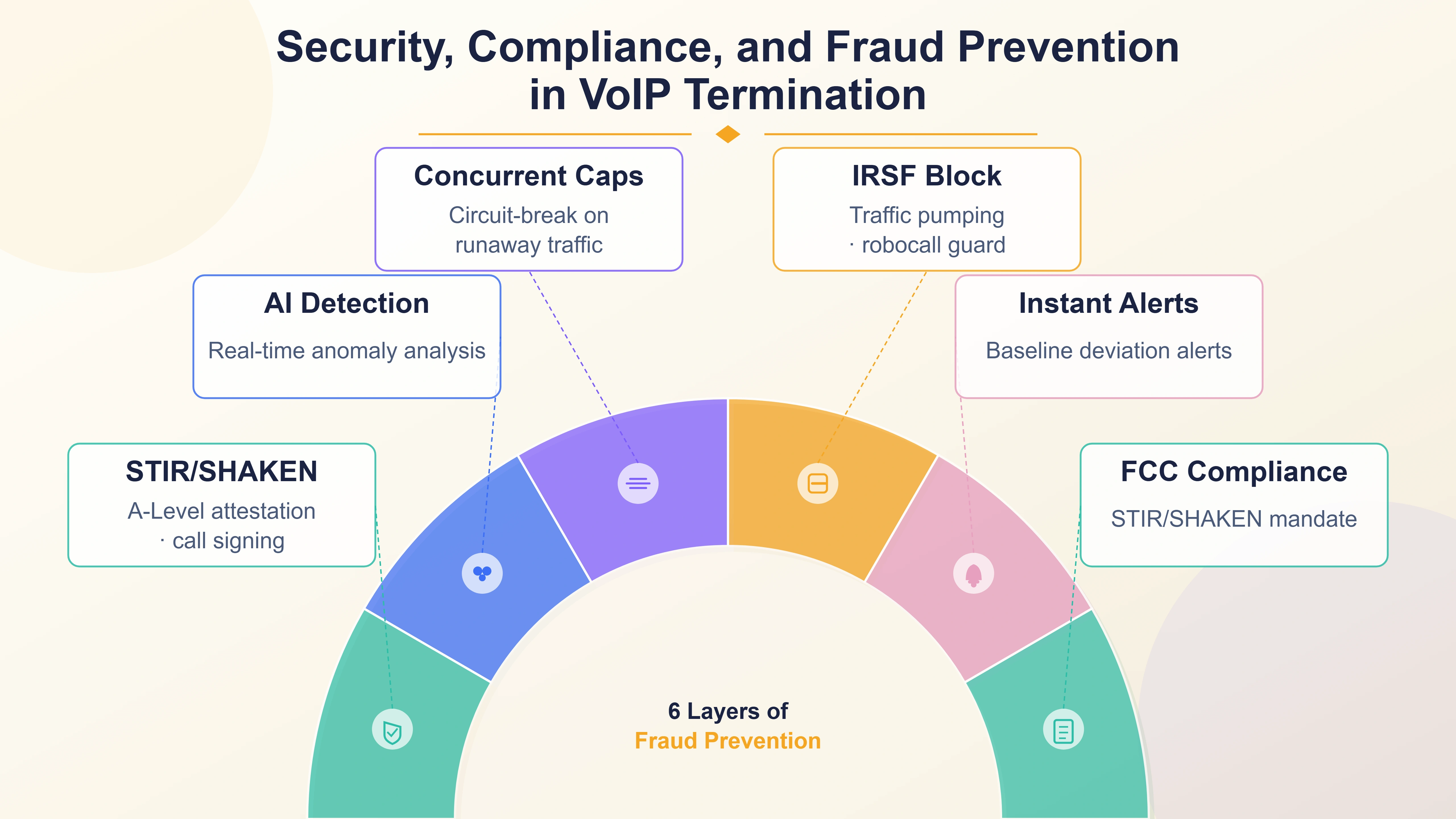
- How do you detect International Revenue Share Fraud (IRSF), and what happens to my account if a fraud pattern is detected on my traffic?
- Do you enforce concurrent call caps and daily spend limits by default, or only if I configure them myself?
- What is your STIR/SHAKEN attestation level for US-bound traffic, and can you provide documentation confirming it?
- How is customer billing data and CDR access secured — is my traffic data isolated from other customers on the platform?
- If fraudulent traffic originates from a compromised credential on my account, what is your incident response process and how quickly are anomalies flagged?
A vendor with genuine fraud infrastructure will answer these questions specifically and immediately, often pointing to documented processes. Vague, reassuring answers without specifics — "we take security very seriously" without any detail on how — are a signal that the controls being described don't actually exist yet.
6Testing Support Responsiveness Before You Commit
Support quality is the one due-diligence item you can test directly, before signing anything, simply by acting like a prospective customer with real questions rather than a lead being qualified through a sales funnel.
Run a Pre-Sales Support Test
During the evaluation period, submit a genuinely technical support ticket — not a sales inquiry — and time how long it takes to receive a substantive answer from someone who understands the infrastructure, not a first-line agent reading from a script. Ask the same technical question through two different channels, such as email and live chat, and compare the consistency and depth of the answers you receive.
Pay close attention to who actually answers. If every pre-sales interaction routes to the same enthusiastic account executive regardless of how technical the question is, that is a signal the organization may not have a real technical support layer behind the sales team — a serious problem once you are a paying customer with a live outage.
Ask About Escalation Paths Directly
Ask what happens at 2 a.m. if a route degrades across a critical destination: is there a 24/7 NOC with documented escalation procedures, or does the vendor rely on a single engineer checking a phone? Vendors confident in their support infrastructure will describe this process in specific, verifiable detail rather than a generic assurance of "round-the-clock support."
7Common Scam and Bait-and-Switch Patterns in This Industry
Certain red-flag patterns recur often enough across the wholesale voice industry that they are worth naming explicitly, so you recognize them the moment they appear in a sales conversation.
- Rate-card bait-and-switch — an unusually aggressive headline rate is quoted to win the deal, then quietly degraded after signing through route substitution, FAS billing, or a sudden "network congestion" surcharge that was never disclosed upfront.
- Unverifiable Tier-1 claims — marketing language describing "direct global carrier partnerships" that no sales representative can substantiate with named partners or a live test route when pressed.
- Pressure to commit volume before testing — a vendor pushing for a large upfront deposit or long-term contract before allowing any live test traffic is avoiding scrutiny they know their routes won't survive.
- Disappearing support post-signature — pre-sale responsiveness is excellent, but ticket response times stretch from hours to days within weeks of the contract being signed and the deposit cleared.
- Opaque or delayed billing — CDRs are withheld or delayed until month-end, making it impossible to reconcile actual call outcomes against the invoice in anything close to real time.
None of these patterns are difficult to spot once you know to look for them — which is exactly why a structured due-diligence checklist, applied consistently to every prospective vendor, catches problems that a rushed rate-comparison spreadsheet never will.
8Conclusion
Vetting a VoIP termination vendor properly takes more time upfront than simply comparing rate sheets, but it is the difference between a partner that scales with your business and one that quietly erodes your margins and your customers' trust over the following year.
Confirm the company's real operating history, talk to live customer references directly, verify Tier-1 claims with independent test traffic rather than a sales deck, ask pointed fraud-control questions, and test support responsiveness before a single minute of committed volume crosses their network. Vendors with nothing to hide welcome this scrutiny; vendors that resist it are telling you something important before you've signed anything at all.
9Frequently Asked Questions
What is the single biggest red flag when vetting a VoIP termination vendor?
Resistance to independent verification is the clearest warning sign. If a vendor won't provide live customer references, won't name their interconnect partners, or won't allow a small test batch of live traffic before you commit volume, treat that reluctance as more informative than anything on their rate sheet.
How can I verify how long a VoIP termination company has really been in business?
Check the company's registration date through the relevant business registry in its jurisdiction and compare it against the domain's WHOIS registration date. A significant mismatch, or a history of operating under multiple prior names, warrants a direct question to the vendor before you proceed further.
How do I confirm a vendor's Tier-1 interconnect claims are real?
Ask the vendor to name their direct carrier partners by market — a genuine Tier-1 provider can answer this without hesitation. Then request a live test batch of calls to your top destinations and independently measure ASR, Post Dial Delay, and audio quality yourself rather than relying on the vendor's own reported figures.
What fraud-control questions should I ask before signing a contract?
Ask specifically how the vendor detects International Revenue Share Fraud, whether concurrent call caps and spend limits are enabled by default, what STIR/SHAKEN attestation level they hold, and what their incident response process looks like if fraud is detected on your account. Vague, reassuring answers without operational specifics are a warning sign.
How do I test a vendor's support quality before committing to a contract?
Submit a genuinely technical support question during the evaluation period, not a sales inquiry, and time the response. Try the same question through two channels and compare consistency. If every interaction routes back to the same sales contact regardless of technical depth, that suggests a thin support layer behind the sales pitch.