1Introduction
The rate card is the easy part of a wholesale voice deal — the contract is where things actually go wrong. Minimum volume commitments, rate-lock windows, SLA penalty language, and exit clauses determine whether a good-looking rate turns into a good deal, or a multi-year liability. Most buyers spend hours comparing ASR and per-minute pricing across shortlisted carriers, then spend five minutes on the master service agreement itself.
That imbalance is expensive. A contract with an unrealistic minimum volume commitment can cost more in shortfall penalties than a slightly higher per-minute rate would ever save. A rate-lock clause with a 30-day validity window can leave you re-negotiating quarterly while your competitor is locked in for a year. This guide walks through the specific contractual terms that matter most in a wholesale voice termination agreement — what to look for, what to push back on, and what should make you walk away from the table entirely.
Before signing a wholesale voice termination contract, check five things: minimum volume commitments and shortfall penalties, rate-lock/validity windows, uptime SLA guarantees with real financial remedies, termination and exit clauses, and vague language around 'reasonable' rate changes. Softtop's standard agreements use transparent volume tiers, published SLA credits, and 30-day exit terms with no lock-in penalty.
2Minimum Volume Commitments: What You're Actually Agreeing To
A minimum volume commitment (MVC) obligates you to route — or pay for — a set number of minutes per month or per contract term, regardless of whether your actual traffic hits that level. Carriers use MVCs to justify their best pricing tiers, and that trade-off can be fair — but only if the commitment is sized to your real, sustained traffic rather than a best-case forecast pitched during the sales process.
The clause to scrutinize closely is the shortfall penalty: what happens if you fall below the committed minute volume in a given month or quarter? Some contracts charge the difference at the committed rate, effectively billing you for minutes you never sent. Others use a true-up mechanism averaged over a longer period, which is far more forgiving of seasonal or launch-stage traffic swings. Ask explicitly whether the commitment is monthly, quarterly, or annualized — an annualized commitment gives you room to absorb a slow month without triggering a penalty.
Before signing, model your last twelve months of actual traffic against the proposed commitment, including any known seasonality. A commitment that only makes sense if growth projections land exactly on plan is a bet, not a floor. Softtop structures its Wholesale Voice agreements with volume tiers tied to trailing usage rather than forward-looking sales projections, so the commitment reflects traffic you've already demonstrated.
3Rate-Lock Windows and Rate Validity: Why Today's Price May Not Be Tomorrow's
Every wholesale voice rate deck carries a validity window, often buried in a footnote: 30, 60, or 90 days. After that window expires, the carrier can revise rates on any destination, and many contracts allow this with only a few days' written notice. If your commercial terms with your own customers assume a stable cost base, a short rate-lock window on your supplier side creates margin risk you don't control.
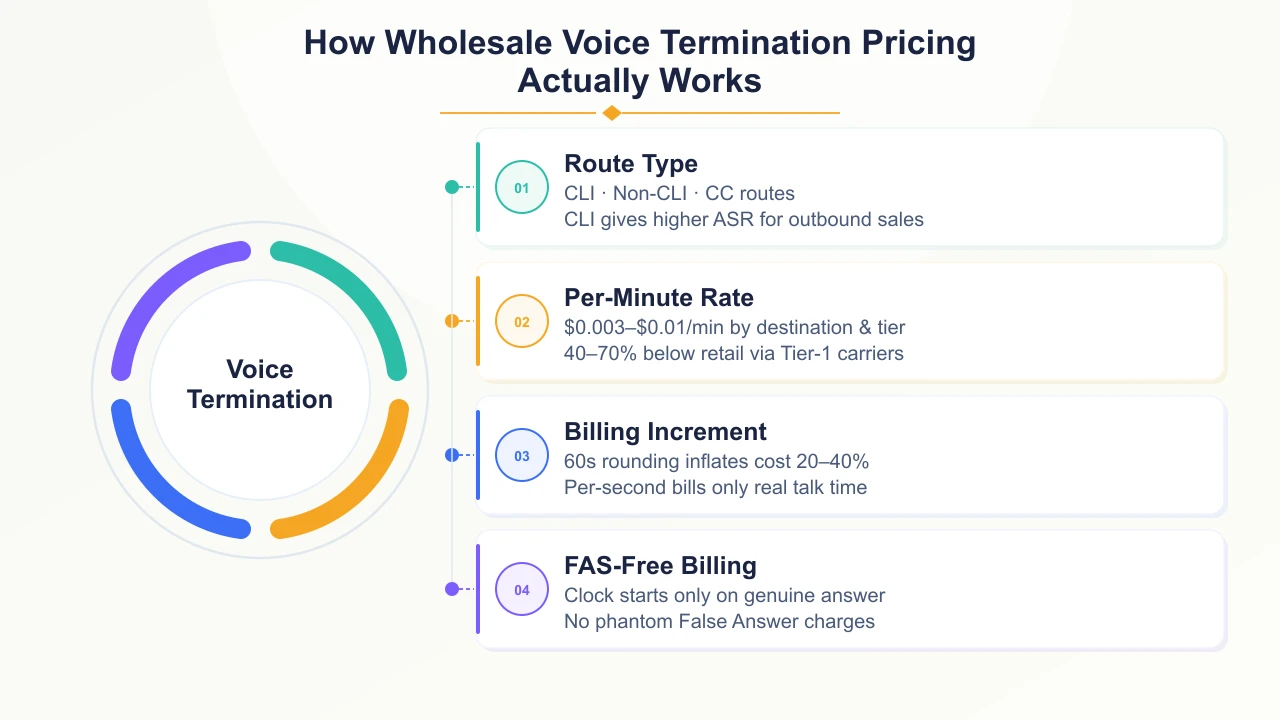
Pay close attention to the mechanism for rate changes, not just the frequency. Contracts that permit revisions 'at the carrier's discretion' or 'to reflect market conditions' give the vendor essentially unlimited latitude. Better contracts specify a defined trigger — such as a documented change in a specific country's Mobile Termination Rate — and require advance notice of a fixed number of business days before any change takes effect, along with the right to reject the new rate on affected destinations without breaching the broader agreement.
Ask for a rate-lock period that covers at least one full commercial cycle with your own customers — 90 or 180 days is a reasonable ask for most B2B wholesale relationships. According to the FCC's interconnection framework, transparency in pricing terms is an area regulators increasingly scrutinize, which gives buyers leverage to insist on clearer rate-change language rather than accepting boilerplate.
4Uptime SLA Guarantees and Penalty Clauses: What a Guarantee Is Actually Worth
A 99.99% uptime figure on a sales page means very little until it's written into the contract with a defined measurement window and a real financial remedy attached. Read the SLA section for three specific things: how uptime is measured (network-wide average versus per-route), what counts as an outage (scheduled maintenance is often excluded, sometimes generously), and what you actually receive if the guarantee is missed.
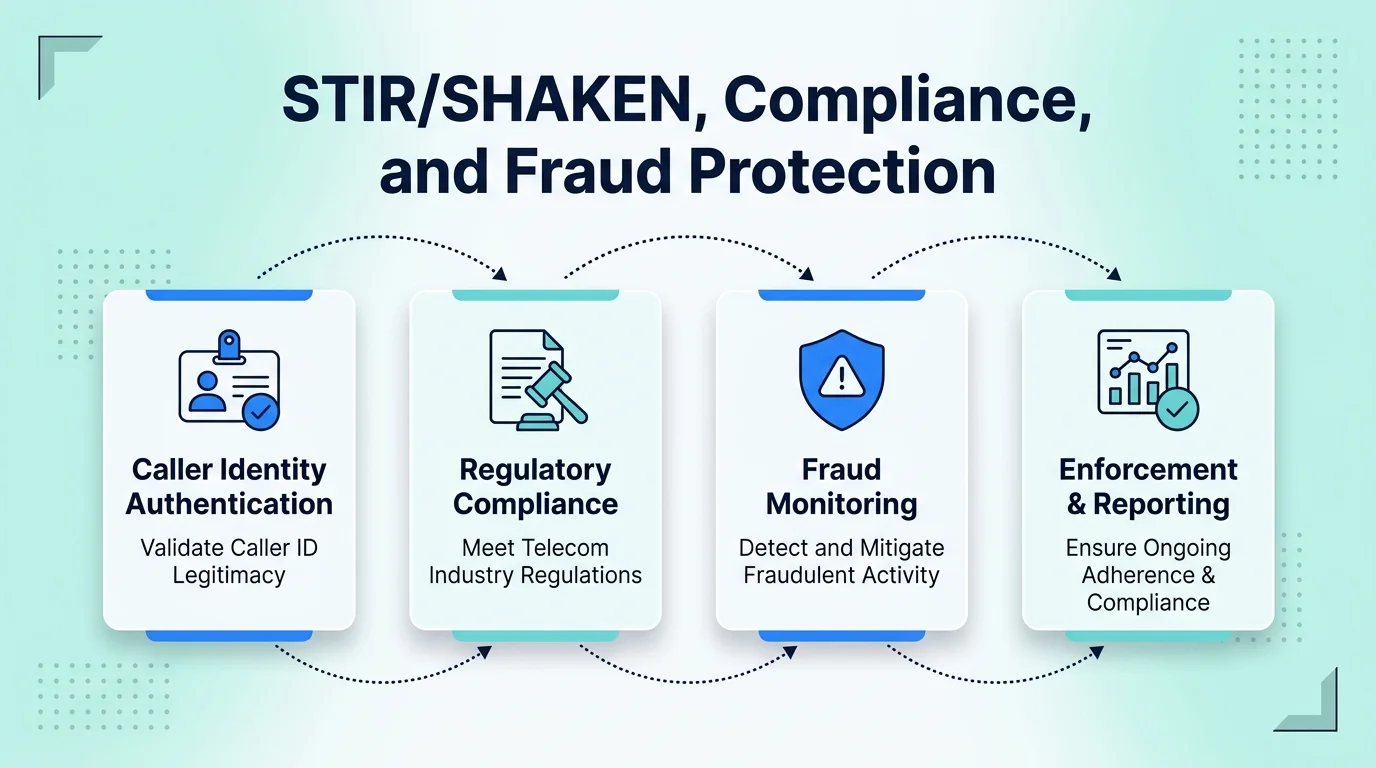
Many wholesale agreements cap the remedy for an SLA breach at a small service credit — often a single day's or week's worth of fees — regardless of how much revenue or customer trust the outage actually cost you. That asymmetry matters: the carrier's downside for missing its own guarantee is capped, while your downside from a real outage is not. Look for SLA credits that scale with the severity and duration of the breach, and confirm whether credits are automatic or require you to file a claim within a tight window after the incident.
Also check for an SLA carve-out on 'force majeure' or 'upstream carrier failure' — some contracts define these so broadly that almost any real-world outage falls outside the guarantee entirely. A tightly scoped SLA with modest but genuinely enforceable remedies is worth more than an impressive uptime number with no teeth behind it.
5Termination and Exit Clauses: Getting Out Without Getting Burned
The exit clause is the section most buyers skip and most regret skipping. Look for three things: the notice period required to terminate without cause, whether early termination triggers a fee tied to the remaining volume commitment, and how quickly number porting, route deactivation, and final billing reconciliation happen once notice is given.
Contracts that auto-renew for a full additional term unless you cancel within a narrow window — sometimes as short as 30 days before renewal, buried deep in the terms — are a common trap. Confirm the auto-renewal notice period explicitly and calendar it the day you sign. Also clarify what happens to any unused portion of a prepaid volume commitment if you terminate mid-term: some agreements forfeit it outright, while fairer terms prorate a refund or allow a grace period to consume remaining committed minutes. For context on how this fits into a broader carrier relationship, see Softtop's Wholesale VoIP terms.
Finally, check the data and CDR handling clause on exit — you need continued access to historical call detail records for billing disputes, tax records, and compliance audits, and a good contract guarantees that access for a defined period (typically 12 months) after the relationship ends, independent of whether you're still a paying customer.
6Red Flags in Contract Language — and Where You Have Negotiating Leverage
Language That Should Make You Pause
Certain phrases recur across weaker wholesale contracts and are worth flagging during review: 'rates subject to change without notice,' 'uptime measured at carrier's sole discretion,' 'commitment shortfall billed at list rate,' and 'auto-renews unless cancelled in writing 60 days prior' are all clauses that shift risk heavily toward the vendor. None of these are automatically disqualifying, but each should trigger a specific redline request rather than a signature.
Where You Actually Have Leverage
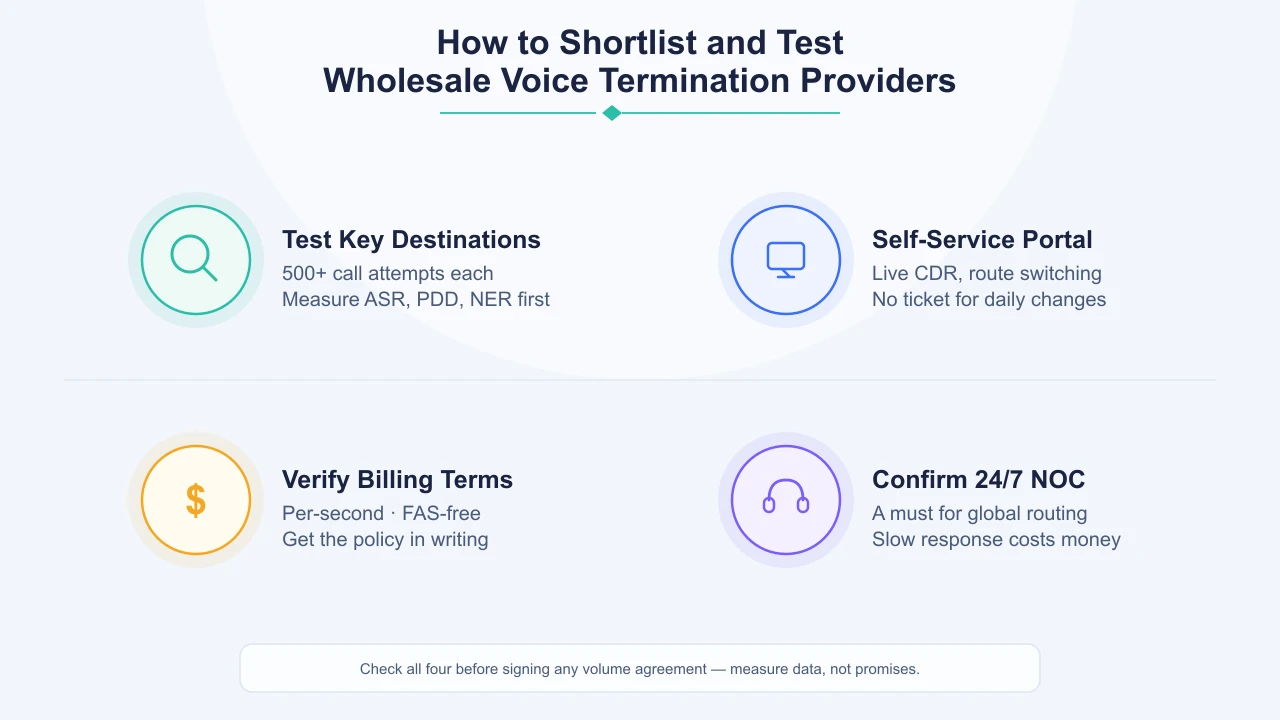
Committed volume is your strongest card — carriers compete hardest for predictable, sizeable traffic, so a documented trailing-twelve-month usage history is worth more in negotiation than any projection. Multi-destination consolidation is a second lever: bundling several route types or countries under one master agreement often unlocks better rate-lock terms and SLA credits than negotiating each destination separately. A third lever is competitive quotes in hand — carriers routinely soften shortfall penalties and extend rate-lock windows when a comparable offer from another Tier-1 provider is on the table.
Before signing, request a redline pass focused specifically on the shortfall penalty formula, the SLA credit schedule, and the termination notice period — these three clauses account for the majority of real financial exposure buried in wholesale voice contracts, far more than the headline per-minute rate ever will.
7Conclusion
A wholesale voice termination contract is a commercial risk-allocation document disguised as a rate sheet. Minimum volume commitments, rate-lock windows, SLA penalty clauses, and exit terms determine who absorbs the cost when traffic dips, rates shift, or an outage occurs — and none of that is visible on the pricing page.
Before signing anything, model your realistic traffic against the proposed commitment, confirm the rate-change trigger and notice period, verify the SLA credit schedule scales with breach severity, and calendar the auto-renewal cancellation window the day you sign. A carrier confident in its own service quality will have no issue putting these terms in writing with real remedies attached.
Not sure whether your current wholesale voice contract has fair terms? Contact our team → for a side-by-side comparison of your existing commitment structure, SLA terms, and exit clauses against Softtop's standard agreement.
8Frequently Asked Questions
What is a minimum volume commitment in a wholesale voice contract?
A minimum volume commitment (MVC) is a contractual obligation to route, or pay for, a set number of minutes per month, quarter, or year in exchange for a given rate tier. If actual traffic falls short, most contracts apply a shortfall penalty, so it's important to size the commitment against realistic trailing usage rather than optimistic growth forecasts.
What does a rate-lock or rate validity window mean?
A rate-lock window is the period during which a quoted per-minute rate is guaranteed not to change. Many carriers quote rates valid for only 30 to 90 days, after which they can revise pricing with limited notice. Longer rate-lock periods, ideally 90 to 180 days, protect your margin if you've committed to fixed pricing with your own customers.
What should an uptime SLA penalty clause actually guarantee?
A meaningful SLA penalty clause should define exactly how uptime is measured, what qualifies as a covered outage versus an excluded event like scheduled maintenance, and a remedy — typically a service credit — that scales with the severity and duration of the breach rather than a flat, capped amount regardless of impact.
What should I check in the termination or exit clause before signing?
Check the required notice period for termination without cause, whether early exit triggers a fee tied to any remaining volume commitment, the auto-renewal window and how far in advance you must cancel it, and how long you retain access to historical CDRs after the contract ends for billing and compliance purposes.
Where do I have the most negotiating leverage on a wholesale voice contract?
Documented trailing usage volume is the strongest lever — carriers price most aggressively for proven, predictable traffic. Consolidating multiple destinations or route types under one master agreement, and having a comparable competitive quote in hand, are also effective ways to soften shortfall penalties and extend rate-lock terms.